If you’re a coffee lover, you’ll be able to experience Guatemala on a whole new level. This bean has been deeply ingrained in Guatemalan identity since the time of the Maya civilisation and is now regarded as one of the best in the world. Learning about its origins and how it’s grown, and savouring its distinctive flavours, is a unique experience that I would definitely recommend you try on your trip, as it will take you into a very special world.
In this article, we aim to tell you everything you need to know about Guatemalan coffee so that, when you set off on your adventure, you’ll already know a little about its history and heritage. We also want to take you on a tour of the country’s different coffee-growing regions and routes, so that you can include them in your itinerary. Are you ready to savour Guatemala’s true heritage?
Why is Guatemalan coffee so well-known around the world?
The reason Guatemalan coffee is so good is down to a combination of geographical factors, age-old traditions and tireless efforts to improve every single bean.
What makes Guatemalan coffee unique
The main difference we find between Guatemalan coffee and coffees from other parts of the world is the wide variety of flavours on offer. From more bitter and intense coffees to those with floral notes, this characteristic makes Guatemalan coffee one of the most versatile in the world, capable of adapting to all kinds of palates and brewing methods.

The influence of climate, altitude and volcanic soils
Without Guatemala’s climate and geography, the country would not be able to grow such high-quality coffee; these are the two key factors. On the one hand, the country’s volcanic soils (for we mustn’t forget that there are as many as 37 volcanoes) enrich the soil with minerals such as phosphorus, calcium and potassium, resulting in a highly nutritious substrate that gives Guatemalan coffee its distinctive body and varied flavours. Furthermore, the texture of the volcanic soil allows for excellent aeration and prevents the plants from rotting during heavy rainfall.
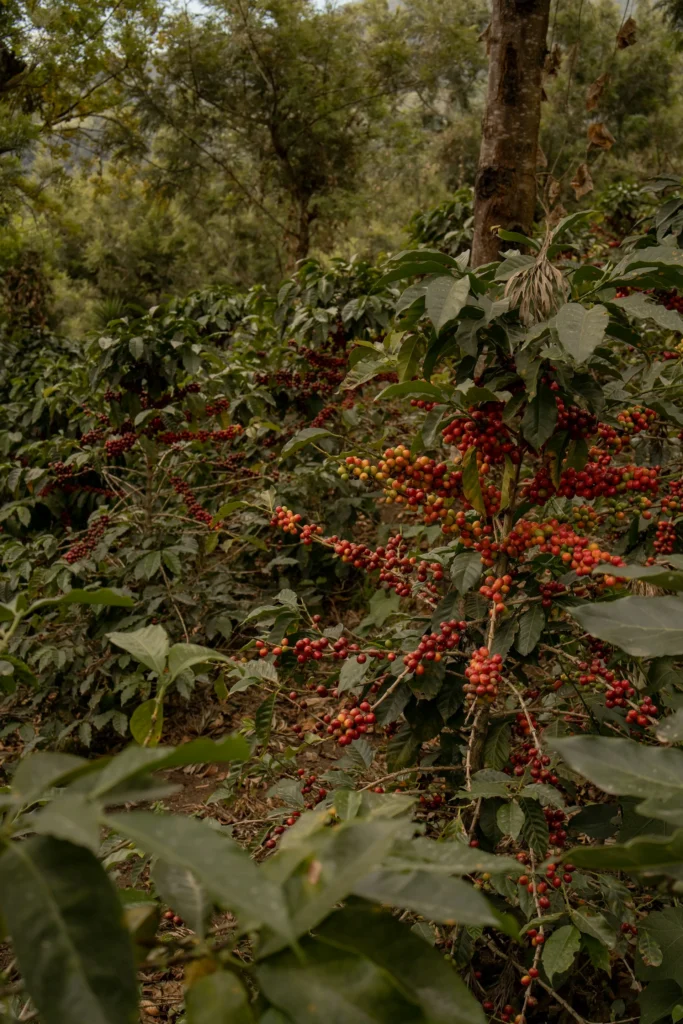
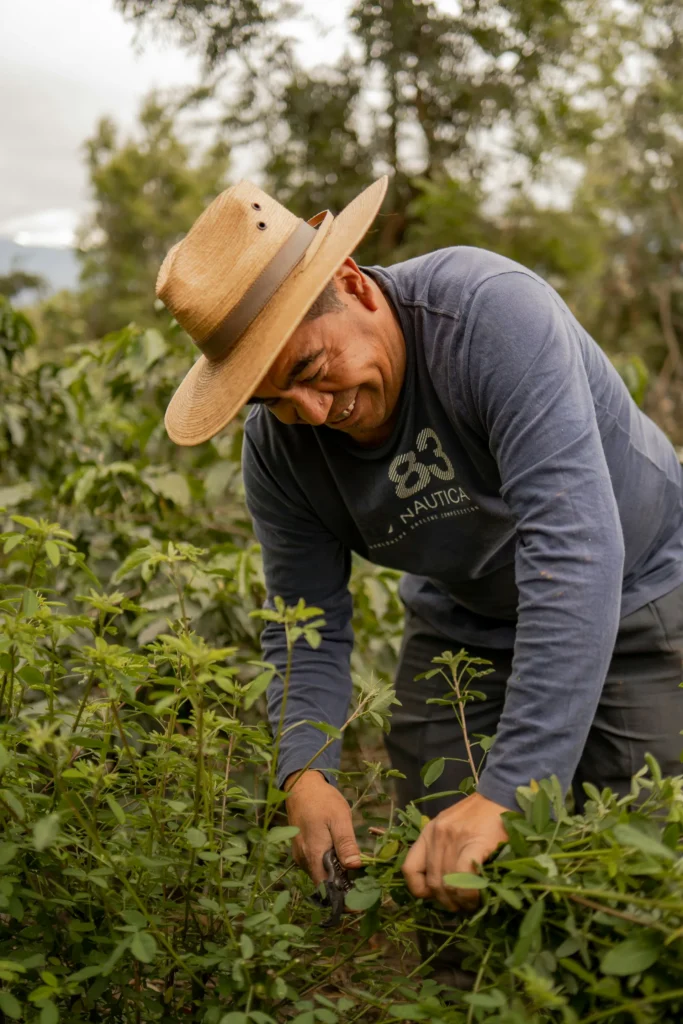
Furthermore, most coffee farms are situated between 1,300 and 1,800 metres above sea level. This means that the beans ripen more slowly, allowing their sugars to become more concentrated, and results in Guatemalan coffee having a much cleaner acidity.
Finally, we must not forget that, thanks to the cold winds from Mexico and the sea breezes from the Pacific, any frosts that may occur at high altitudes are not destructive, and so the plant remains protected.
Awards and international recognition
There are some truly iconic Guatemalan estates, such as El Injerto and El Morito, which break records every year and whose coffees score over 91 points. These points (on a scale of 0 to 100) represent the certified quality of the coffee following a professional cupping. Any coffee scoring over 80 points is considered a ‘speciality coffee’. And not only that, but many coffee shops in the country’s major cities are also ranked amongst the top 100 in the world. In short, Guatemalan coffee is highly prized internationally and competes on equal terms with coffees from countries such as Colombia and Ethiopia.
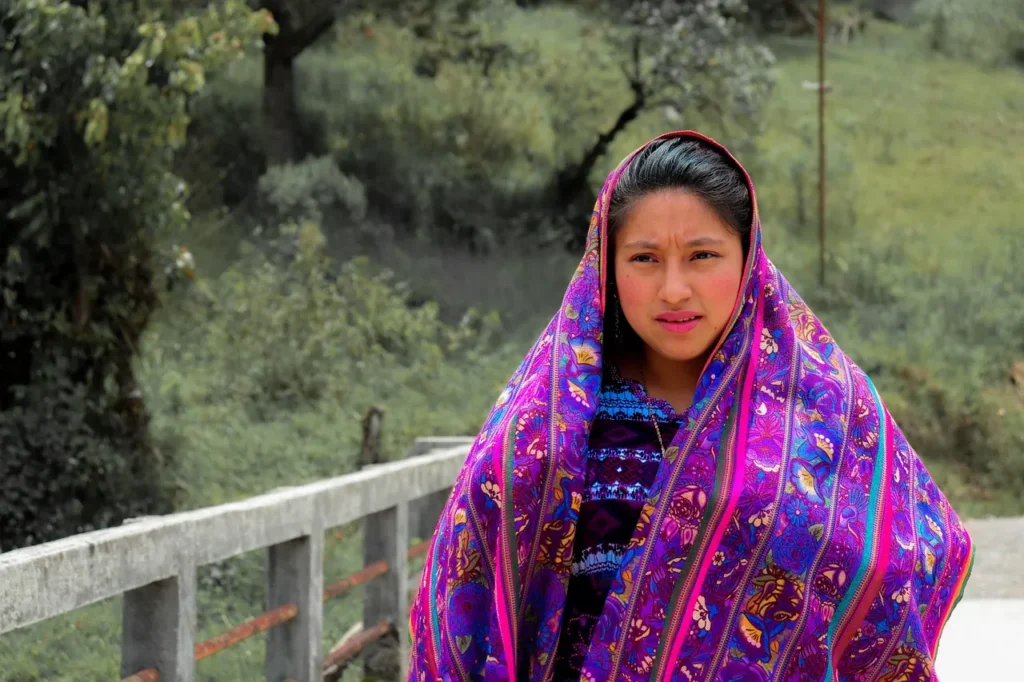
- We invite you to read our article about the traditional dress of Cobán.
The History of Guatemalan Coffee
The arrival of coffee in the country
Contrary to what you might think, the coffee grown in Guatemala is not native to the country, but was introduced by Jesuit priests in the 18th century. However, they did not consume the fruit, as they only used the plants for their ornamental value to decorate the gardens and convents of the Guatemalan capital, now known as Antigua Guatemala. Gradually, over time, coffee cultivation shifted from being purely aesthetic to the beans being consumed in homes. Later on, it began to gain popularity amongst local farmers.
As you can see, the original Mayan civilisation was unfamiliar with coffee (their sacred drink was cocoa). But then, you might ask: why is this fruit so important to this culture? The relationship between coffee and the Maya stems from the country’s religious and cultural mix. Despite Spanish colonisation, Mayan culture continued to thrive in the region, whilst adopting and coexisting with Catholic and Hispanic customs. That is why coffee has become an integral part of the Mayan worldview itself, playing an important role in many ceremonies; so much so that the majority of the country’s small-scale coffee farmers are of Mayan origin.
The coffee boom during the 19th century
In the 19th century, the country’s economy depended on the export of natural dyes, such as indigo and cochineal. But with the invention of synthetic dyes in the 1850s, market forces compelled Guatemala to urgently seek a new economic driver. The solution came in 1871 when the government declared coffee a strategic crop and implemented drastic reforms to exploit this bean and make the most of it. To this end, it distributed public land at low prices with the aim of establishing coffee plantations and invested heavily in coffee-growing infrastructure.
Furthermore, to facilitate the large-scale export of this crop (mainly to Europe and the United States), the first railways were built and the seaports were modernised. By the end of the 19th century, Guatemala’s landscape had changed completely, becoming a sea of coffee plantations.
The importance of coffee to the Guatemalan economy
Today, Guatemalan coffee remains one of the mainstays of the country’s economy. For some time now, coffee cultivation in the country has been strongly focused on sustainable agriculture and fair trade. It's a major source of employment, providing jobs for half a million people directly and indirectly and supporting thousands of families.
Today, the Guatemalan coffee industry also places a strong focus on small-scale producers. Whereas in the past it was the large landowners who owned the coffee plantations, today more than 80 per cent of producers are small-scale local coffee farmers organised into cooperatives, who are responsible for exporting their coffee directly. As a result, coffee is one of Guatemala’s main agricultural exports, generating millions of dollars annually for the national economy. But, quite apart from that, it's the country’s best calling card for tourism.
- We invite you to read our article about traditional sweets from Antigua Guatemala.
Where is coffee grown in Guatemala? Coffee-growing regions of Guatemala
Guatemala is like a continent in miniature. Its geography and climate give rise to eight coffee-growing regions officially certified by the National Coffee Association (Anacafé), each with its own unique ecosystem that lends the beans a distinct and unique flavour.
Coffee from Antigua Guatemala
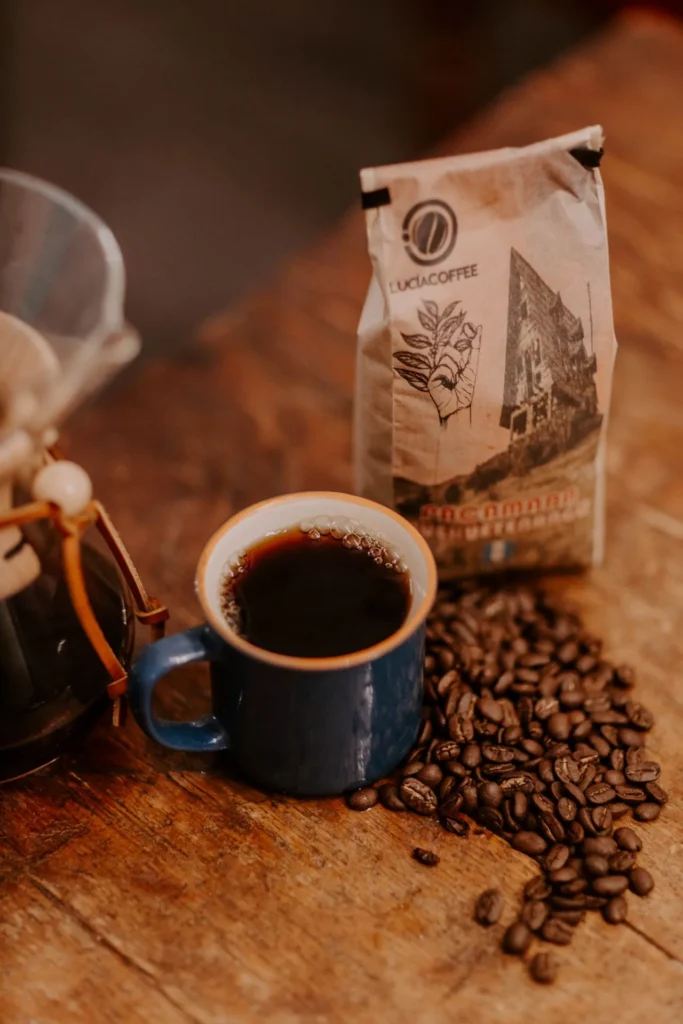
It's the most famous coffee-growing region. Surrounded by volcanoes, these enrich the soil with minerals and retain just the right amount of moisture. This results in a very well-balanced, sweet coffee with notes of chocolate and a full body.
Coffee from Huehuetenango
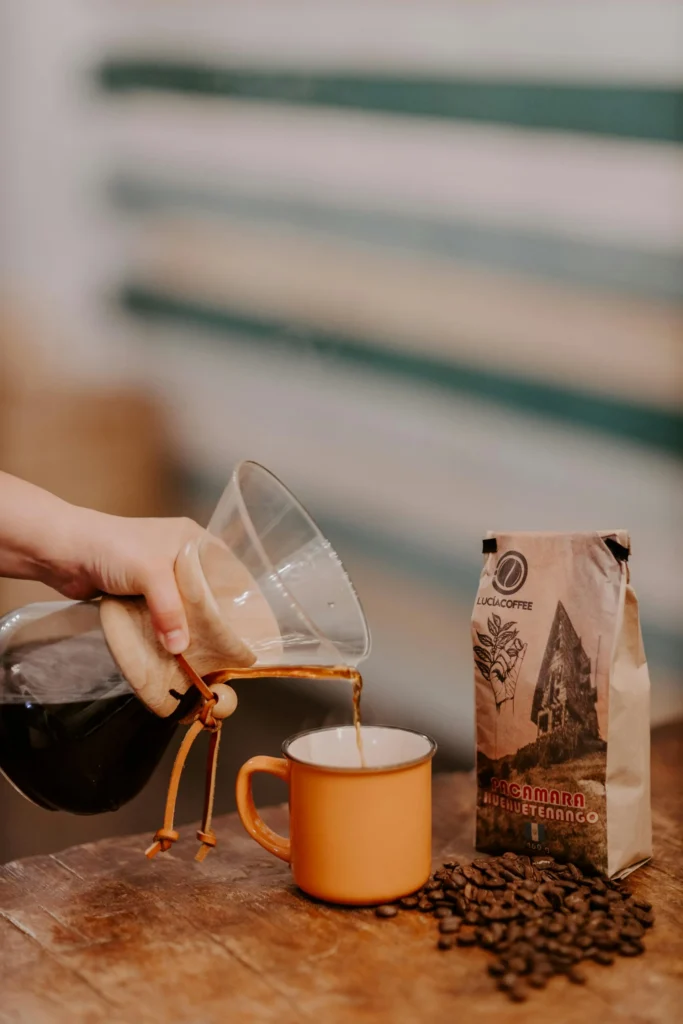
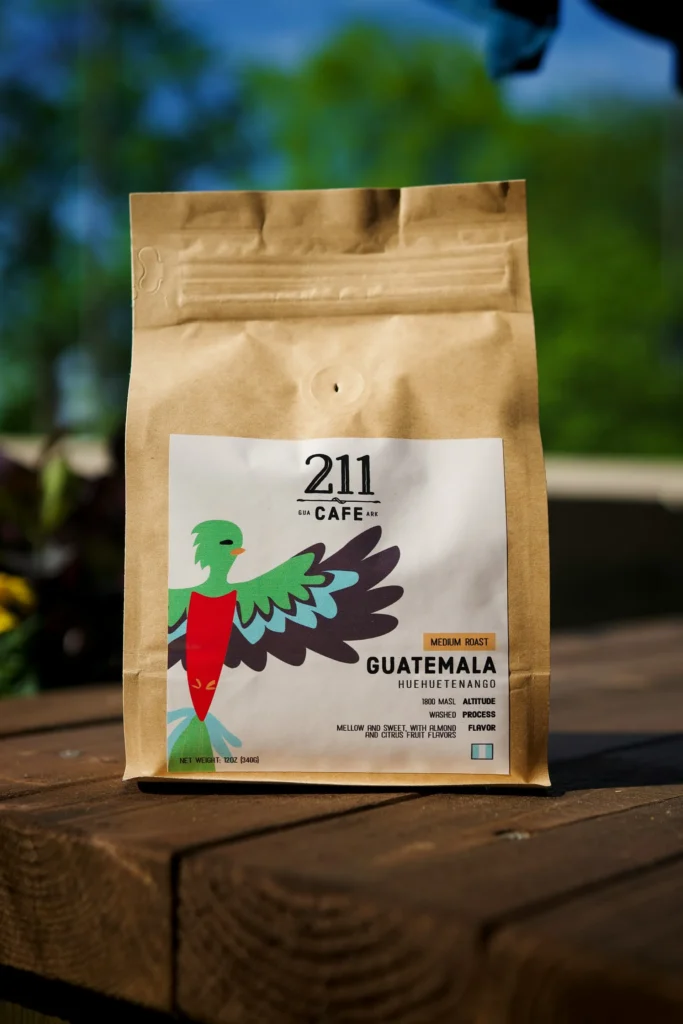
It's one of the driest and highest coffee-growing areas. The region lies at the foot of the Sierra de Cuchumatanes, one of the most remote regions in the country. The secret of Huehuetenango coffee lies in its geography: the cold air of the mountains is balanced by the warm winds from the Mexican plains, resulting in a coffee that can be grown at extreme altitudes of 2,000 metres without the risk of frost. Coffee from this area is characterised by its intense acidity, creamy body and fruity flavours.
Atitlán Coffee
The coffee plantations in the Atitlán region are situated on the slopes of the volcanoes surrounding this lake, which is considered one of the most beautiful in the world. The wind in the area regulates the temperature of the coffee plantations, which, combined with the mineral-rich soils, results in a coffee with a full body, citrus notes and a chocolatey aftertaste.
Cobán Coffee
This region is situated in the north of the country and is extremely cloudy and cold. It's an area of karst mountains covered in dense tropical rainforest and lush cloud forest. The climate in Cobán is very humid due to the constant drizzle and mist, which significantly slows down the ripening of the beans. This is why coffee from the Cobán region has a distinctly acidic and fruity flavour and exhibits a distinctive acidity.
Fraijanes Coffee
To the south of Guatemala City, on high-altitude plains, lie the region’s coffee plantations. The active and imposing Pacaya volcano plays a crucial role here, watching over the crops and nourishing the soil with fresh ash. Furthermore, the region’s intensely sunny summers and high humidity allow the beans to dry perfectly in the sun. The result: a cup with a well-defined body and an intense yet perfectly balanced and aromatic flavour.
Acatenango Coffee
The coffee plantations in this area stretch across the slopes of the Acatenango volcano, reaching altitudes of 2,000 metres above sea level. The wind from the Pacific Ocean, combined with the porous volcanic sand soils, allows for the cultivation of coffee with a very clean flavour, pronounced acidity and fruity notes.
Nuevo Oriente Coffee
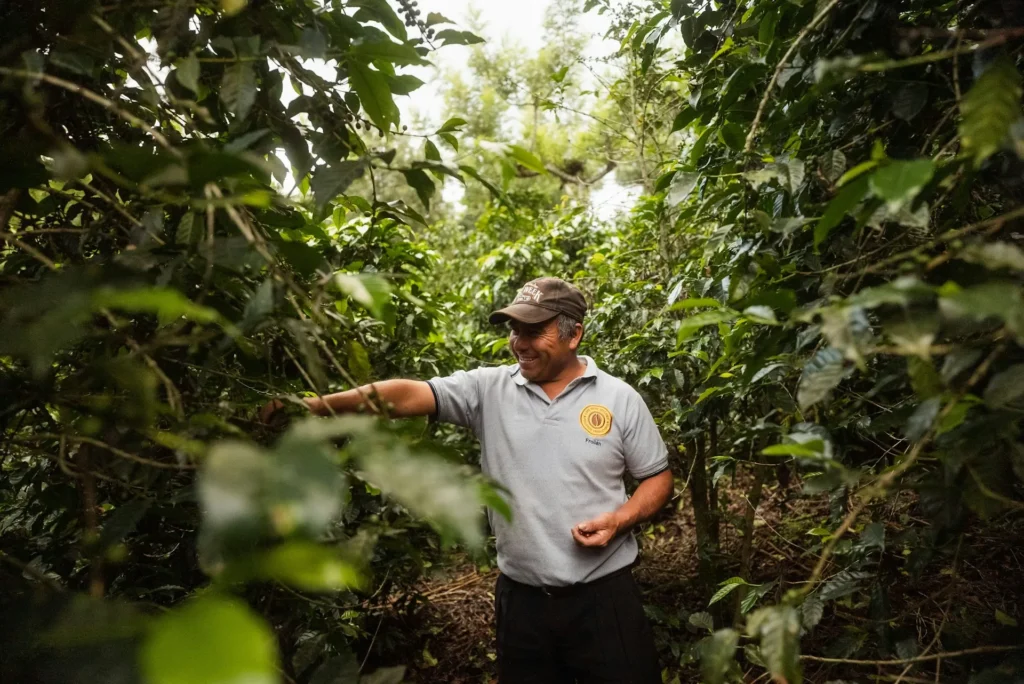
Situated on the border with Honduras, this historic region lies on an ancient, now-dormant volcanic mountain range. The soils here are clayey, which results in a mineral profile very different from that found in other parts of the country. As a result, the coffees have a dense, buttery body with excellent sweetness and a very pleasant acidity.
San Marcos Café
Finally, we come to the warmest, rainiest and westernmost region of the country, dominated by two volcanoes. This gives rise to a unique harvest pattern characterised by an early rainy season and an equally early coffee flowering period. The result is a coffee with a very floral aroma, pronounced acidity and a full body.
- We invite you to read our article about the flora of Guatemala.
Characteristics of Guatemalan coffee
As you have read throughout this article, Guatemalan coffee is not a uniform product; it's a bean with ever-changing flavours, giving it an unmistakable character on the international market. And all this is down to the climate and the wide variety of conditions in which it's grown.
Flavour and aroma profile
Although there is a variety of flavours and aromas, one thing that tends to characterise most of the coffee grown in the country is its elegant aroma. The fragrance it gives off is very intense, yet also very clean. It's by no means a flat or boring coffee. On the palate, the flavours evolve and leave a clean, very pleasant aftertaste that leaves you wanting more.
Acidity, body and the most common flavour notes
The acidity of Guatemalan coffee is neither sharp nor unpleasant, but it's lively and reminiscent of the freshness of green apples and citrus fruits. As for its body, it's very well-balanced, with silky, velvety notes. It's not heavy, but it does have an intense texture. Its flavour notes vary depending on the region and the coffee estate, but flavours such as dark chocolate, caramel, toffee, cane sugar and subtle hints of nuts and fruit usually predominate.
Differences by region of origin
- Antigua, Acatenango and Fraijanes regions: these are very well-balanced coffees with notes of chocolate and caramel. They also have a full body, but their acidity is very well balanced.
- Huehuetenango and San Marcos region: the coffees have a high level of citrus acidity with very floral notes.
- Cobán, Atitlán and Nuevo Oriente region: this is a very fruity coffee with a buttery body.
How coffee is grown in Guatemala
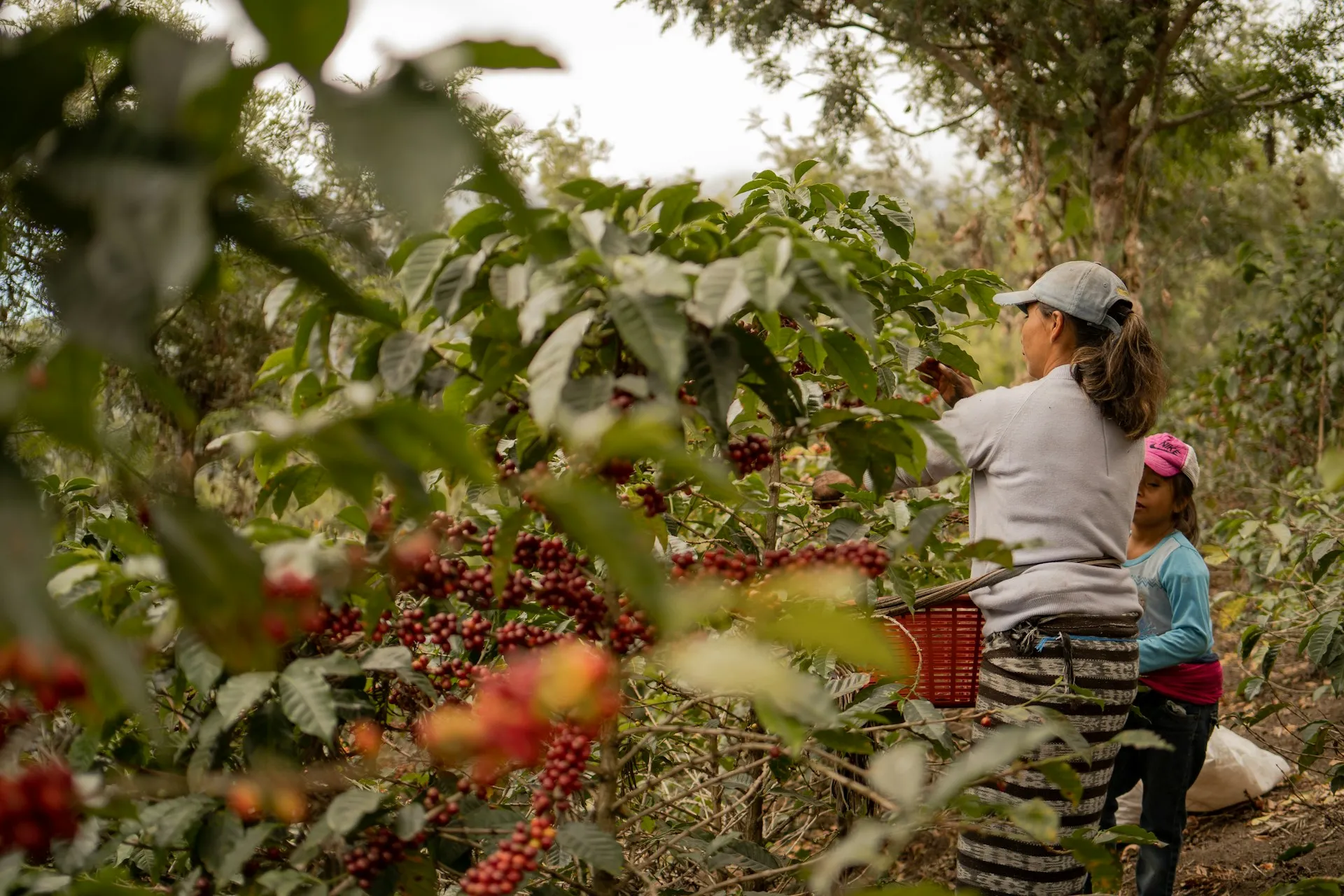
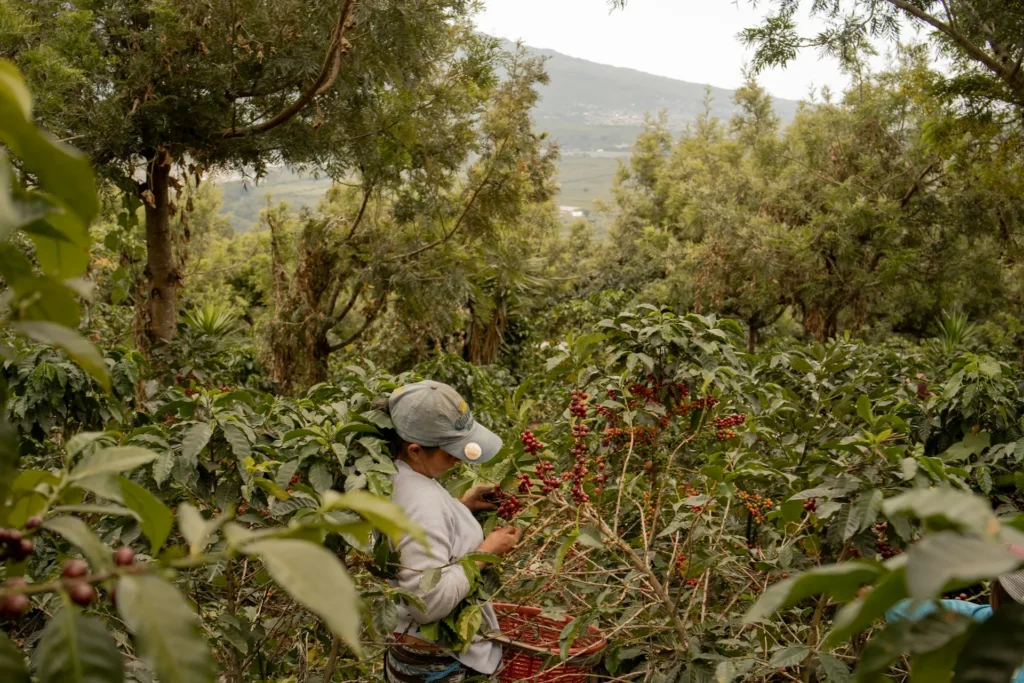
The cultivation of Guatemalan coffee, followed by its harvesting and drying, is a purely artisanal process. This is because the country’s uneven, mountainous and rugged terrain makes it impossible to mechanise these stages. Consequently, every single bean consumed both within and outside the country is the result of tremendous human effort and the use of traditional techniques perfected over generations.
Manual coffee harvesting
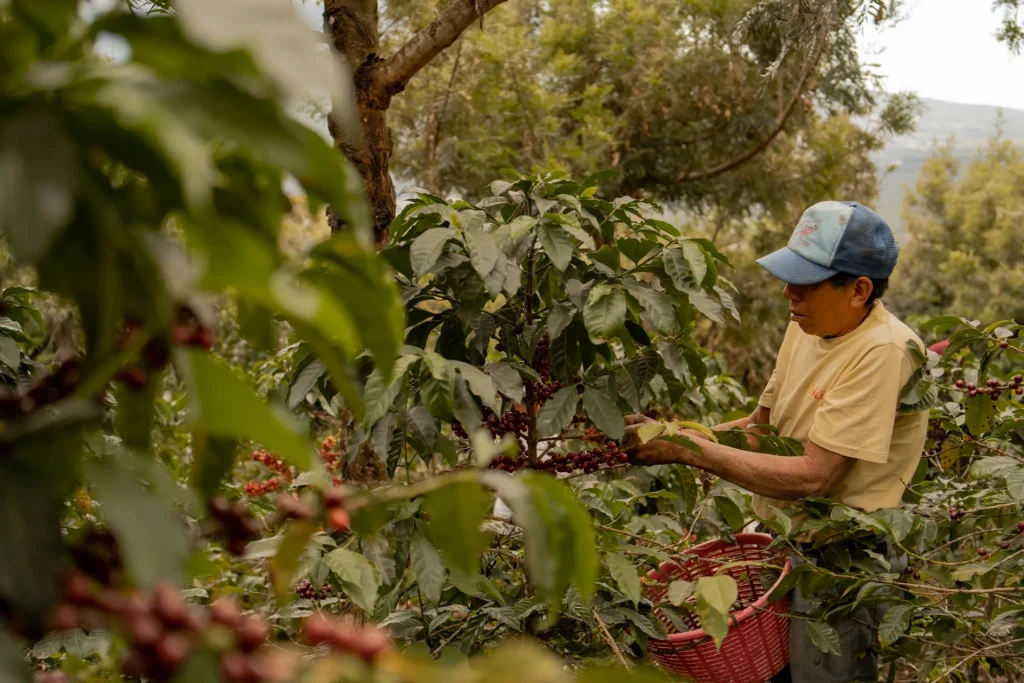
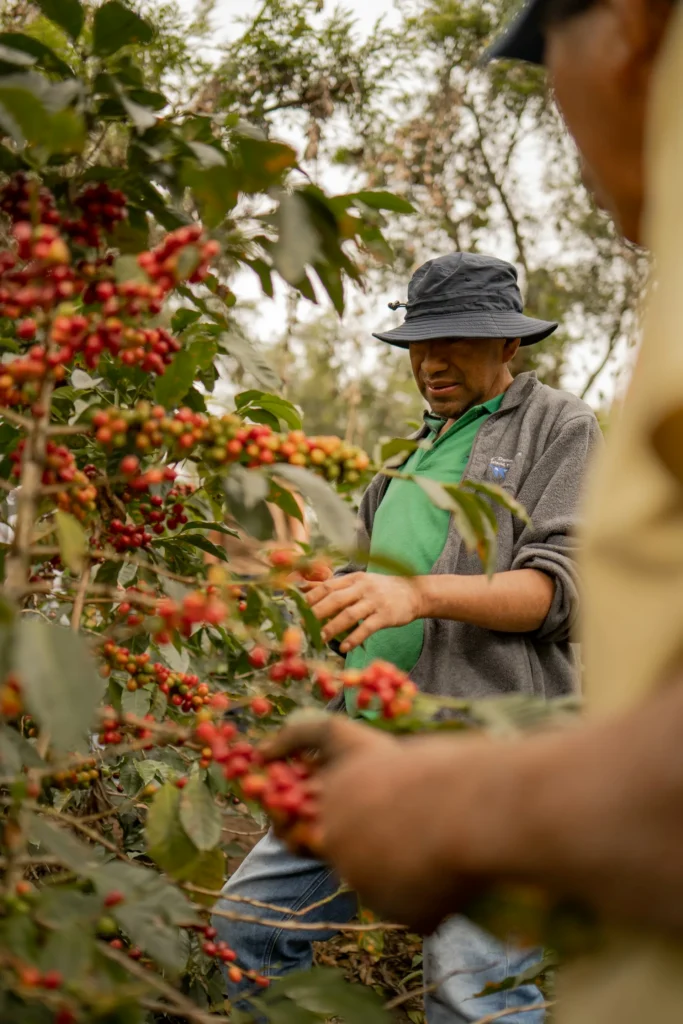
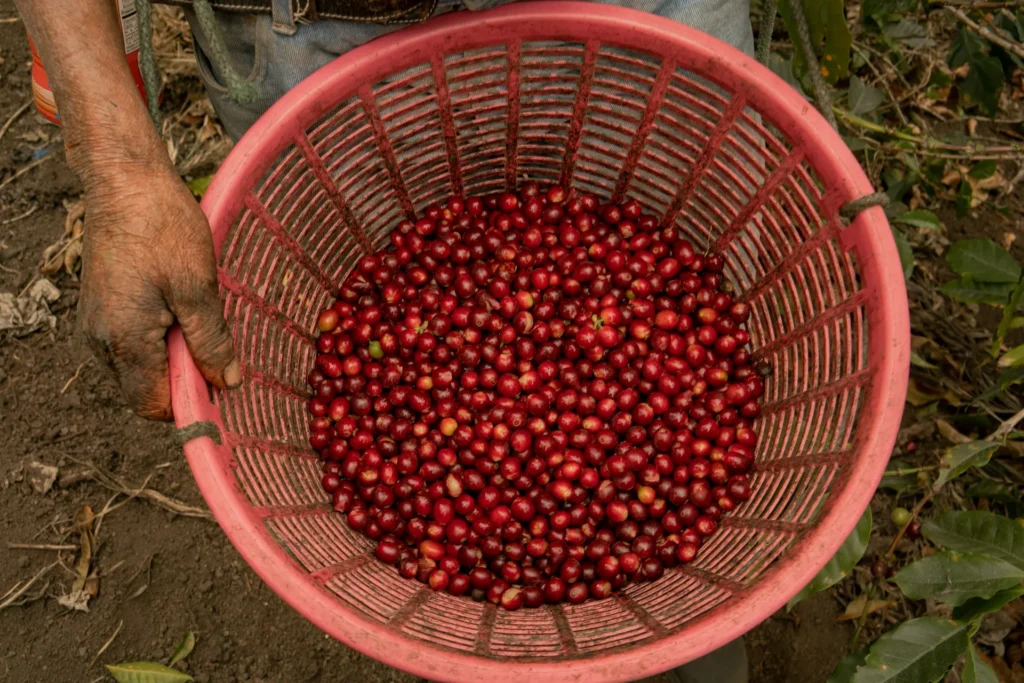
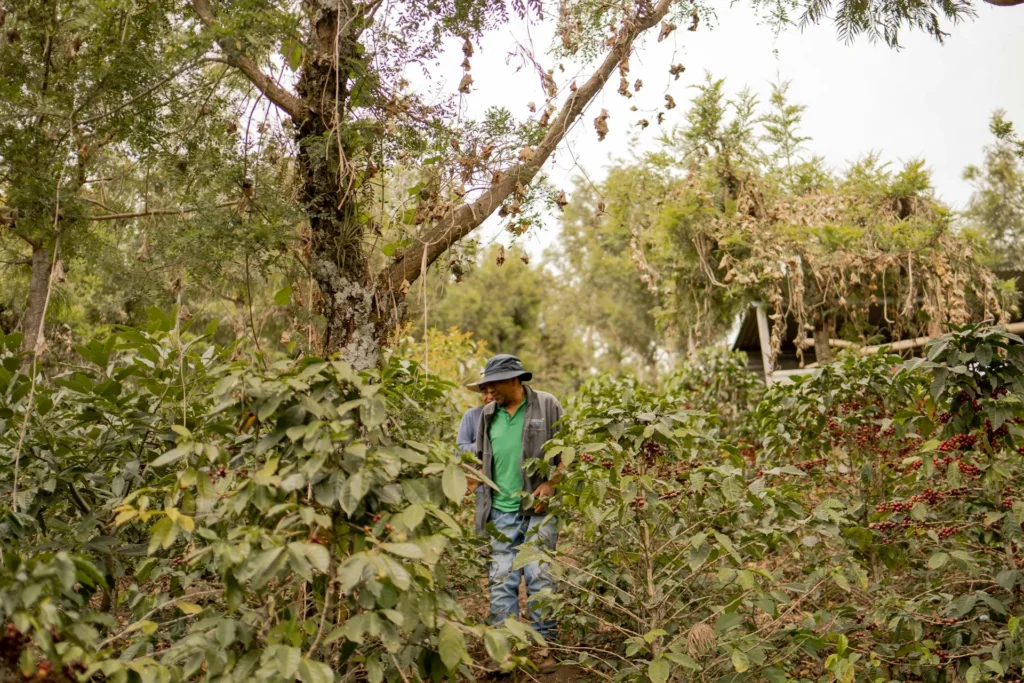
Generally, the coffee harvest season in Guatemala runs from November to March, although this may vary slightly depending on the region’s altitude. As we have mentioned, the harvest is carried out manually and selectively. The pickers make their way up the steep slopes and examine the berries branch by branch to pick only those that have reached their optimum ripeness. These are commonly known as ‘cherries’ because of their deep red colour.
Coffee cherries that are not yet ripe are left on the branch to be harvested later. This manual harvesting process is crucial to producing high-quality coffee; otherwise, the brew would have very bitter flavours or leave a dry aftertaste.
Coffee bean processing and roasting
Once the coffee cherries have been harvested, they are taken to what are known as ‘beneficios’, which are the processing plants. It's there that the fruit is transformed into green coffee beans before being roasted, and three different methods are used in the country to achieve this. Firstly, there is washed coffee, which is the most traditional and widely used method in the country. It involves removing the outer pulp from the bean and then soaking them in tanks of clean water for 12 to 36 hours to allow fermentation. Thanks to this washing process, a very clean citrus acidity is achieved, which is typical of Guatemalan coffee.
On the other hand, there are also the ‘honey’ process and the natural process, which have gained popularity in recent years due to the boom in speciality coffee. In the natural process, the bean is left to dry in the sun without removing the pulp, whilst in the other process it's dried with the pulp still attached, but with the sticky mucilage left on. The result is a very fruity sweetness and a coffee with a very full body. That said, both methods require the utmost care.
Finally, all the coffee beans must undergo a drying process to remove moisture, and then be hulled. Roasting then takes place in the country of destination or at local factories, not on the coffee farms.
- We invite you to read our article about traditional Guatemalan dishes.
Types of coffee produced in Guatemala
Arabica coffee
Almost 100% of Guatemalan coffee is of the Arabica variety. This variety is noted for its finesse, lower caffeine content and rich aroma. However, as it's grown at high altitudes and under shade in Guatemala, it develops greater sweetness and clarity.
Most commonly grown varieties
Within the Arabica variety, Guatemala has preserved and developed varieties that are perfectly suited to volcanic soils. Some of the most notable are: Bourbon, the most important variety with notes of caramel and chocolate; Caturra and Catuaí, characterised by their citrus acidity; Typica and Maragogype, the former producing very clean cups and the latter characterised by its smoothness and aroma; and Pache, which adapts perfectly to steep terrain.
Speciality coffees and micro-lots
These two coffees rank at the very top of the coffee quality scale in Guatemala and worldwide. Speciality coffee is coffee that professional tasters have awarded a high score to after tasting it; Guatemala produces a high percentage of this type of coffee. As for micro-lots, these are small, exclusive batches of coffee sourced from very specific sections of the estates. They are usually made from highly prized exotic coffee varieties and have very unique flavours.
The Coffee Route in Guatemala
As a coffee-loving tourist, this Guatemalan gem is the perfect excuse to explore the country in a completely different way and discover unique settings, as well as a very special tradition.
Coffee tour experiences
There are many activities you can do in Guatemala to gain an in-depth understanding of the country’s coffee production and everything surrounding it. For a start, you can visit coffee farms and walk through the plantations, as well as take part in the harvesting and see the washing and drying processes first-hand. These activities, of course, also include coffee tasting sessions.
You can also organise your own tours of speciality coffee shops (mainly in Antigua and Guatemala City) to sample the country’s most special coffees.
- We invite you to read our article about traditional food from Cobán.
Interesting facts about Guatemalan coffee
- The chipi-chipi: as we have mentioned, in the Cobán region, coffee crops ripen under a constant, fine drizzle known locally as ‘chipi-chipi’. This creates a mist that prevents the sun from beating down directly on the coffee plantations and causes the beans to ripen very slowly, giving them a unique fruity flavour.
- Estates with a record number of wins: there are Guatemalan estates that have already become legendary for having won major international awards on numerous occasions. This is the case with Finca El Socorro.
- The effect of active volcanoes: contrary to what one might think, the ash that frequently falls from active volcanoes onto the crops growing on their slopes does not kill the plants – quite the opposite. The ash acts as a natural pesticide and as a mineral-rich fertiliser, giving the cup of coffee its unique flavour.
International records and accolades
Guatemalan coffee and the country’s estates have won awards in prestigious national and international competitions. One example of this is the Cup of Excellence Guatemala award, in which up to five Guatemalan estates have won in recent editions. Guatemalan coffees also excel at micro-lot auctions, fetching astronomical prices and attracting the attention of the most discerning buyers in countries such as Japan, China and South Korea.
Frequently asked questions about Guatemalan coffee
Which is the country’s most famous coffee-growing region?
Without a doubt, the Antigua Guatemala region is the most popular. Whilst it shares international prestige with the Huehuetenango region when it comes to speciality coffee, Antigua Guatemala has a richer history and greater recognition. Furthermore, it's one of the few regions to hold Protected Designation of Origin status, and is also the area where the effect of volcanic ash on crops is most noticeable. Aside from this, Antigua coffee offers a very balanced flavour with notes of dark chocolate and sweet caramel, making it a favourite with many people.