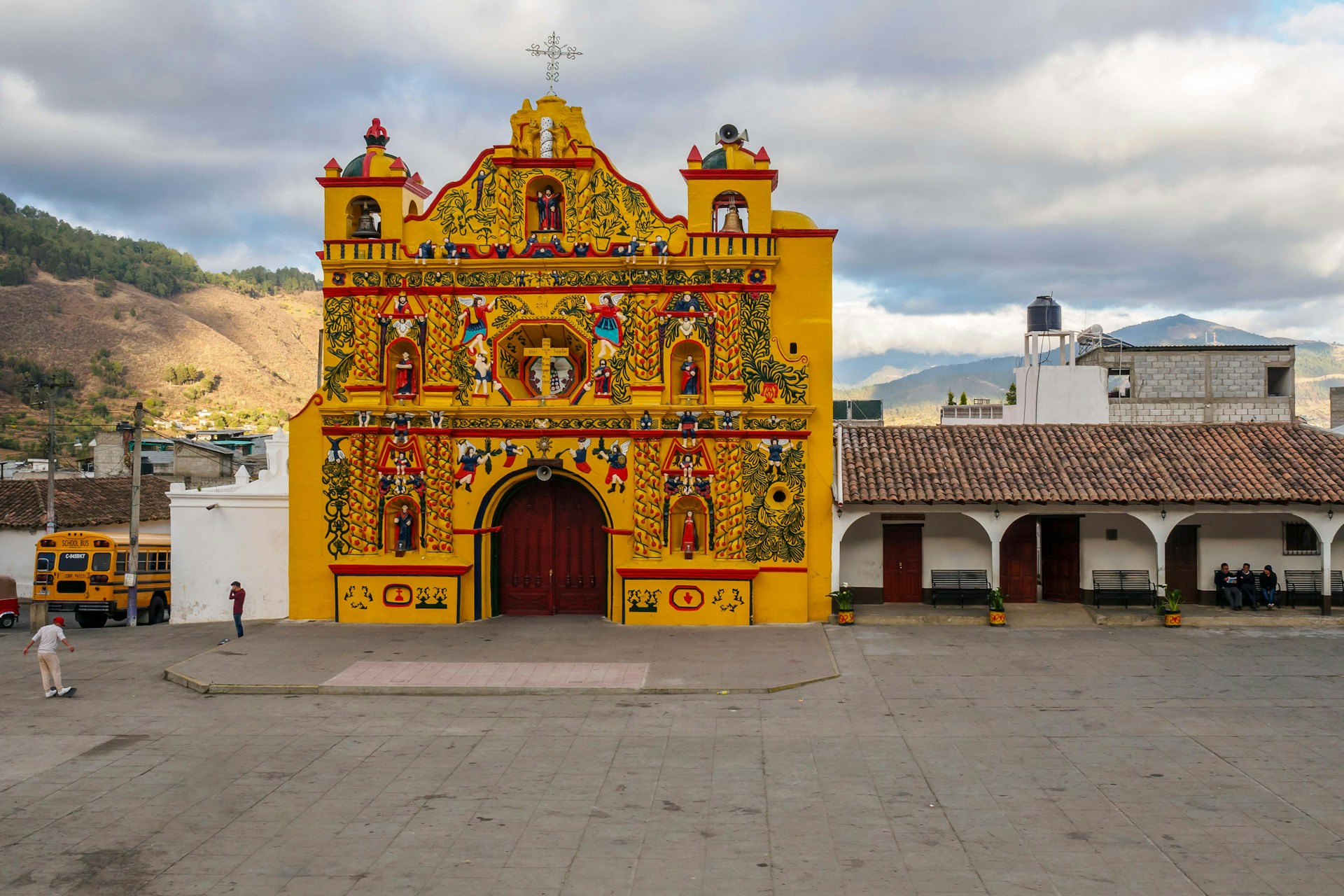
One of the defining features of Guatemala is its religious syncretism, and the church of San Andrés Xecul is one of the places where this can be seen. You’ll be struck at first glance by its striking colours, which break with the austerity of traditional colonial architecture, as well as by its 200 handcrafted figures. In short, the church of San Andrés Xecul is not just a work of art, but a unique opportunity to discover the distinctive identity of the Guatemalan highlands.
In this article, we reveal all the secrets of this church and how to visit it so that you don’t miss a thing about this symbol of the faith of the people of Guatemala and of cultural resistance.
Where is the church of San Andrés Xecul?
The Church of San Andrés Xecul is situated in the municipality of the same name, within the department of Totonicapán. The municipality borders directly on the famous city of Quetzaltenango, which is why many of the tours and excursions to visit the church set off from there.
How to get there from Quetzaltenango
To get to the church of San Andrés Xecul from Quetzaltenango, we suggest you use private coach services or join one of the organised tours. It really is a short journey, taking about 15 or 20 minutes at most.

How to get there from Guatemala City
From Guatemala City, the journey is longer and can take around three and a half hours. In this case, I recommend taking the first-class buses, which have private terminals and assigned seats. The most popular and reliable companies operating on this route are Transportes Alamo and Transportes Marquensita. To book your ticket, simply visit their offices in the capital.
However, they won’t drop you off in San Andrés Xecul itself. You’ll need to get off at a junction before the bus reaches its final destination and then take one of the tuk-tuks you’ll see as soon as you get off. This final leg of the journey takes only about 10 minutes.
Location within Totonicapán
Within the department of Totonicapán, the church of San Andrés Xecul is situated in the southern part of the department, on the slopes of Mount Pacaja.
History of the Church of San Andrés Xecul
The colonial origins of the church
The origins of the church of San Andrés Xecul date back to the era of Spanish colonisation. The friars of the Order of St Francis grouped the indigenous peoples of the area into settlements (San Andrés Xecul being one of them) with the aim, amongst other things, of evangelising them. To this end, construction of the church of San Andrés Xecul began in the 16th century; it looked very different from the one we know today.
The influence of K’iche’ Maya culture
Despite the settlers’ efforts, the indigenous K’iche’ people of San Andrés Xecul put up a cultural, albeit silent, resistance. This resistance was evident in the fact that there was no permanent Catholic priest in the municipality; the indigenous people seized the opportunity, and local artisans and religious brotherhoods took charge of the maintenance and finishing touches to the church under the pretext of depicting the Catholic calendar of saints on the façade.
Although they did this, they also carved figures and landscapes from their own mythology (such as jaguars and sacred plants), thereby creating a religious syncretism within the church that is unique in the country and throughout Latin America. Furthermore, the overall design of the façade and the arrangement of the figures mimic the geometry and embroidery of the region’s traditional dress.
The evolution of its iconic façade
In its early days, the church of San Andrés Xecul had a much more austere appearance and its façade was white, as tradition dictated; even the sculpted figures were uncoloured. The major transformation took place in the second half of the 20th century, when the community decided to add colour, making use of the durable paints available at the time. It was then that the church was painted yellow for the first time and the figures were painted one by one.
Why is the church of San Andrés Xecul so famous?
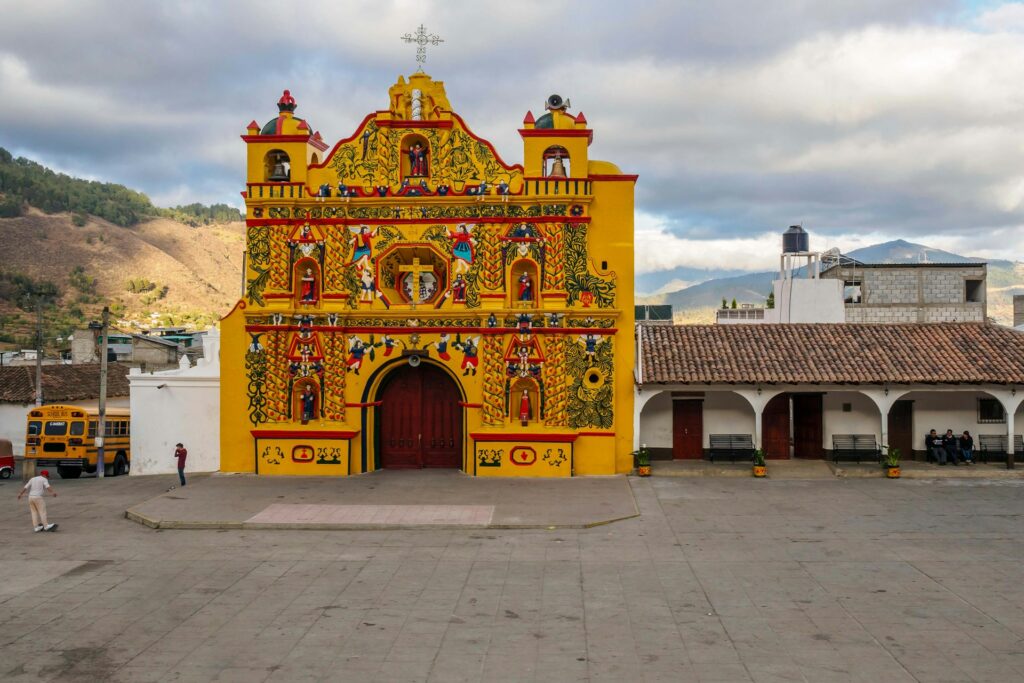
The church of San Andrés Xecul has become a tourist icon in Guatemala. Its fame stems from the striking visual impact of its architecture and its cultural significance.
One of the most colourful churches in Guatemala
It is its spectacular colour palette that has made the church of San Andrés Xecul a global phenomenon, featuring in the international media and attracting attention from travellers from all over the world. Indeed, there is no other church in the country with such vibrant colours.
The symbolism of its figures and decorations
The colour of the church of San Andrés Xecul is just as important to its popularity as its figures. There are 200 in total, and every single one is hand-painted in vibrant colours that bring even more life and joy to the façade. But don’t think they’ve been placed at random; each one serves a narrative purpose, weaving together pre-Hispanic heritage with Franciscan iconography.
The façade of the Church of San Andrés Xecul: The meaning of its symbols
The angels and saints depicted
The arrangement of the human and celestial figures on the façade follows the guidelines laid down by the Franciscan friars. In this regard, the central section features the figure of Saint Andrew the Apostle, patron saint of the town. Alongside him are depictions of Saint Christopher, Saint Anthony of Padua and Saint Clare. There are also dozens of archangels, angels and cherubs.
The use of yellow on the façade
The yellow colour of the façade’s base evokes the yellow of maize, which in the Mayan worldview symbolises life, sustenance and the sacred food. This yellow is complemented by other colours that also hold deep significance for the indigenous people. Red, for example, evokes the sunrise and sacrifice, as well as the blood shed by the ancestors during the conquest.
Green and blue, for their part, represent the fertility of the land and the connection with the sky.
Elements of Mayan origin
It's only when we look closely at the façade that we can make out the elements of Mayan origin, particularly those referring to flora and fauna. At the very top are two jaguars, symbolising the rulers and the power of the kings. Meanwhile, the fruits, vegetables and plants that adorn the entire façade pay tribute to the close relationship that humans had with nature in pre-Columbian times.
What to see inside the church of San Andrés Xecul
We’ve talked a lot about the façade, but what about the interior? It has plenty to offer too. As soon as you step through the doorway, you’ll find yourself in a world entirely different from the one outside. Here, the riot of colour gives way to a more austere and understated atmosphere, which is indeed more reminiscent of Spain’s more modest Catholic churches.
In fact, many visitors feel that, as soon as they step inside, it's as if they were in a completely different temple.
The main altar
This is the most important feature of the church’s interior. It's in the Baroque style and is made of carved wood. Like the rest of the interior, it has a very austere air, and in the centre stands a statue of Saint Andrew the Apostle, surrounded by other Franciscan saints. The altar is also usually decorated with flowers, fruit and fabrics brought by members of the local religious brotherhoods.
The most important religious images
On the side walls inside the church, there are smaller altars and shrines housing some of the community’s most revered images, such as Jesus of Nazareth and Our Lady of the Rosary, amongst others.
- We invite you to read our article about the Santa Catalina Arch.
Local ceremonies and traditions at the Church of San Andrés Xecul
The church of San Andrés Xecul is not a static museum of the colonial past, but rather the epicentre of the community’s cultural and festive life, hosting unique events and traditions. One of the most important is the Patron Saint’s Festival in honour of Saint Andrew the Apostle, held at the end of the year. During this time, fireworks are set off, concerts are held, parades take place and processions are organised.
The most distinctive feature of this festival is the Dance of the Monkeys and Deer, a folk dance with strong links to the Mayan heritage. During the dance, participants slide down a 20-metre pole in front of the church and perform acrobatic feats whilst wearing masks and colourful costumes.
Things to do near the church of San Andrés Xecul
Visit the centre of San Andrés Xecul
San Andrés Xecul has plenty to offer beyond its church, perfectly complementing a visit to it. We therefore recommend you visit the Calvario chapel, situated just a few metres from the church. Its façade is also yellow and painted in exactly the same style. It's just like the church of San Andrés Xecul, but in miniature. Its great significance lies in the fact that, in its rear courtyard, there are important Mayan ceremonial altars that are still in use today.
Another must-see in the town is a visit to Maximón, another example of the great religious syncretism found in the area. Just a few metres from the main square, there is an altar dedicated to this saint, who is deeply revered in the highlands. It's fascinating to see how he is depicted and the offerings that the devotees bring to him.
Finally, you can’t leave the town without exploring the local markets and the traditional textile industry there.
Discover other attractions in Totonicapán
In the department of Totonicapán, home to the church of San Andrés Xecul, there are also several places well worth visiting. One of the highlights is the Chajil Siwan Ecological Park, a dense forest ideal for hiking, birdwatching and zip-lining.
Combine this visit with a trip to Quetzaltenango
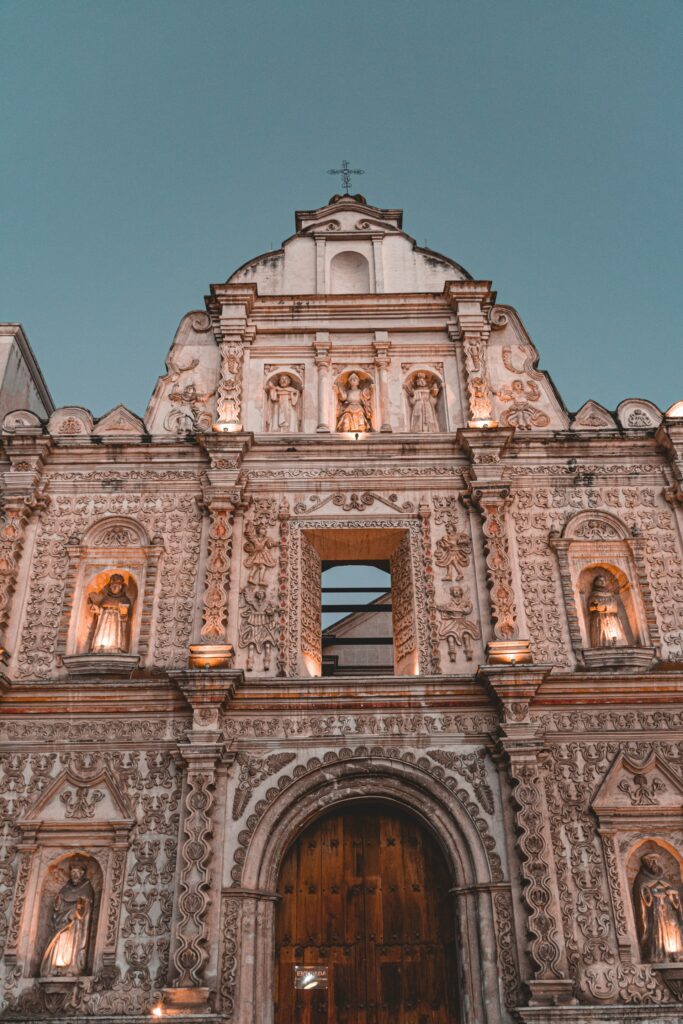
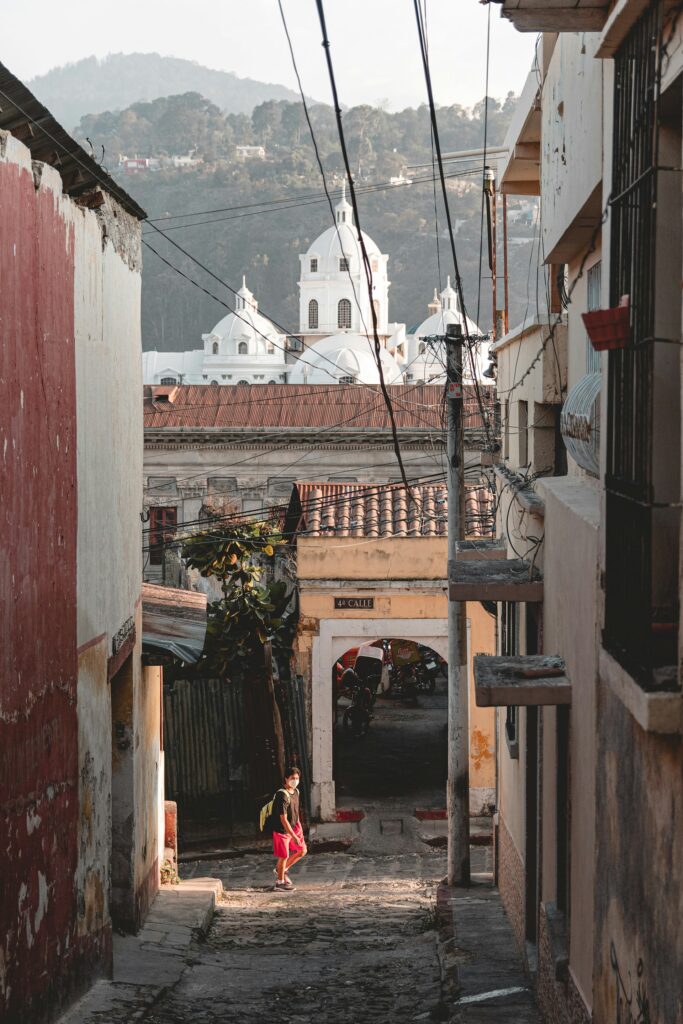
Given its proximity, a visit to the city of Quetzaltenango can be perfectly combined with a tour of San Andrés Xecul. I encourage you to explore its historic centre, the Ermita de la Concepción church in the nearby town of Salcajá (considered to be the oldest church in Central America), and the famous hot springs in the equally nearby town of Zunil.
Tips for visiting the church of San Andrés Xecul
Best time to visit
The morning, between 8 am and 11 am, is the best time to visit the church of San Andrés Xecul. At this time of day, the sun shines directly onto the main façade, making the yellow colour look radiant and ensuring your photographs turn out perfectly. Furthermore, the afternoons are when there is usually the most fog and rain, particularly during the wet season. As for the days of the week, you’ll find a much quieter atmosphere from Monday to Thursday.
Rules of conduct during your visit
- It's forbidden to take photographs with a flash inside the church, so as not to damage the interior and not to disturb the worshippers.
- Keep your mobile phone on silent and speak quietly.
- Although there is no explicit dress code, it's recommended that you dress modestly.
- If you visit the Calvario chapel and are lucky enough to witness a Mayan ceremony, do not take any photographs unless the priest gives you permission.

Is the church of San Andrés Xecul worth a visit?
If you’re interested in Guatemala’s culture and its fascinating religious mix, you certainly mustn’t miss the church of San Andrés Xecul. It’s a visual spectacle unlike anywhere else in the world and, what’s more, it’s close to other places of interest, so you won’t have to go out of your way to visit it.
Frequently asked questions about the church of San Andrés Xecul
What are the opening hours of the church of San Andrés Xecul?
Except on Sundays (when the interior is closed), it's open every day from 10.00 to 17.00.
How much does it cost to go into the church?
Admission is completely free. However, you are welcome to make a voluntary donation, which will go towards the upkeep of the facilities.
How long does it take to visit the church?
An hour is more than enough to take your time and enjoy both the interior and exterior of the church. You’ll even have time to visit the Calvario chapel.