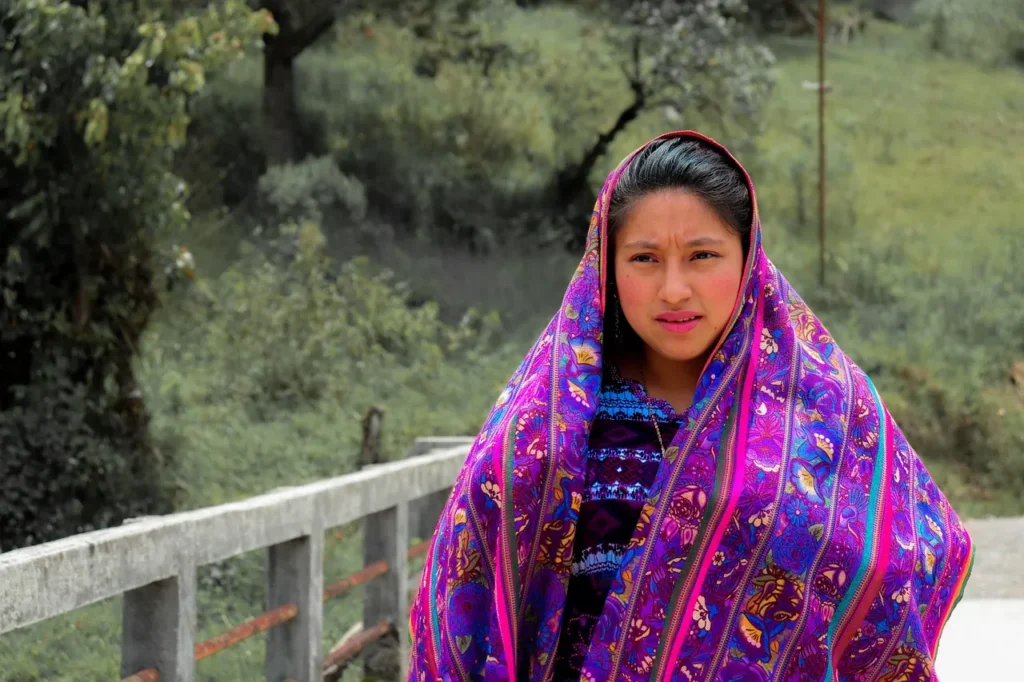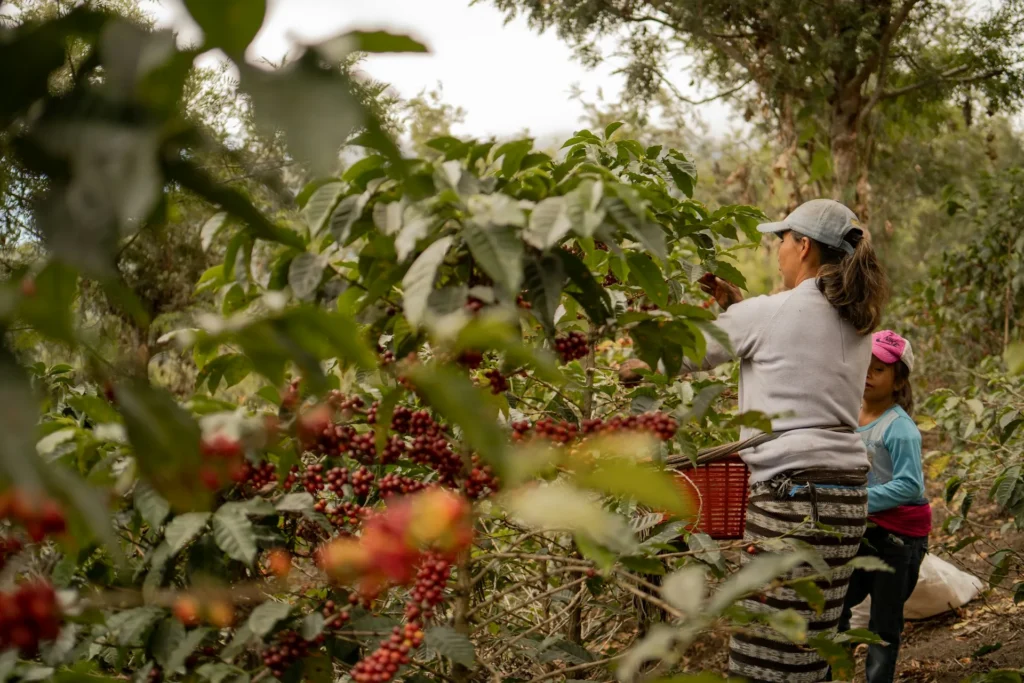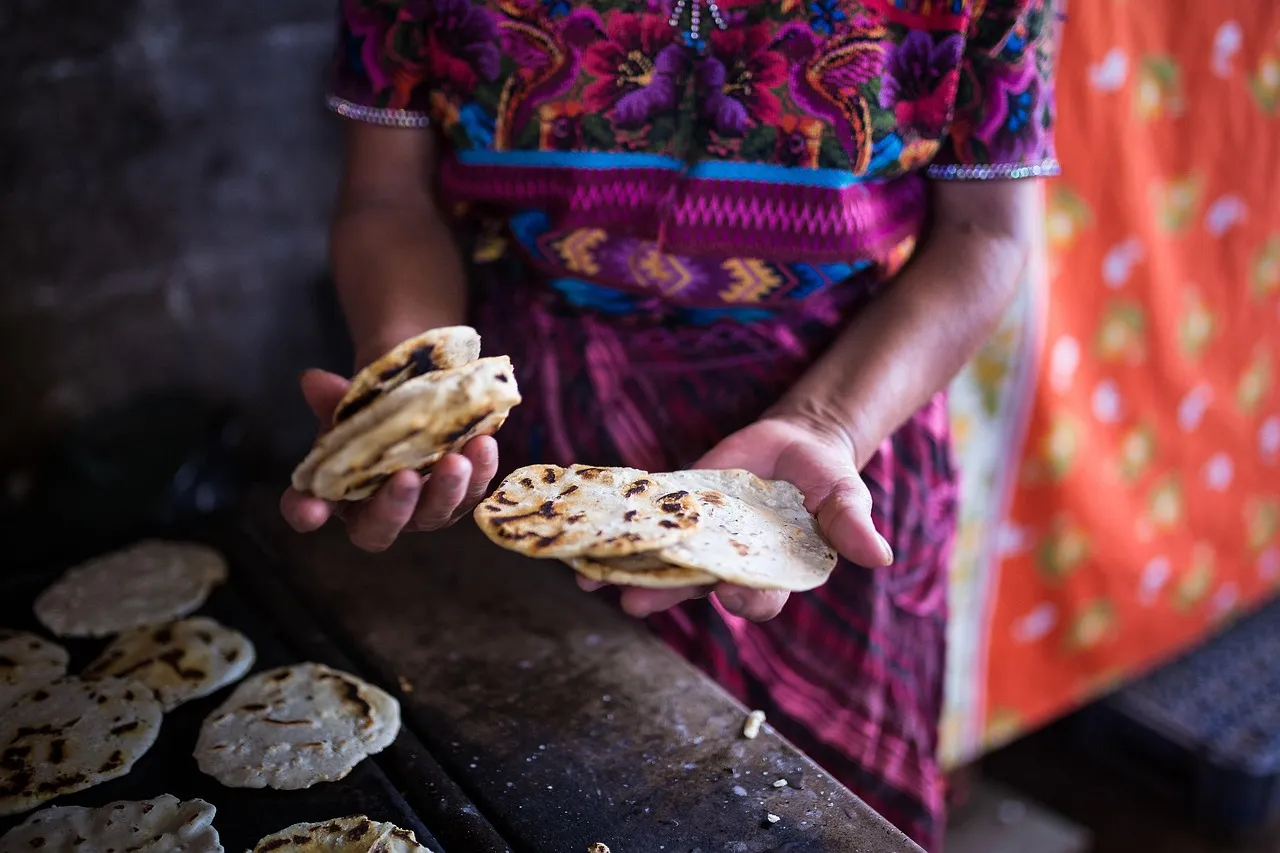
Guatemalan cuisine is one of the finest examples of the country’s cultural diversity. Ancient Mayan techniques have been combined with traditional recipes from colonial Spain, creating dishes with a character found nowhere else in the world, bursting with colour and intense flavours.
Many traditional Guatemalan dishes have been designated as part of the country’s cultural heritage, but they are not as well known as other Latin American recipes. In this article, we aim to shed light on Guatemala’s culinary world so that, during your trip, you can discover the country’s most authentic flavours.
- We invite you to read our article about Guatemalan coffee.
An Introduction to Guatemalan Cuisine
Mayan, Spanish and mestizo influences in Guatemala’s traditional dishes
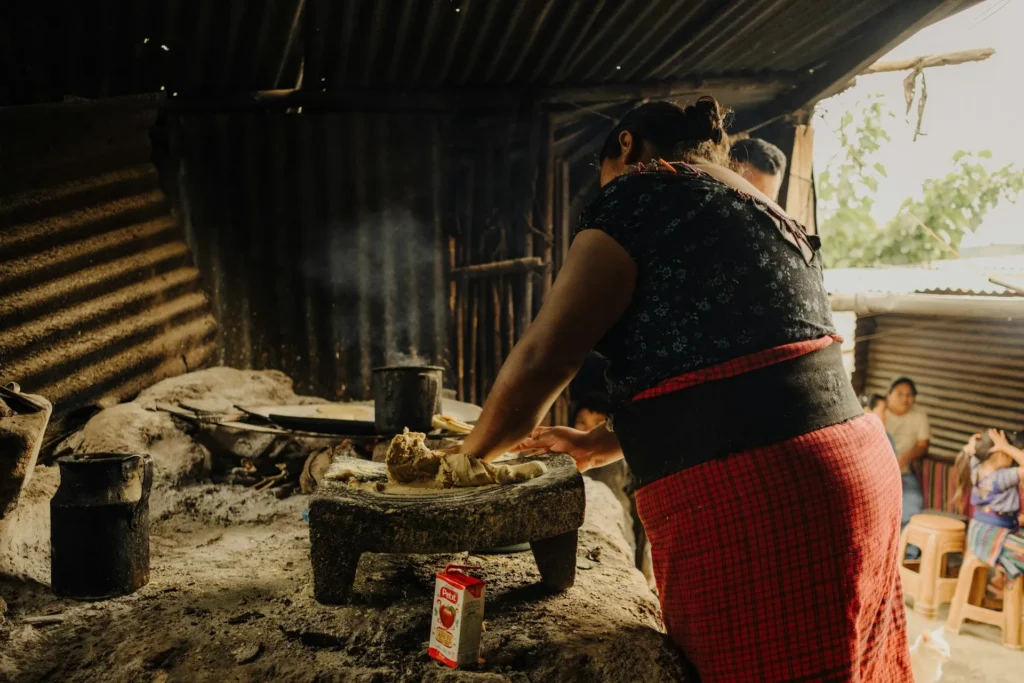
Guatemalan cuisine today is the result of the fusion of two worlds: the Mayan heritage and the Spanish influence. Every bite tells the story of centuries of cultural evolution. And from this fusion emerged what is known as Chapina cuisine.

The Maya, for one, formed what is now the backbone of Guatemalan cuisine. It is thanks to them that ingredients such as maize, beans, squash, cocoa and chillies feature so prominently in recipes.
With the arrival of the Spanish in the 16th century, the region’s cuisine began to change with the introduction of new flavours and techniques brought over from Europe. Pork, chicken, beef and lard began to replace the small game traditionally found in local dishes. Similarly, spices from the Old World such as parsley, oregano, cinnamon and coriander were also introduced. As for techniques, frying and baking using wheat and sugar were incorporated.
- We invite you to read our article about traditional sweets from Antigua Guatemala.
The most commonly used local ingredients in Guatemalan cuisine
Once again, we come back to maize; after all, it is the very heart of Guatemalan cuisine. It forms the basis of many side dishes and staples such as tortillas and tamales; it is even the main ingredient in some traditional drinks.
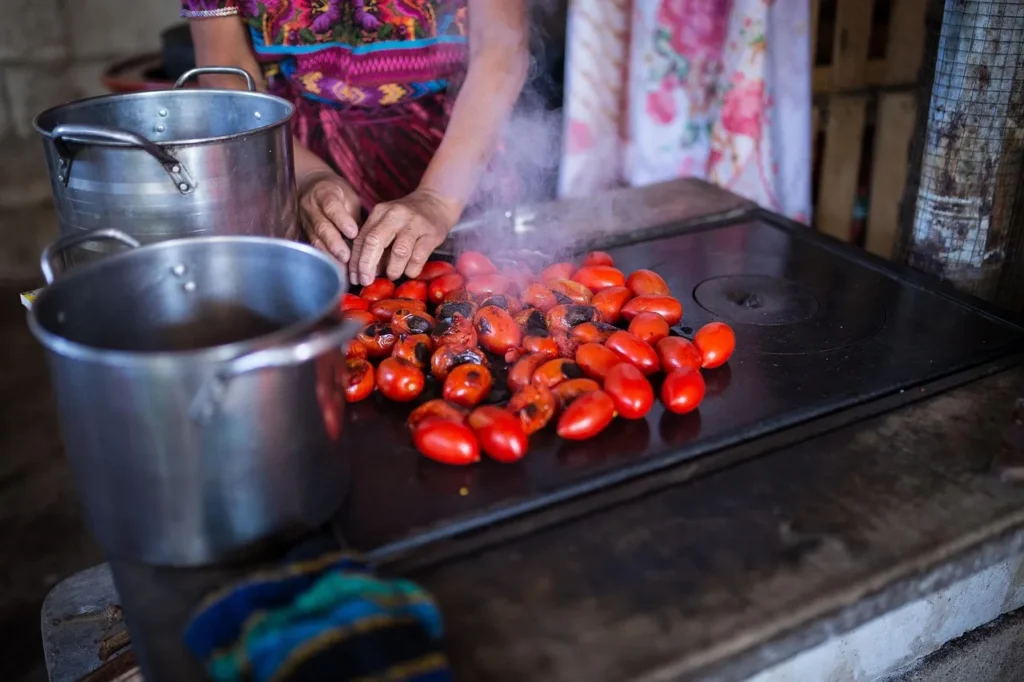
Many people are unaware that the tomato is also a staple of Guatemalan cuisine, serving as the key ingredient in many of the country’s sauces. Seeds such as pumpkin seeds and sesame seeds are ground and widely used to thicken and flavour traditional Guatemalan dishes. And chillies are also a staple, but in Guatemala they do not use excessively hot varieties; instead, they prefer the more aromatic ones that add flavour and aroma.
We mustn’t forget black beans, a staple on any Guatemalan table and cooked in a variety of ways. Finally, plantains are used extensively, in both sweet and savoury dishes.
- We invite you to read our article about tapado, Livingston’s most iconic dish.
Traditional dishes from Guatemala
In this section, we’ll tell you a bit about the country’s most iconic and representative dishes – in other words, the ones you simply must try at least once during your trip to Guatemala.
Pepian
It is the national dish. It is a type of stew of pre-Hispanic origin, specifically Maya-Kaqchikel, and is characterised by its dark colour and smoky aroma. It contains many spices which are cooked together with beef, pork or chicken and potatoes. It is said that this dish was served at Mayan religious ceremonies.
The dish originated in what is now the department of Chimaltenango, but pepián is prepared throughout the country, with each region having its own variations.
Kak’ik
This is a soup of Q’eqchi’ origin, originating in the Alta Verapaz region. Kak’ik soup is highly distinctive, with a deep red colour derived from the chillies, tomatoes and herbs used in its preparation. It is traditionally served with a whole turkey, and the whole dish is accompanied by rice and small tamales.
Jocon
The appearance of this dish may be a little off-putting at first. The broth in this stew has a very distinctive green hue that often surprises visitors. This is because the soup is made using coriander, spring onion stalks and green chillies, amongst other ingredients. The broth is usually served with chicken or hen, giving the whole dish a fresh and slightly tangy flavour. It is also a very popular dish amongst the locals.
Cold cuts (a traditional dish for Day of the Dead)
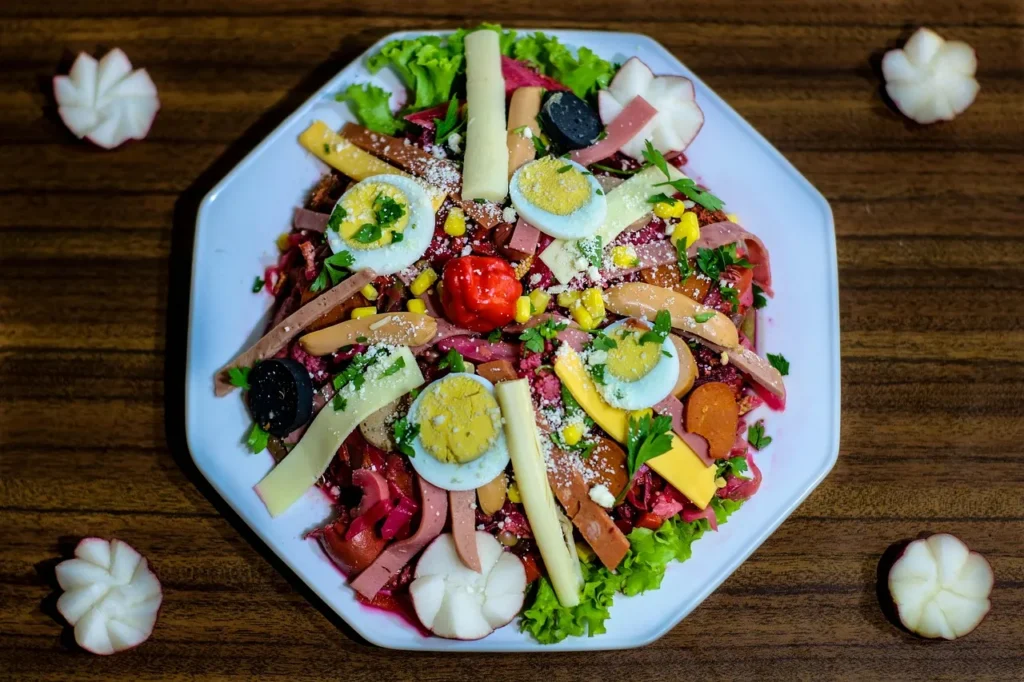
It is Guatemala’s most ‘unusual’ dish. It is only made on 1 November – Day of the Dead – and consists of a cold salad made with over fifty different ingredients: vegetables, cold meats, meat, cheese, capers and olives.
In theory, it symbolises the union between the living and the dead, and although it can be served with various accompaniments, there is no single recipe for this dish. It has colonial origins; specifically, it is thought to be based on the Catalan salad, which looks similar.
- We invite you to read our article about the traditional dress of Cobán.
Different types of tamales
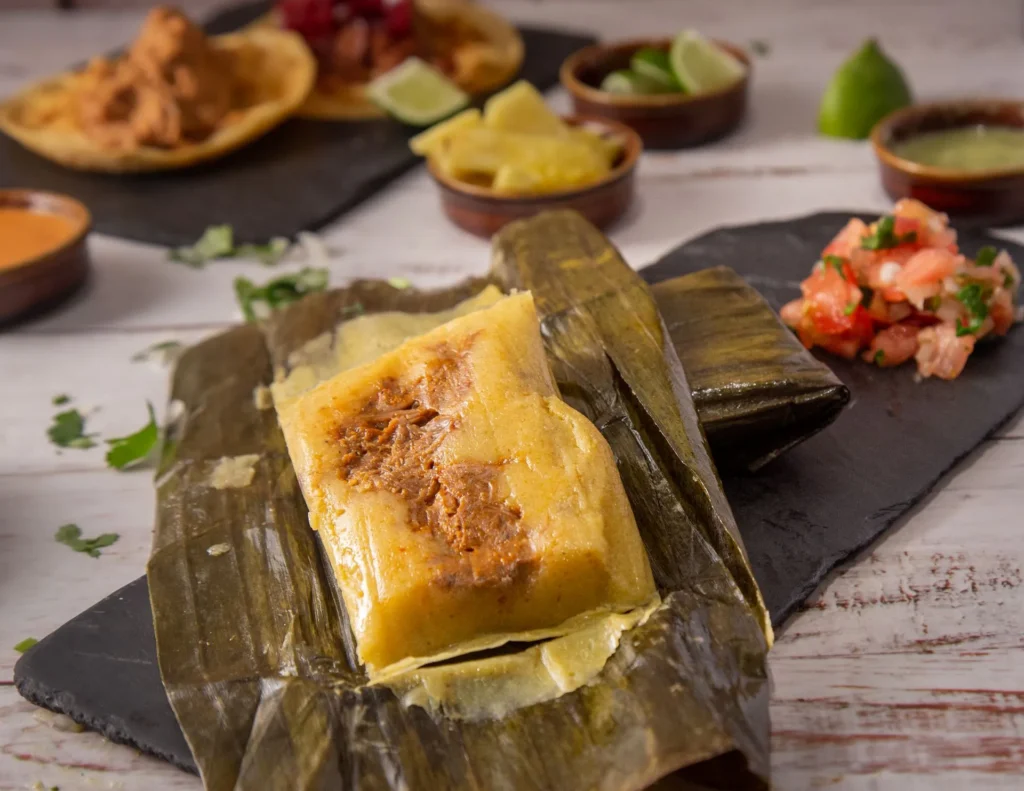
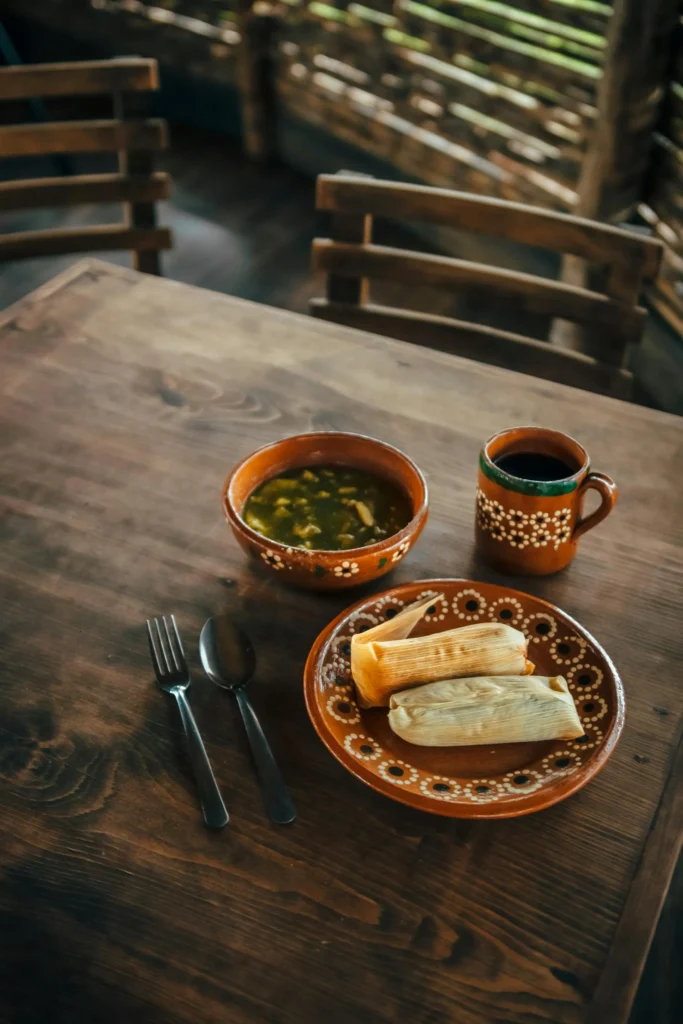
The tamale is a dish of Mesoamerican origin dating back to pre-Columbian times. It consists of seasoned cornmeal dough wrapped in banana leaves, which is then steamed or baked. In Guatemala, and in other parts of Central and South America, tamales are a staple at parties and family gatherings.
The way tamales are prepared varies from region to region. For example, the tamal colorado is made with soft corn dough and filled with meat, whereas the so-called 'cuchitos' are smaller and firmer.
Bean soup
It’s a real classic in any Guatemalan home. It’s made by blending cooked black beans with their cooking liquid, garlic and onion. It’s then served hot, accompanied by fresh cream, dried cheese, white rice and freshly baked tortillas.
Paches and fillings
Paches are a type of tamale, but the dough is made not from maize but from mashed potato. They originate from Quetzaltenango and have a softer, juicier texture. It is very common to eat them on Thursdays and, in this case, the leaves used are wider and more elongated.
As for the 'rellenitos', these are street sweets that look like croquettes, made from a dough of cooked and mashed ripe plantains. They are filled with black beans mixed with sugar and cinnamon. Once the balls have been shaped, they are fried and, when ready, sprinkled with sugar.
- We invite you to read our article about traditional food from Cobán.
Culinary experiences for visitors
On your trip to Guatemala, we suggest you look beyond the usual restaurants and experience the local cuisine from a variety of angles. Here are a few ideas.
Local fairs and markets where you can sample traditional Guatemalan dishes
In places such as the Central Market in Guatemala City and the Chichicastenango Market, you can sample hot dishes prepared in the traditional style. In addition to this, in every town across the country, the locals celebrate their patron saint once a year. During these festivities, the streets are usually filled with street stalls selling a wide variety of traditional products, making them a great way to experience the local cuisine.
Traditional cooking workshops
If you’re interested in taking part in cookery workshops during your trip to Guatemala, the city of Antigua is the best place for that. It’s the hub for this sort of activity for travellers. Many local schools take you first to the market to buy fresh ingredients and then teach you how to cook them using Mayan or pre-Hispanic techniques.
Meanwhile, on Lake Atitlán, in villages such as San Juan La Laguna, some local women’s cooperatives offer experiences where they open the doors of their homes to travellers to show them how traditional Guatemalan dishes are prepared using age-old techniques. Of course, you’ll then get to taste everything they’ve prepared right before your eyes.
Practical tips for trying Guatemala’s traditional dishes
One of the most important tips we can give you when trying Guatemalan cuisine is to always carry cash. Many stalls don’t accept credit cards, and it’s also best to have small notes, as some stalls don’t always have change.
Food safety and hygiene guidelines
- Always drink bottled water: bear in mind that tap water in Guatemala is not safe to drink, so only use it for showering. Buy bottled water during your trip for drinking and for brushing your teeth.
- Be careful with fresh produce: there is a huge variety of fruit and vegetables in Guatemala (mangoes, pineapples, papayas…), but peel them yourself to make sure tap water hasn’t been used. With this in mind, we recommend avoiding raw salads from street stalls.
- Take hand sanitiser with you: local markets don’t always have toilets available for washing your hands, so it’s best to always carry hand sanitiser or wet wipes with you.