Río Azul isn’t just any old trip through Petén. Rather, it's one of those places you arrive at after having lived through a whole experience, with the feeling of being in a remote spot. All this is undoubtedly part of its charm and explains why it's now one of the great, little-known treasures of northern Guatemala.
Tourists who come here aren’t just looking for Mayan ruins. They’re also drawn by the captivating natural landscape within the Mirador-Río Azul National Park. This is, moreover, one of the best-preserved areas of the Mayan Jungle. Stay with us so you can discover all the secrets of this magical spot.
What is Río Azul and why is it considered one of Petén’s hidden gems?
Río Azul is a Mayan archaeological site located in northern Petén. It's famous for its painted burial complexes, its carved monuments and its strategic role in the political history of the Early Classic period.
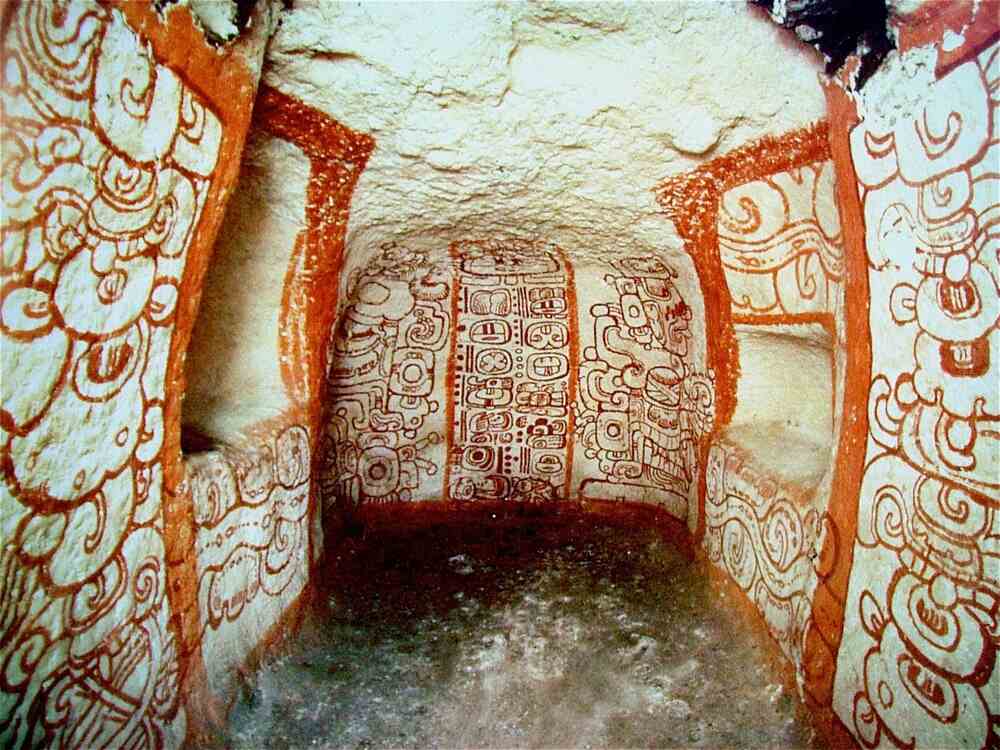
Its fame, as we have said, is due above all to the tombs decorated with inscriptions and murals. These burial sites are unique within the Mayan world. Not surprisingly, they have helped us to better understand how power, death and the sacred landscape were represented during this period. Río Azul is, therefore, a destination rich in historical and symbolic information about this civilisation.

But why does it remain a hidden gem? Well, basically because access is remote and restricted. So much so that most travellers stick to the easier routes. Unlike the El Mirador area, very few tourists visit Río Azul.
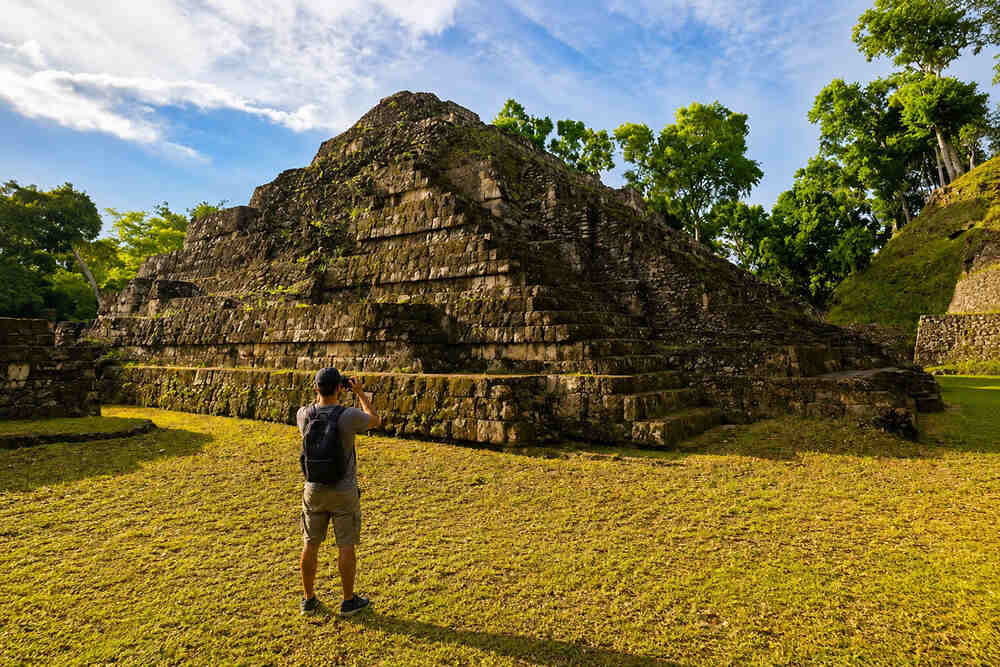
Where is Río Azul?
Río Azul is located within the Mirador-Río Azul National Park, in the far north of the department of Petén. The park forms part of the heart of the Mayan Forest and connects protected areas in Guatemala, Mexico and Belize. In reality, you are not in a completely isolated place, but rather in a key part of a landscape of enormous ecological value.
The usual point of reference for Río Azul is Flores. The park is located 200 kilometres from this city. It's important to bear in mind that access is difficult, as it rains heavily in winter and conditions are very dry in summer.
- We invite you to read our article about the ruins of Nakum.
The history of Río Azul and its connection with the ancient city of El Mirador
Río Azul’s defining moment came during the Early Classic period. The site was conquered by Tikal around 380 AD and later developed into a frontier and trading town, with a notable influence from Teotihuacán.
It's this political significance that helps us understand why such richly decorated tombs were found at Río Azul. Some of these funerary complexes feature hieroglyphic and pictorial texts linking the tombs to the sacred mountains, the underworld and the axis mundi – a combination of great value for reconstructing Mayan ideas about royalty and the journey to the afterlife.
Río Azul and El Mirador now form part of the same large protected landscape and are officially designated as part of the Mirador–Río Azul National Park. Furthermore, these sites are connected by wide Mayan causeways, so although each site has its own historical background, they form a shared archaeological territory.
El Mirador is therefore the great monumental icon of the Late Preclassic period in this region, whilst Río Azul stands out for its later development. Together, they offer a more complete picture of northern Petén and form a route that is not confined to a single city, but spans centuries of Mayan history within the same jungle.
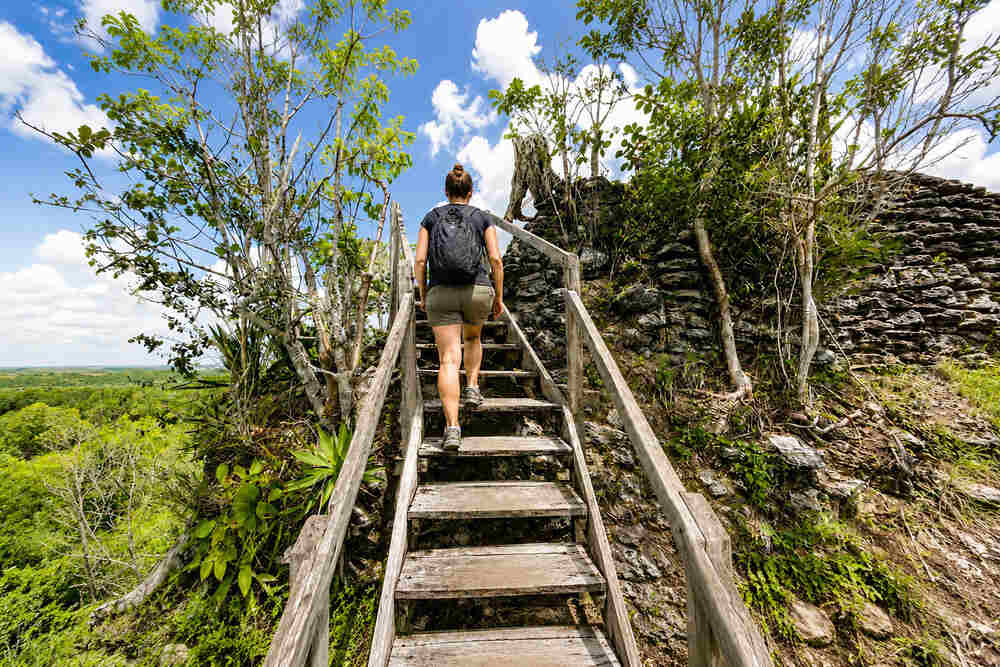
What to see in Río Azul during a visit to the archaeological site
A visit to Río Azul isn’t about going from one temple to another with a map in hand. The best thing to do here is to take your time and soak up the atmosphere. The main attractions are the burial complexes, Temple One and the carved monuments.
Squares, pyramids and main structures in Río Azul
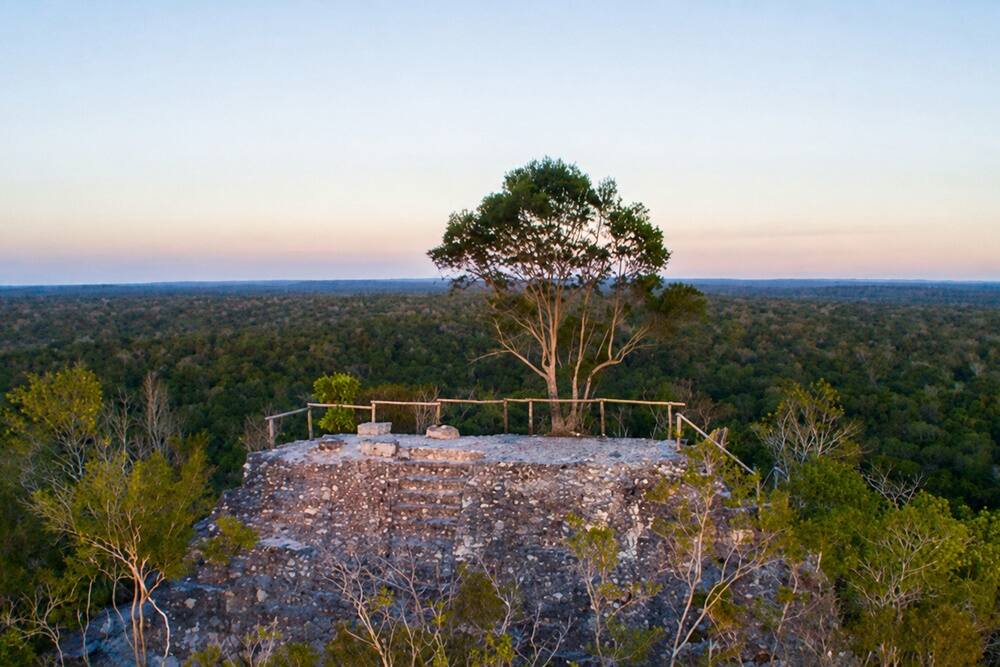
The main monumental complex features plazas and structures that serve as a reminder that Río Azul was once a major urban centre. It's a site characterised by formal architecture, monumental complexes and a distinctly urban character dating from the Early Classic period.
During the tour, be sure to take a close look at the temples and platforms in the main area. Everything you’ll see here is part of an ancient frontier town, which played a vital role in trade and territorial control.
Tombs, stelae and other notable finds at Río Azul
Río Azul is famous for its painted tombs, several of which feature elaborate chambers and wall decorations. These burial sites are particularly striking for the calligraphy adorning their walls and the way in which they express religious ideas relating to the afterlife of kings or high-ranking figures.
Added to this are the carved monuments and other finds of great interest. The carved monuments are, in fact, among the site’s main attractions, not forgetting, of course, the inscriptions and other artefacts.
- This page about Lake Petén Itzá may interest you.
Río Azul and El Mirador: How to combine both places in a single trip
A much more comprehensive expedition through northern Petén is the one that combines Río Azul with El Mirador. For travellers, there are three access routes, one of which links Carmelita, El Mirador and the Mirador-Río Azul National Park.
In this case, it's best not to think of it as an extended route. In fact, the estimated time to reach the park is between one and two days, depending on the route and the package booked. It's therefore more common to organise a multi-day trek, with logistical support, guides and thorough advance planning.
Recommended itineraries: El Mirador + Río Azul (multi-day trip)
If you want to combine both sites, we recommend planning your trip in separate stages:
- Option 1 focuses on El Mirador. You can enter via Carmelita, spend several days hiking and visit the major sites in the western sector (you can then extend the route if your tour operator offers an extension to Río Azul).
- Option 2 focuses on the eastern sector. Access is via Uaxactún or the Melchor de Mencos route, the best option if your main priority is Río Azul and its surroundings.
- Option 3: Full expedition. This is only recommended if you have plenty of time, a sufficient budget and a very tight schedule, as there are several remote sections within the park itself.
Common routes to Río Azul from the Yaxhá and El Mirador area
In this section, we will distinguish between the wider tourist route and the official access route. The official access routes to Mirador-Río Azul National Park start from the Carmelita, Uaxactún and Melchor de Mencos corridors. Yaxhá is not listed as an official entrance to the park.
This does not mean that Yaxhá should be left out of your trip through Petén. Rather, it means that if you are coming from that area, you will need to coordinate logistics with operators and access points in eastern Petén, or return to a more common meeting point. However, from El Mirador, the connection is part of one of the park’s official routes.
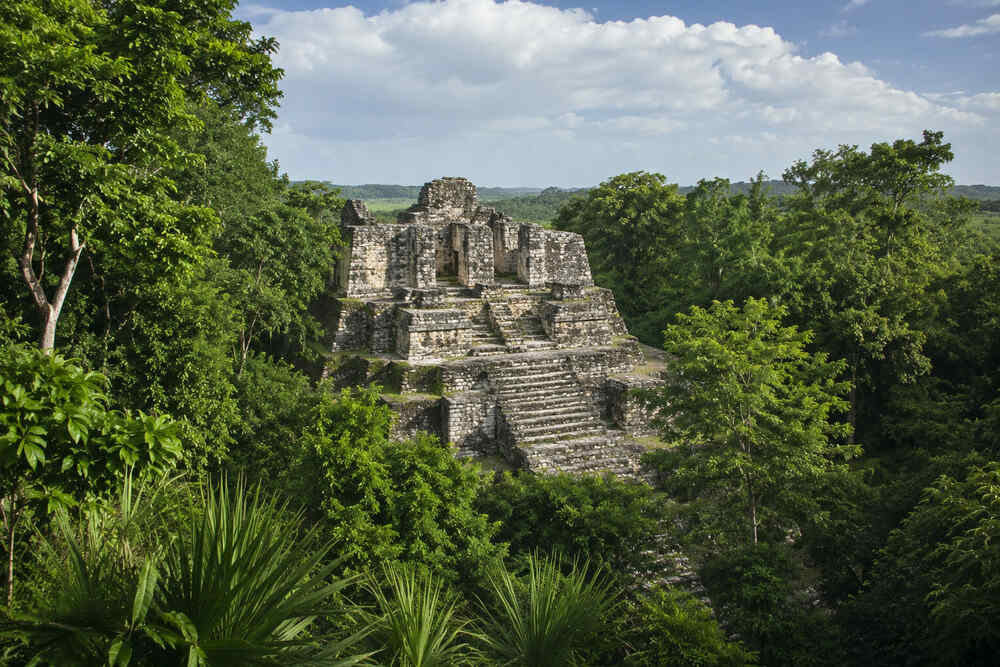
Nature in Río Azul: Jungle, wildlife and scenery within the Mirador-Río Azul Park
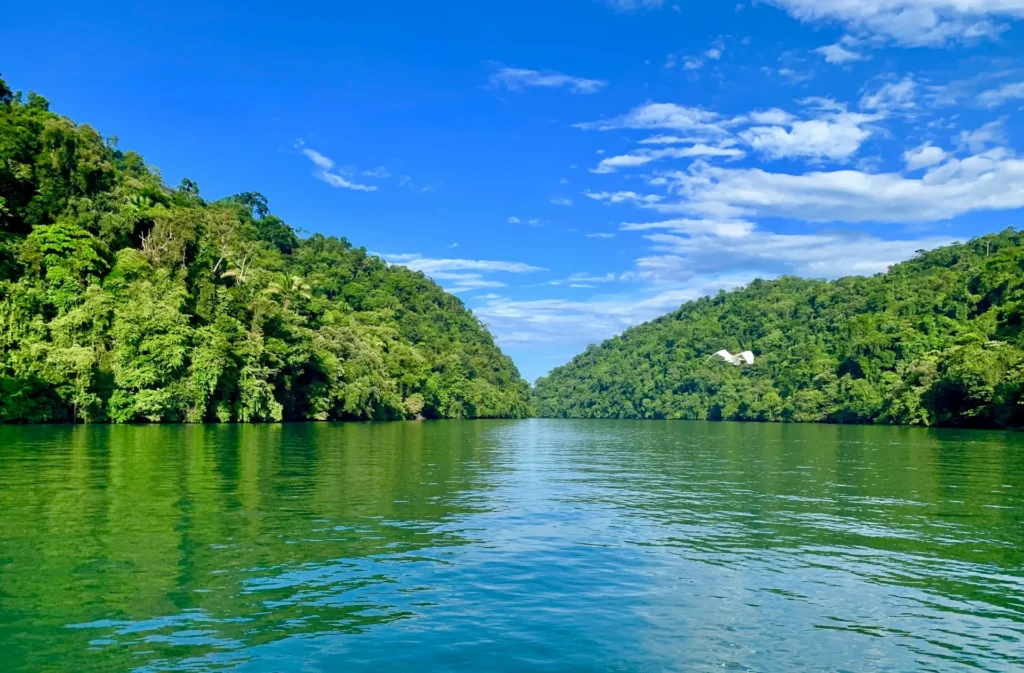
Río Azul would be inconceivable without the jungle that surrounds it. To put it simply, the park is a vital hub of the Mayan Forest and an important refuge for iconic species such as the jaguar and the white-lipped peccary. Deer, pumas, tapirs and agoutis also live here.
The landscape is also an ecosystem of gypsum outcrops and low-lying vegetation known as ‘El Desierto’, a unique environment in Guatemala. This blend of ruins, rainforest and unique ecological areas makes for a much richer experience if you visit Río Azul as part of a wider expedition.
- We invite you to read our article about La Danta.
Practical tips for visiting Río Azul as part of an expedition to El Mirador
The first piece of advice everyone gives here is simple: don’t wing it. The park is remote, so you should contact the park authorities in advance to find out the current situation in the area. Furthermore, access is only permitted when accompanied by tourism guides authorised by CONAP (National Council for Protected Areas).
Level of physical exertion, weather and what to pack
The physical demands will depend on the exact route and the type of tour you have booked. However, in all cases, you should bear in mind that you will be entering a remote jungle area, with heat, humidity, insects and long walks. Official recommendations state that you should wear comfortable, quick-drying clothing, biodegradable insect repellent and sturdy boots with good support.
You should also bring sun cream, water, a waterproof bag for your equipment, a head torch and rainwear if you’re travelling during the wet season. All these recommendations are due to the park’s remote and humid nature.
The climate in Río Azul, as in the rest of northern Petén, is hot and humid for much of the year. In winter, access is more difficult due to standing water, whilst in summer conditions are drier. Therefore, the most comfortable time to travel is during the dry season (between November and April).
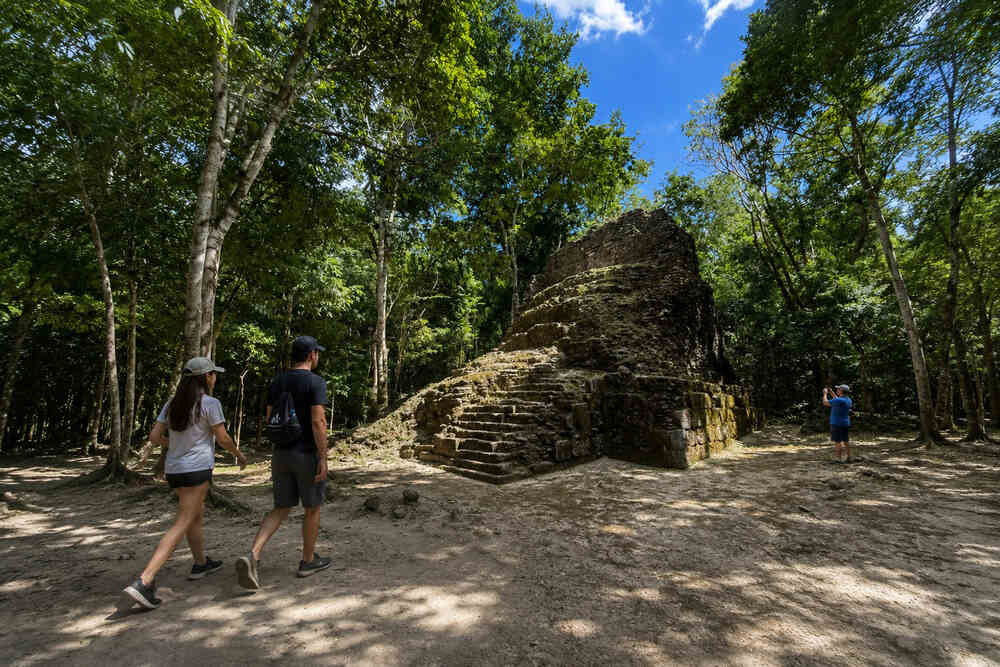
Guided tours, logistics and safety in the Río Azul area
The guide is not an optional extra here, but an integral part of the access system. The park works with authorised community committees to ensure the safety and conservation of the area. Furthermore, please bear in mind that you must be accompanied when entering this remote area, particularly by someone who is familiar with the routes and day-to-day operations.
In short, Río Azul is a destination that is by no means comfortable in the traditional sense, but it's certainly unforgettable. It’s best to approach it as an archaeological expedition into the great jungle of Petén rather than just another day trip. That way, you’ll enjoy it much more and understand why it remains one of the most fascinating corners of the Mayan world.
- We invite you to read our article about El Tintal.
Frequently Asked Questions about Río Azul and visiting it alongside El Mirador
Can you visit Río Azul on your own?
No, according to official information from the park, access is only permitted when accompanied by tourism groups organised by CONAP. Furthermore, as it's a remote location, a visit requires prior booking, logistical coordination and confirmation of the current condition of the route.
How many days do I need to visit both El Mirador and Río Azul?
It makes the most sense to set aside several days. The journey to the park takes between one and two days, depending on the route. If you’re combining both sites into a single trip, you’ll need to allow for several days, plan carefully and book a specialist tour operator.
What makes Río Azul special compared to other Mayan sites in Petén?
Río Azul is notable for its painted tombs, hieroglyphic inscriptions and its significance in Early Classic period politics. It certainly does not rival other sites in terms of size or fame, but rather for the historical significance of its funerary finds and its jungle setting.