To speak of La Danta is to speak in grand terms. Not only because it's one of the most monumental Mayan structures ever built, but also because it stands in a place that feels vast in its own right: El Mirador, a megacity hidden in the jungle of northern Petén, where the journey becomes an expedition and archaeology is experienced with a very different intensity to that of the more accessible sites.
In this article, we explain what La Danta is, where it's located, why it's considered one of the largest pyramids in the world, how it fits into the El Mirador complex, what architectural curiosities it features, what symbolism lies behind its mask-like carvings, and how to organise a realistic visit (either on foot or by helicopter).
If you’d like the official information about the destination, here’s the tourist guide for El Mirador. And if you’re planning a trip to Guatemala, this website will help you situate Petén within the country’s cultural landscape.
What is La Danta and where is it located?
La Danta is the most famous pyramid complex at El Mirador and one of the most impressive structures in the Mayan world. It's situated within the archaeological site itself, on a hilltop overlooking the surrounding area, and forms part of the monumental complex that defines the city’s identity.

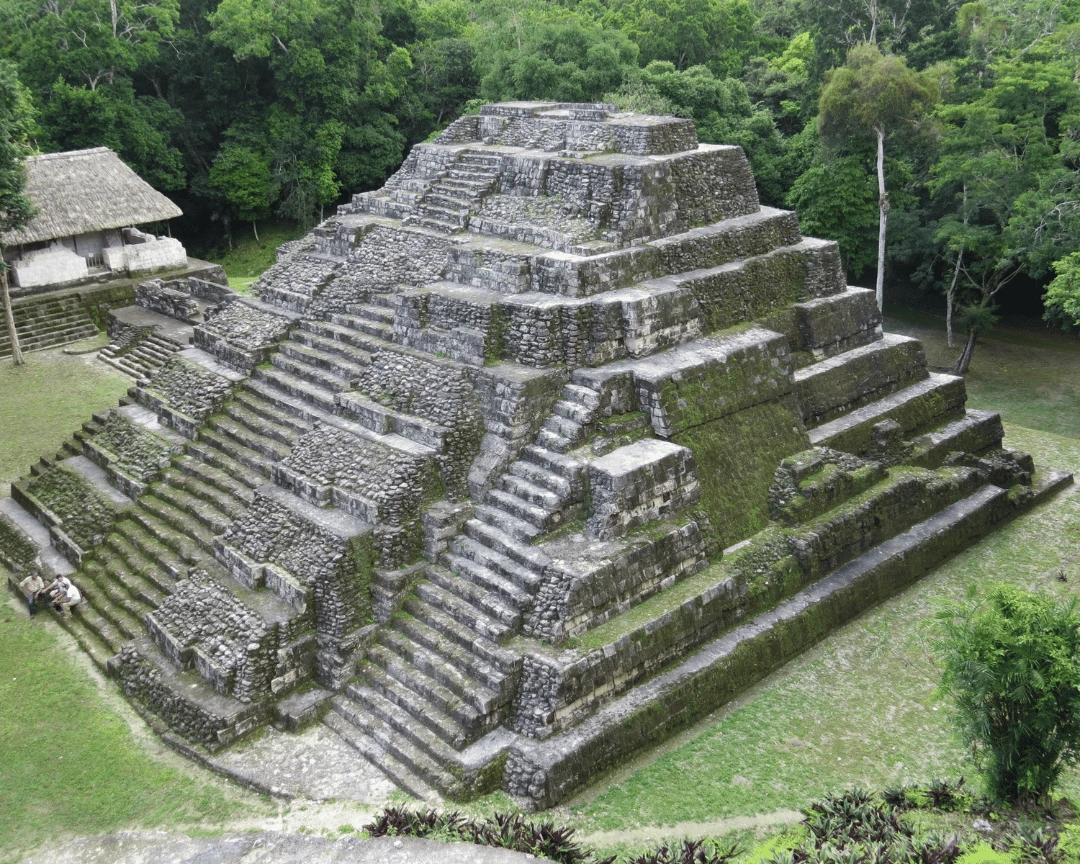
The important thing is to understand that La Danta is not ‘a solitary pyramid’ as we sometimes imagine when we think of ruins. It's a complex: a huge base platform, several levels and an upper section with a triadic layout, all integrated into a large-scale ceremonial space. That is why, when you visit it, the sensation is not just one of height, but of volume and of architecture designed to bring people together, to organise and to project power.
To reach La Danta, you need to be inside El Mirador, and that in itself sets the tone for the trip: you don’t come here just to spend a few hours; you come to experience a journey through the jungle and ruins on a whole new level. The reward, however, is usually worth the effort.
- This page about Yaxhá may interest you.
Is La Danta the largest pyramid in the world?
This is a common question, and there are nuances to it, because ‘the largest’ can refer to height, volume or surface area. La Danta is famous because it's considered one of the largest pyramids in the world in terms of volume and the scale of the complex as a whole, particularly when referring to the entire complex (platform + tiers + upper structure).
Compared to better-known pyramids, La Danta does not always come out on top in terms of ‘pure height’ depending on the exact measurements and the source, but it's certainly impressive for the way it's built and the scale of its base. The feeling you get when you walk around it's clear: this is not just a 'large' temple, it's a monumental feat of engineering.
What is most useful for the traveller is not the ranking itself, but the key insight: seeing La Danta in person raises an inevitable question: how was such a construction planned, organised and carried out in the middle of the jungle, with an entire city functioning all around it?
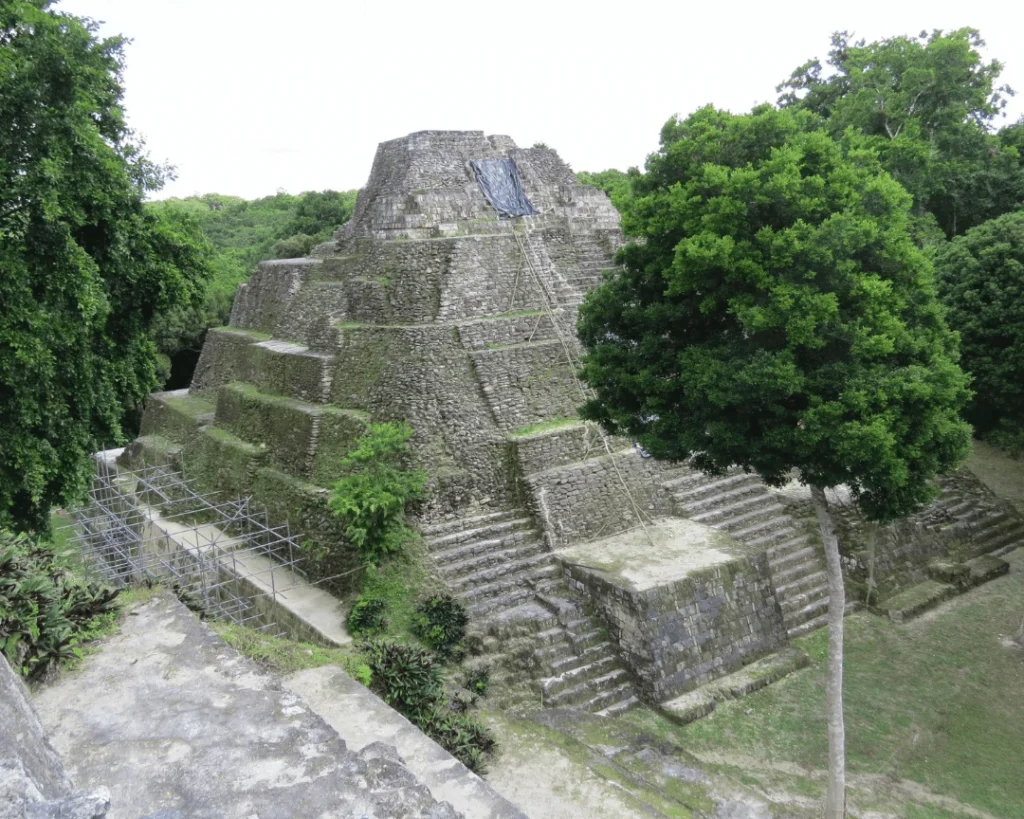
La Danta and El Mirador: The history of this Mayan megacity
El Mirador was one of the great Mayan cities of the Preclassic period, and its sheer scale explains why La Danta exists. Such monumental structures do not appear on a whim: they are a reflection of periods of power, population growth, organisation, and political and religious ambition.
La Danta is part of that language: monumental architecture designed to organise space, create ceremonial settings and project authority. When you walk through El Mirador, you notice it: it's not a site with ‘two structures’; it's an archaeological city with distinct complexes, spacious squares and routes that force you to think in urban terms.
And there’s something very special about this story: El Mirador doesn’t feel like a ‘domesticated’ park. It feels like a blend of jungle and ruins. This makes a visit there a very powerful experience, because the past is there, but so is the natural present, enveloping everything.
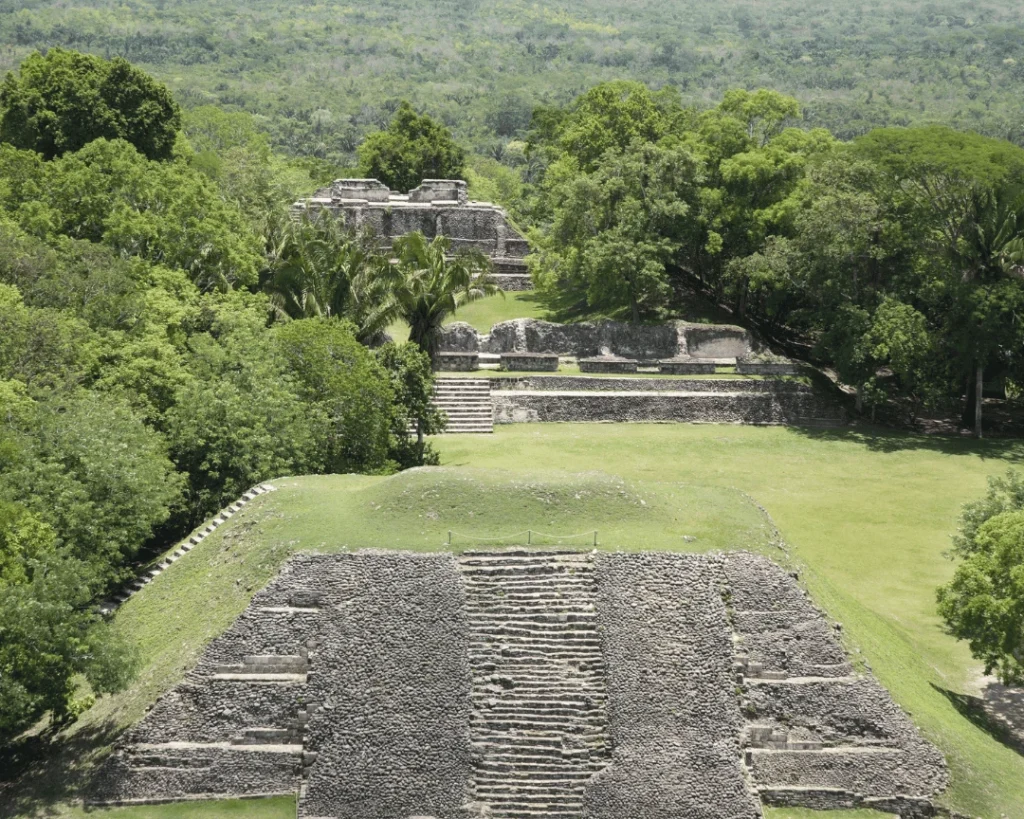
La Danta, El Tigre and other monumental complexes at El Mirador
El Mirador is best understood as a collection of complexes, rather than a single structure. La Danta is usually the main attraction, but it's not alone: there are other monumental complexes that help us to understand the city as an urban megaproject.
The combination of La Danta and El Tigre (and other ceremonial sites) gives you a complete picture: different power centres, different squares, different perspectives on the jungle. That is where El Mirador truly becomes a ‘megacity’: when you connect the various complexes and realise that everything was part of a single system.
If you’re planning a more extensive archaeological tour of Petén, you might also want to balance this trip with more accessible and complementary sites, such as the ruins of Nakum or the North Acropolis of Yaxhá.
Architecture and dimensions of La Danta
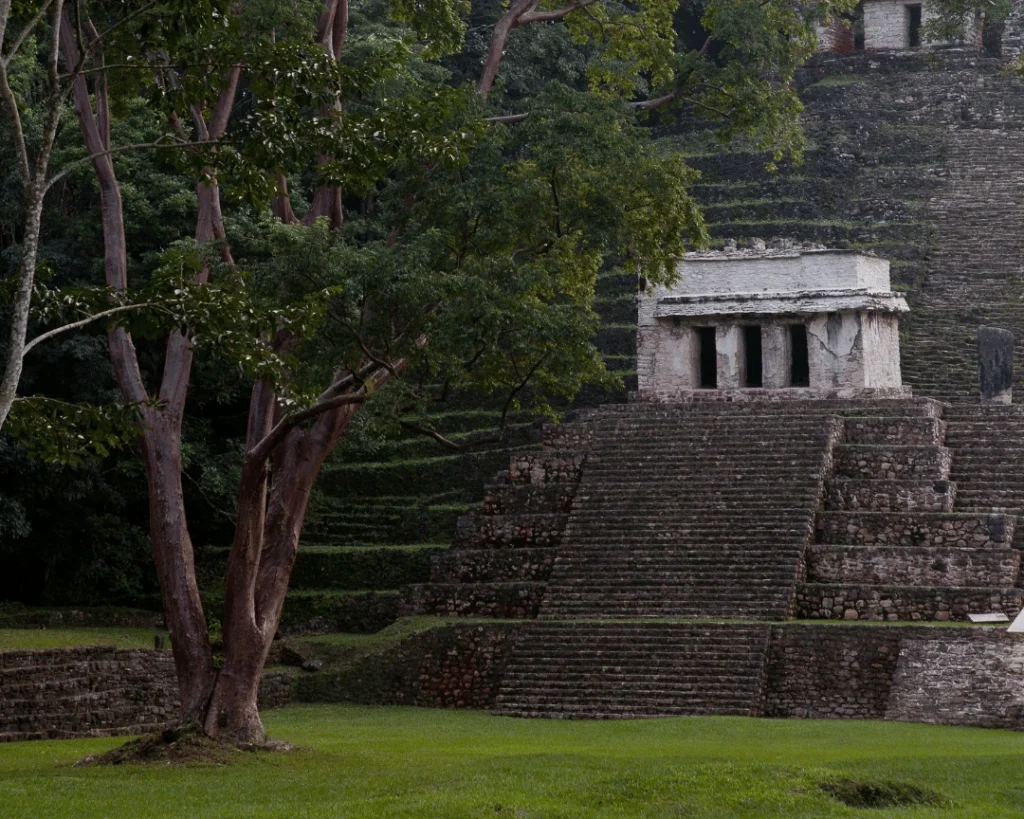
La Danta is impressive for its design: not only is it huge, but it’s built as a series of terraced platforms and levels that let you appreciate its scale step by step. That progression is part of the experience: the feeling of climbing through a complex that seems to go on forever.
Furthermore, its architecture reflects a very distinct ceremonial logic: open spaces, transitional areas, gathering platforms and elevated points where symbolic significance is concentrated.
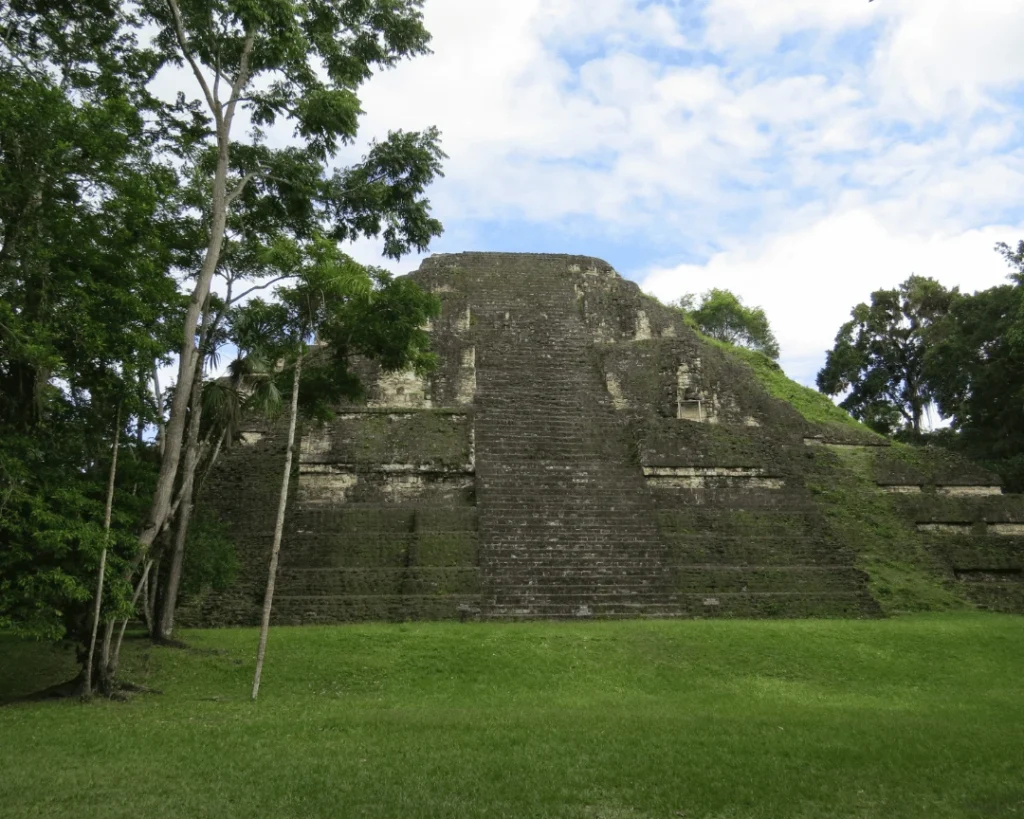
The foundation, levels and triadic structure of La Danta
La Danta sits on a massive base platform, from which various levels rise up to the upper complex. This upper complex is often described as a triadic structure, an architectural pattern that was very common in the ancient Mayan world, where several structures are arranged around a central point.
As a visitor, this is very clear to see: first you walk across a vast platform (which would already be considered ‘a site’ elsewhere), then you climb up to levels that resemble raised plazas, and finally you reach the upper section, where the landscape opens up and you realise why this place was a ceremonial centre of the highest order.
Height, volume and comparison with other pyramids around the world
When comparing La Danta with other pyramids around the world, what sets it apart most is its sheer size and the scale of the entire complex. There may be some debate regarding its height, depending on the reference point and measurement criteria, but in terms of overall size, La Danta is one of those structures that can only be described in superlatives.
In practice, the comparison that really ‘hits home’ isn’t with a figure, but with the physical experience: walking along its base and climbing its levels makes you realise that here, size isn’t just a statistic – it’s a journey.
- We invite you to read our article about El Tintal.
Reliefs, masks and symbolism at La Danta
Beyond its sheer scale, La Danta also captivates visitors with its artistic and symbolic features. In the Mayan world, monumental architecture was often accompanied by a powerful visual language: reliefs, masks and mythological motifs that reinforced the site’s religious and political significance.
At El Mirador, this language becomes particularly interesting because it links back to the early stages of Mayan civilisation. Seeing these elements (when they are visible) is a way of getting a sense of ‘what the complex represented’, not just how big it was.
Stucco masks and Mayan mythological motifs
The stucco masks are one of the main attractions of El Mirador and, by extension, of the symbolic world surrounding La Danta. These representations are often linked to deities, myths and concepts of power, and serve as a kind of visual narrative integrated into the architecture.
As a visitor, the advice is simple: when you come across a mask or relief, don’t just snap a quick photo. Take a moment to appreciate the scale, the position and the context. Often, the most impressive thing is not the fine detail, but the fact that these pieces were part of a ceremonial message for those arriving at the complex.
The ceremonial and religious function of the La Danta complex
La Danta was more than just a vantage point from which to view the jungle. Its architectural design, scale and location within the city suggest that it served a central ceremonial and religious function. It was a place for rituals, for gatherings, for organising public life and for upholding the legitimacy of those in power.
You can sense this quality even without any technical knowledge: the way the space ‘draws you’ upwards, the spaciousness of certain platforms, and the feeling of being on a stage designed for the collective. At La Danta, the architecture isn’t just something to be looked at: it’s something to be walked through and felt.
How can I visit La Danta as part of a trip to El Mirador?
A visit to La Danta inevitably involves a visit to El Mirador. And that means choosing a mode of transport: either a multi-day trek through the jungle or a helicopter ride. It’s no small decision, as it determines the kind of experience you’ll have.
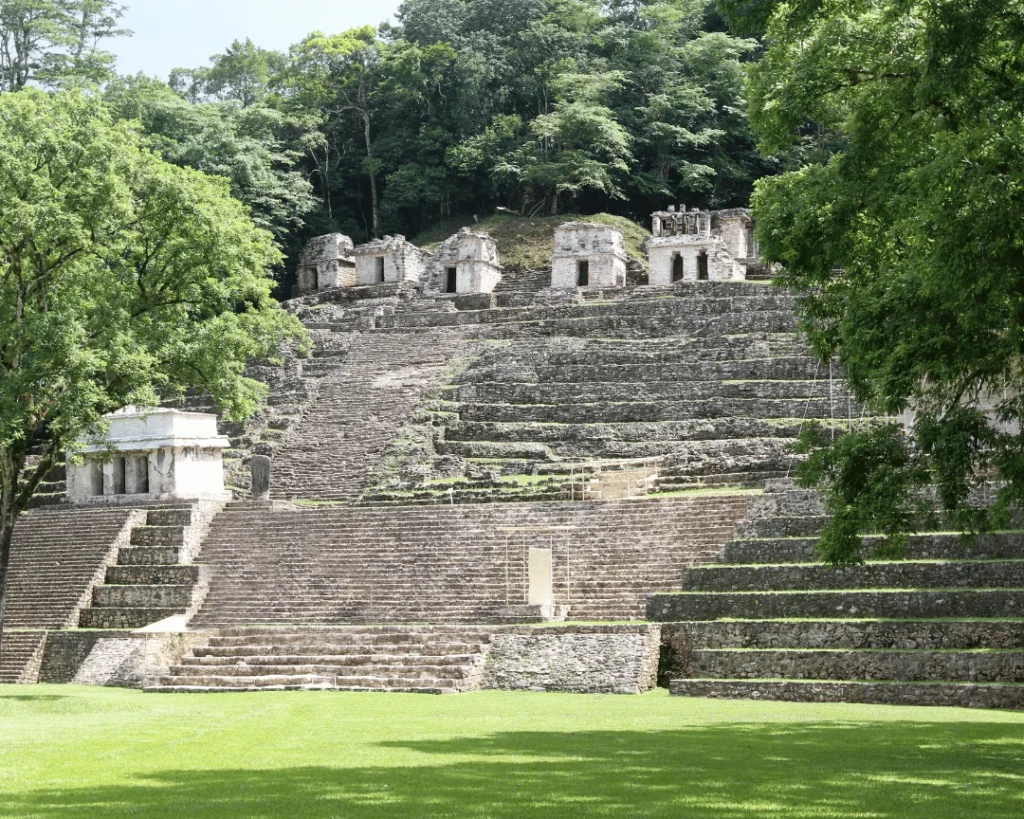
Access to El Mirador: A multi-day trek through the jungle or by helicopter
The best-known way to reach El Mirador is a multi-day trek through the jungle. It’s a complete experience: physical exertion, stunning scenery, camping, the pace of an expedition, and the feeling of venturing into a truly remote place. It’s the sort of trip you remember as much for the journey as for the destination.
The other option is the helicopter, which completely changes the experience: it cuts down on travel time and effort, and turns the trip into a more focused visit. It’s still impressive, but with a different focus: less on the journey and more on the site itself.
The key here is to choose based on your travel style: if you enjoy a leisurely adventure, a hike is the way to go; if you want to make the most of your time or don’t fancy a long trek, a helicopter might be the most sensible option.
Difficulty of the route and physical requirements for reaching La Danta
If you’re doing the trek on foot, the difficulty is moderate to high due to the cumulative nature of the challenge: walking for several days through the jungle involves heat, humidity, uneven terrain and a constant demand on your energy. You don’t need to be an athlete, but it’s advisable to be in good physical shape, comfortable walking for hours at a time, and able to maintain an expedition pace.
The key to enjoying it isn’t going fast, but keeping a steady pace. Preparing your body with some preliminary walks, wearing suitable footwear and staying hydrated usually makes all the difference.
La Danta and the experience of watching the sunrise over the jungle at El Mirador
If there is one moment that makes La Danta seem almost unreal, it's dawn. Being up high, with the jungle stretching out like a green sea and the light gradually breaking, is one of those scenes that makes the whole journey worthwhile.
The experience of watching the sunrise here is something special: it’s neither an urban viewpoint nor an isolated mountain, but a monumental Mayan structure deep in the jungle. You hear the surroundings come to life, feel the temperature change and watch the landscape take shape in the light. It’s the perfect moment to understand why El Mirador feels like an expedition: because it places you in settings that don’t feel like you’re just ‘passing through’.
If you can manage it, setting aside some time for this moment is often the most memorable part of the trip. There’s no need to take a hundred photos. Just taking it all in and spending a moment in silence is usually enough.
Practical tips for visiting La Danta and El Mirador
You’ll get the most out of your visit to La Danta and El Mirador if you’re properly prepared. It’s not about packing “a million things”, but about taking the essentials with you in a sensible way: comfort, staying hydrated and respect for the environment.
The best time of year to organise the expedition
The best time to visit depends on the weather and how you want to experience the jungle. During the drier season, the trails are usually easier to navigate and logistics are simpler. During the rainy season, the landscape is greener, but the terrain can become more challenging.
A useful tip is to plan your trip with plenty of time to spare and not rush things. On a route like this, the pace is part of the experience. If you’re short on time, plan carefully what you want to prioritise: La Danta, other sites, sunrise, or a balanced mix.
Essential hiking equipment and guidelines for looking after the environment
For a trip to El Mirador including a visit to La Danta, the essentials are usually:
- Comfortable shoes with a decent sole.
- Lightweight, breathable, quick-drying clothing.
- A lightweight raincoat if there's a chance of rain.
- Water and a system to maintain constant hydration.
- Insect repellent and sun cream.
- Head torch (very useful when camping or in the early hours of the morning).
- A comfortable, lightweight rucksack with all your essentials neatly organised.
And, above all, follow these simple conservation guidelines: leave no litter behind, stay on the paths, avoid touching rock formations or fragile features, and leave the area exactly as you found it. The value of El Mirador lies in its heritage and its jungle.
If you’re looking for inspiration from similar places for a cultural tour, you could explore archaeological sites.
Frequently Asked Questions about La Danta and its connection with El Mirador
Is it possible to visit La Danta without doing the whole walk?
To see La Danta, you have to get to El Mirador, so the alternative to the hike is usually a helicopter ride or an organised tour. The experience is different, but the destination is the same.
How long does it take to see La Danta from El Mirador?
It depends on your itinerary, but it’s worth setting aside some time to explore the complex at a leisurely pace: stroll around the lower levels, head up to the higher levels and take in the views. La Danta isn’t just a ‘five-minute’ stop.
Is La Danta suitable for everyone?
The route is manageable, but the trek to El Mirador is demanding if done on foot. With good planning, a steady pace and the right kit, many people manage it. If you’d prefer an easier option, taking a helicopter reduces the physical effort.
What sets La Danta apart from other Mayan pyramids?
Above all, the sheer size and scale of the complex. It isn't just a tall temple; it's a monumental complex that feels like a city built upwards.
Is it worth visiting any other places besides El Mirador?
Yes, if your itinerary in Petén allows for it. To complement your visit with sites near Yaxhá, you might want to check out the ruins of Nakum and the North Acropolis of Yaxhá.