Many travellers arrive in El Tintal eager to see the great pyramids. However, the tour of the Cuenca Mirador begins much earlier. This ancient Mayan city, situated deep in the jungle of northern Petén, is monumental, remote and far more significant than its reputation as a tourist destination suggests. In fact, it's one of the major pre-classical archaeological sites in the basin and a key stop on the classic trek from Carmelita.
Here you can enjoy a lush tropical rainforest, campsites, long walking trails and an unrivalled archaeological landscape. El Tintal is not just another day trip, but a Mayan city that will help you understand the organisation and ambition of the pre-Hispanic world of the Cuenca Mirador.
Where is El Tintal?
El Tintal is located in the north of the department of Petén, within the protected area of the Mirador-Río Azul National Park, in the heart of the Maya Biosphere Reserve. A remote area of Guatemala, far removed from the department’s usual tourist routes and linked to other pre-Hispanic sites in the surrounding area by trekking trails and ancient Mayan roads.
The usual starting point for visiting the area is Flores. From this town, the village of Carmelita serves as the gateway for exploring the basin on foot. You won’t be able to make a quick visit here, as you might at other Mayan sites. In El Tintal, the journey needs to be much better organised, to the extent that you’ll need to spend the night en route.

A brief history of El Tintal: One of the largest Mayan cities in northern Petén
El Tintal is of great historical significance. In fact, along with El Mirador, Nakbé and Wakná, it ranks among the major sites of the Cuenca Mirador. These settlements date back to the Pre-Classical period.
El Tintal is one of the main centres in the basin thanks to its monumental architecture. It's also famous for its Mayan causeways, which link it to other major sites. Furthermore, there is evidence of settlement dating back to the Preclassic period and later periods.
It's therefore not a minor city; rather, given its size, layout and role within the regional network, it plays a key role amongst the major Mayan states of northern Petén. El Tintal is, in short, one of the main political centres of the area at the end of the Middle Preclassic period.
Why is El Tintal a key stop on the expedition to El Mirador?
If we follow the Carmelita–El Mirador route, El Tintal is the first major town on the classic 5–6-day itinerary. When you arrive here, you are fully immersed in the Mayan landscape of the basin. The cities are no longer just isolated ruins, but emerge as part of a much larger territorial network.
It's also a key stop because it brings together many of the features that make this region so special: large platforms, an acropolis, a ball court, causeways, water management systems, and a strategic location in the heart of the jungle.
In short, one could say that El Mirador provides the headline, whilst El Tintal is the one that gives meaning and context to the area.
- We invite you to read our article about La Danta.
How to get to El Tintal: Access from Carmelita and hiking trails
The best-known route to El Tintal is via Carmelita, as part of the trekking circuit to El Mirador. Expeditions usually set off from Flores at dawn to reach Carmelita by road. Once there, the trek begins with 5–6-day routes, with El Tintal being the first major archaeological stop on the itinerary.
Carmelita is the key gateway. The San Andrés–Carmelita route is accessible all year round and is very well managed. However, it should be noted from the outset that trekking in the area is not easy.
El Tintal on the Carmelita–El Mirador trek
El Tintal is part of the most popular itinerary, along with La Muerta and El Mirador. On a 5-day tour, you can visit these three major sites, whilst the 6-day package also includes visits to Nakbé and La Florida.
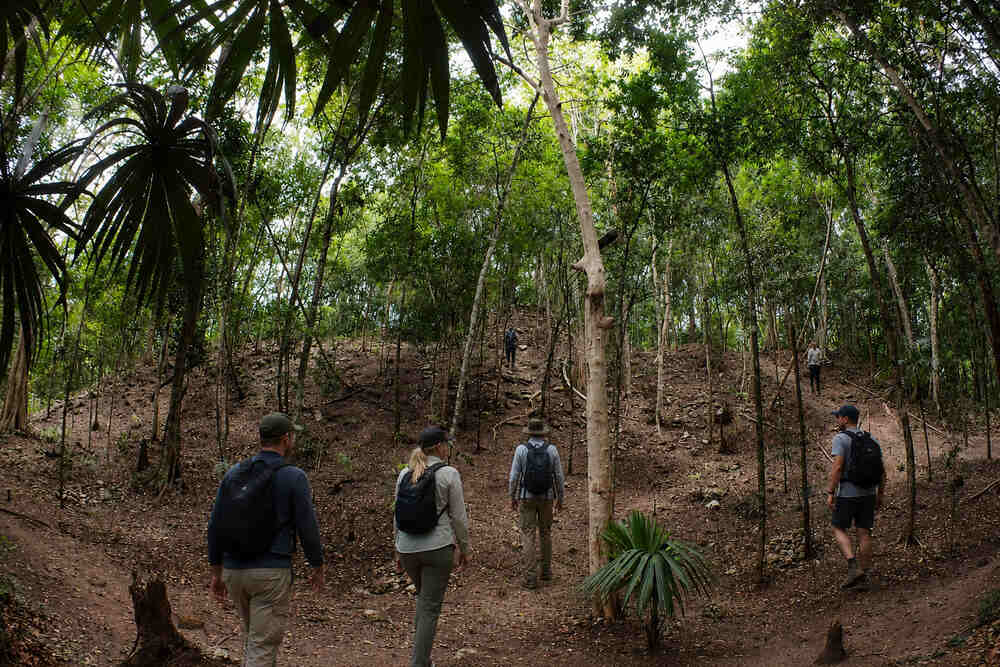
The La Ceibita–Tintal and Tintal–El Mirador sections are among the most spectacular in the area. The route follows ancient Mayan roads and involves spending the night deep in the jungle. What we want you to know from the outset is that the archaeological tour and the trek always go hand in hand here.
Tour options: Multi-day tours, camping and basic logistics
A visit to El Tintal is not a day trip, but rather part of a longer expedition. It's common to organise a 5–6-day trek, with base camps, camping equipment and logistical support throughout the journey. Tourists stay in camps at El Tintal and El Mirador, which are specially equipped with tents, sleeping mats and basic sanitary facilities.
The treks include mules to carry the main rucksack. However, each traveller usually carries a small rucksack containing water and their personal belongings. It's, therefore, a long and challenging trek, but you don’t have to carry the full weight of your luggage.
What to see in El Tintal on a guided tour
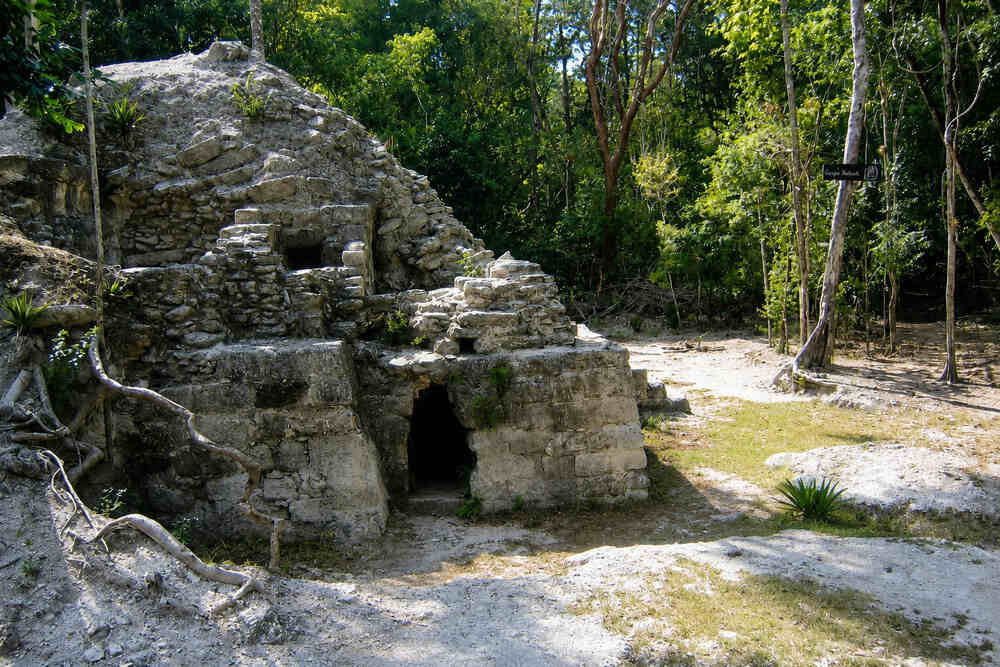
The best thing about a guided tour of El Tintal is that it allows you to take your time and see everything. Here, you won’t be left with the typical impression of just another set of ruins deep in the jungle. The whole area is packed with large pyramid complexes, an acropolis, a ball court, raised causeways and an artificial water system surrounding the civic centre.
Acropolis and large pyramidal bases
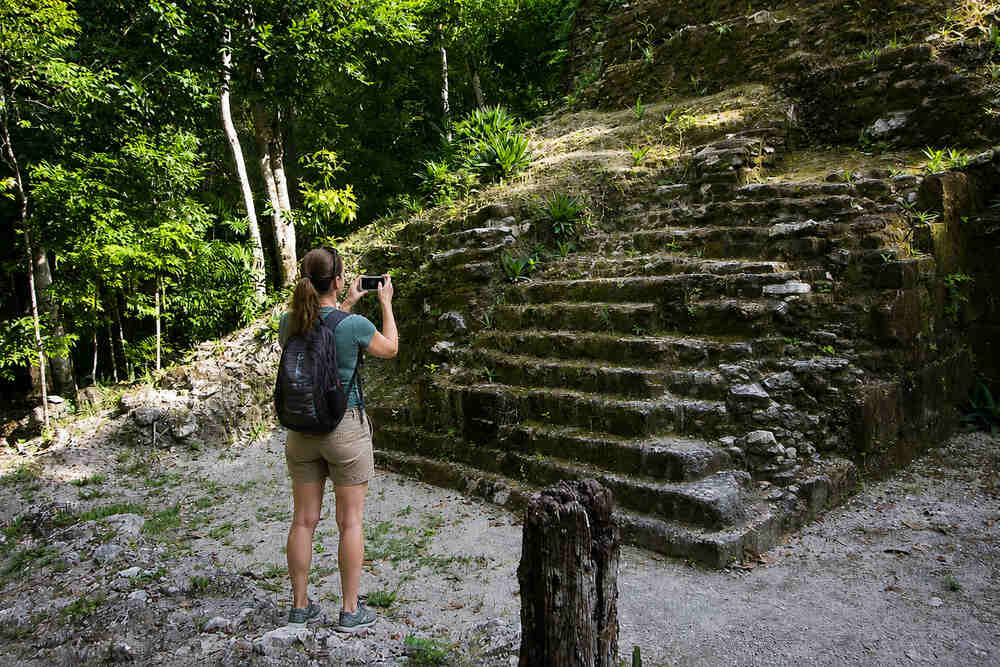
El Tintal has more than 850 buildings. Among them, the Acropolis, the grand palaces and the massive pyramids are undoubtedly the most striking. There are also structures up to 50 metres high, monumental platforms and buildings characteristic of late Preclassic architecture.
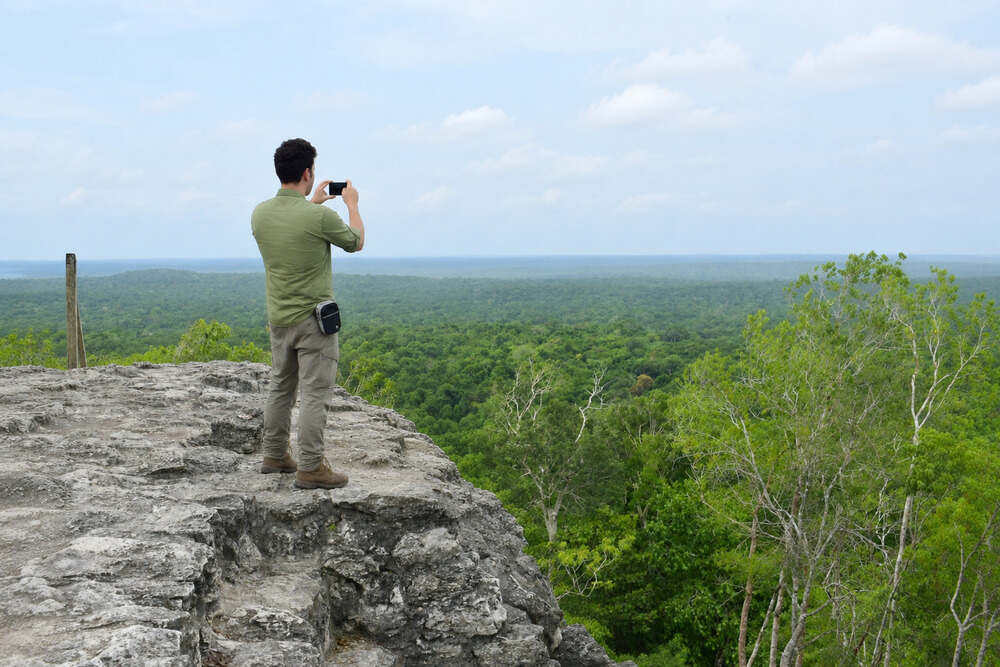
It's curious that El Tintal does not enjoy the same international fame as El Mirador, given that this is an archaeological site of truly monumental significance. What’s more, the surrounding landscape is very well maintained, something that is particularly striking when viewed from the Henequén pyramid, one of the must-see highlights of the visit.
Ball game and other monumental structures
One of the most striking features of El Tintal is its Mesoamerican ballgame court. Located to the north of the complex, it's one of the largest known to date in the Maya Lowlands. Its size is a clear indication of the importance this site held at the time.
In addition to this area, there are stelae, high-status burials and other monumental structures. For example, there is a tomb belonging to a person of high status, dating from the Early Classic period, which is situated at the foot of Stela 1.

Mayan causeways linking El Tintal with El Mirador and other sites in the basin
The Mayan causeways linking El Tintal with Nakbé or El Mirador are another of the main attractions here. The whole area is perfectly criss-crossed by these ancient paths, which blend seamlessly with the surrounding landscape. Walking along these causeways is part of the experience.
The landscape of El Tintal: Jungle, wildlife and a system of defensive canals and moats
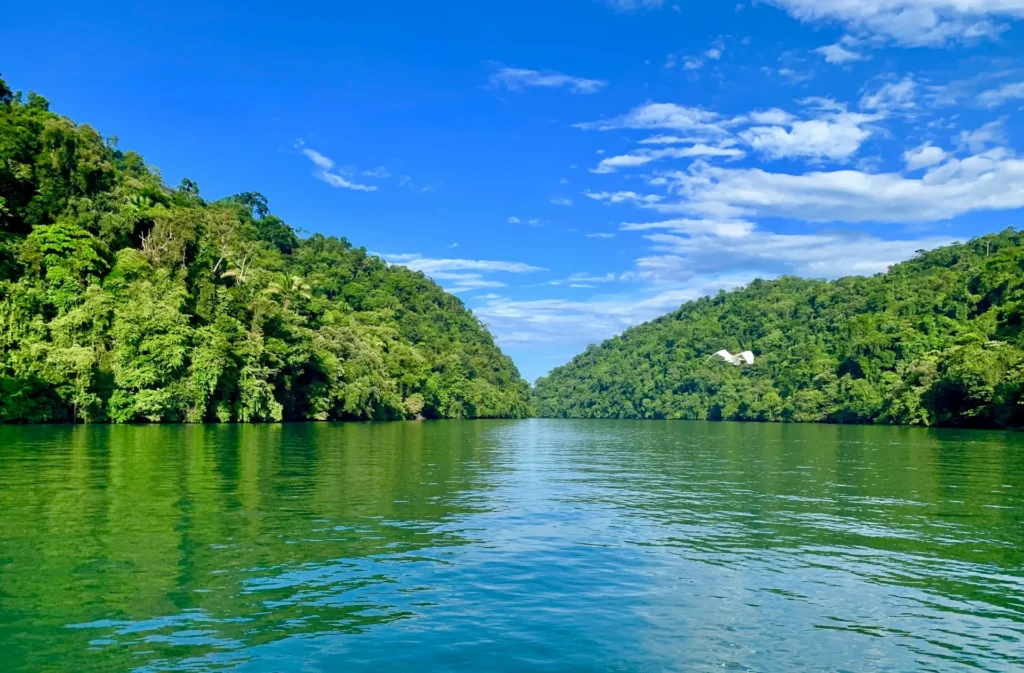
El Tintal is situated in the heart of the Cuenca Mirador’s tropical rainforest. It's a landscape of seasonal lowlands characterised by forest and a rich biodiversity. The climate here is tropical, with average temperatures ranging between 21 and 30 degrees Celsius and annual rainfall of 1,136 mm, which is heaviest between June and December.
From an ecological point of view, the Carmelita–El Mirador trail passes through an area of great diversity in terms of flora and fauna. All this makes us realise that the landscape is not merely a backdrop, but rather shapes the pace of the walk, visibility, humidity and even the very way of life of the inhabitants of these ancient cities.
One of the most interesting aspects of El Tintal is its hydraulic and defensive system. The civic centre was completely surrounded by an artificial moat. The whole of El Tintal consisted of a complex of depressions, wetlands and hydraulic features. The channels that carried water from a lagoon were modified to create a moat system covering some 34 hectares.
How to combine El Tintal with La Muerta and El Mirador in your itinerary
The most natural combination is El Tintal, La Muerta and El Mirador. This trio forms the basis of most of the multi-day treks undertaken here. Not surprisingly, it allows you to see three distinct stages of the archaeological landscape of the basin in a single expedition.
El Tintal offers a sense of grandeur, La Muerta serves as an intermediate stop steeped in local history, and El Mirador is the culmination of the experience, featuring its most famous sites.
Typical 5–6-day itineraries through the Cuenca Mirador
As we have mentioned, the most common tour formats for this trip are 5- to 6-day itineraries:
- 5 days and 4 nights: includes El Tintal, La Muerta and El Mirador.
- 6 days and 5 nights: the itinerary is extended to include other ancient sites in the area, such as Nakbé and La Florida.
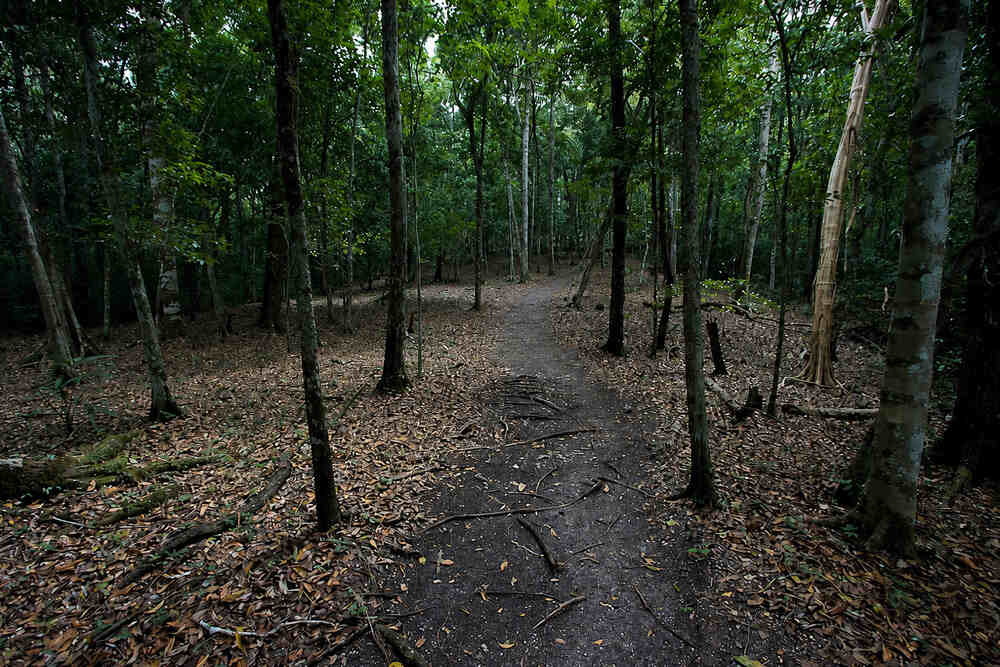
Ideally, anyone deciding to come here should be able to walk continuously for more than 6 hours a day. Most of the route is on flat ground, but there are also small natural inclines of between 10 and 30 metres before reaching the main archaeological sites. What we mean by this is that it's not an alpine trek, but it's a demanding route due to its length, the heat and the humidity.
Tips for choosing a tour operator and type of tour to get to El Tintal
The first piece of advice we usually give is that the expedition organisers should have a very clear plan for logistics from Flores and Carmelita. It's also highly recommended that they provide a detailed breakdown of what is included in the camp, equipment transport and meals. Furthermore, they must make it absolutely clear whether the tour is private or shared.
On the other hand, it's very important to have the support of the tour operators in Carmelita and Uaxactún, as this is a remote trip.
Practical tips for visiting El Tintal
The trip should be treated for what it's – an expedition – rather than a conventional archaeological visit. The heat, humidity, distance and muddy sections during the rainy season make for a very different experience. Furthermore, the route demands physical rather than technical stamina, so careful planning of equipment and the time of year is essential to avoid problems.
The best time of year to hike to El Tintal
The best time to enjoy this experience is from early December to late June. During these months, the trails are drier and the physical exertion required is less. The rainy season runs from July to November, so some sections may be flooded and there may be more mosquitoes.
The dry season, or summer, runs from February to May, and the rainy season from June to December. So, if you have a choice, don’t hesitate: plan your trip for the dry part of the year.
What to bring for a jungle walk: Water, equipment and protective gear
It's recommended that you wear light clothing that covers most of your body during the hottest months. Furthermore, sturdy hiking boots and waterproof clothing are essential during the rainy season. It's also advisable to keep your main luggage to a minimum and carry a small rucksack with water and everyday essentials.
In short, these are the essential items and products you’ll need:
- Hiking boots or trainers with good grip.
- Lightweight long-sleeved clothing.
- A raincoat if you're travelling between July and November.
- Insect repellent and sun cream.
- A small day rucksack.
- A canteen.
Frequently Asked Questions about El Tintal and its connection with El Mirador
Is El Tintal worth a visit if I’m already going to see El Mirador?
Yes, El Tintal is not just a stopover, but a major city in the Cuenca Mirador. It boasts monumental architecture, a ball court, causeways and a highly distinctive hydraulic system that helps to provide a better understanding of the entire archaeological landscape.
How many days do I need to allow to include El Tintal in my trip?
The most common way to do this is on a 5–6-day trek starting from Carmelita. The current community trails include El Tintal, La Muerta and El Mirador, with campsites and logistics already organised for the trek.
Is the walk to El Tintal a tough one?
It's actually quite demanding due to the length of the walk, the heat and the humidity, but not because of any steep gradients. Most of the route is on flat ground, although all visitors coming here should be prepared to walk for more than six hours a day.
When is the best time to visit El Tintal?
The best time to visit is usually between December and June. During these months, the trails are drier and easier to walk on. Between July and November, the rain makes access difficult in several sections due to the mud and the presence of mosquitoes.
Is it possible to visit El Tintal without joining an organised tour?
The tour is organised as a guided expedition from Carmelita and Flores, including camping, a guide, meals and luggage transport. Given the remoteness of the site and the logistics involved in the jungle, this is always the safest and most recommended option.