On the outskirts of the Caribbean village of Livingston lies a hidden ecological sanctuary that has earned the reputation of having the most famous natural pools in the whole of Guatemala. But it is not just a spectacular natural site; it is also a sacred place steeped in history and spirituality for the local Garifuna community, a culture born of the union between African slaves and the indigenous people.
In this article, we explore the natural surroundings of the Seven Altars to tell you everything you need to know if you’d like to include it in your itinerary. We’ll also share its history and some practical tips that will help you make the most of your visit.
What are the Seven Altars?
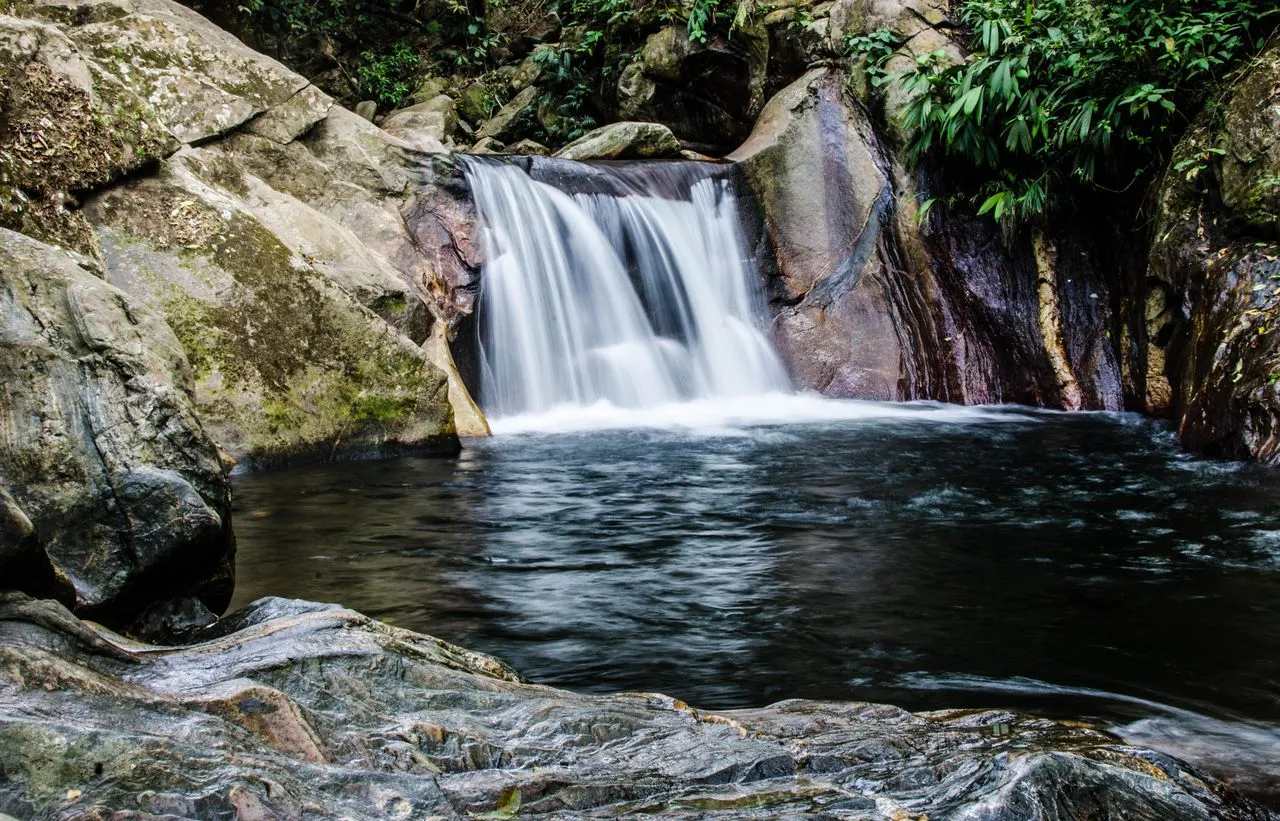
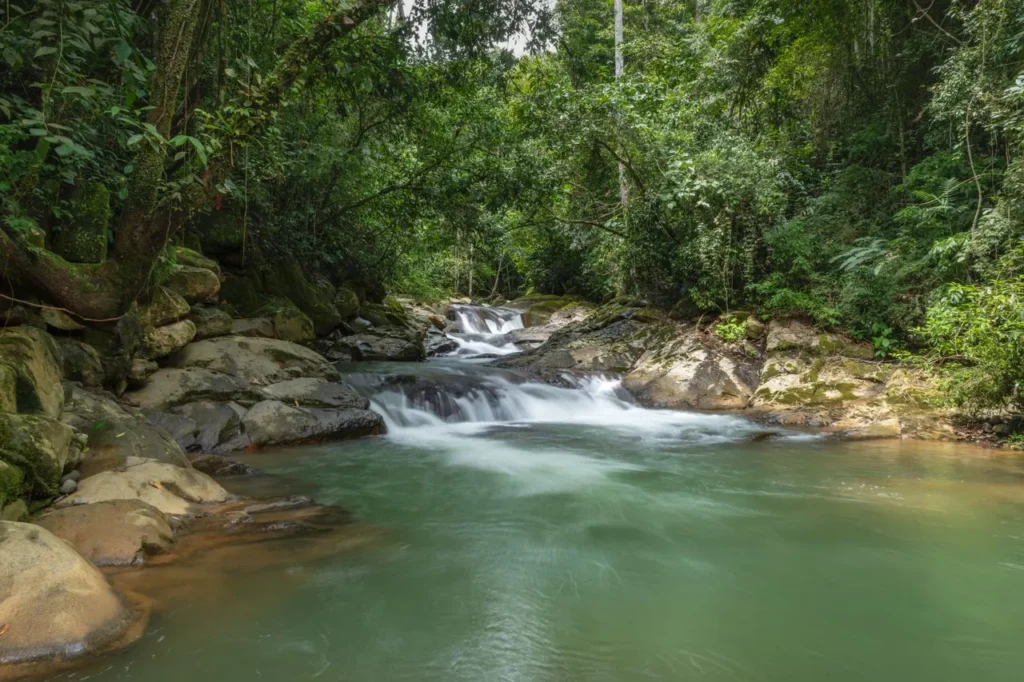
The Seven Altars are a series of seven turquoise-coloured freshwater pools situated in tiers amidst the natural landscape, one above the other, forming cascades between them. They are situated in the heart of a lush, protected tropical forest which is a veritable sanctuary of biodiversity, where wildlife thrives freely in the surrounding area.
The origins of this natural attraction in Izabal
The water in the Seven Altars pools originates directly in the nearby mountains. It flows gradually down from the peaks of the mountain range and, on its way to the Caribbean Sea, thanks to the erosion of the rocks and the jungle soil, creates a series of tiered waterfalls that fill progressively until they flow into the sea.

Why are they called the Seven Altars?
This area is called Seven Altars in honour of the seven main pools, which stand out from the others in the surrounding area due to their size, beauty and depth. However, in addition to its geographical significance, this name is steeped in symbolism for the local Garifuna community, and therefore holds great mystical and spiritual significance.
In the past, the area known as the Seven Altars was used as a sacred ceremonial centre. Furthermore, the local people also visited these pools because they believed they had medicinal and healing properties. People suffering from ailments or incurable diseases would travel there to bathe in the pools, in order to heal, purify and revitalise their bodies.
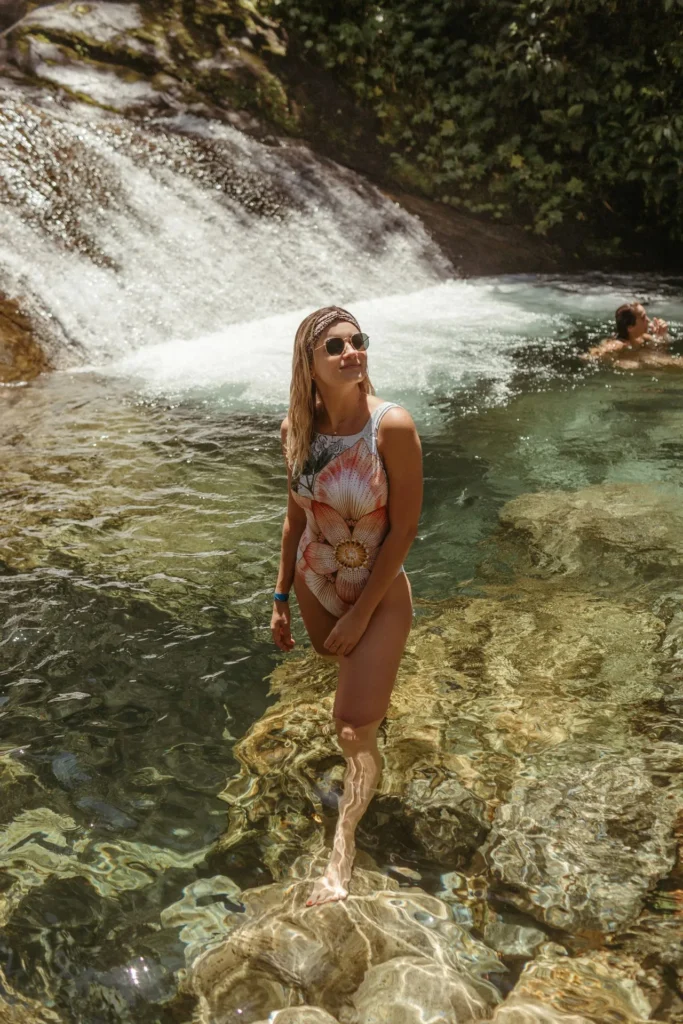
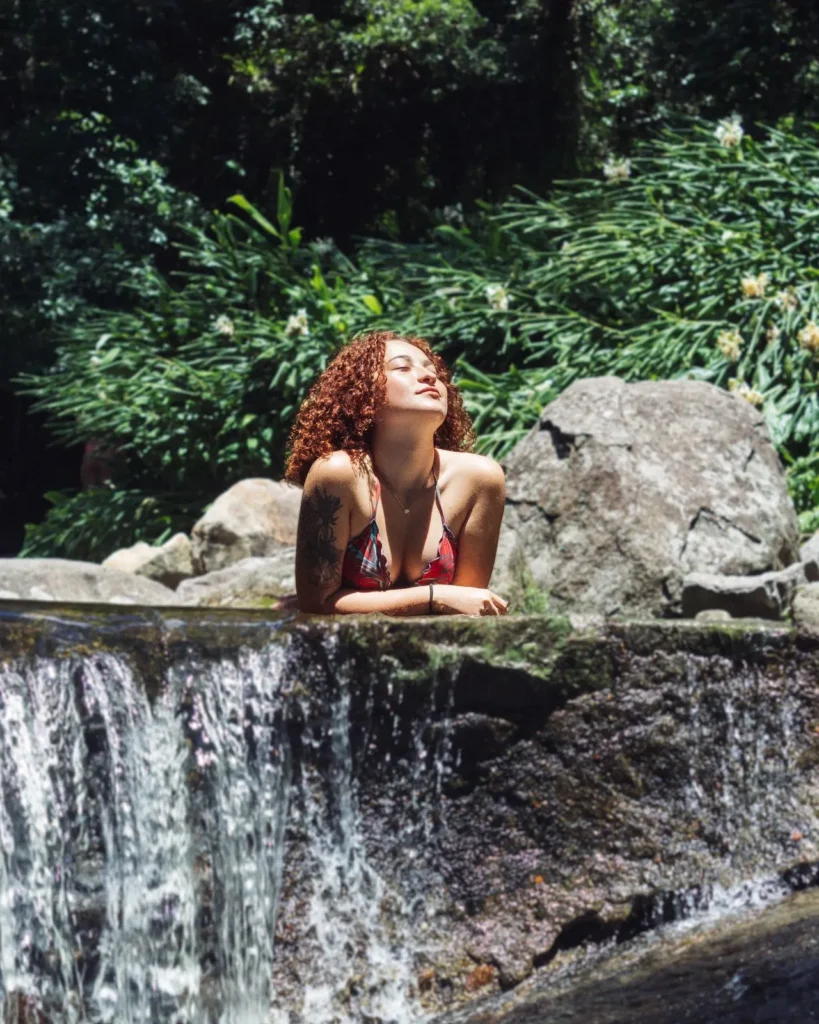
Over time, there was a desire to link the number of main pools with their mystical significance for the indigenous people, and thus the name ‘The Seven Altars’ was officially established.
What makes this destination in the Guatemalan Caribbean unique
The area around the Seven Altars (and the whole of the Río Dulce region and the Guatemalan Caribbean where it is situated) offers a landscape and culture very different from what can be found in the rest of the country. This area, in the department of Izabal, is unlike any other in Guatemala. It has a unique character and atmosphere that make it truly distinctive.
Apart from this, the Seven Altars serves as a cool retreat in the Guatemalan Caribbean region, which is particularly sweltering and humid. Outside this area, the sun beats down fiercely and the water at the beach is warm. In contrast, the waters of Seven Altars remain cooler, offering relief from the heat to anyone who fancies a dip.
Location of the Seven Altars in Livingston
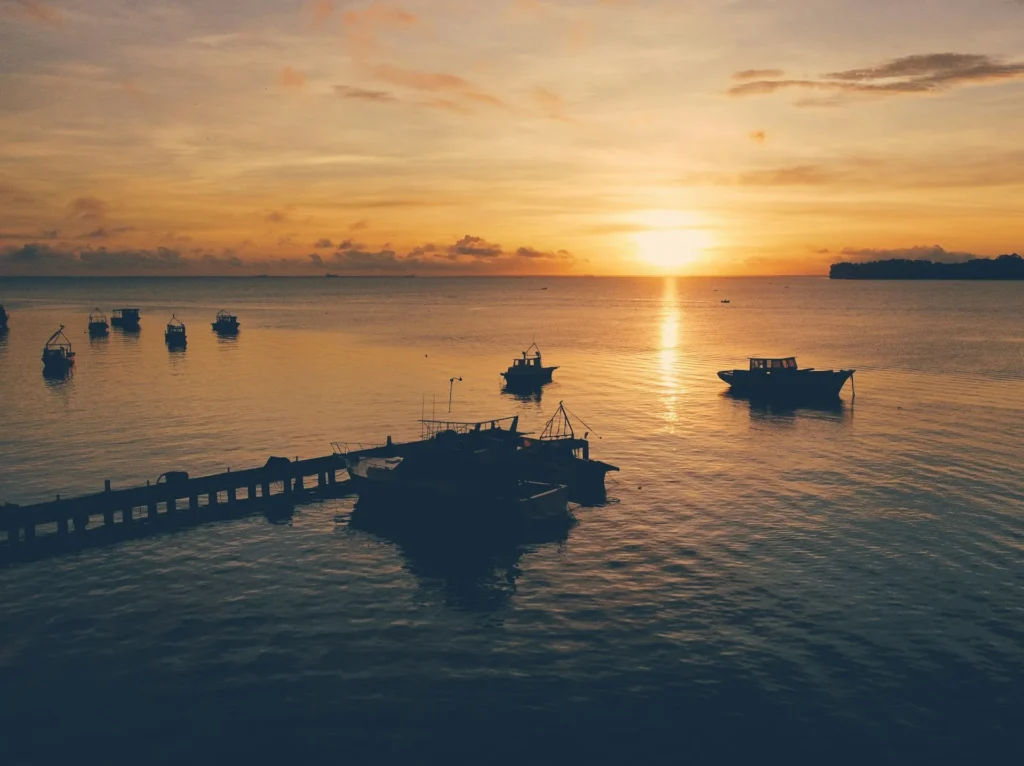
The Seven Altars are located in the municipality of Livingston, within the department of Izabal. That is why the best way to visit them is from this town, once you have already visited it.
Distance from Playa Blanca and Livingston
Seven Altars is situated about 3 kilometres north of Livingston’s historic centre; there are various ways to get there from Livingston. You can walk along the riverbank on a route that takes about 35 to 45 minutes. You’ll reach the pools after crossing a suspension bridge over the river, where you’ll find the entrance to the nature reserve. It’s a flat walk (with no slopes or uneven ground), very safe and offering some lovely views.
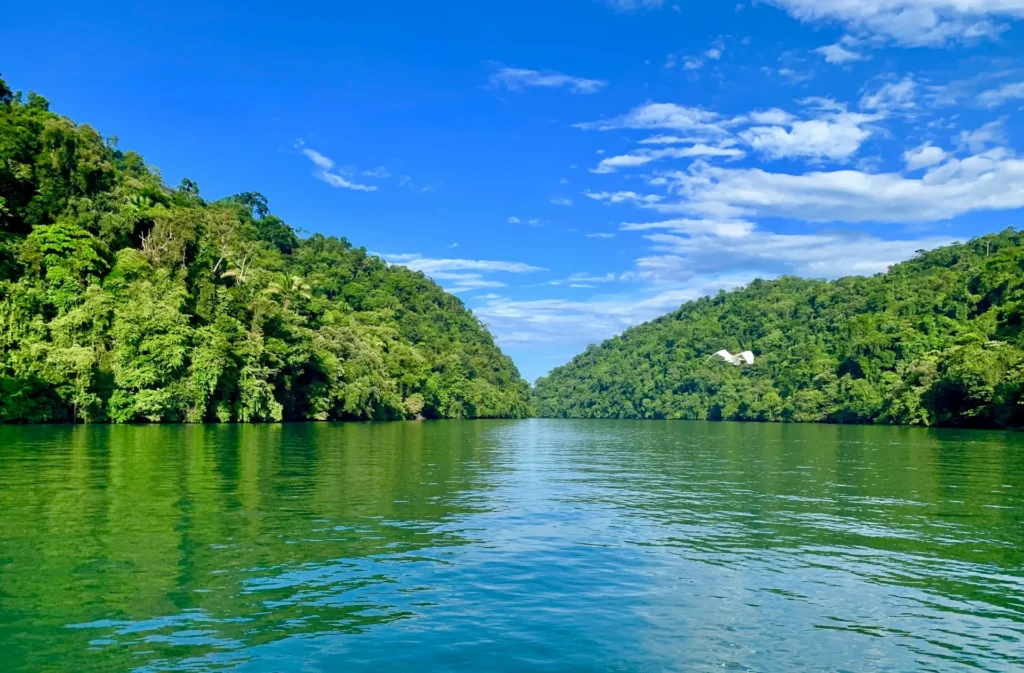
The quickest option, however, is to book a boat trip at Livingston’s municipal jetty. The journey takes just 15 minutes and follows the beautiful coastline from the sea, dropping you off at the reserve’s jetty. You can also opt for a tuk-tuk, which you can catch in Livingston and which will also drop you off right at the entrance to the reserve.
As for Playa Blanca, it is situated 9 kilometres north of Seven Altars, and the boat trip is the only way to get from one of these places to the other. The journey takes about 15 to 20 minutes and, given its location, tourists often combine visits to both places in a single day, stopping off at Punta de Cocoli as well.
How to get to the Seven Altars from Río Dulce and Puerto Barrios
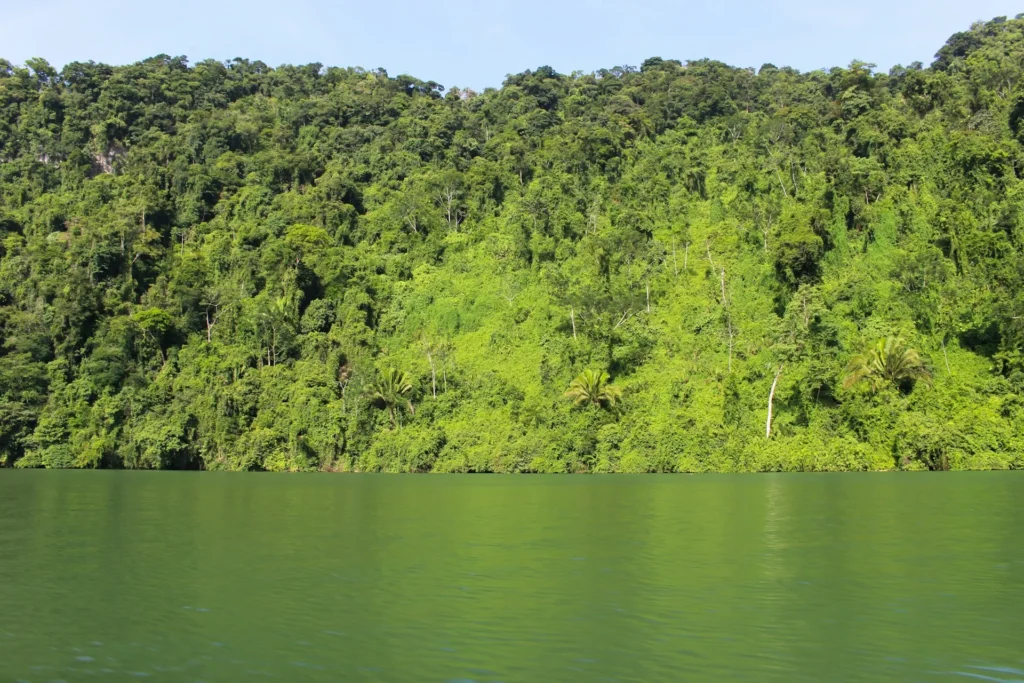
From Río Dulce, there are tours that take you to Seven Altars and Playa Blanca in a single day. They usually include a stop in Livingston before dropping you back at your hotel in Río Dulce. However, you can choose to stay in Livingston once you reach the coast. And if you’re in Puerto Barrios, you’ll need to head to the main quay to travel to Livingston by sea – a journey that takes around half an hour – and then choose from the various options available for getting to Seven Altars from Livingston (remember that these are by sea, on foot or by tuk-tuk).
- We invite you to read our article about Hun Nal Ye, Alta Verapaz.
Access paths and walking trails in Seven Altars
Once you enter Seven Altars, the route is divided into two very distinct sections. First, you’ll come across a path that leads into the rainforest, where you’ll walk beneath dense trees and navigate around exposed roots that criss-cross the ground. After a few minutes, you’ll come across the first two pools; they’re small and peaceful, ideal for a first stop.
After this stage, the second one begins. Here, the path disappears completely and you’ll have to walk through the water, following the course of the River Quehueche upstream. In some places, you’ll find ropes tied to the trees to help you walk and keep your balance during the ascent, particularly in areas where the current is strongest. You’ll be wading through water up to your ankles and, at other points, up to your knees, but it’ll all be worth the effort.
After walking through the water for about twenty minutes, you’ll finally see the seventh pool – the largest, deepest and most spectacular of them all. You can take a dip in it and enjoy its beautiful waterfall.
Tips for planning your visit
- Make sure you have small change to pay the entrance fee to the Seven Altars, as cards are not accepted.
- Don’t forget your rubber-soled shoes, as it is strongly advised against walking the trail in flip-flops or barefoot, as the stones are extremely slippery.
- It’s also a good idea to take a waterproof bag to put your mobile phone and other personal belongings in. When walking through the water, there’s a risk you might slip and end up with more of your body submerged in the pools. If that happens, you’ll be sure your belongings are safe.
- To get the most out of the Seven Altars, it’s best to arrive early in the morning, around half past eight or nine. That’s when there are fewer people and the heat is more bearable. What’s more, the light at this time of day is ideal for taking stunning photographs.
What are the natural pools at the Seven Altars like?
The seven natural pools
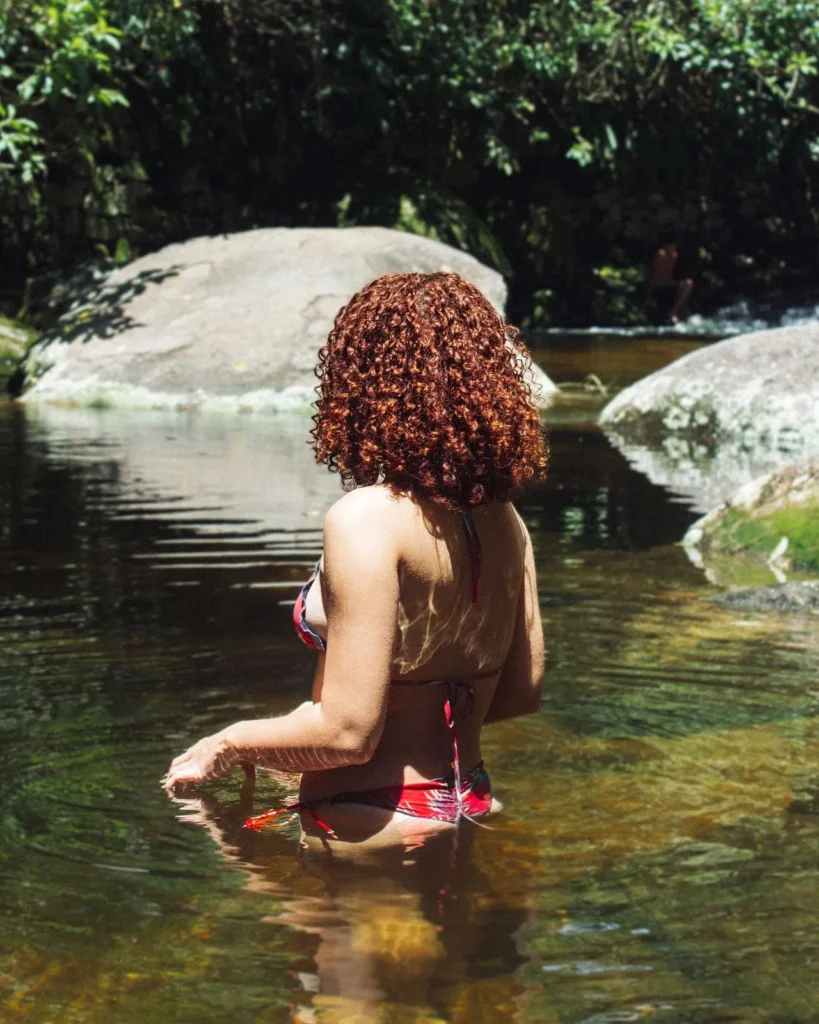
The Seven Altars pools are carved out of limestone and form a natural staircase that allows you to climb up the hillside. The water flows from the top pool down to the lower ones, keeping it constantly moving and circulating, so it is always clean, cool and crystal-clear.
Depth and characteristics of each area
In the lowest part of the trail there are two pools – the first ones you’ll come across on your walk. They are spacious, open and surrounded by wooden walkways. They are very shallow, so the water won’t come any higher than your knees, making them perfect for dipping your feet in and watching the little fish and crayfish that live there.
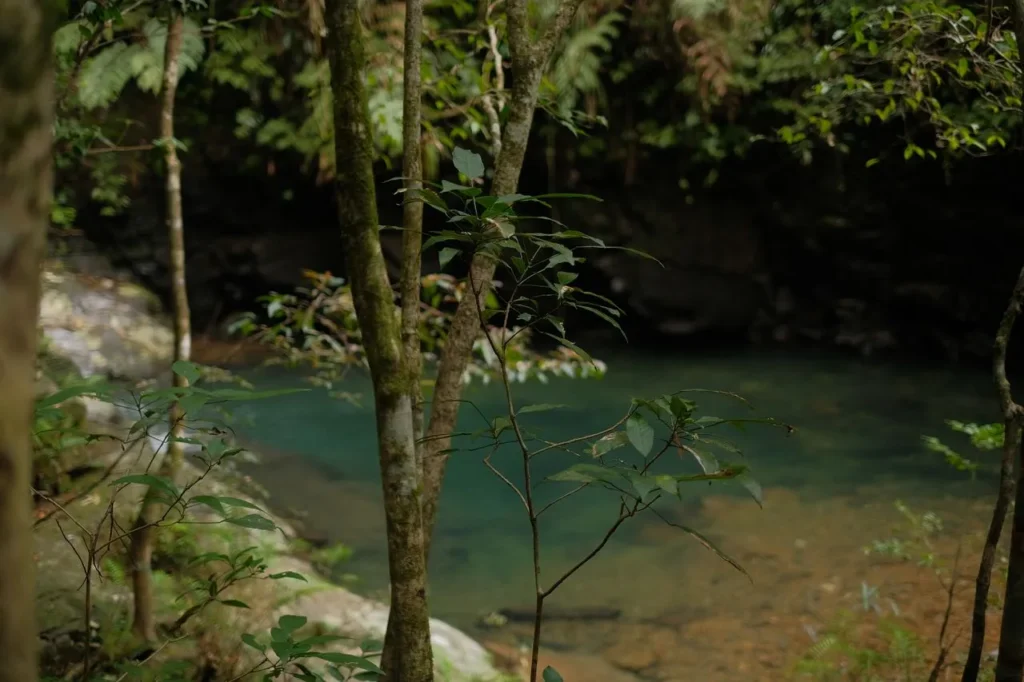
Halfway along the path there are three more pools. Here, they are more sheltered and surrounded by vegetation, which is reflected in the water, giving it intense greenish hues. These pools are deeper, with the water reaching waist and chest height. The rocky bed here is very uneven, so this is where you need to be most careful not to slip.
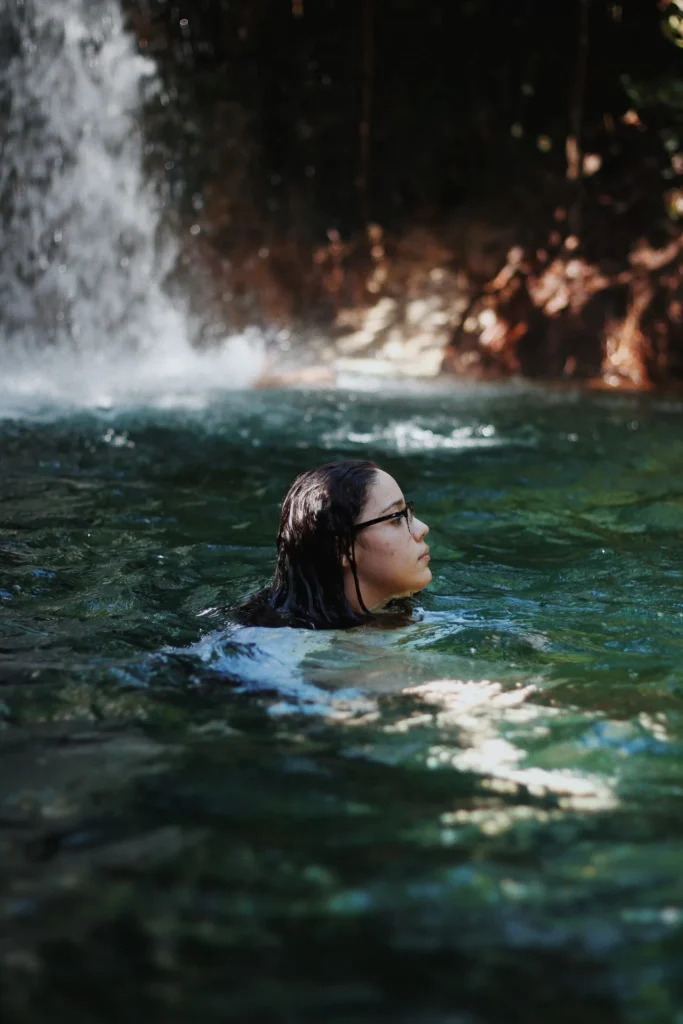
Once you’ve passed the sixth pool, you’ll reach the last one, which is the jewel in the crown. It’s a huge natural pool nestled between the jungle and stone walls, fed by a massive waterfall. The water here is much deeper and can be deep enough to submerge you completely.
Where to swim safely
You can go into any of the seven pools, but bear in mind that beneath the waterfall at the last one, the current is very strong and could pull you down to the bottom, so do take extra care. This last one is also the only one where you can swim, as it is the deepest.
If you’re travelling with children who can’t swim, or if you simply fancy a more relaxed swim, pools 3 and 4 are the best choice. What’s more, they’re usually quite shaded. The only thing that’s forbidden is diving headfirst or jumping into the pools in any way. Some locals do do this, but it’s strongly discouraged because the bottom is made of pure limestone and the depth can vary depending on the current.
Best time to visit the Seven Altars
Dry season vs. rainy season
The rainy season (which runs from June to December) is the best time to visit Seven Altars. Unlike most tourist destinations in the country, where it is advisable to avoid this time of year, this is not the case here. Thanks to the rainfall, the pools are completely full and overflowing. The waterfalls are also at their most spectacular, as is the surrounding vegetation, creating a truly unique landscape.
However, it is best to avoid visiting if there has been a tropical storm the day before (which are very common in July and August). In such cases, the river water can stir up a lot of sediment, causing it to become murky and turn brown, which detracts from the beauty of the surroundings. If it has rained the day before your visit, we recommend asking the boatmen or local people about the condition of the pools and deciding on the spot whether to go ahead with the visit or postpone it.
Recommended visiting times
If you’re looking for peace and quiet, pop along first thing in the morning and enjoy the surroundings between 8 am and 11 am. This is, by far, the best time of day to avoid the organised tour groups, as you’ll have the pools practically to yourself. What’s more, you won’t feel the heat quite so much as the air is cooler, since the sun hasn’t yet started beating down too fiercely.
Apart from that, during the rainy season it tends to rain more often in the afternoon, so that’s yet another reason to visit this spot in the morning.
- We invite you to read our article about Río Azul.
Tips for visiting the Seven Altars
Safety recommendations
- Walk using three points of support in the sections where you’ll need to walk along the river, making use of the ropes and vines that have been set up on the most challenging stretches.
- Rocks that are submerged are usually less slippery than those that remain wet on the surface, as they often have a layer of moss on them. With this in mind, always play it safe and check how much grip there is before taking your next step.
Regulations to protect the natural environment
- Do not use conventional sun creams or insect repellents, as the chemicals they contain are toxic to the flora and fauna in the pools. Instead, swim without using anything, or use 100% eco-friendly and biodegradable products.
- Do not litter the area; take all the rubbish you produce with you and dispose of it once you return to the village.
- Please do not disturb the local wildlife; simply enjoy watching them and treat them with respect.
- Similarly, it is forbidden to uproot any vegetation or move stones to build towers (a very common practice amongst tourists, but one that disrupts the microhabitat of small insects and crustaceans).
Interesting facts about the Seven Altars
They are one of Livingston’s most popular natural attractions
Although Livingston is renowned for its cuisine and vibrant music scene, 90 per cent of travellers who choose to head to the mouth of the Río Dulce do so with the aim of visiting Seven Altars. It is, therefore, the most prized treasure of the Guatemalan Caribbean.
The water comes from streams that flow through the rainforest
Unlike other pools or spas where the water does not flow, at the Seven Altars the water never stops flowing and is constantly being renewed, as it is a river. This, combined with the fact that the water travels a long way from the mountains – a journey during which it is naturally purified – means that by the time it reaches the pools, it is completely crystal-clear and at a very cool temperature, which helps to provide relief from the heat.
A mosquito-free jungle
Contrary to what you might think, there are very few of these insects at Seven Altars. Despite being in the middle of the jungle, the water does not become stagnant, which prevents mosquitoes from laying their larvae and thus makes the swimming experience extremely pleasant.
Is it worth visiting the Seven Altars?
Absolutely. If you’re planning to include the Caribbean coast in your trip to Guatemala, Seven Altars is the most incredible experience in the area, alongside the trip to Río Dulce. At Seven Altars, you’ll find a unique landscape that’s very different from what you see in the rest of the country. So, if you’ve got time and you’re keen on nature, you should definitely include this place in your itinerary.
What to expect from the experience
Before including Seven Altars in your itinerary, you should be aware that a visit here is an experience that brings you into very real and vivid contact with nature. The surroundings of the Seven Altars are not a spa resort with all the mod cons, but rather a real adventure where you’ll need to make an effort to discover the highlight of the visit: its seventh pool.
Who is this destination recommended for?
Seven Altars is a highly recommended destination for backpackers and travellers with a strong sense of adventure who want to enjoy a genuine experience in the great outdoors. That’s not to say it’s a particularly difficult challenge, suitable only for expert hikers; far from it. However, it does have an element of adventure, and you need to be prepared to tackle some challenging terrain.
Therefore, if you’re travelling with young children, this might not be a place I’d recommend visiting. Similarly, if you’re an elderly person or travelling with elderly people who aren’t able to walk over this kind of terrain, you’d be better off choosing other areas of Guatemala.
How to include it in a tour of the Guatemalan Caribbean
Generally speaking, I’d recommend spending around 4 or 5 days of your trip in the Caribbean region of Guatemala, although you could spend a little less time there if you find natural attractions interesting but not a top priority. Below is a brief four-day itinerary with suggestions on what to do on each day:
- Day 1. Arrival at Fronteras de Río Dulce and a visit to San Felipe de Lara Castle. You can stay at one of the eco-lodges in the area.
- Day 2. A boat trip along the Río Dulce to Livingston, stopping off at various points of interest.
- Day 3. Visit the Seven Altars and Playa Blanca from Livingston.
- Day 4. Visit to the waterfall at Finca El Paraíso.
If you’re short on time, you can do the boat tour and visit the Seven Altars in a single day.