Tikal National Park is one of those experiences that changes a traveller’s perspective. In the very heart of the Guatemalan jungle, surrounded by the magical sounds of howler monkeys and beneath the imposing presence of the Mayan temples, stands one of the most impressive archaeological sites to be found today.
Tikal is a city swallowed up by the jungle, harbouring history and mysteries yet to be unravelled from a powerful and ancient civilisation that dominated the whole of Mesoamerica for over a millennium. The national park is one of Guatemala’s greatest ethnographic treasures: and one of its most unique tourist attractions. A trip to its colossal ruins deserves a dedicated itinerary for anyone wishing to enjoy an unforgettable experience.
Why Tikal is a must-see in Guatemala
Tikal National Park was officially established on 26 May 1955, becoming Guatemala’s first protected area. Tikal is home to the ancient Mayan city of Tikal, one of the largest and best-preserved pre-Columbian urban centres in the Americas.
UNESCO declared the entire area a World Heritage Site in 1979. And it did so in an exceptional category: it was the first site in the world to be recognised simultaneously for its cultural and natural values. In 1990, it became part of the Maya Biosphere Reserve, one of the largest contiguous tropical forests in Central America.

How to get to Tikal National Park
Tikal is situated in the heart of the tropical rainforest, in the department of Petén, in northern Guatemala. Covering an area of 575 square kilometres, it's located 484 kilometres from Guatemala City (around nine hours’ drive) and approximately 65 kilometres from the town of Flores. From Flores, the main starting point for visitors, the journey takes around an hour by car.
1. By plane
The quickest option is to fly from La Aurora International Airport in Guatemala City to Mundo Maya International Airport, situated just 2 kilometres from the island of Flores. There are regular flights operated by airlines such as TAG and Avianca; the journey takes less than an hour. From Flores Airport, it's easy to catch a bus directly to the park.
2. By bus
Direct bus services run from Guatemala City to Flores with companies such as Autobuses del Norte, Fuentes del Norte and Línea Dorada. The journey takes between 9 and 10 hours.
3. By tourist shuttle
This is the most popular and convenient option for international visitors. Minibuses (shuttles) run regularly from hotels in Flores and Santa Elena, taking passengers directly to the entrance to Tikal.
4. By taxi or hire car
It's also possible to hire a car in Flores and drive to the park along the CA-13 road, then turn off onto the RD-PET-3 departmental road. The road is tarmacked and signposted. There is a car park at the park entrance, costing around 20 quetzales.
5. By public transport
Buses depart from Santa Elena station and stop at the park entrance; they are ideal for travellers with plenty of time but a limited budget.
Once inside the park, the only way to get around is on foot. And that, far from being a drawback, is part of the magic of the place.
Tikal, the gem of the Maya
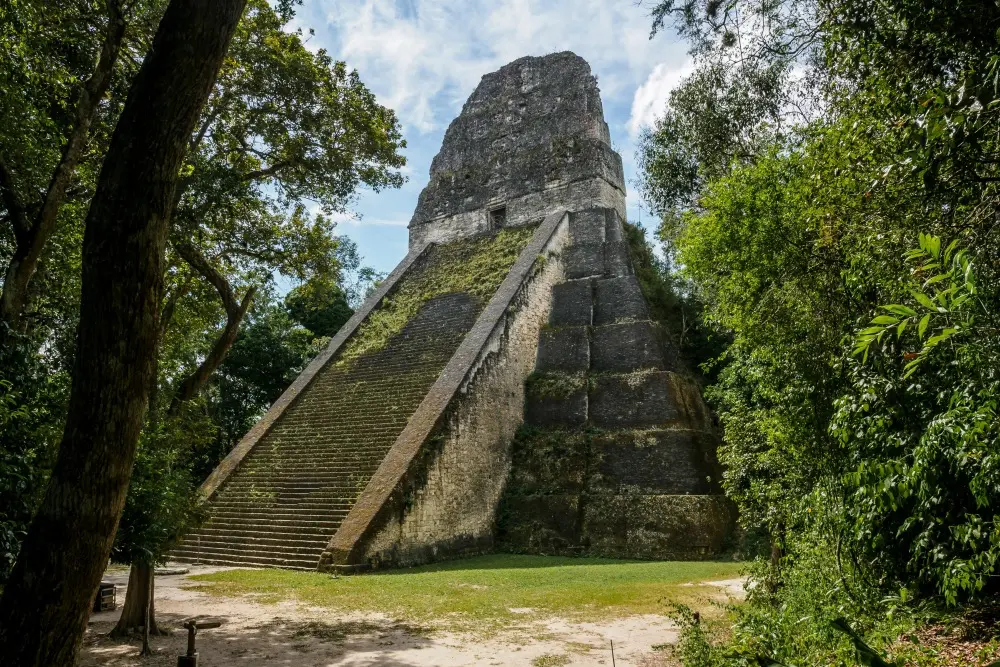
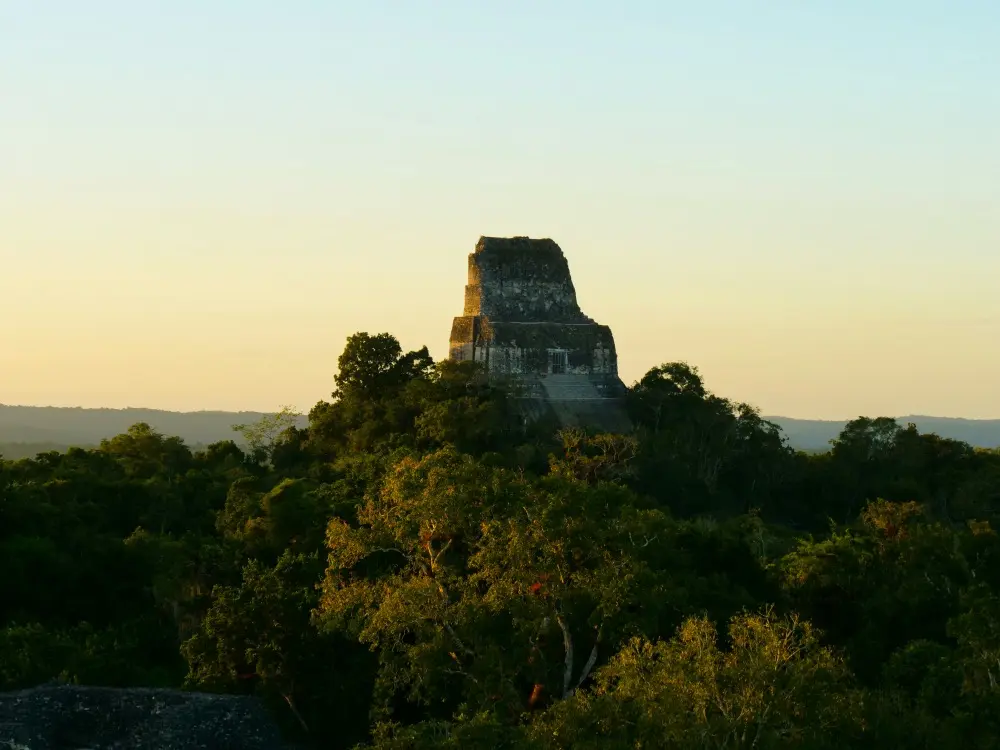
Between the 4th and 9th centuries, Tikal was the largest city in the entire Mayan world, with an estimated population of between 100,000 and 200,000. Its stepped-pyramid temples rise above the jungle. The tallest of these, Temple IV, stands 65 metres high.
The city also exemplifies the most sophisticated architectural style of Mayan culture. Its stepped limestone pyramids, with intricate reliefs, ceremonial plazas, ball courts, twin-pyramid complexes and carved altars, form a comprehensive monumental complex. Tikal is a true national symbol of Guatemala. Its silhouette appears on the one-quetzal note and is the country’s most recognisable icon worldwide.
1. The history of Tikal National Park
The first settlements in the region date back to the 6th century BC, although it was not until the period between the 4th and 9th centuries that the city reached the height of its splendour and became one of the most powerful metropolises on the continent.
Tikal was, in fact, a major political, religious and commercial centre that exerted influence over a vast territory. One of the key moments in the city’s history was the intervention of Teotihuacán, the great power of central Mexico, which arrived in Tikal at the end of the 4th century and placed Siyaj Chan K’awiil I on the throne, marking a period of foreign influence that transformed local art and politics.
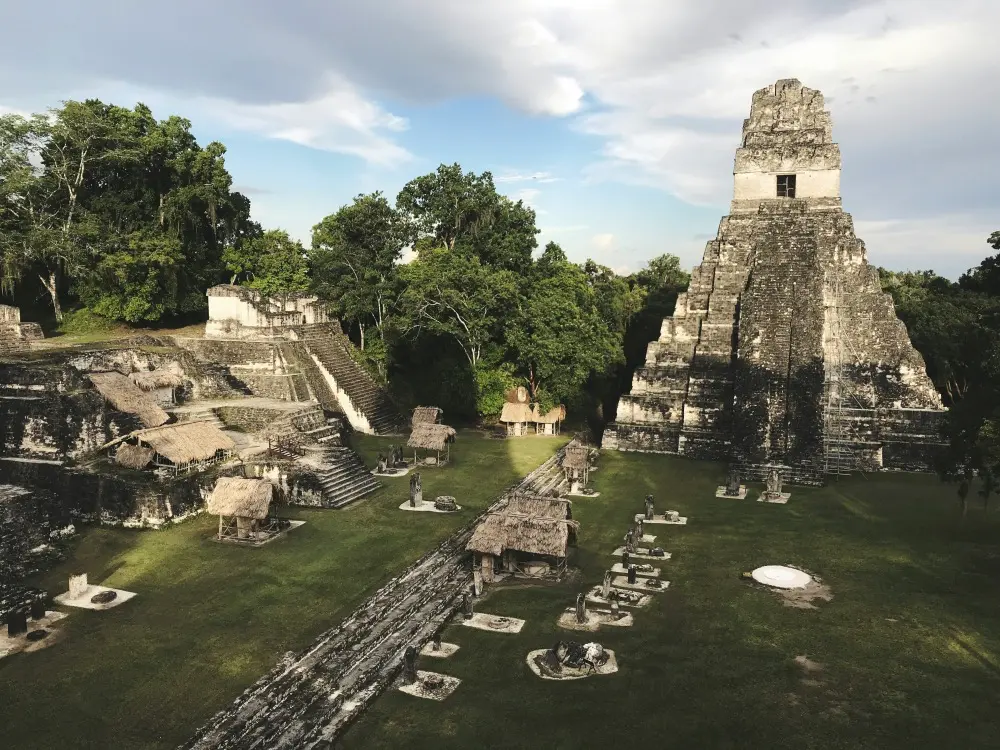
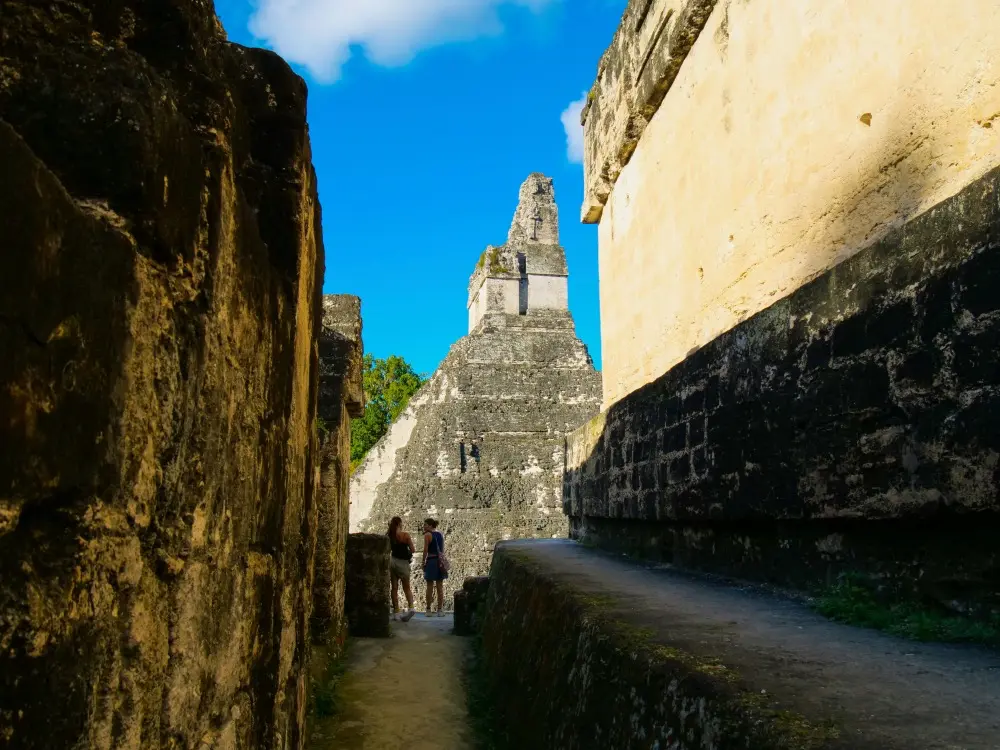
Later, in the 7th century, the ruler Jasaw Chan K'awiil I ordered the construction of Temple I (also known as the Temple of the Great Jaguar) to serve as his own mausoleum. And Temple II was built as a monument dedicated to his wife. Both structures frame the iconic Great Plaza, the visible heart of Tikal.
It's estimated that Tikal was abandoned around the year 900 AD. The exact causes remain a matter of debate amongst historians, but a combination of factors is suggested, including the depletion of natural resources, prolonged droughts, the collapse of trade networks and wars with other cities.
Although local communities were aware of the ruins’ existence, it was not until 1848 that the Guatemalan government sent an official expedition to document them. From then on, European and North American archaeologists began their research and, later, restoration work.
2. Main ethnographic treasures
Tikal is home to an extraordinary number of archaeological structures, many of which have yet to be excavated. These are the main ones:
Temple I: Temple of the Great Jaguar
It's Tikal’s most iconic symbol. It rises some 47 metres above the Great Plaza. Valuable offerings made of jade, bone and pottery were found in its burial chamber.
Temple II: Temple of the Masks
It's 38 metres high. It's so named because of the two large masks carved on either side of the central staircase. It's also possible to climb up via a wooden staircase at the back.
Temple IV: Temple of the Two-Headed Serpent
At 65 metres high, it's the tallest temple in Tikal and one of the tallest in the whole of pre-Columbian America. From its summit, you can enjoy one of the most spectacular views on the planet: the roofs of the other temples peeking out above the green canopy of the jungle. This image was used in the first Star Wars film as the rebel base on Yavin 4.
Temple VI: Temple of the Inscriptions
It's situated at the south-eastern end of the park and is notable for its enormous cornice covered in hieroglyphs that recount the dynastic history of Tikal.
The North Acropolis
It's the holiest site in Tikal: a limestone platform that served as a royal necropolis for centuries. It contains dozens of superimposed temples, burial chambers and monuments spanning more than a thousand years of history.
The Lost World
The Lost World of Tikal is one of the oldest complexes in the park, featuring a large central pyramid with four stairways facing the four cardinal points. It was used as an astronomical observatory.
Things to do in Tikal National Park
One of the most memorable experiences Tikal has to offer is the sunrise tour. It begins at 4.30 am. From the top of Temple IV, visitors can watch the day break over a sea of trees, with the temple spires rising above the mist. Howler monkeys, parrots and macaws provide a unique soundscape. This tour must be undertaken with an official guide.
The sunset tour also requires a guide, and it's an equally magical experience.
The park is open from 6.00 am to 6.00 pm every day. You can explore it on your own during daylight hours. The main paths are signposted, although it's always advisable to use the services of a guide.
Tikal has several trails that wind through both the archaeological site and the surrounding jungle. Some of them lead to more remote and less-visited temples, ideal for travellers looking to escape the crowds.
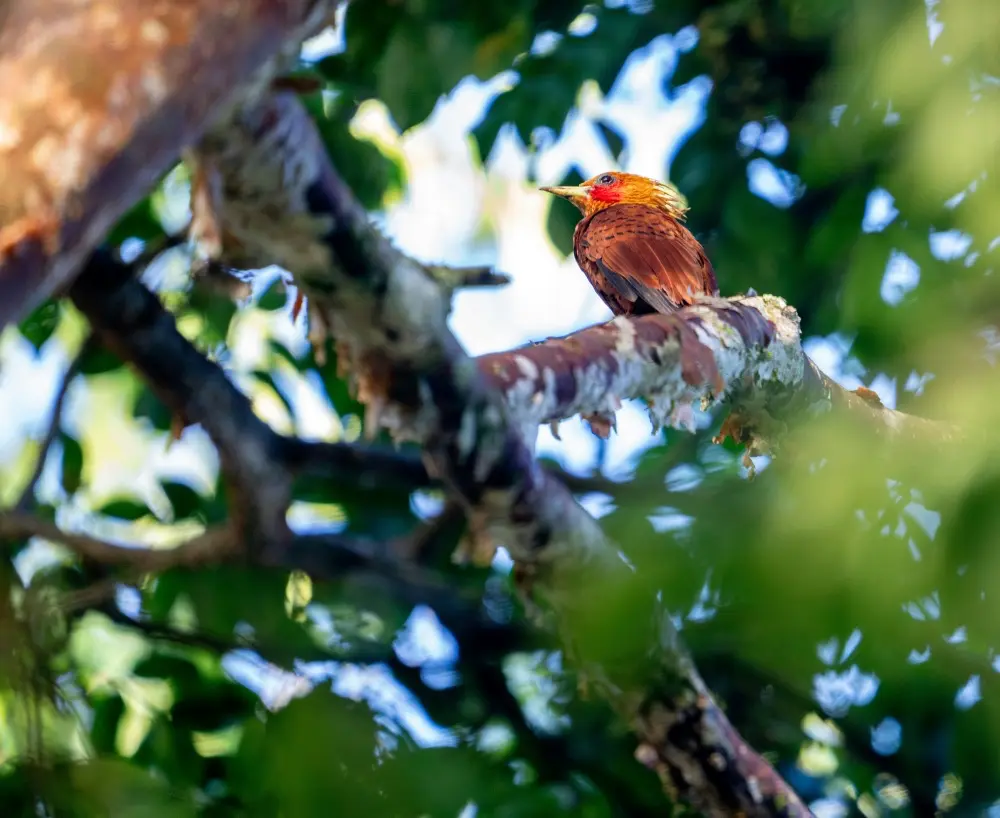
On the other hand, Tikal is one of the best places in Central America for birdwatching. Spending time observing the birds can prove surprisingly rewarding. Over 300 species have been recorded in the park, including the rainbow-billed toucan, the scarlet macaw, the ocellated turkey and the harpy eagle. Sunrise is the best time to go.
Where to eat
There are several places to eat within the park, although they are all fairly basic. The restaurants at the hotels located inside the park serve breakfast, lunch and dinner, featuring traditional Guatemalan dishes: beans, rice, stewed chicken, tamales and tortillas. Prices, however, are higher than in Flores.
Near the main entrance, there are also a few simple eateries and food stalls where you can grab a quick bite to eat before or after your visit.
Most visitors, however, choose to bring their own food and water from Flores. It's important to bring enough water: the heat of the jungle can quickly take it out of you. You should also wear comfortable clothing suitable for hiking and designed to cope with the humidity typical of jungle environments.
Where to stay
There are four hotels operating within the park: the Tikal Inn, the Jungle Lodge, the Jaguar Inn and the Posadas de la Selva. All are just a few minutes’ walk from the entrance to the ruins and offer the chance to experience sunrise and sunset without having to travel anywhere. It's worth bearing in mind that electricity and Wi-Fi connectivity are limited, and facilities are basic. In return, they offer the experience of sleeping in the heart of the jungle.
The vast majority of travellers choose to stay on the island of Flores or in neighbouring Santa Elena, which offer a wide variety of hotels and guesthouses to suit all budgets. Flores is a colonial town with a special charm, built on a small island in Lake Petén Itzá, with cobbled streets and colourful houses. Prices are significantly lower than within the park, and there is a much wider range of dining and leisure options.
Halfway between Flores and Tikal, the small village of El Remate is another very popular option. It’s just 30 minutes from the park, accommodation is very affordable and the setting, by the lake, is peaceful and beautiful.
Frequently Asked Questions about Tikal National Park
How many temples are there in Tikal?
The archaeological complex of Tikal comprises more than 3,000 recorded structures, although not all of them are temples in the strict sense. Among them are temple pyramids, palaces, platforms, altars, stelae, ball courts and administrative or residential buildings.
How long does it take to visit Tikal?
Ideally, you should set aside at least a full day for the park. If you want to make the most of the sunrise tour and explore the main temple complexes at a leisurely pace, it’s a good idea to stay overnight in the park or in Flores the night before. For a more comprehensive visit that includes the more remote temples, you may need two days.
How should you prepare for the visit?
Tikal is a safe and very well-managed tourist destination. The park has park rangers, official guides and signposting. It's recommended that you always go with a guide for dawn and dusk tours, and that you bring insect repellent, sun cream and plenty of water. The animals in the park are wild but generally pose no danger if you keep your distance.