Nine kilometres from Xela lies a village that most travellers pass by without stopping. That’s a mistake. Salcajá is home to the oldest Catholic church in Central America, produces almost 60 per cent of all woven textiles in Guatemala, and makes the most famous fruit broth in the western highlands. It’s not a picture-postcard destination, but if you want to see the country beyond the usual tourist trails, stick around and we’ll tell you all about it.
Where is Salcajá?
It's a municipality in the department of Quetzaltenango, in the western highlands of Guatemala. It covers an area of twelve square kilometres, has a population of 19,000 and lies at an altitude of 2,321 metres. The languages spoken are Spanish and K’iche’, and the patron saint is Saint Louis IX of France. The River Samalá flows through the municipal area, and the town takes its name from this river: in K’iche’, ‘sac’ means ‘white’ and ‘cajá’ means ‘bitter water’. The Spanish translation would be ‘Your water is white’.
It borders the municipality of Totonicapán to the north and east, Cantel and Quetzaltenango to the south, and San Andrés Xecul and the municipal capital of Xela to the west.
How to get there from Xela
Nine kilometres along the road towards Cuatro Caminos. By car or taxi, it takes fifteen to twenty minutes. By minibus from Quetzaltenango, it takes about twenty to twenty-five minutes and is very cheap. They run frequently from the centre of Xela; you don’t need to plan it too far in advance.

Distance from Guatemala City and other nearby destinations
It's 102 km from the capital, about two hours’ drive along the Interamericana (CA-1), passing through Los Encuentros and Cuatro Caminos. San Andrés Xecul, with its multicoloured church façade, is just a few minutes away. Las Fuentes Georginas is less than half an hour away. Salcajá makes a good stop on a longer route through the highlands.
The origins of one of Guatemala’s oldest villages
The municipality was officially founded as a town around 1776, within the jurisdiction of San Cristóbal Totonicapán. However, Salcajá appears in records much earlier: in 1524, during the early Spanish settlements, this territory already existed as the ancient town of La Paz.
The name San Luis Salcajá derives from Saint Louis IX of France, the city’s patron saint. However, there is another version recorded in the General Archive of Central America which attributes the name to Pedro de Alvarado, who chose it in honour of his wife, Doña Luisa Xicoténcatl.
Following independence in 1821, the municipality came under the jurisdiction of various authorities: Totonicapán/Huehuetenango, then the State of Los Altos in 1838, and back to Guatemala in 1840 when General Rafael Carrera recaptured the region. In this century, it became part of the Mancomunidad Metrópoli de los Altos, alongside other municipalities in Quetzaltenango and Totonicapán.
The colonial heritage of Salcajá
Five centuries of history cannot easily be confined to display cases. That is why, in Salcajá, it can be found on the church walls, in the looms that still operate using colonial techniques, and in the recipes for drinks that are prepared just as they were generations ago. A village where history is part of everyday life.
- This page about Zaculeu may interest you.
San Jacinto Church: Salcajá’s main attraction
The Ermita de la Concepción, also known as La Conquistadora: the first Catholic church built in Central America. That’s the main reason to stop off in Salcajá, and it’s well worth it.
History of the church
Pedro de Alvarado ordered its construction in the 16th century. The walls are high and thick, the windows few and far between: architecture from the early colonial period, designed to withstand the elements and provide protection. There are no unnecessary ornaments. The façade is in a sober Baroque style and the interior retains features that have stood in the same place for centuries.
Why is it considered one of the oldest in Central America?
It is not the most photogenic in the area – the church in San Andrés Xecul, just a few kilometres away, is the undisputed winner in that category – but it is the oldest. INGUAT and historical records recognise it as the first Catholic church to be built in the whole of Central America. To step inside is to physically stand in the very place where colonial evangelisation began in this part of the continent. No other building in the region can claim that.
The historical significance of the municipality in the western highlands
The church is the main tourist attraction, but Salcajá has been significant for centuries for other reasons as well. Its location on the route between the capital and Xela made it an essential stop along the way, and its production of textiles and traditional drinks gave it its own economic identity, which it retains to this day.
- We invite you to read our article about the traditional dress of Quetzaltenango.
Why visit Salcajá?
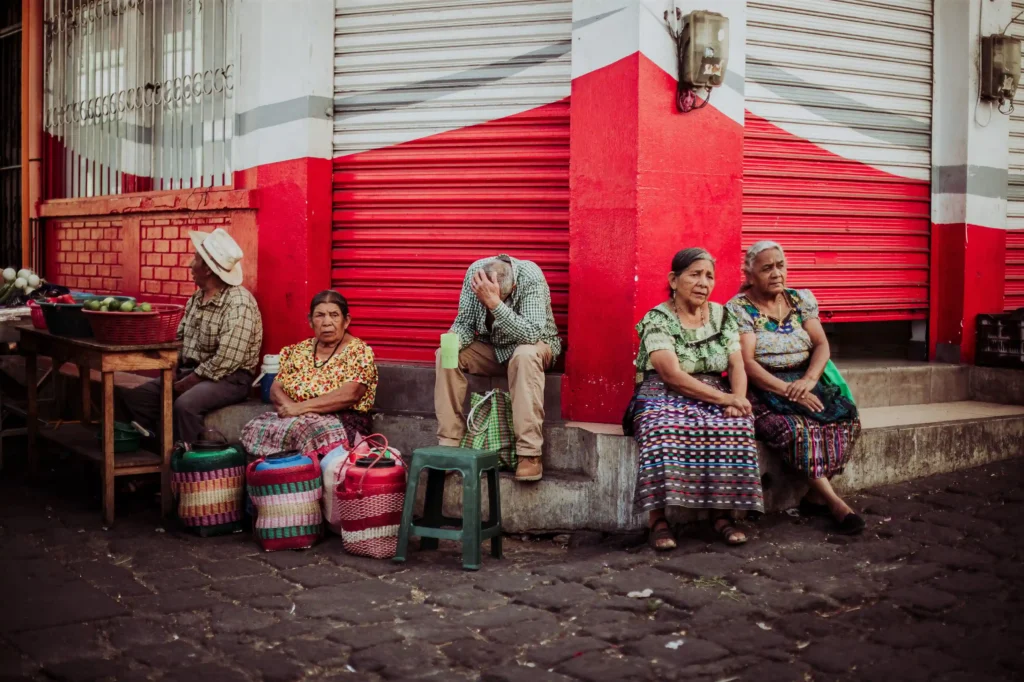
Because it’s a real village. It’s not geared towards mass tourism; there aren’t souvenir shops on every corner or restaurants with menus in several languages. It has a market, textile workshops, the oldest church in Central America and artisanal drinks that you won’t find anywhere else. If you’re looking for something authentic near Xela, Salcajá is just the place.
An ideal destination for discovering the local culture
60 per cent of the country’s fabric comes from here. That makes Salcajá a town where textile production isn’t just a tourist attraction but the real driving force behind the local economy. The looms are in full swing; the shops sell directly to distributors across Guatemala, and you can see it all for yourself by taking a stroll through the town centre.
Traditions, architecture and cuisine
Three things define Salcajá: the colonial church, the textiles and the drinks. Fruit juice and rompope are famous throughout Guatemala and originate here. You can buy them at the market or from small stalls in the town centre, directly from the people who make them.
What to see in Salcajá
The historic centre of Salcajá
The main square, the church, the market and the textile shops: all in one place, all within walking distance. You don’t need any transport to see the town’s main attractions. It’s an unpretentious historic centre where everyday life – deliveries, the market, people going about their work – coexists with the colonial buildings.
Monuments and charming spots
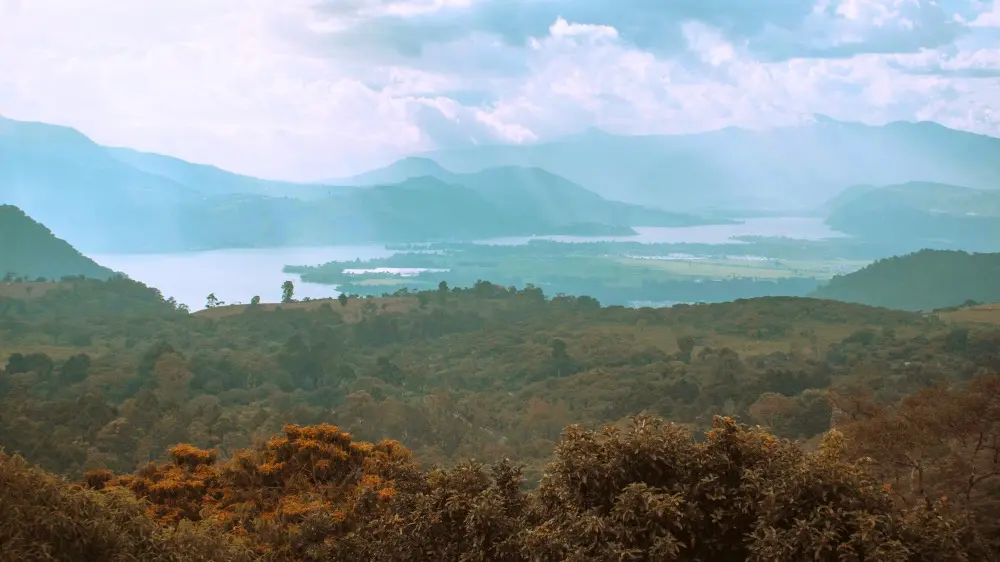
The Hermitage is a must-see, but there’s more to it than that. La Laguneta is a small natural area that the local council has developed as a recreational area. The craft market is a hub for the production and sale of local textiles. And if you have time, Cerro de Oro and Juchanep Mountain offer views of a landscape surrounded by pine, cypress, eucalyptus and fruit trees.
Traditional crafts and textiles
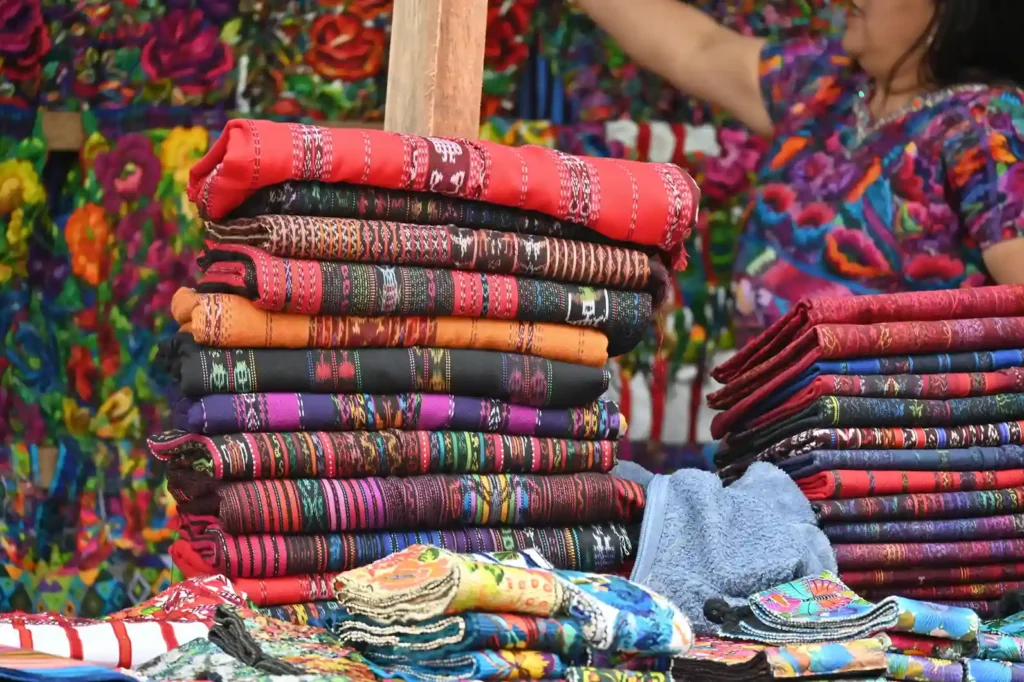
Jaspe, cut fabrics and other traditional textiles are sold directly by the producers at the market and in shops in the city centre. If you’re interested in the traditional costume of Quetzaltenango, much of the fabric used to make it comes from workshops in Salcajá. Here you can buy it without any middlemen and, if you ask, you can see the entire craft-making process.
Discover the traditional production of local drinks
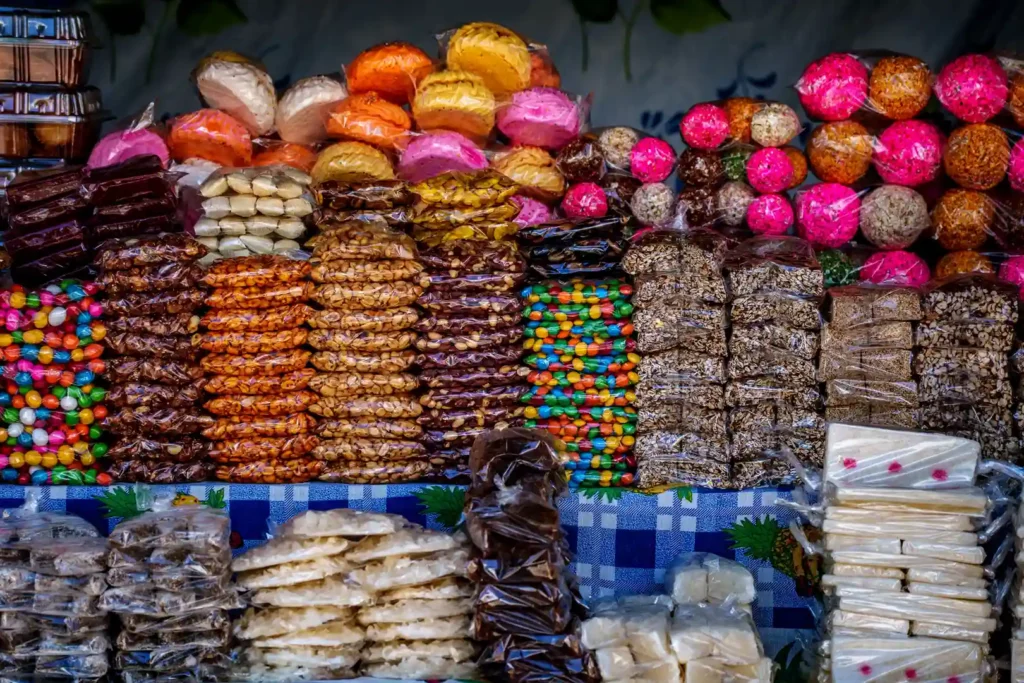
Fruit liqueur is made by macerating fruit from the Altiplano in aguardiente. Each producer has their own recipe and choice of fruit, and the differences between them are striking. Rompope – made from eggs, milk and aguardiente – is the other speciality. Both drinks are available at the market and from stalls in the town centre, and trying them in Salcajá makes much more sense than buying them bottled in Xela.
Traditions and culture of Salcajá
The municipality’s most important festivals
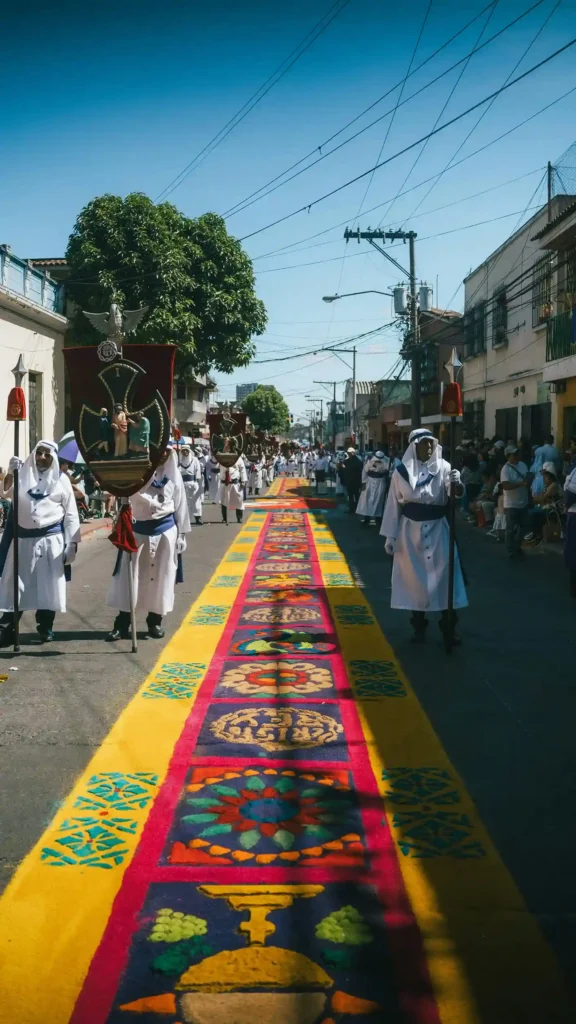
The patron saint’s festival takes place from 21 to 25 August, in honour of Saint Louis IX of France. Officially authorised in 1912, during those five days the town is filled with processions, music, an expanded market and community activities. If you happen to be there at that time, you’ll see Salcajá at its liveliest.
Traditional costumes and local customs

Textile production is not just about the economy: it's about identity. Salcajá’s fabrics combine techniques inherited from the colonial era with designs from the K’iche’ Maya tradition. Seeing the whole process – the loom, the yarn, the finished fabric – is one of those things that no guidebook can quite capture.
The village’s cultural heritage
The first church in Central America, textiles that supply the whole country, drinks based on centuries-old recipes, and a patron saint’s festival that remains the heart of the community. Salcajá covers just twelve square kilometres, yet it boasts more history than many destinations that take up three times as much space in travel guides.
The weather in Salcajá
What is the weather like throughout the year?
It’s cold all year round. That’s to be expected at an altitude of over 2,300 metres. The wind picks up during the dry months and the nights get quite chilly at any time of year. Even if you’re leaving Guatemala City in warm weather, take a coat anyway: you’ll need it in Salcajá.
Average temperatures by season
Between November and April, the days can be pleasant, with maximum temperatures of 18–20 °C, but temperatures easily drop below 10 °C at night. During the rainy season, from May to October, the afternoons are damp and the night-time chill is more pronounced. Nothing extreme, but it’s best to be prepared.
Best time to visit Salcajá
Dry season, from November to April: clear days, dry tracks, and more comfortable conditions for getting about. If you can go from 21 to 25 August, you’ll be right in the middle of the rainy season, but with the local festival in full swing and the town at its liveliest. Both options make sense; it depends on what you prioritise.
Traditional dishes from the region
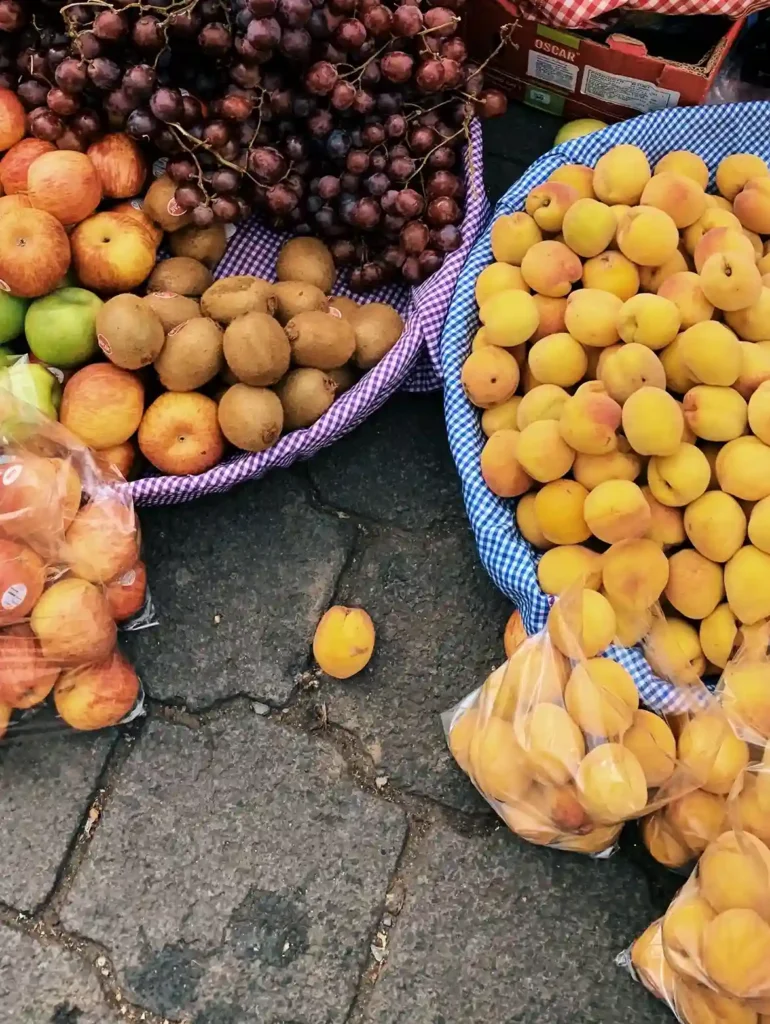
Soups, tamales, stuffed chillies, and dishes made with maize and beans. The cuisine of the Guatemalan highlands, in all its simplicity. At the Salcajá market, you can eat well and cheaply, with seasonal produce straight from the town’s vegetable gardens: apples, peaches, maize, broad beans and vegetables.
The famous fruit broth
Salcajá’s most exported product, although here it’s bought in a different way: straight from the producer, using their own recipe and the fruit of their choice. The base is always the same – Altiplano fruit macerated in aguardiente – but each version has its own character. Try it at the market before you buy, so you can take home the one you like best.
How to combine a visit to Salcajá with other destinations in the region
Salcajá is a good place to stop for lunch on a longer journey. From here, the Quetzaltenango Municipal Theatre, Cerro El Baúl and Cerro Quemado are all less than an hour away. For nature lovers, the Chicabal Volcano and its sacred lake are less than 45 minutes away. The Santa María Volcano is also within a day’s journey from Xela.
A winning combination: tomorrow in Salcajá – church, textiles, fruit broth – and in the afternoon at the Fuentes Georginas to round off the day with thermal waters and cloud forest.
Frequently Asked Questions about Salcajá
Why is the church in Salcajá famous?
It's the first Catholic church to be built in Central America, erected on the orders of Pedro de Alvarado in the 16th century. It is not particularly large, but its historical significance is unrivalled in the region.
What is produced in Salcajá?
Almost 60% of all the fabric produced in Guatemala. Also fruit broth and rompope, two traditional drinks with centuries of history in the municipality, which you can buy directly at the local market.
How do you get to Salcajá from Quetzaltenango?
It’s 9 km away. By minibus from Xela, it takes twenty to twenty-five minutes and is very cheap. By taxi or in your own car, it takes between fifteen and twenty minutes along the road towards Cuatro Caminos.
When is the Salcajá fair?
From 21 to 25 August, in honour of Saint Louis IX of France. Five days of religious and cultural events and a market, marking the most festive time of the year in the town.