There are buildings that simply fulfil their purpose, and then there are those that end up becoming part of a city’s soul. Without a shadow of a doubt, the Quetzaltenango Municipal Theatre is one of the latter.
You might end up there because you’ve jotted it down on a list somewhere, or because someone mentioned it in passing. Whatever the reason, as soon as its façade comes into view at the end of the street, you’ll stop in your tracks. And you don’t need to be an expert in architecture or local history to react like this: this building has a certain gravitas, a presence that you sense before you can explain it.
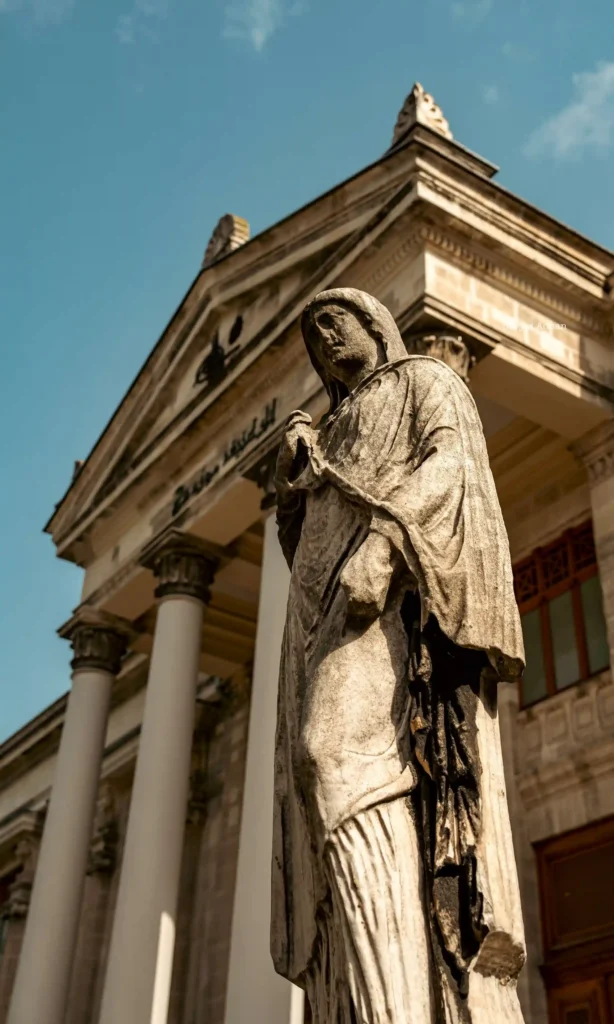
More than a hundred years of concerts, theatre, civic events and moments that have shaped Xela’s cultural life have quietly accumulated within these walls. What this theatre represents goes far beyond its programme. It is a source of local pride, built of stone. The people of Xela point to it when they want to explain where they come from, and the rest of the country recognises it as one of Guatemala’s most valuable architectural treasures.
If Xela isn’t already on your itinerary, you can now add it to your itinerary if you’re coming to Guatemala. And if it’s already on your list, make sure you spend more than five minutes visiting this theatre, as it deserves more than just a quick look and a couple of photos. In this article, we’ll tell you about its history, its architecture and some details about the interior that few people know about.

What is the Quetzaltenango Municipal Theatre?
One of Xela’s most iconic buildings
Ask any resident of Quetzalteco which building best represents their city, and you can be almost certain that most will say the Municipal Theatre. It is no coincidence that most people agree on this, as it has stood in the heart of Xela’s historic centre since the late 19th century, forming part of the city’s skyline as if it had always been there – which, in a way, is true. The most curious thing is that such a prominent place in history has not turned it into a museum piece. It remains a living space, with its own programme of events and an audience that fills it to capacity.
Its cultural significance for Quetzaltenango
Ever since it opened its doors, the theatre has been a meeting place for everything that makes a city great: artists, musicians, writers and members of the public keen to share something. Symphonic concerts, cultural festivals, theatre performances, and academic and institutional events have filled decades of cultural life, all concentrated in a single space.
For many people from Quetzaltenango, this building is not just a piece of history: it has become a personal memory. The venue of that first concert, of that school event that is still remembered, of the first time the world of the performing arts opened up wide. That sort of connection is not forged by architecture alone. It is forged over time and through shared experiences.
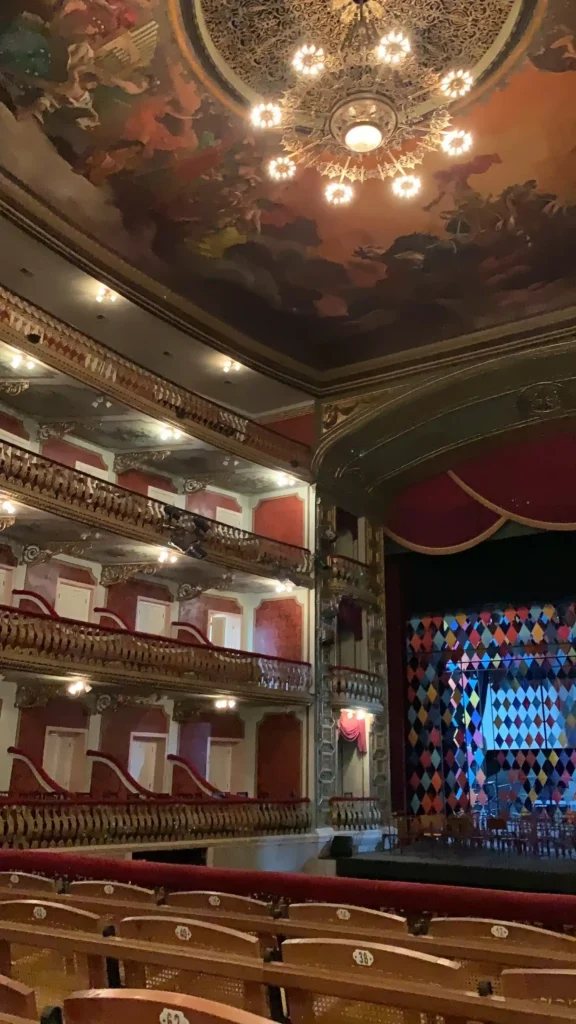
Few of Xela’s historic buildings are concentrated in a single location. History, architecture, heritage value and the opportunity to explore the interiors combine to create an experience that is hard to beat for anyone wishing to truly understand the city’s cultural character. What’s more, it is strategically located: surrounded by other places of interest, such as Cerro El Baúl, just a 15-minute walk away.
- We invite you to read our article about what to see and do in La Esperanza.
History of the Quetzaltenango Municipal Theatre
Its origins and construction
Quetzaltenango had a clear vision at the end of the 19th century: to grow, and to do so with ambition. The city wanted to establish itself as the country’s leading urban centre, and to achieve this it needed a space that would live up to what it was becoming.
It was in 1891 that construction began and that the foundation stone of the Municipal Theatre became the cornerstone of something far more difficult to build: a cultural identity that western Guatemala could not ignore. Years of construction work and a considerable financial outlay on the part of the local authorities and various sectors of Quetzaltenango society.
The opening and the first performances
The theatre opened its doors on 19 July 1895. Since then, it has hosted concerts, theatre performances and official events. But the theatre represented something more: it became the place where Quetzalteca society came together, recognised one another and shared experiences. Attending a performance was also a social experience, and that gave the theatre a dimension that went far beyond its programme. That role was not part of any architectural plan, and yet it ended up being the most important of all.
Its development as the city’s cultural centre
The theatre’s history has not been an easy one. The earthquakes that struck western Guatemala in 1902 dealt a severe blow to the building. The damage was devastating, but the response to such a catastrophe was unanimous: to rebuild and not to give up. And that decision is also part of what you see today when you look at its walls. Over the decades, the theatre has continued to adapt to the times without losing sight of what is truly essential. Today, it remains one of Quetzaltenango’s most important cultural landmarks and a venue where artists from all over Guatemala still long to take to the stage. That is not something that can be improvised.
- We invite you to read our article about the San Andrés Xecul Church.
Where is the Quetzaltenango Municipal Theatre?
Location in the historic centre of Xela
Right in the heart of the historic centre, where much of Xela’s most interesting architecture is concentrated. This location makes it the perfect starting point for continuing to explore the city on foot, without needing to take any form of transport.
How to get to the theatre
If you’re staying in the city centre, you’ll most likely be able to walk there, which is the best way to get to know any city. Xela’s historic centre is compact and quite pleasant to explore on foot: the main attractions are close to one another and every street has something to see. If you prefer, a taxi or local transport will drop you right at the door from anywhere in the city.
Leaving the theatre and carrying on walking is one of the best decisions you can make. The building is surrounded by churches, such as San Nicolás, squares, such as Plaza Cantabria, and heritage architecture that naturally round off the walk. Or you can simply sit in a quiet corner of the town centre and let the daily rhythm of Xela unfold before you – which also has its own charm.
What to see in the surrounding area
The theatre is surrounded by some of Quetzaltenango’s most interesting spots, so it makes sense not to rush off as soon as your visit is over. Churches, squares, heritage buildings and the Central America Park are all just a short walk away. If you’re planning a more extensive itinerary, combining a visit to the theatre with other sights in the historic centre is the most natural way to get to know the city and its local culture.
Architecture of the Quetzaltenango Municipal Theatre
The architectural style of the building
The architecture is truly marvellous. It exudes elegance, balance and a grandeur that stands out with style against the urban landscape of Xela. Even those who pass by with no intention of stopping find themselves gazing at it for a few minutes.
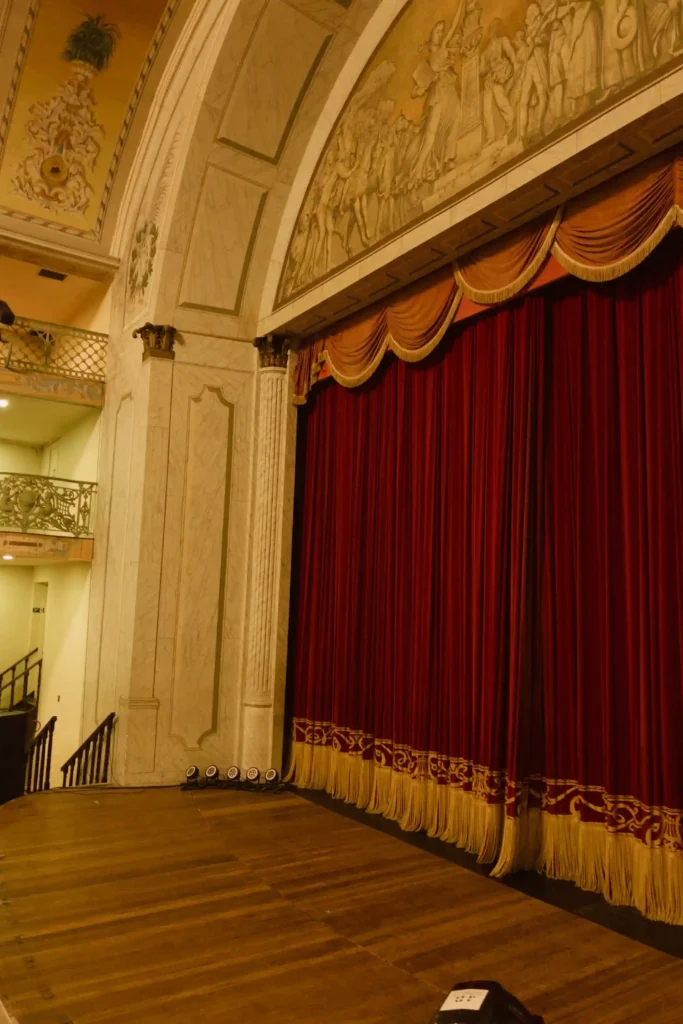
The façade and its most striking features
The façade is the first thing that catches your eye. Columns, mouldings, balconies and ornamental details that stand out clearly against the urban landscape of Xela. If you’ve got a camera with you, it’s well worth visiting first thing in the morning or at dusk, when the light does the work for you.
European influences on its design
You will see that the European influence is evident: at the time of its construction, there was great admiration for the architecture of the Old Continent, and this is evident in the composition of the façade and in numerous interior details. But far from being a mere copy, these references were reinterpreted with a distinctive approach to suit the country’s local context and the cultural aspirations of a city that had a very clear vision of what it wanted to be.
Inside the Quetzaltenango Municipal Theatre
The main hall and its layout
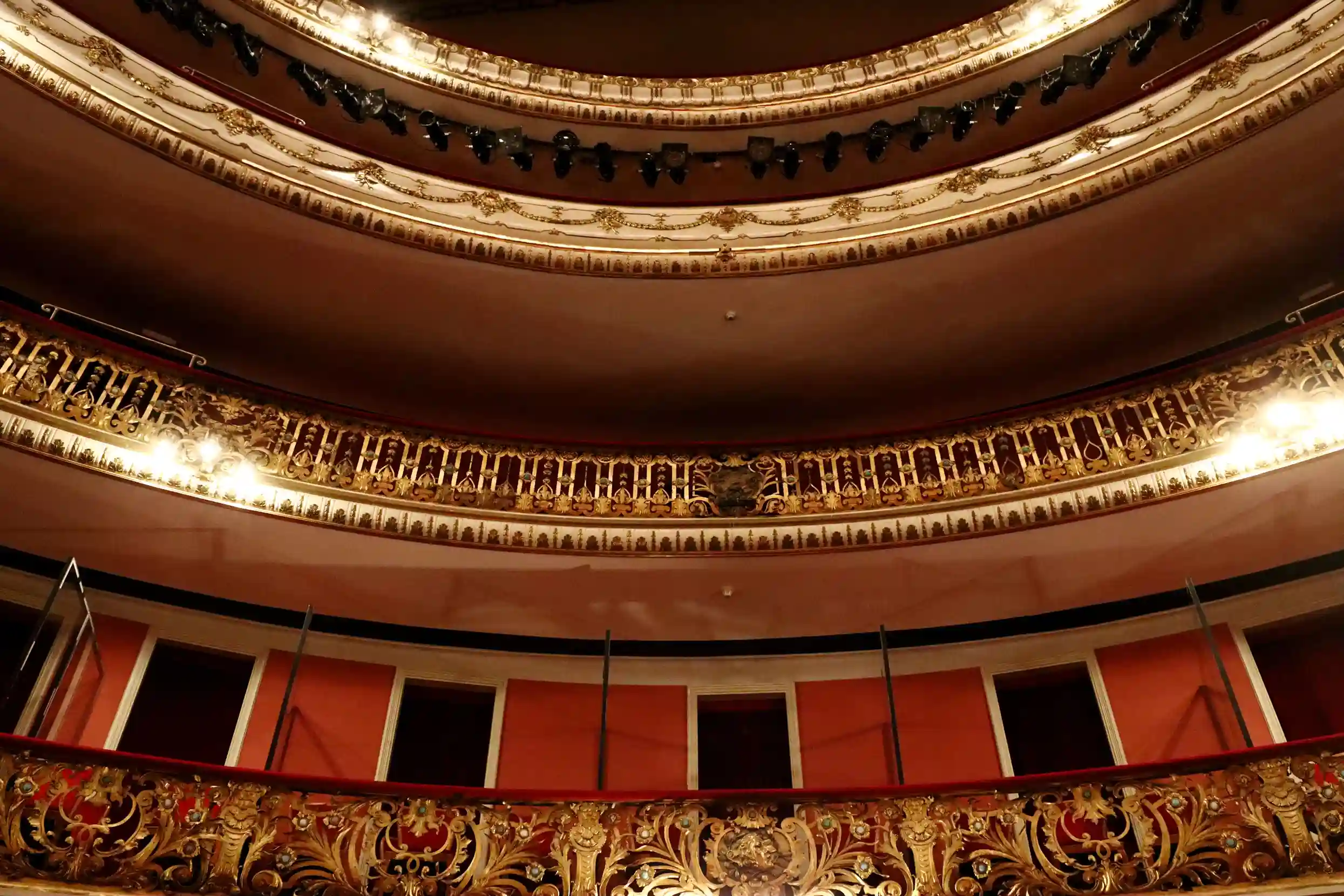
Whilst the exterior is impressive, the interior is often even more surprising. The main auditorium retains that atmosphere found only in great historic theatres: the sense that something significant has taken place within those walls, time and again. Its layout ensures excellent visibility from every seat in the house and preserves the charm of buildings from a bygone era.
The most striking decorative details
Lamps, mouldings, balconies and ornamental features that create an elegant atmosphere and effortlessly transport you to another world. It’s worth taking your time as you explore the building, as many of these details go unnoticed at first glance, and yet they are precisely the ones you remember most afterwards.
The theatre’s stage and acoustics
For decades, the stage has been the heart of the building. Theatre companies, musicians, dancers and artists from all over the country and abroad have graced its stage. And the acoustics, which are still highly prized for concerts and performances, are one of those details that can only be fully appreciated when you hear the first note from the stalls.
What to see during a visit to the Quetzaltenango Municipal Theatre
Historic areas of the building
It’s worth not just heading straight to the stage. The passageways, entrances and preserved historic areas have just as much to offer as the main hall – sometimes even more.
Works of art and decorative items
The building features artistic elements scattered throughout its various spaces, which enhance the visitor experience. Many visitors head straight for the main hall, but it is the small details encountered along the way that ultimately end up in the photos and remain in the memory.
The theatre’s most photographed spots
The main façade, the interior balconies and the view of the stage are usually the most popular spots. But if you take your time and explore with curiosity, you’ll find angles that most people overlook. We invite you to discover them.
Artistic and heritage features of the interior
The interior retains historical features that form part of Quetzaltenango’s cultural heritage. Beyond the décor, each space helps visitors to understand the role the theatre played in the city’s social and cultural life for over a century. It is not simply a tour of the auditoriums: it is a journey through the layers of history.
- We invite you to read our article about the traditional dress of Quetzaltenango.
Events and activities at the Quetzaltenango Municipal Theatre
Concerts and cultural events
The programme of events remains one of the theatre’s main attractions. Throughout the year, there are concerts, recitals and artistic activities that bring the building to life in a way that no visit during museum opening hours can fully replicate.
Plays and shows
The performing arts continue to play a significant role in the programme. Attending a performance allows you to experience the building from a completely different perspective – one that is not easily forgotten.
Festivals and special events
As well as its regular programme, the theatre takes part in cultural events and festivals, such as the International Poetry Festival, which attract both local residents and visitors from further afield. It’s worth checking what’s on before you go.
Interesting facts about the Quetzaltenango Municipal Theatre
As we have already mentioned, the theatre opened its doors in 1895. It survived the earthquakes of 1902 thanks to subsequent reconstruction work. It has a capacity of over a thousand spectators. It remains one of the main cultural centres in western Guatemala. It is also regarded as one of Quetzaltenango’s most important heritage buildings. It is not a building preserved by decree. It is a theatre that still functions as a theatre, and that is very difficult to sustain nowadays given the surge in tourism.
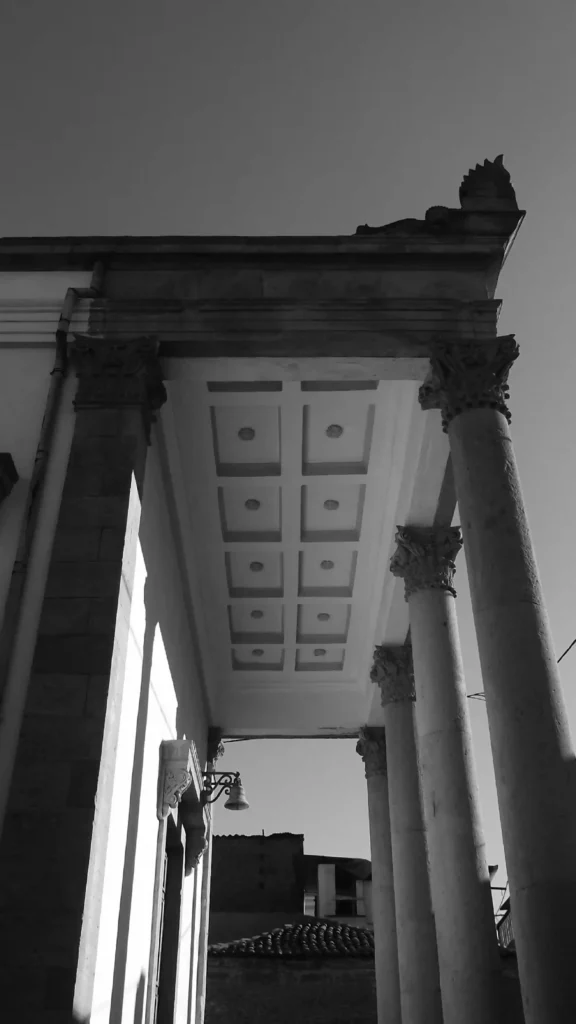
Things to do near the Quetzaltenango Municipal Theatre
A stroll through the historic centre of Xela
The best way to round off your visit is to wander aimlessly through the streets of the historic centre. Xela is on a human scale, which encourages you to stroll at a leisurely pace, and there’s something to discover around every corner.
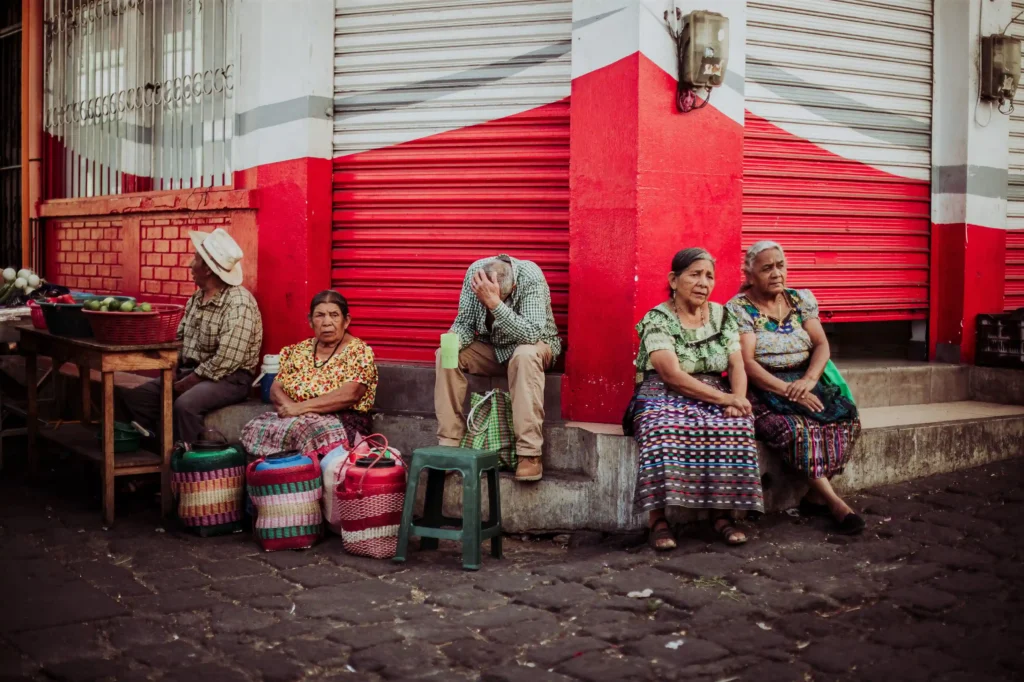
As you explore the historic centre, you’ll also have the chance to discover one of the city’s most distinctive cultural expressions: the traditional costume of Quetzaltenango. Its fabrics, colours and embroidery are part of Xela’s identity and remain a feature of markets, festivals and everyday life in many communities across the highlands.
Visit the Central America Park
One of the city’s main meeting places and the perfect spot to watch the daily rhythm of Xela unfold, without any rush or set plans. One of those spots where simply sitting down is the plan.
Discover other historic buildings in Quetzaltenango
The city has a remarkable historical richness. Every building you come across in the city centre has a story behind it that helps you understand why Quetzaltenango has always been much more than just a stop-off point.
Tips for visiting the Quetzaltenango Municipal Theatre
Opening hours and access to the building
Opening times vary depending on the programme, so it’s worth checking that the theatre is open on the day before you go. A quick glance at their programme will save you a wasted trip.
Tips for taking a guided tour
If a guided tour is available, don’t hesitate. Local guides have that blend of historical knowledge and personal anecdotes that turns a pretty building into something truly memorable. What they tell you won’t be found on any sign or information board.
The best time to discover the theatre
If you have the choice, combine your visit with a cultural event. Seeing the building full of local people and in full swing is the best way to understand why it remains so important to the city. There are some things you can only understand that way.
An architectural gem that continues to breathe life into Xela
There are buildings you remember for their architecture. Others for the history they hold. And then there are those that manage to do both at the same time.
The Quetzaltenango Municipal Theatre is one of the latter. You might be drawn there by its façade, on the recommendation of a friend, or simply because it’s part of a tour of the historic centre. But when you leave, it won’t be the columns or the balconies that you’ll remember.
You’ll recall that this building has been the place where Xela has come together to celebrate, to create and to listen for over a century. That different generations have passed through those doors to share the same moments. That isn’t built by architecture. It’s built over time. And that’s exactly what makes it worth stepping inside.
Frequently Asked Questions about the Quetzaltenango Municipal Theatre
Where is the Quetzaltenango Municipal Theatre?
Right in the heart of the historic centre, where much of Xela’s most interesting architecture is concentrated. A perfect location for combining your visit with a stroll around the neighbourhood without having to travel far.
Is it possible to visit the interior of the Quetzaltenango Municipal Theatre?
Yes, although it depends on the programme and availability at any given time. You can visit as part of an organised tour or by attending a cultural event. In any case, it’s well worth a try: the interior is just as impressive as the façade, if not more so.
What architectural style is the theatre in?
Neoclassical, with an unmistakable European influence: this is evident in the columns, the mouldings and every decorative detail that adorns the building both inside and out. It was a time when Latin American cities looked to the Old Continent as a model, and Quetzaltenango was no exception. The difference is that the result was not merely an imitation but something unique, with enough character to endure for over a century without losing its presence.
What events take place at the Quetzaltenango Municipal Theatre?
There is a varied programme of events: concerts, plays, cultural festivals and recitals throughout the year. You can check the up-to-date programme on their website: https://teatromunicipalquetzaltenango.org/