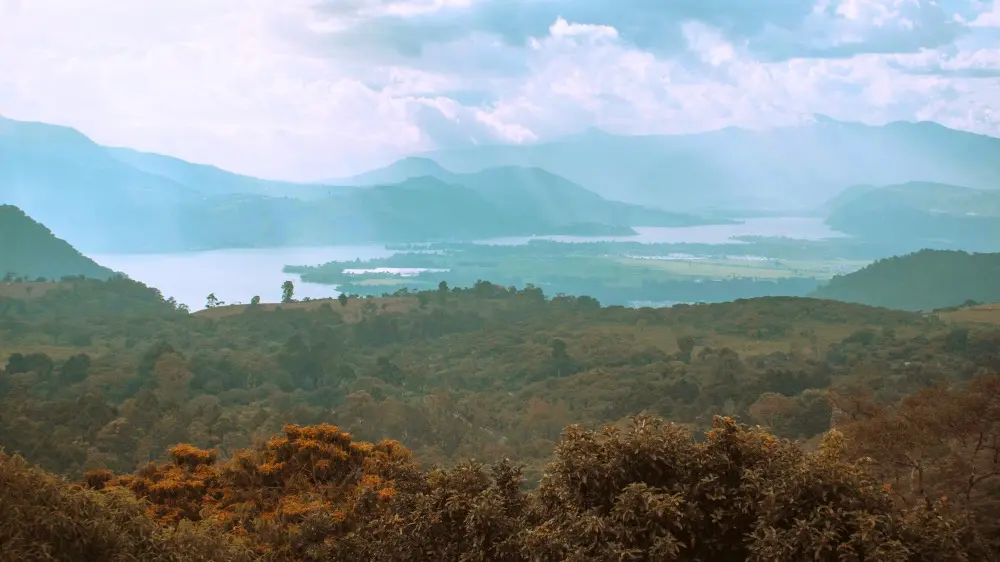
Lake Amatitlán is a vast expanse of water covering more than 15 square kilometres. It's a magnificent place that has traditionally been regarded as a hallmark of Guatemala's tourist appeal. Set amongst volcanic terrain, this unique spot – a vast lake occupying an ancient crater – lies just 25 kilometres from the capital, enticing travellers with its vastness, its vegetation and its charm: that of a water park offering fun, nature and unforgettable views. A visit here is almost a must for tourists arriving in the country. And it’s hard to be disappointed.
Amatitlán is a name of Nahuatl origin (one of the most widely spoken indigenous languages in Central America): it means ‘surrounded by amates’, referring to Ficus insipida, the predominant species of tree that once covered its shores. The area around the lake was inhabited by its original inhabitants before the Spanish conquest. Thus, in the popular imagination, the lake connects the past, history and natural heritage.
Today, more than two million people live in the Amatitlán basin, spread across 14 municipalities in the departments of Guatemala and Sacatepéquez. Four of these municipalities surround the lake: Amatitlán, San Miguel Petapa, Villa Canales and Villa Nueva. They rely on a vital water resource, which is also essential for the capital’s metropolitan area.
The layout of Amatitlán and how to get there
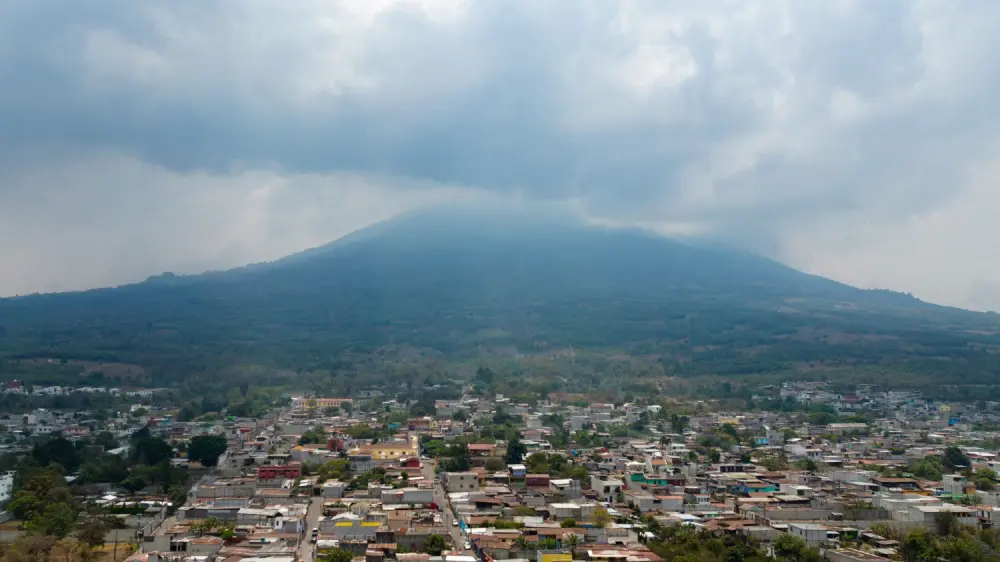
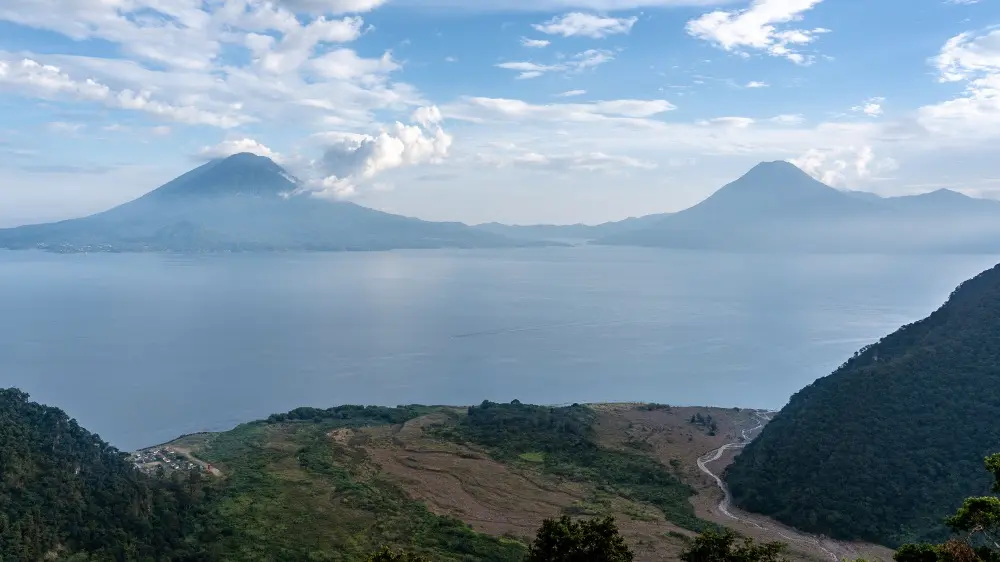
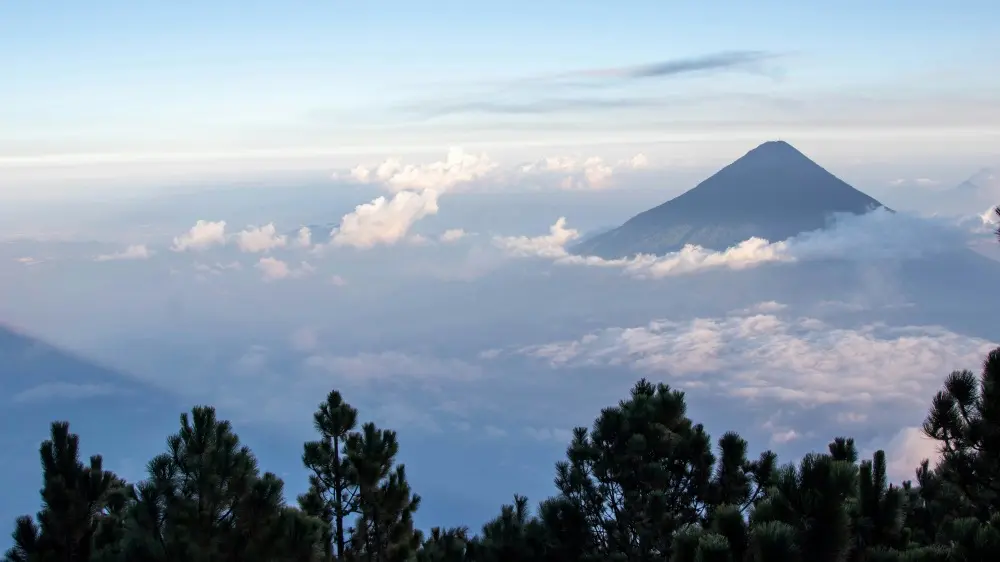
The lake is situated at an altitude of 1,188 metres above sea level, and from there you can see the Agua, Pacaya and Fuego volcanoes. Measuring 12 kilometres long and 3 kilometres wide, Amatitlán has an average depth of 18 metres, although in some places it can exceed thirty metres.

The lake itself is artificially divided into two parts. This division is due to a dam some 200 metres long, which was built in 1882 to extend the railway line to the capital. This structure is known locally as ‘El Relleno’.
The journey from Guatemala City takes approximately one hour if you set off from the city centre. By car, the most common route is via the El Salvador Highway (CA-2), continuing on the Amatitlán Lake Ring Road. The road is clearly signposted to various spots around the lake, including Amatitlán’s public beach, IRTRA Park and the Santa Elena Barillas viewpoint.
If travelling by public transport from the capital, you can take the bus routes that depart from the Zona 11 Terminal and the San Marcos La Laguna market. These offer good value for money and run directly to the village of Amatitlán, where you’ll find the public beach and the lakeside restaurants.
Access points to the lake
Amatitlán’s public beach is the best-known access point. The National Rowing and Canoeing Federation has its headquarters at one end of the beach. A range of water sports can be enjoyed on the beach, and visitors can take in a magnificent panoramic view of the landscape.
On the shores of the lake lies the first park run by the Guatemalan Private Sector Workers’ Recreation Institute (IRTRA), which offers facilities for hosting events, restaurants and holiday cottages.
The Santa Elena Barillas Viewpoint offers spectacular views of the lake and the Pacaya and Agua volcanoes. It's situated on Departmental Road GUA-27, which runs down from Departmental Road GUA-10 to the lake.
The National Sailing Association is situated at kilometre 32 of the ring road, in the village of Belén. Something for sailing enthusiasts to bear in mind.
The natural beauty of Lake Amatitlán
The origins of Lake Amatitlán date back to the Quaternary Period and are linked to the tectonic and volcanic activity caused by the Pacaya, Agua, Fuego and Acatenango volcanoes. These natural phenomena formed a large cavity and, within it, an impressive lake that initially covered an area of more than 40 square kilometres. Erosion and subsequent seismic activity have gradually reduced the size of the lake to its current dimensions.
The River Villalobos is the largest tributary of Lake Amatitlán. In total, the rivers in the lake’s catchment area stretch for 289 linear kilometres. The lake’s water, as a hydrological resource, is used for domestic purposes and electricity generation, in addition to the fishing industry in the area and its tourist attractions, which include a wide variety of water sports.
In fact, Amatitlán’s suitability for water sports has made it the venue for various international competitions over the years. These include the Central American Games.
Vegetation and flora
Native species such as clove grass and tul, amongst others, can be found on the shores of the lake. Lechuguilla is the characteristic plant that floats on the waters of Amatitlán, where various types of algae can also be found.
Animal life and biodiversity
Lake Amatitlán is home to a wealth of aquatic biodiversity. So much so that recreational fishing is permitted, although it's regulated by UNIPESCA.
- We invite you to read our article about Laguna de Calderas.
Things to do at Lake Amatitlán
Water sports and walks are just some of the activities you can enjoy around the lake.
Boat trips
Visitors can take boat trips to see the lake from different angles. Local guides share information about the area’s history, adding an extra educational dimension to the tourist experience.
A family holiday
The Amatitlán Water Park is a comprehensive complex featuring swimming pools, play areas and relaxation areas. It's the ideal place to enjoy a more leisurely and peaceful day.
Hiking
The area surrounding Las Ninfas Park is ideal for walking, photography and getting out into nature. It's also a peaceful option for those who prefer a quiet setting, with rest areas where visitors can take a break and have a picnic.
Enjoy the local cuisine.
The restaurants situated on the lakeshore offer a variety of traditional dishes such as fried fish (including the typical mojarras), served fresh and prepared in the traditional style. In the village of Amatitlán, there is also no shortage of traditional sweets at the stalls on Calle de las Ninfas.
Water sports
Kayaking and stand-up paddleboarding are very popular activities – always under supervision – and ideal on a calm lake such as Amatitlán. Other activities include rowing, canoeing and sport fishing.
Hot spring baths
There are several places in the surrounding area offering hot spring baths. These facilities add a wellness tourism dimension to the destination.
Pedalos
Pedalos are a very popular activity on Lake Amatitlán. They offer a fun experience at a leisurely pace that allows you to enjoy the scenery.
Legends and traditions of Amatitlán
One of the unique sights offered by Lake Amatitlán is its water processions. Legend has it that these originated with the construction of ‘El Relleno’: the workers would spend the whole day stacking stones, only for them to disappear during the night. One night, the foreman decided to investigate and discovered that a small child, barely a couple of years old, would approach the stones and kick them away.
In the story, the stones rolled and sank to the bottom of the lake. When the warden rebuked the boy, he replied that all that land belonged to him and that no one had asked his permission to build the dam. In return for allowing its construction, the boy asked for an altar to be built in his honour and for a water procession to be held.
Amatitlán, in fact, holds two water processions a year. The main and best-known of these is that of the Child Jesus of Amatitlán, which takes place on the Feast of the Holy Cross (3 May). It sets off from Amatitlán’s public beach. The sacred figure remains for a few hours on a rock situated on the shores of the lake, known as ‘la silla del niño’.
The second water procession is that of the Child Jesus of Bethlehem; it's a more modest affair and takes place on the south-eastern shore of the lake during Holy Week. It sets off from the church in Aldea Tacatón, and its acolytes go from house to house along the shore asking for alms.
The economy and environmental awareness at Lake Amatitlán
Lake Amatitlán is of great economic, historical, cultural and religious importance; it's the last remaining water reservoir in the Guatemala City metropolitan area. The economy of the municipality of Amatitlán is based on agriculture, livestock farming, fishing and handicrafts.
Local tourism also plays a part, with numerous domestic visitors coming from the capital. The hotel and catering sectors likewise account for a small part of economic activity. The same applies to the property market that has developed around homes near the lake, which are used for recreational purposes or as leisure-related accommodation.
In the Amatitlán region, it's impossible to overlook the major problem that arose in the lake itself and its surroundings due to water pollution from the mid-20th century onwards. In fact, this environmental deterioration led to its decline as a tourist attraction: a role which the local authorities, with the support of community groups, have been trying to restore in recent years.
With this aim in mind, numerous environmental clean-up and restoration projects have been launched to gradually improve the entire recreational area until it's restored to its original state. The aim is thus to give a further boost to economic activity around a lake that is clean and has been revitalised from a conservation perspective.
In this regard, it's essential that visitors to Amatitlán do not lose sight of this ecological perspective, and that they look after the environment by practising responsible tourism.
- This page about natural wonders in Guatemala may interest you.
How to prepare for your trip
Lake Amatitlán can be visited all year round, but the best time to visit is between November and April, when the weather is drier and the temperatures are more pleasant. During the rainy season (May to October), activities may be limited. Access routes may even be cut off, or the conditions may be unsuitable for travel.
It's advisable to wear comfortable, light clothing suitable for the warm weather at the lake. For water activities, it's recommended that you bring a swimsuit, a swimming cap and suitable footwear. Don’t forget your sun cream, sunglasses and head protection, as the lake is directly exposed to ultraviolet rays.
It's also advisable to carry some cash if you plan to visit small shops or restaurants where card payments are not accepted. And for local transport.
The lake is currently undergoing environmental restoration, so it's essential to respect environmental regulations, not to litter, not to pollute and to follow the instructions of the local guides.
Amatitlán’s public beach and parks have set opening and closing times. It's advisable to check the opening hours before you visit to avoid any unpleasant surprises.
For water sports, it's advisable to use the services of certified organisations that provide supervision and suitable equipment. The National Rowing and Canoeing Federation and the National Sailing Association are key points of reference for safe water sports activities.
Frequently Asked Questions
When is the Niño de Amatitlán festival?
The patron saint’s festival is held on 3 May in honour of the Child of Amatitlán, on the Feast of the Holy Cross. On this day, the water procession of the Child Jesus of Amatitlán takes place.
When is the best time to visit the lake?
The best time to visit is between November and April, when the weather is drier and temperatures are moderate. Weekdays are noticeably less crowded than weekends.
What spectacular views can you enjoy?
From the Santa Elena Barillas viewpoint, on Departmental Road GUA-27, you can enjoy spectacular views of the lake and the Pacaya and Agua volcanoes. On Road GUA-10 there is a hotel and restaurants offering similar views