Totonicapán is one of those destinations in the Guatemalan highlands that you cannot fully experience in a single visit. Its main attraction lies not only in its magical, cool, mountainous landscape. Here, travellers can discover a rich history, K’iche’ Maya traditions that remain deeply rooted in the local culture, and a community living in harmony. And traditional clothing that encapsulates their entire identity.
Where is Totonicapán?
Situated in predominantly K’iche’ territory, Totonicapán forms part of a cultural corridor linking Quetzaltenango, Sololá and other parts of the western highlands. This location makes it a place of transit, but also a destination with its own identity, where visitors can experience an indigenous Guatemala that is vibrant and proud of its traditions.
Location of the municipality in Guatemala
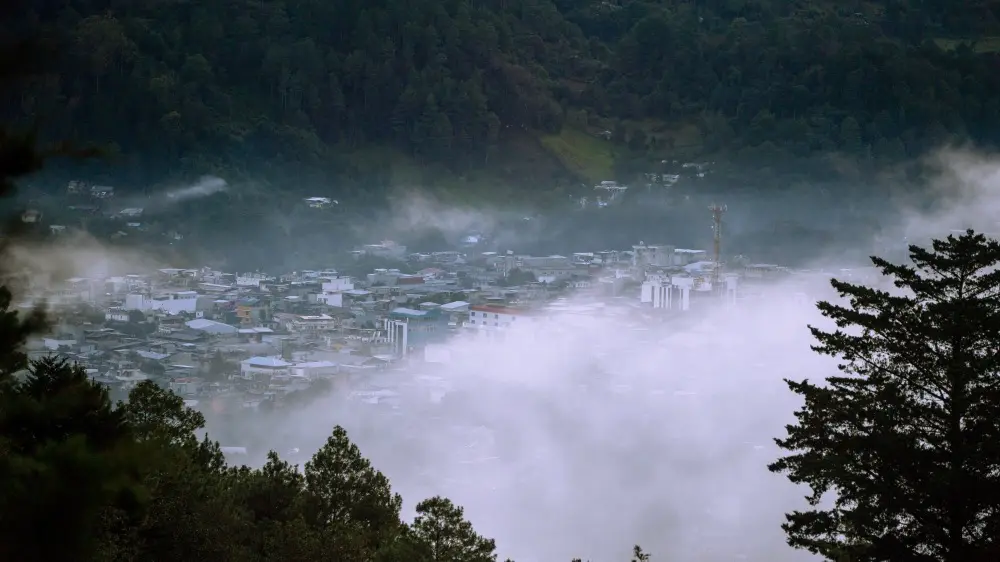
Totonicapán lies to the south-west of the country’s capital, within the western mountain range. Its location explains both its climate and its history: it's a region characterised by subsistence farming, communal forests and ancient paths that foster exchange between villages.
How to get there from Quetzaltenango
From Quetzaltenango, the distance ranges from 19 to 27 kilometres, depending on the route. The journey by car usually takes between 20 and 30 minutes. The most direct route follows the road linking Quetzaltenango with Totonicapán, passing through the areas of San Bartolo and Agua Caliente.

There are also buses that leave from Zone 2 in Quetzaltenango: they are an affordable option for the journey.
Connections to other destinations in the Altiplano
From Totonicapán, it's also easy to reach Sololá, Momostenango, San Cristóbal Totonicapán and other K’iche’ villages.
History of Totonicapán
The history of Totonicapán is closely linked to the K’iche’ world, the colonial era and the development of a strong sense of community that has withstood the changes. It's a place where history remains present in the way people speak, dress, celebrate and organise the territory.
Its pre-Hispanic and colonial past goes a long way towards explaining its current identity. In Totonicapán, history is not found solely in archives or books, but also in the continuity of customs, in the structure of the brotherhoods, in community rituals and in the oral tradition that is still very much alive.
Pre-Hispanic and colonial origins
Before the arrival of the Spanish, the region was inhabited by Mayan peoples linked to the K’iche’ world, one of the great civilisations of the highlands. Their political organisation, their conception of the territory and their methods of production laid the foundations upon which the colonial city was later built. As in other parts of Guatemala, the conquest transformed the structure of power, but did not erase the indigenous identity.
During the colonial period, Totonicapán gained prominence as a settlement organised around religious, administrative and commercial institutions.
The development of the municipality over time
Over the centuries, Totonicapán gradually adapted to new political and economic contexts without losing its community-based character. Local life was characterised by agriculture, trade, craftsmanship and the maintenance of a strong social fabric, in which communal authority played a central role.
Totonicapán as the cultural centre of the western highlands
The influence of Totonicapán is evident in textile production, popular religious practices, handicrafts and the way in which communities articulate their identity, balancing indigenous and mestizo elements, as well as local and regional influences.
Culture and traditions of Totonicapán
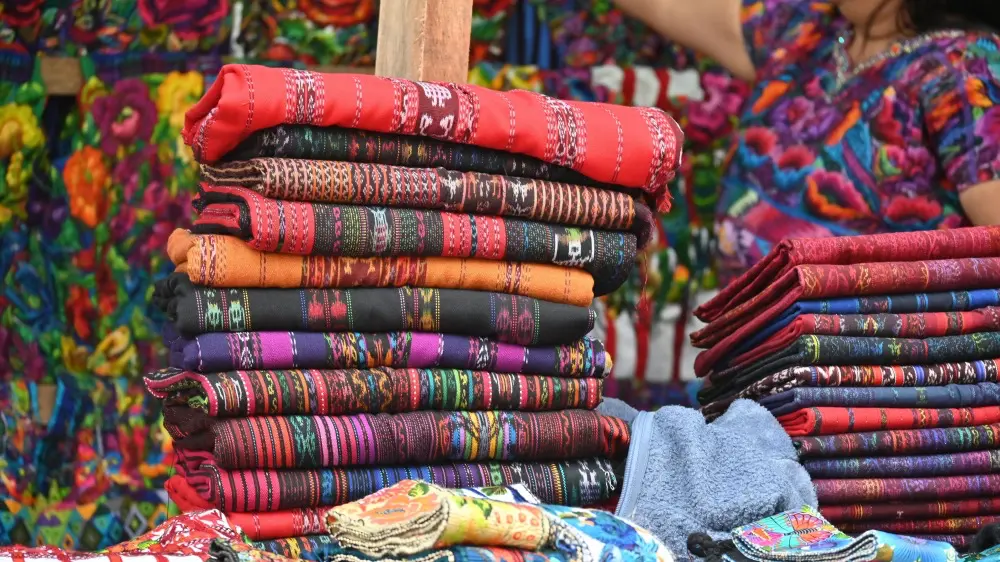
The culture of Totonicapán has very strong community roots. Its traditions combine Mayan, Catholic and local elements, and are expressed through festivals, crafts, stories and diverse ways of living together.
Culture is experienced through everyday activities, in the weaving of textiles, in music, in the way celebrations are organised, and in the use of public spaces.
Local festivals and celebrations
The department’s most important celebration takes place in the municipal capital of Totonicapán, in honour of Saint Michael the Archangel. These are the patron saint festivities. The festival runs from 24 to 30 September, with the 29th being the main day. This is when the ‘convites’ take centre stage: massive parades where people dress in traditional clothing and dance through the streets. The streets are decorated with colourful carpets of sawdust.
Furthermore, the Wajxaqib' B'atz', which is celebrated on 1 March, marks the start of the new K’iche’ ceremonial calendar and is one of the most significant pre-Hispanic celebrations in the western highlands.
Other notable festivals in Totonicapán include the fairs: the Fair of St Francis of Assisi (in October), the Fair of St Bartholomew (on 1 August) and the Fair of St Lucy (in December), the scale of which varies depending on the municipality in which they are held. And Holy Week, which combines Catholic processions with local traditions.
Traditional crafts and trades
Totonicapán is renowned for its handicrafts, particularly its woven fabrics, embroidery and traditional garments, which showcase the skill of its artisans. Textile work has economic value, but it also plays a key role in shaping the local identity. Other traditional trades are also practised, linked to local trade, carpentry, agricultural production and manual labour.
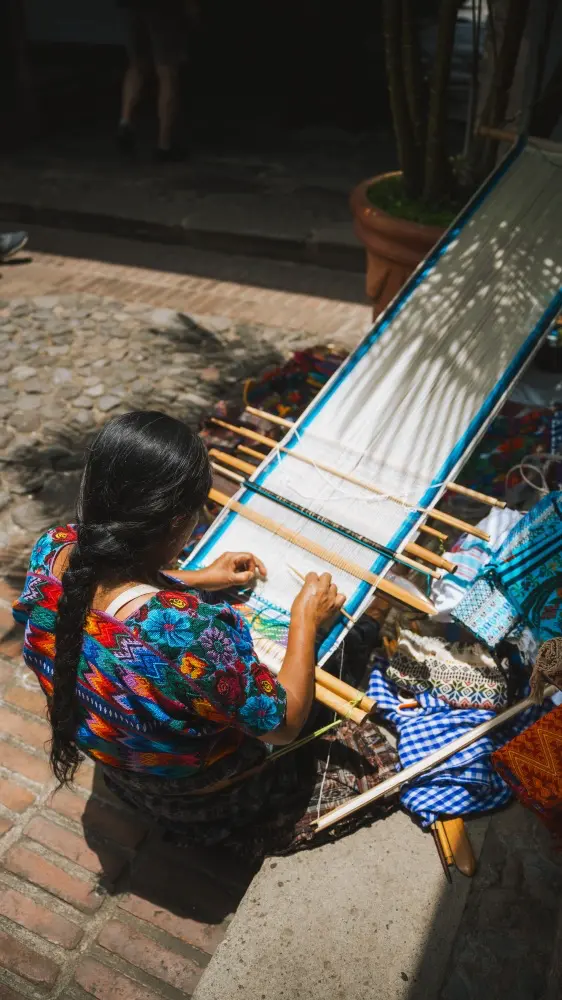
Traditional dress of Totonicapán
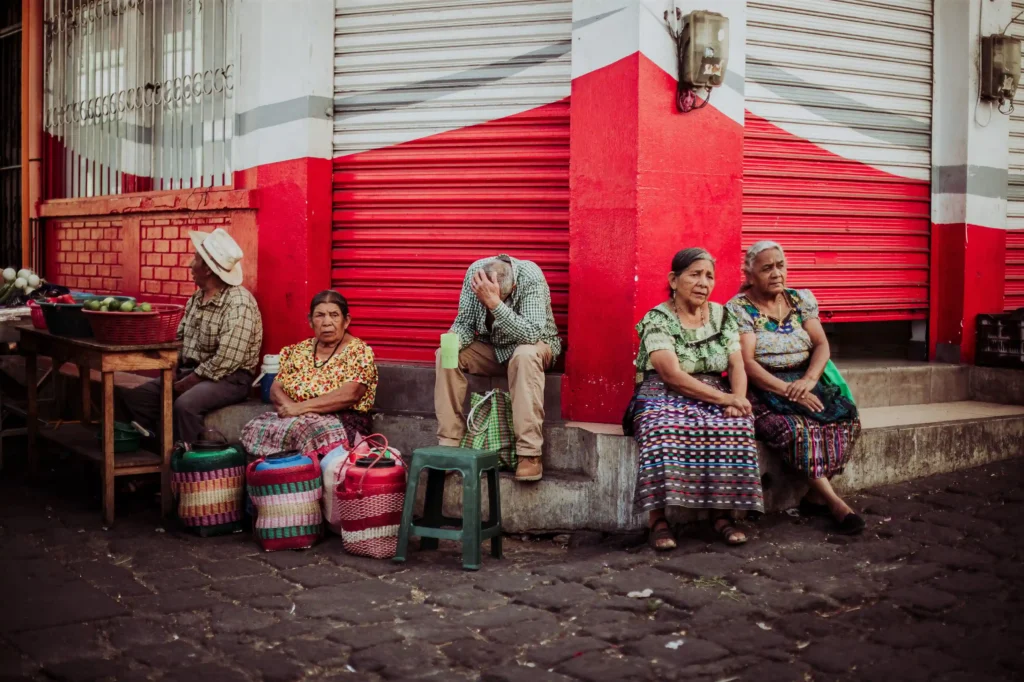
The traditional dress of Totonicapán is not merely a folk outfit worn for photographs: it expresses identity, a sense of belonging and, in many cases, a living memory that connects people to their community, their family and their history.
Women’s clothing
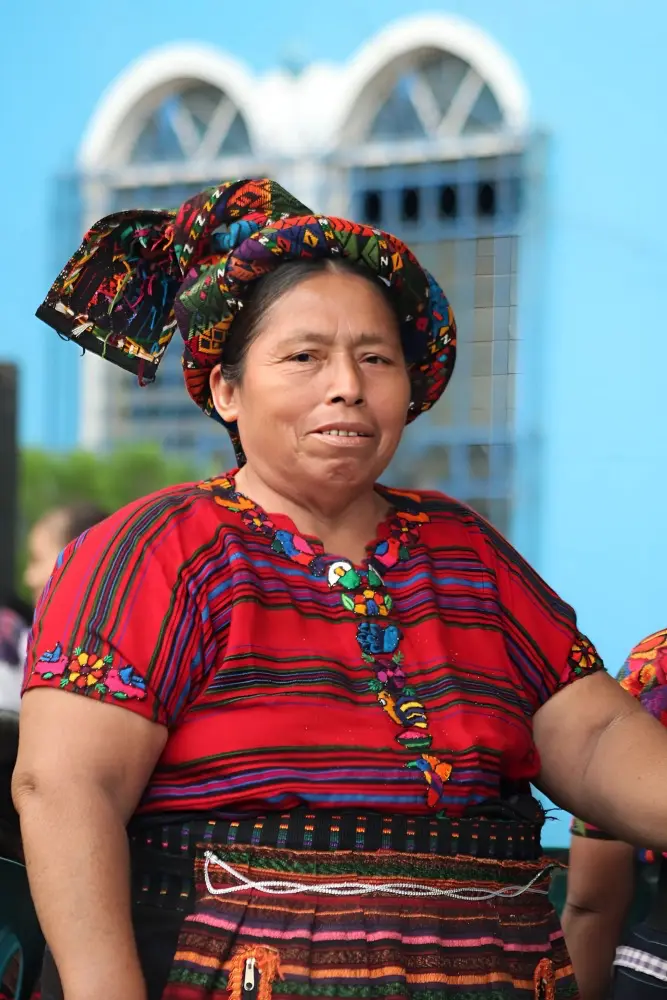
The traditional women’s clothing of Totonicapán is notable for its rich textiles and the balance between colour, design and symbolism. It generally comprises a cut, a güipil and a sash, all of which may feature delicate embroidery and patterns that reflect local traditions.
Features of men’s suits
The men’s traditional clothing of Totonicapán, although less commonly seen in everyday life than the women’s, also holds strong symbolic significance. It usually consists of trousers, a shirt or a local variant, a sash and other items that may vary depending on whether it's worn for ceremonial or community occasions.
The meaning of colours and embroidery
The colours and embroidery of traditional dress have meanings that can vary depending on the community and the family, but generally they refer to nature, spirituality, community life and the continuity of ancestral knowledge. In Totonicapán, embroidery can also serve as a marker of origin or belonging.
Wearing the costume at festivals and ceremonies
Traditional dress is particularly prominent during patron saint festivals, religious ceremonies, community events and important family occasions.
What to see in Totonicapán
Totonicapán offers travellers a range of places where history, faith, commerce and nature coexist harmoniously.
Churches and main squares
The town’s churches and squares are key landmarks. Religious architecture encapsulates much of the local history and serves as the setting for the main celebrations. The square, for its part, organises urban life and offers a glimpse into the daily rhythm of trade, socialising and the flow of people.
Markets and craft workshops
The markets in Totonicapán are essential to understanding the life of the area. Food, clothing, textiles, household goods and farm produce are sold there. But the market is also a place for conversation, bargaining and a sense of community.
Artisan workshops, meanwhile, offer visitors the chance to see first-hand how textiles and other traditional products are made.
Viewpoints and natural landscapes
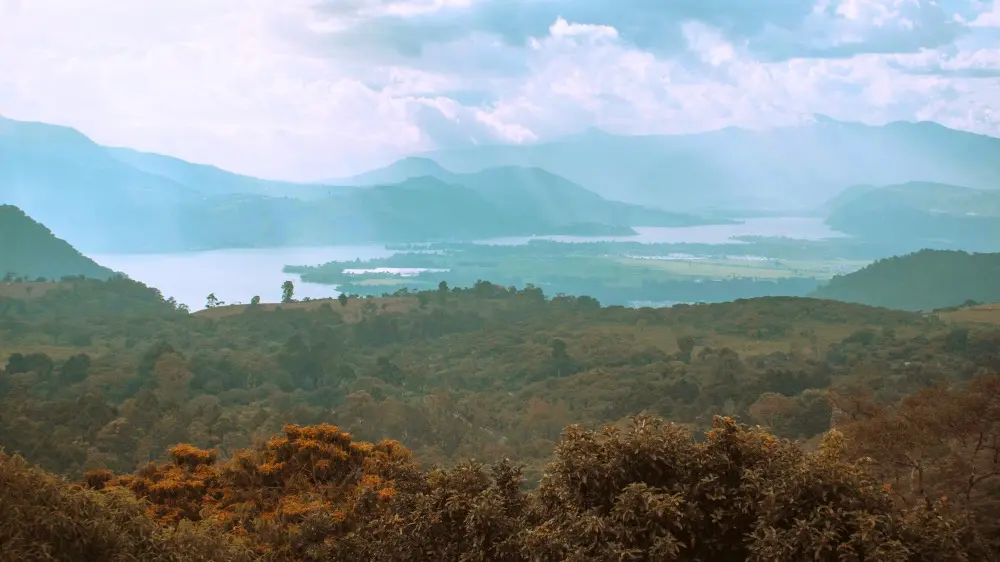
The geography of Totonicapán offers mountain scenery, forests and sweeping views of the highlands. The nearby viewpoints and trails provide visitors with a priceless perspective of the municipality.
Historic sites and local museums
Totonicapán boasts historical sites and places that help visitors understand its past. The ancient buildings, temples and certain features of the town allow us to piece together the town’s development over time.
Things to do in Totonicapán
Totonicapán is best explored at a leisurely pace. The value of the experience lies in interacting with the surroundings and the local people.
Cultural tours of the municipality
Walking through Totonicapán allows you to discover its character through the relationship between the square, the market, the church and the neighbourhoods. The walk requires you to interpret the space, recognise its different uses and understand how the town functions.
Experiences with the local community
One of the best ways to get to know Totonicapán is to interact respectfully with the local community. Talking to craftspeople, shopkeepers or older residents can open a window onto stories, customs and knowledge that you won’t find in a conventional guidebook.
Architectural and traditional photography
Totonicapán is a very attractive location for documentary photography. Its churches, squares, traditional costumes and market scenes provide visual material with great narrative power. The light of the highlands also helps to bring out textures and colours.
Take part in local festivities
Participating with discretion and respect is one of the best ways to experience the local culture. The festivities showcase Totonicapán at its most vibrant, with music, devotion, traditional dress and a strong sense of community.
Best time to visit Totonicapán
Totonicapán can be visited at different times of the year, but the experience varies depending on the weather and the festival calendar. Visitors should decide whether they wish to prioritise unobstructed views, religious celebrations or a more active cultural immersion.
Climate throughout the year
The climate in Totonicapán is cool due to its altitude, with cold mornings and afternoons that can be mild or rainy, depending on the season. During the dry season, between November and April, travel and tours are generally more comfortable. In the rainy season, the landscape becomes greener, although some routes can become more challenging.
- We invite you to read our article about what to see and do in La Esperanza.
Tips for visiting Totonicapán
Totonicapán is best enjoyed with some basic preparation and a respectful attitude. It does not require specialised equipment, but you do need to be mindful of the weather, transport and the rules of co-existence.
It's advisable to bring warm clothing, comfortable footwear, a raincoat if you are visiting during the wet season, and cash for markets or local transport.
As with any trip through the highlands, it's advisable to find out about routes, timetables and road conditions.
Asking permission before taking photographs of people, greeting them politely and showing a genuine interest in the local culture are simple gestures that open doors.
What to see near Totonicapán
Totonicapán could be the starting point for a longer route through the western highlands. Nearby, there are cities, volcanoes and villages that will undoubtedly enrich the experience.
Quetzaltenango
Quetzaltenango is the region’s most important urban centre. Its architectural, cultural and commercial attractions enrich any tour of western Guatemala.
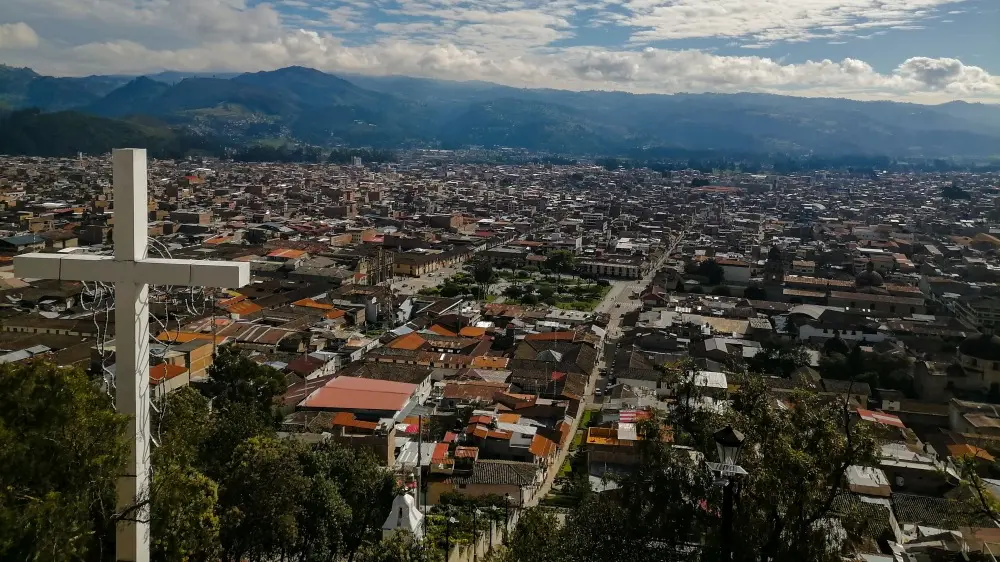
El Baúl Hill
Cerro El Baúl offers stunning views and the chance to get close to nature, as well as a panoramic view of the Quetzaltenango valley.
Santa María Volcano
The Santa María Volcano is one of the major geographical landmarks of the western highlands. It dominates the horizon and helps to illustrate the region’s volcanic character.
- We invite you to read our article about traditional dress of Quetzaltenango.
Is Totonicapán worth a visit?
Yes, Totonicapán is well worth a visit for anyone looking for a trip with genuine cultural substance, far removed from the clichéd postcard image.
What makes it unique in Guatemala
What makes Totonicapán unique is the vitality with which its culture continues to thrive in everyday life. Here, traditional dress is not merely an accessory, festivals are not one-off events, and tradition is an integral part of daily life.
Who is it recommended for?
It's an ideal destination for cultural travellers, journalists, photographers, researchers and anyone interested in Guatemala’s indigenous history. It's also highly recommended for those seeking an authentic highland experience.
How to include it in a tour of the Altiplano
Totonicapán fits very well into an itinerary that includes Quetzaltenango, Sololá and other K’iche’ municipalities. It can be visited as a day trip or at a more leisurely pace. Either way, it makes for a stop that greatly enriches the map of western Guatemala.
Frequently Asked Questions about Totonicapán
Where is Totonicapán?
Totonicapán is in western Guatemala, in the highlands, and is both a department and a municipality of the same name. It's situated in a mountainous area with a strong K’iche’ identity.
What is the traditional costume of Totonicapán?
The traditional costume of Totonicapán includes traditional garments such as the güipil, corte and faja for women, and local attire worn for ceremonial or community occasions for men. It's distinguished by its colours, embroidery and sense of identity.
When is the best time to visit Totonicapán?
The dry season is usually the best time to get around. If you’re looking for live cultural events, it’s best to visit during the local festivals.