The museums in Antigua Guatemala are one of the best ways to get to know a city that can’t be fully appreciated simply by strolling through its cobbled streets. The museums tell the story of its convents, ruins, religious art, courtyards and historic buildings. Today we’re taking you on a tour so you can enjoy this unique place even more.
Why are the museums in Antigua Guatemala key to understanding the city?
Antigua was the capital of the Kingdom of Guatemala during the colonial era, which is why it boasts a vast collection of churches, convents, palaces and ruins. That’s why visiting one of its museums is a great way to make sense of everything you see outside.
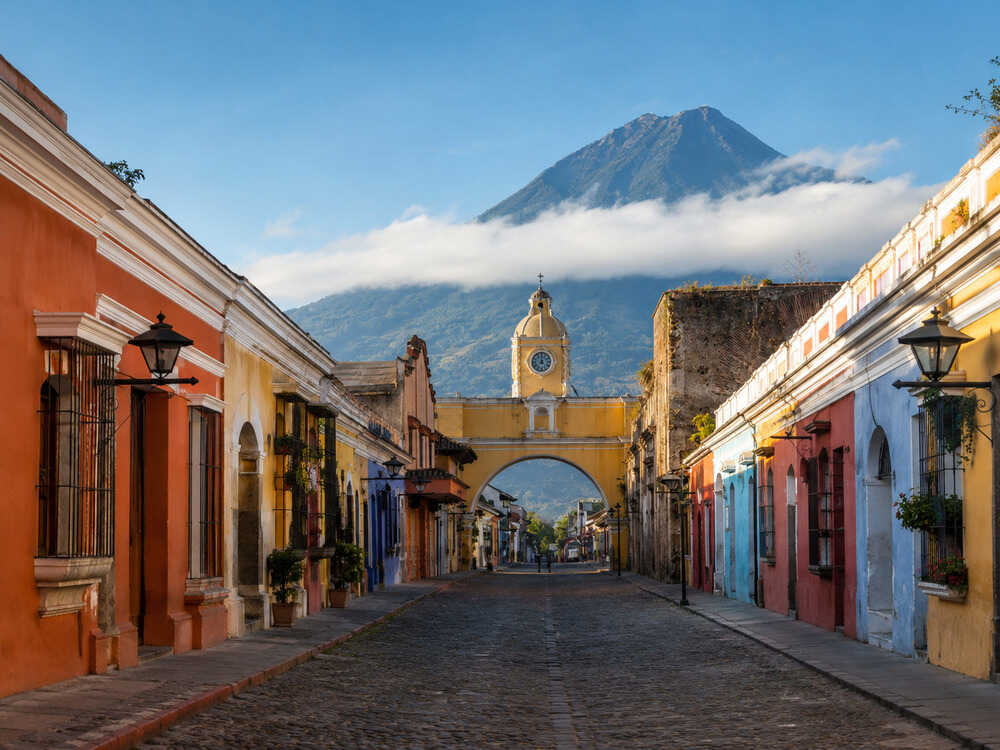
Throughout its history, the city has been hit by several major earthquakes, most notably the one in 1773, which led to the capital being moved to Nueva Guatemala de la Asunción. This changes the way we view Antigua considerably, as its ruins are the remains of a city that was once a political, religious and economic hub.
The museums in Antigua Guatemala link the façades, cloisters, religious images, colonial artefacts and restored buildings to the city’s true history. If you simply visit the churches and stroll through the streets, you’ll enjoy their beauty. But if you add a visit to the museums to your itinerary, you’ll gain a much better understanding of what you’re seeing.

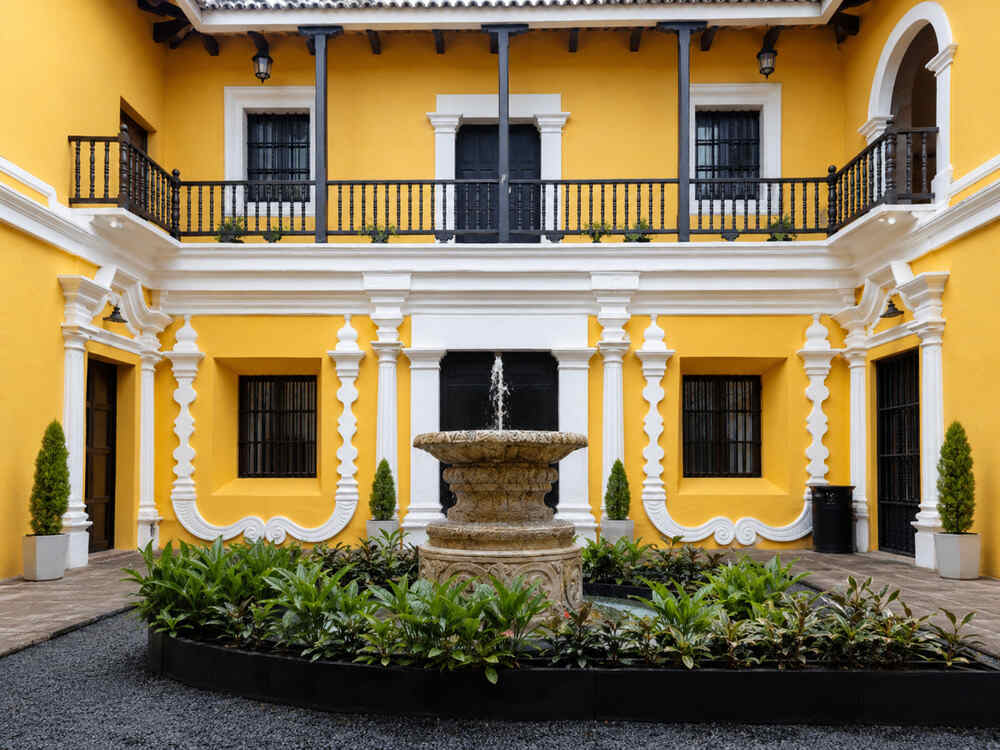
Furthermore, many cultural venues are housed in historic buildings. The MUNAG, for example, is located in the Royal Palace of the Captains-General, opposite Central Park. Casa Santo Domingo, meanwhile, occupies part of the former Convent of Santo Domingo.
Are the museums in Antigua Guatemala worth a visit? What do travellers think?
Yes, the museums in Antigua Guatemala are well worth a visit, especially if you want your trip to be about more than just taking some nice photos. Most travellers speak very highly of Antigua for its atmosphere, its ruins and its views of the volcano, but the museums offer a much more complete experience.
They’re also great when the weather’s not on your side. If it’s raining or too sunny, a museum can save the day without taking you too far from the city centre. That said, you need to choose wisely – there’s no need to visit them all. Antigua has large museums, small ones, former convents and collections housed in hotels that double as museums.
The key is to mix things up. You could, for example, visit the MUNAG in the morning or Casa Santo Domingo, enjoy a leisurely lunch, and then pop along to a convent or a smaller museum, such as the Museum of Old Books or the Holy Week Museum.
- We invite you to read our article about the Santa Catalina Arch.
What kind of traveller would benefit from a museum tour in Antigua Guatemala?
A tour of the museums in Antigua Guatemala is highly recommended for travellers who want to get to know the city better. If you’re interested in finding out the history behind a building, why a church fell into ruin, or how religion was practised during the colonial era, this is the perfect way to spend your time.
It’s also great if you’re travelling as a couple, with friends or with the family. Antigua is the perfect place for a stroll, so the museums are ideal for taking a break and seeking shelter from the sun or the rain.
Museums in Antigua Guatemala for culture lovers and those interested in colonial history
If you’re interested in colonial history, the museums in Antigua Guatemala are a must-see. The Museum of Colonial Art, located on 5th Street East, houses a collection of religious and colonial art, including paintings, sculptures and religious imagery from the period.
The MUNAG is also highly recommended for gaining a broader understanding of Guatemalan art. Its exhibition covers the pre-Hispanic, colonial, republican, modern and contemporary periods. As you can see, it isn’t limited to Antigua alone, but helps to place the city within a wider historical context.
To round off your tour, the Santiago de los Caballeros Museum, also known as the Arms Museum, houses a collection of ceramics, heraldry, ironwork, sculptures and weapons. It’s a short visit, but well worth it if you want to gain a better understanding of civilian and military life in the former capital.
Museums in Antigua Guatemala for those who want to combine churches, ruins and exhibitions
If you prefer a more visual experience, you can combine museums with convents and ruins. Casa Santo Domingo is one of the best examples, as it brings together archaeological remains, courtyards, colonial art, pre-Columbian art, modern glasswork and temporary exhibitions.
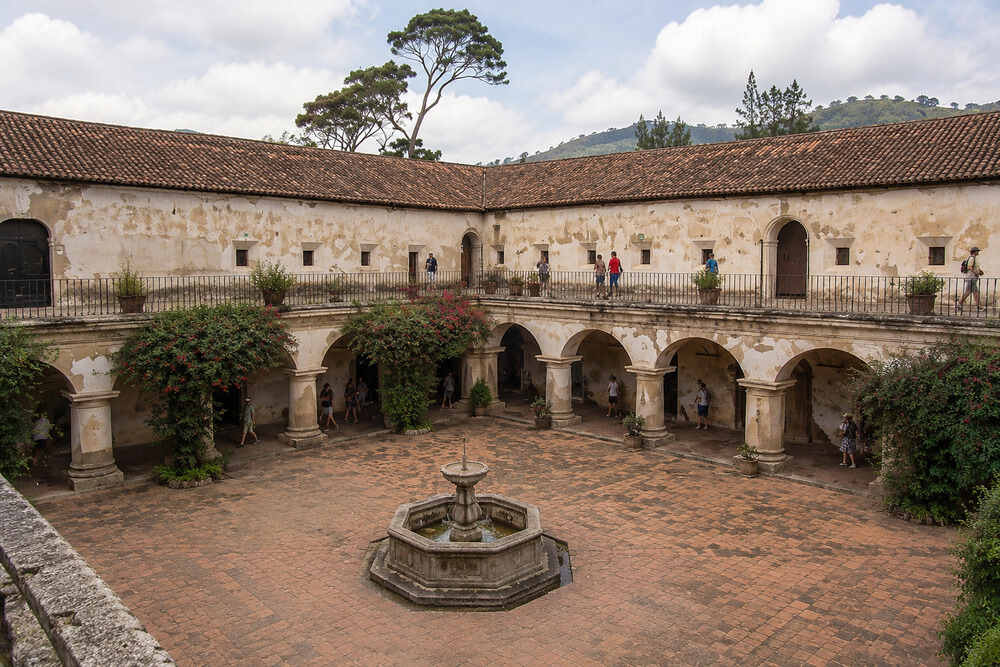
You can also visit the Capuchinas, Santa Clara, La Recolección or San Jerónimo. Although many travellers refer to them as “ruins”, they are in fact heritage sites that help to shed light on what religious life was like in colonial Antigua.
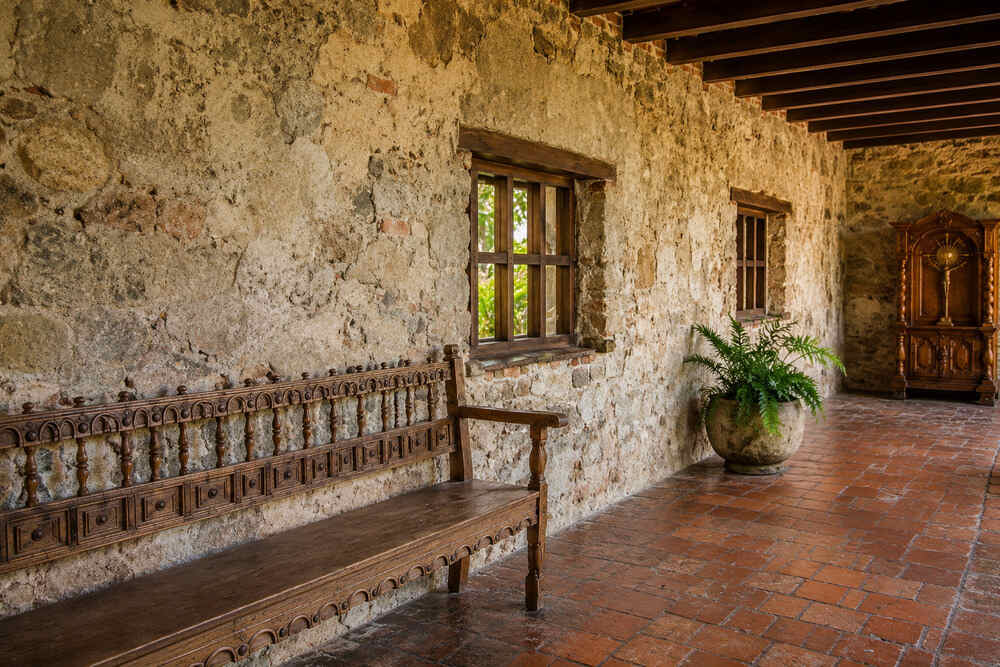
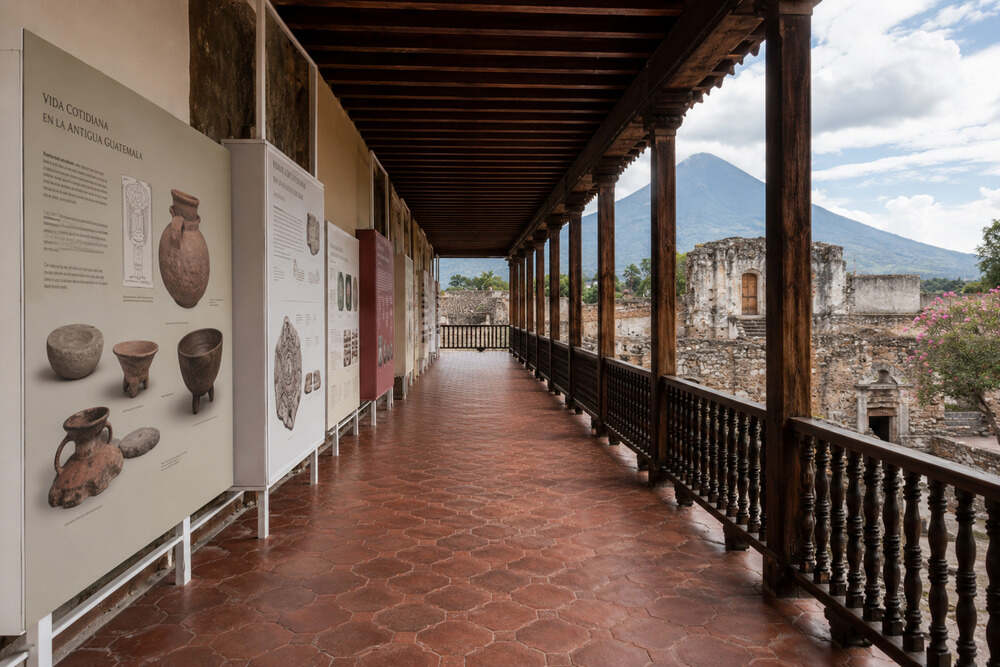
This mix means that the museums in Antigua Guatemala don’t feel like a series of closed rooms one after the other. In many cases, you’ll find yourself strolling through courtyards, corridors, gardens and cloisters as you learn more about the history of the place.
- This page about Antigua Guatemala may interest you.
Which museums in Antigua Guatemala are most worth visiting?
If you’re short on time, you should visit three different types of attraction: an art and history museum, a former convent complex, and a small specialist venue. That combination will give you a fairly comprehensive picture of the city.
For a first visit, the MUNAG, Casa Santo Domingo and the Museum of Old Books are ideal. If you’re interested in Holy Week, do also visit the Holy Week Museum, at the Sor Juana de Maldonado monument. And if you’re into textiles, you can pop along to the Casa del Tejido Antiguo Museum, although you’ll need to check the location and availability before you go.
Museums of religious art, archaeology and local history
Among the most interesting museums in Antigua Guatemala for art and history is the MUNAG. Its location opposite the Central Park makes it very convenient to visit, and the building itself is well worth seeing: the Royal Palace of the Captains-General was the seat of administrative and political power during the colonial era.
Casa Santo Domingo, for its part, offers a different experience altogether. Its tour includes the archaeological site, the Colonial Museum, the Archaeological Museum and the Museum of Pre-Columbian Art and Modern Glass, amongst other attractions. It’s a good option if you want to spend several hours exploring a single complex.
Finally, the Museum of Colonial Art is also well worth a visit if you want to learn more about painting, sculpture and religious art. It focuses on the more Baroque side of Antigua and helps you spot some of the details you’ll later see in churches and ruins.
Cultural venues associated with convents, churches and historic buildings
Antigua is also renowned for its historic convents. The Capuchinas, Santa Clara, San Jerónimo, La Recolección and Santa Teresa de Jesús are among the top sights for tourists to visit, with opening hours generally from 9.00 am to 5.00 pm.
These spaces are not just traditional museums, but also heritage sites. Here you can explore courtyards, corridors, cells, façades and open areas where the impact of the earthquakes and subsequent neglect is still evident. To tell the truth, you won’t just be looking at objects in display cases, but exploring buildings that explain the city from the inside.
Small museums and lesser-known spots that round off the experience
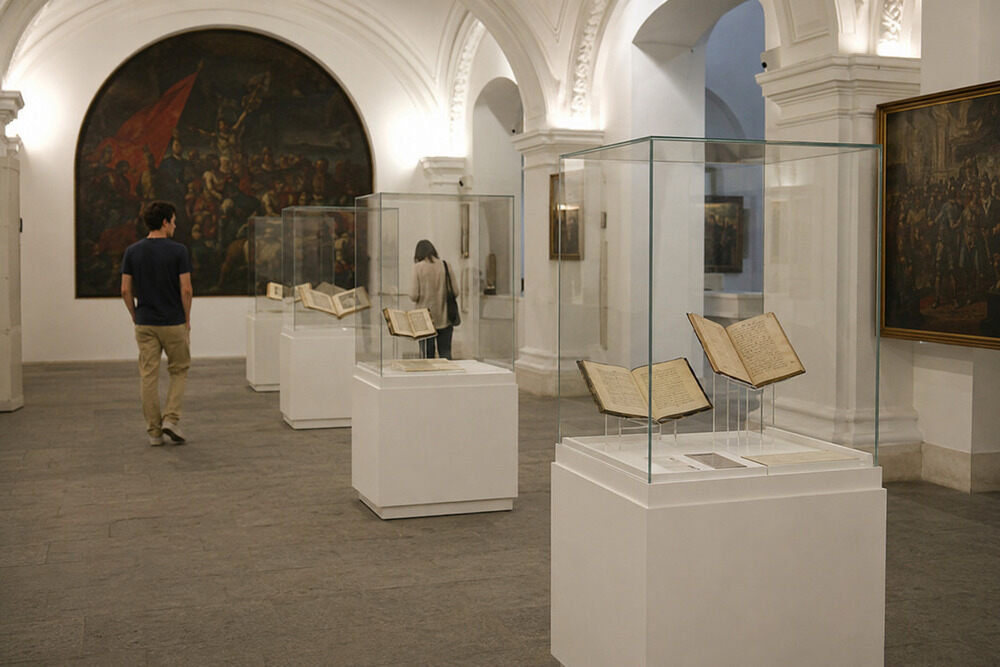
Small museums are also well worth a visit. The Museum of Old Books, for example, displays original books and documents published in Guatemala between 1660 and 1821, during the colonial period. It’s a short visit and ideal if you’re interested in the history of printing and written works from the former Kingdom of Guatemala.
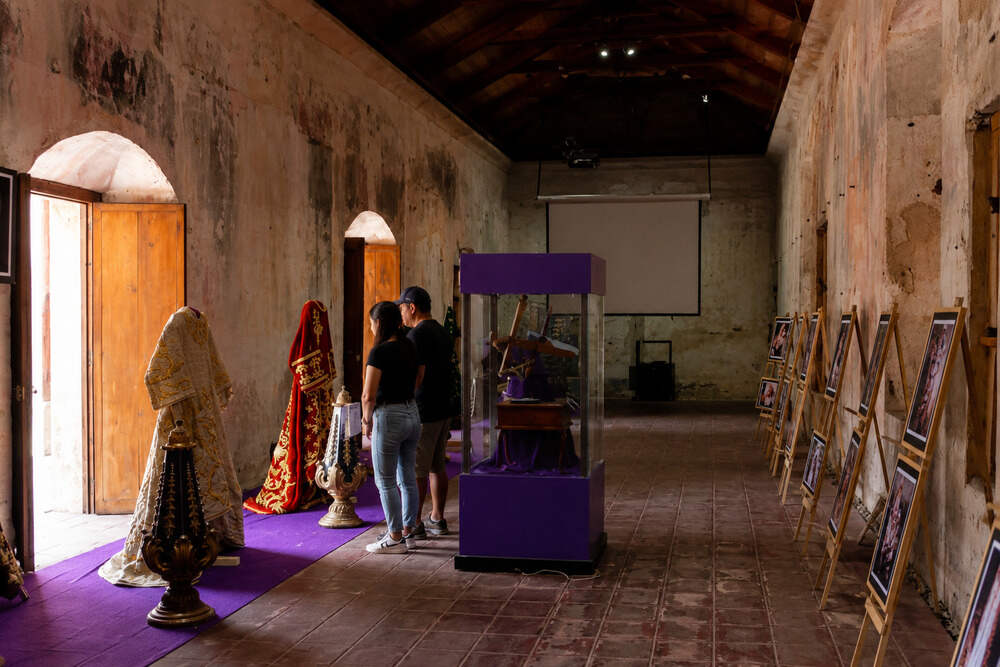
The Holy Week Museum, located in the cloister of Sor Juana de Maldonado, is another fascinating place to visit if you want to learn about the significance of Lent and the processions in Antigua. This museum displays items associated with vigil altars and local religious traditions.
These kinds of spaces really round off the visit nicely because they explain specific customs, not just broad historical narratives.
- We invite you to read our article about the Flower Festival in Antigua Guatemala.
Museums in Antigua Guatemala to learn about the city’s history
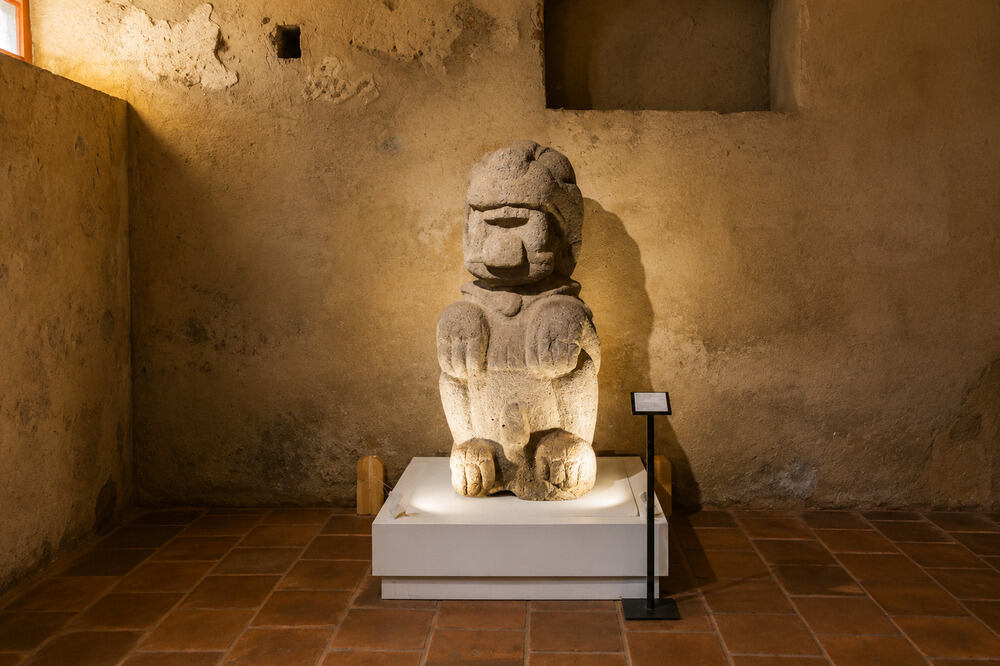
The museums in Antigua Guatemala help visitors to understand three major themes: religion, earthquakes and colonial power. These are the key factors that explain why the city has so many convents, churches and ruins packed into such a small area.
They also show that Antigua is not a city frozen in time, but one that remains alive, inhabited and protected. Conservation does not treat all these elements as isolated monuments, but as a historical ensemble comprising streets, houses, public buildings, churches and social life.
What they help you understand about earthquakes, religion and the colonial era
Earthquakes have shaped much of Antigua’s urban landscape. Many churches and convents were damaged, to the extent that the city lost its status as capital after 1773. When you visit ruins such as Santa Clara or Las Capuchinas, you gain a better understanding of why the capital was moved.
Religion is evident in paintings, sculptures, altarpieces, processions and monastic architecture. Sacred art was not merely decorative; it also conveyed power, devotion, teaching and social order.
The colonial era, for its part, is evident in buildings such as the Palace of the Captains-General, the Town Hall, the religious schools and the convents. That is why the museums in Antigua Guatemala provide the historical introduction you need before continuing on your way.
How can you fit museums into your overall visit to Antigua Guatemala?
It’s best not to visit all the museums in a single day. Antigua is best enjoyed on foot, taking your time, stopping off at cafés and viewpoints, and simply strolling through the streets. If you pack too many museum visits into one day, you’ll miss out on the charm of the city’s laid-back pace.
A good idea is to choose one main museum per day and add a small site or a nearby ruin. For example:
- Day 1: MUNAG, Central Park and the Cathedral.
- Day 2: Casa Santo Domingo and the surrounding area.
- Day 3: Museum of Old Books, Capuchinas or Santa Clara.
- We invite you to read our article about traditional sweets from Antigua Guatemala.
How many museums to visit in Antigua Guatemala, depending on how much time you have
The ideal number depends on the length of your stay. If you’re only spending a day in Antigua, choose one or two. If you’re staying for two or three nights, you can visit three or four museums without getting tired. And if you’re really into culture, you can spend a whole day visiting museums, convents and historic buildings.
Just bear in mind the opening hours. Many places open in the morning and close in the afternoon, and some museums may close for maintenance, events or internal changes. Before you go, always check the official information or ask at your accommodation.
A short tour of the most important museums
If you only have half a day, start with the MUNAG. It’s opposite Central Park, so it’s easy to combine a visit with the Cathedral, the Town Hall, the nearby cafés and a stroll along the main streets.
After that, you can pop into the Museum of Old Books if it’s open. It’s a quick visit – usually less than an hour – and it’s very convenient as it’s in the historic centre.
If you’d prefer something more impressive, swap the Museum of the Old Book for the Capuchinas or Santa Clara. This short route gives you a good overview of the museums in Antigua Guatemala at a leisurely pace.
The most comprehensive itinerary if you want to spend a day exploring Antigua’s cultural side
For a full day of culture, you could start early at Casa Santo Domingo. The tour takes several hours if you visit the museums, courtyards, archaeological site and galleries. What’s more, part of it takes place outdoors, so you’ll need to bring a hat or an umbrella depending on the time of year.
Afterwards, you can enjoy a leisurely meal and carry on to the MUNAG. And if you’re still up for it, round off your visit with the Holy Week Museum or the Museum of Old Books. Don’t try to rush through it all. The museums in Antigua Guatemala are best enjoyed when you allow yourself time to look around.
Museums in Antigua Guatemala, tailored to your type of trip
Not all travellers are looking for the same thing, which is why the museums in Antigua Guatemala can be sorted according to your interests: colonial history, art, photography, religion, architecture, textiles, or a more laid-back experience involving coffee and strolls.
If you’re travelling with children, it’s best to visit places that are visually engaging and not too long. If you’re travelling as a couple, combine a visit to a museum with a coffee and a stroll. And if you’re travelling alone, you can take your time, with plenty of time to read the information panels and take in the details.
How to combine museums, cafés and strolls through the historic centre
One of the best ways to explore Antigua is to mix culture with relaxation. You could start with a visit to a museum in the morning, have a coffee near Central Park, stroll over to a convent and finish off on a terrace with a view.
The distances in the centre of Antigua are very manageable, although the cobbled streets are more tiring than they look. Wear comfortable shoes and be careful of the midday sun, which can be quite intense.
The museums in Antigua Guatemala are perfect for that leisurely pace. They aren’t quick visits, but stops that help you see the city in a new light.
What kind of museum best suits your travel style?
For those who prefer art, there’s nothing better than the MUNAG, the Museum of Colonial Art, and Casa Santo Domingo. If you’re interested in architecture, you should also visit the Capuchinas, Santa Clara, San Jerónimo or La Recolección.
If your trip is more about living traditions, the Holy Week Museum might be a better choice. And if you’re interested in Mayan textiles, the Casa del Tejido Antiguo Museum could be worth a visit, although it’s more closely associated with the San Antonio Aguas Calientes area, so you’ll need to check the details carefully before you go.
The point isn’t just to visit for the sake of it. Choose the museums in Antigua Guatemala that really resonate with your style of travel.
- We invite you to read our article about Antigua Guatemala Fútbol Club.
How to plan your visit to the museums in Antigua Guatemala
To plan your route properly, have a look at the map first. Antigua seems like a small town, but between the cobbled streets, the heat, taking photos, stopping for coffee and buying tickets, things can take longer than you expect. The best approach is to group your visits by area.
Central Park is the main landmark. Surrounding the park are the MUNAG, the Town Hall, the Museum of Old Books and several churches. To the north-east lies the Casa Santo Domingo, whilst the other streets are home to convents and ruins.
Which areas of the city centre have the most museums?
The Central Park area is home to several of Antigua Guatemala’s most accessible museums. From there, you can walk to the art galleries, historical sites, antique bookshops and colonial civil buildings.
Casa Santo Domingo is a little further out, but it’s still easy to reach on foot from the centre if you enjoy walking.
Las Capuchinas, Santa Clara, San Jerónimo or La Recolección can be included in walking tours depending on where you’re staying. Before leaving the hotel, check the opening hours and closure dates carefully, as some monuments may be closed due to restoration work, maintenance or events.
The best time of day to combine them with other visits
The morning is usually the best time to visit museums and convents. Why? Quite simply because you’re less tired, the light is better for viewing the courtyards and cloisters, and you still have time to change your plans if any of the venues happen to be closed.
At midday, indoor museums are a great way to escape the strong sun. In the afternoon, we recommend opting for shorter visits and leaving time to take a stroll, have a drink or watch the sunset from a terrace.
If you’re visiting during the rainy season, the museums in Antigua Guatemala are a great option. You could plan to explore the outdoor areas in the morning and save the indoor galleries for when the weather is more unpredictable.
How much time to spend at each museum without overloading the day
It can take between 45 minutes and an hour to visit smaller museums, such as the Museum of Old Books or the Holy Week Museum. For the MUNAG, you’ll need to set aside at least an hour if you want to see it at a leisurely pace.
A visit to Casa Santo Domingo can take two or three hours, or even longer if you stop to explore the galleries, courtyards, archaeological site and outdoor areas. The convents usually take between 45 minutes and an hour and a half to visit, depending on your pace.
The simple rule is this: no more than two substantial visits a day. If you add any more, make sure they’re just quick stops.
Frequently Asked Questions about museums in Antigua Guatemala
What are the most important museums in Antigua Guatemala?
Among the most highly recommended are the MUNAG, Casa Santo Domingo, the Museum of Colonial Art, the Museum of Old Books, the Santiago de los Caballeros Museum and the Holy Week Museum. Convent complexes such as the Capuchinas and Santa Clara are also well worth a visit.
How many museums should you visit in Antigua Guatemala?
For a first visit, two or three well-chosen museums are enough. If you’re spending two or three days in the city, you can extend your itinerary to include convents, ruins and smaller sites without overloading your schedule.
Are the museums in Antigua Guatemala close to one another?
Many are located in the historic centre or near the Central Park. Casa Santo Domingo, on the other hand, is a little further away, but is still within walking distance of the city centre. It’s best to group your visits by area.
Do you need to book a ticket to visit the museums in Antigua Guatemala?
In most cases, you can buy your ticket directly, but you’ll need to check opening times and availability before you go. Some museums may be closed for maintenance, events or internal changes.
Which museum should I visit if I only have a few hours in Antigua?
If you only have a few hours, choose the MUNAG for its location and historical context, or the Casa Santo Domingo if you’d prefer a more comprehensive experience featuring ruins, courtyards, museums and galleries all within the same complex.