Acatenango lies at the very foot of an imposing volcano. With an identity shaped by the Ch’orti’ Maya culture, its inhabitants today maintain a deep connection with the land that sustains them. Amidst farmlands, mountain trails and a vibrant folk culture, the journey to this enclave in the Guatemalan highlands calls for a leisurely pace and a broad perspective on the destination.
Acatenango is history, land, mountain, community and volcano. It has a voice all of its own, which stems from the way of life that is still preserved there, deeply rooted in its own traditions.
Where is Acatenango?
Acatenango is situated in the department of Chimaltenango, in western Guatemala, in a cold, mountainous highland region that forms part of the Pacific volcanic range. Its name is inextricably linked to the Acatenango volcano, which dominates the horizon and serves as a geographical and symbolic landmark for the community.
Location of the municipality of Acatenango in Chimaltenango
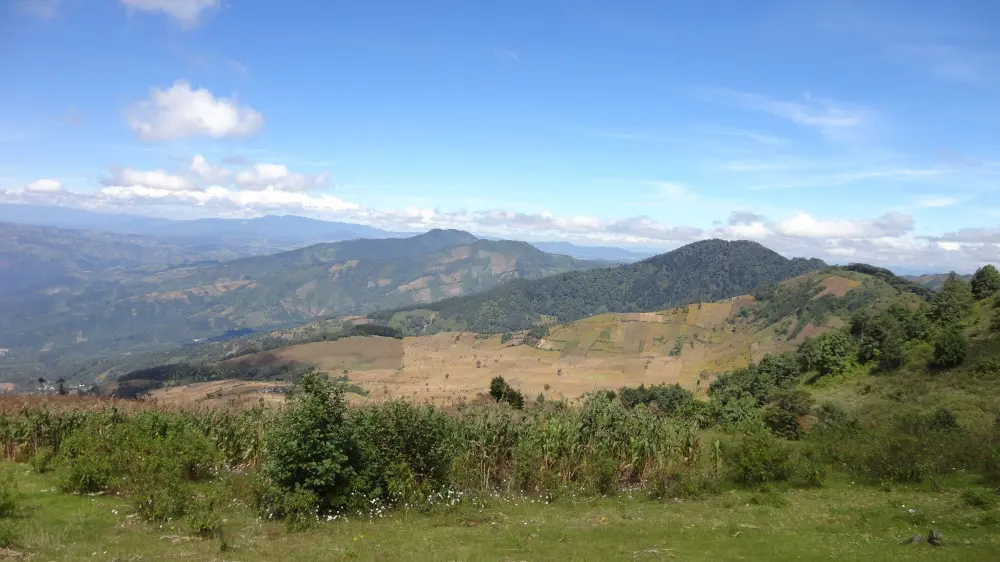
The municipality of Acatenango is situated in the central part of the western highlands. Pine forests and farmland characterise a landscape where the local economy is based on subsistence farming and caring for the environment. The altitude gives it a distinctive character: mornings are usually cold, afternoons can be mild, and the sky is bathed in a very clear light, which is ideal for photography and taking in the scenery.

Acatenango is not an isolated municipality. It forms an organic part of a wider area that includes Chimaltenango, Antigua and other nearby towns, enabling local people to move relatively easily between markets, institutions and other meeting places.
How to get there from Antigua Guatemala
The distance by road is approximately 43 kilometres and the journey time is around 45 to 50 minutes. The most recommended route is to take National Road 14 northwards, towards Chimaltenango. About 12 kilometres along this road lies the village of Parramos, where you should turn left onto the CHM-11 road towards Yepocapa. From there, continue along this road for a further 18 kilometres until you reach Aldea La Soledad, the most common starting point for the ascent of the volcano.
For those choosing to travel by public transport, the route involves taking a bus to Chimaltenango from the Antigua bus station, and then a minibus to Aldea La Soledad.
A very popular option amongst travellers, however, is to book an organised tour that includes return transport, guides, equipment and meals.
Connections to other destinations in the Altiplano
Acatenango forms part of a vast cultural and tourist corridor. From there, it is easy to reach Antigua Guatemala, Chimaltenango, the Fuego volcano, coffee plantations and other towns in the highlands that have preserved strong indigenous traditions.
History of Acatenango
The history of Acatenango is deeply intertwined with its volcanic landscape, the Ch’orti’ culture and the development of a strong sense of community. The local identity remains evident in the way people dress and live, as well as in their interactions with travellers. Thus, customs, the structure of the brotherhoods, community rituals and the tradition of oral history sustain this enduring connection with the area’s past.
Origins of the municipality and pre-Hispanic settlements
Before the arrival of the Spanish, the region was inhabited by Mayan peoples linked to the Ch’orti’ culture; Acatenango was an important waypoint in the Pacific volcanic chain. Its proximity to the Acatenango volcano and the presence of fertile land enabled the community to establish itself as a settlement of economic significance. Moreover, the volcano was not merely a geographical feature: it was a spiritual and cultural landmark, a place of power.
Developments during the colonial period
Acatenango came to prominence as a settlement organised around religious, administrative and commercial institutions. The presence of temples, local authorities and trade networks consolidated an urban centre that served as a focal point for neighbouring communities. The conquistadors also adopted indigenous forms of organisation that remain visible today. The unique relationship with the volcano, characterised by respect and mysticism, also played a part in the town’s development following the conquest.
The historical and cultural significance of the village
Acatenango has been, and continues to be, a place whose cultural influence extends beyond its administrative boundaries. Its influence can be seen in the arts and crafts, in religion, in music, and in the way communities articulate their identity, blending indigenous and mestizo elements, as well as local and regional aspects. For this reason, to speak of Acatenango is to speak of a town with its own distinct identity in the highlands. A key factor in this is the continued use of the indigenous language, as well as the preservation of local customs.
The town of Acatenango
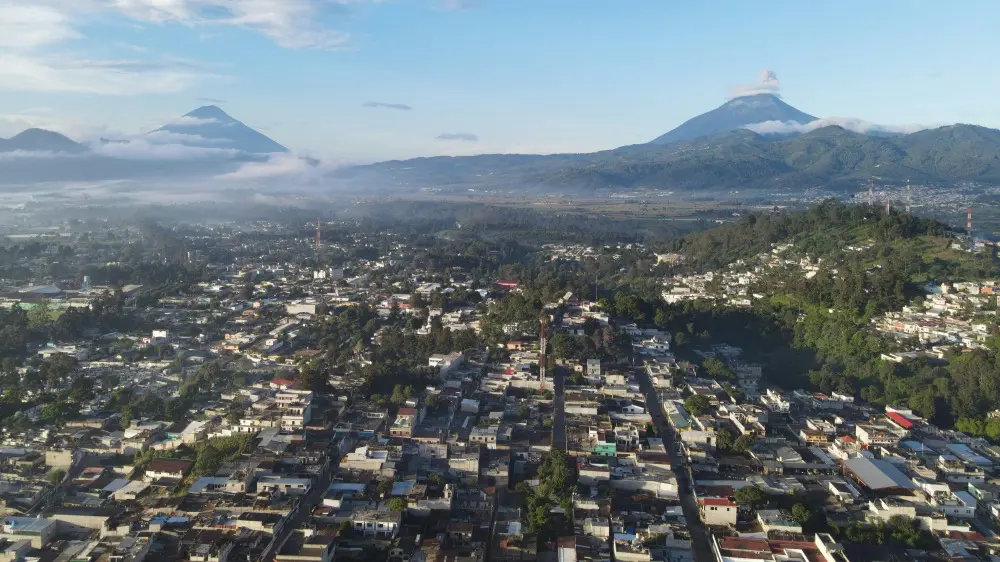
The village of Acatenango is the heart of the community. It is the focal point for daily life, trade, culture and the collective expressions that give the place its meaning. It is not a destination known for grand monuments, but rather for experiences on a human scale, where every square, temple or street tells a story about local life.
Anyone who explores it with a keen eye will discover a city that reveals itself better on foot than from a vehicle. There are architectural details, market scenes and nearby landscapes that make the visit all the more meaningful as you go along.
Characteristics of the village and its people
Acatenango is a village whose inhabitants live in harmony with their surroundings. The community maintains a direct connection with the land, with agricultural work and with the preservation of cultural traditions. Its residents convey a great sense of calm to visitors, as well as a strong work ethic and a willingness to work.
Daily life revolves around the square, the church, the market and the neighbourhoods. In these spaces, one can sense the interplay between tradition and modernity. The village is not isolated, yet it has not been swallowed up by urban sprawl either. It retains its own distinctive character.
Architecture and key sites
The architecture of Acatenango is understated, with buildings that reflect the function of each space: the church as a religious centre, the square as a meeting place, and its streets as bustling thoroughfares linking neighbourhoods and the countryside. Buildings and homes blend seamlessly into the volcanic landscape.
The main square is the village’s focal point. It is where people gather, trade takes place and community events are held. The church, for its part, embodies much of the local history and serves as the venue for the main celebrations.
Local traditions and festivals
Acatenango celebrates its Patron Saint’s Festival in honour of Saint Barnabas the Apostle from 9 to 13 June each year, with the main day of celebration falling on 11 June. A hallmark of this festival is the famous procession accompanied by marimba music, which winds its way through the streets before the procession of the Virgin of the Conception. The event is accompanied during this period by food fairs, stalls selling traditional dishes and sweets, fairground rides for families, and fireworks that light up the sky at the foot of the volcano.
Furthermore, Acatenango keeps other important traditions alive, such as Holy Week, with the creation of sawdust carpets for the processions, and All Saints’ Day and All Souls’ Day (1 and 2 November). Independence Day on 15 September is also celebrated with great enthusiasm, featuring student parades.
The Acatenango volcano
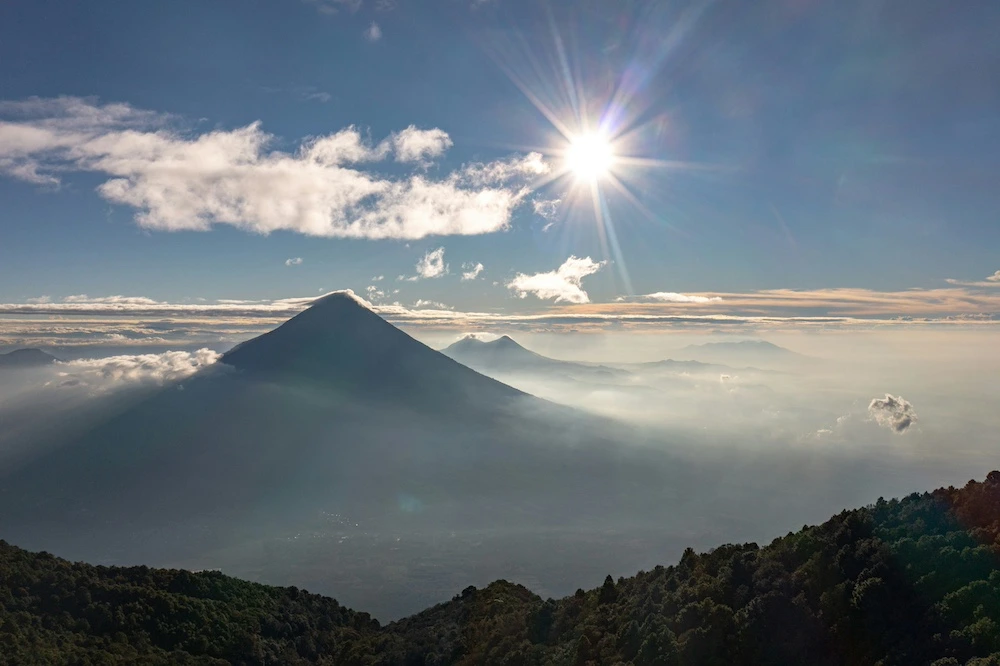
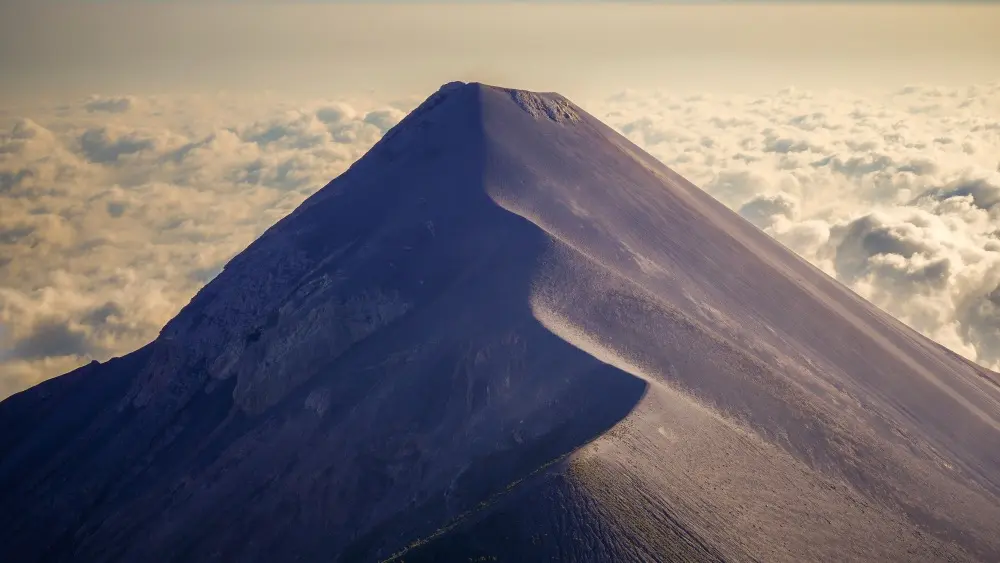
The Acatenango volcano is the most imposing feature of the landscape and the municipality’s most recognisable symbol, serving as a spiritual landmark and a constant presence in the daily lives of the residents.
Altitude and geographical features
The Acatenango volcano rises to a height of 3,976 metres above sea level, making it the third-highest volcano in Guatemala, after Tacaná and Tajumulco.
The volcano has two main peaks: the northern peak, known as Yepocapa or Tercera María, which is 3,800 metres high, and the southern peak, called El Plato or Bonete, which is the main summit at 3,976 metres. Taken as a whole, it is connected to the Fuego volcano, with which it forms the massif known as La Horqueta. Its last recorded eruption was in December 1972.
Volcanic activity and safety
The Acatenango volcano is considered an active volcano. The local community has learnt to live with the presence of fumaroles, minor movements and changes in the volcano’s morphology. Safety is a priority on the trekking routes, and the authorities and local guides usually recommend caution and adherence to the rules.
For visitors, the main advice is to follow the signposted routes, avoid high-risk areas and keep up to date with the volcano’s activity. Volcanic activity should not be seen as a constant danger, but rather as a natural phenomenon that requires attention and respect.
The volcano’s relationship with the local community
The volcano is deeply embedded in the life of the community. In the local worldview, the volcano is a powerful entity, a place of remembrance and a spiritual landmark. Families regard it as part of their history and identity, and often associate it with protection, fertility and natural balance.
- This page about natural wonders in Guatemala may interest you.
Things to do in Acatenango
Acatenango offers travellers experiences that combine nature, culture and adventure.
Volcano climbs and trekking routes
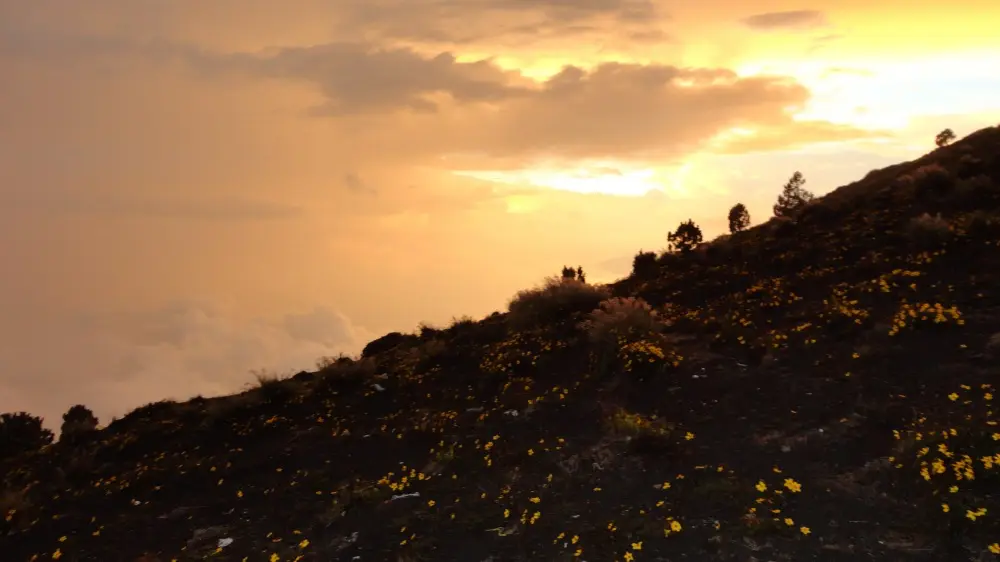
The climb up the Acatenango volcano is one of the highlights. There are trekking routes that take you to heights where you can enjoy sweeping landscapes, fumaroles and views of the Fuego volcano. The trek must be undertaken with local guides, in accordance with safety regulations and without taking any risks.
Landscapes and photography
The nearby viewpoints and footpaths offer visitors a different perspective on the village, where the natural surroundings are not merely a backdrop but an essential part of the local story.
Learning about the culture and way of life of the village
Walking through Acatenango allows you to discover its character through the interplay between the square, the market, the church and the neighbourhoods.
Adventure and ecotourism
The Acatenango region is ideal for those seeking authentic ecotourism experiences. The trails, forests and viewpoints allow visitors to explore nature whilst maintaining a connection with the local culture.
What to see in Acatenango
Acatenango offers visitors a range of places where history, faith, commerce and nature coexist harmoniously.
Viewpoints of the volcano and the surrounding area
The nearby viewpoints and footpaths offer visitors a different perspective on the village, where the natural surroundings are not merely a backdrop but an essential part of the local story. The views of the Acatenango volcano, the Fuego volcano and the valley are spectacular.
Church and village centre
The church and the main square are key landmarks. The church also serves as the venue for the main celebrations.
Cafés and craft workshops
The cafés and craft workshops offer a close-up look at how textiles and other traditional products are made. For those seeking an authentic experience, visiting these places means coming to understand that Acatenango’s material culture is shaped by hands, time and craftsmanship.
Nature and walking trails
The landscape of Acatenango offers mountain scenery, forests and sweeping views of the highlands. The nearby trails provide panoramic views of the valley and the volcanoes.
- We invite you to read our article about La Danta.
What to see near Acatenango
Acatenango could be the starting point for a longer route through the western highlands.
Antigua Guatemala
Antigua is the region’s most important urban centre and a natural complement to a visit to Acatenango. Its architectural, cultural and commercial attractions enrich any tour of western Guatemala.
Fuego Volcano
The Fuego volcano is one of the major geographical landmarks of the western highlands. It dominates the horizon and helps to illustrate the region’s volcanic character.
Chimaltenango
Chimaltenango is the department in which Acatenango is situated and offers a broader view of the region. Its cultural and commercial attractions complement the experience.
Coffee plantations
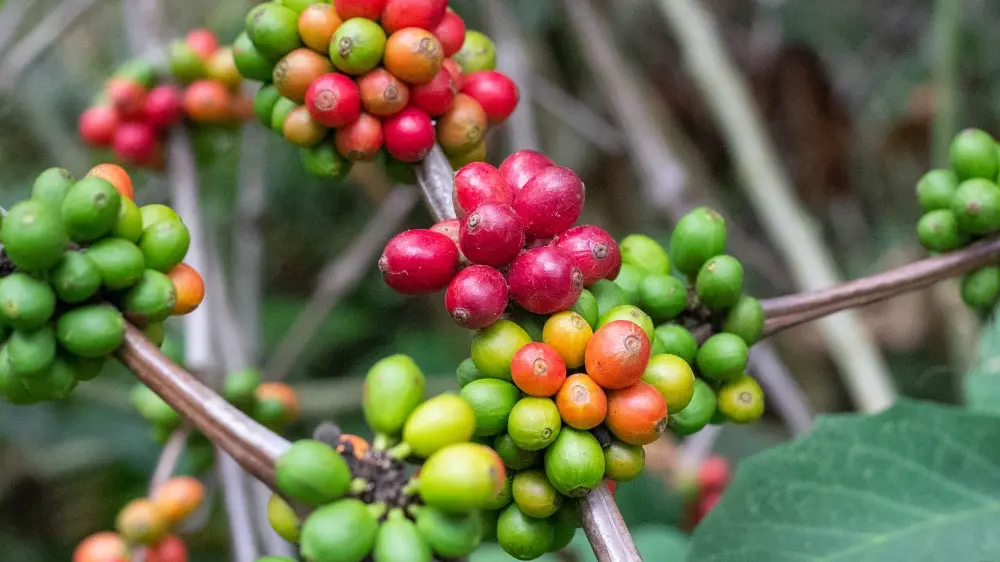
The nearby coffee farms offer an insight into high-altitude coffee production and the lives of the communities who work there.
- We invite you to read our article about San Lucas Sacatepéquez.
Frequently Asked Questions about Acatenango
How do I get to the village of Acatenango from Antigua?
The journey is along a tarmac road in good condition. It is relatively short and can be made by private car or public transport.
When is the best time to visit Acatenango?
The best time to visit depends on the traveller’s interests, but the dry season is generally the most comfortable time to get around: between November and April. If you’re looking for a taste of local culture, it’s best to visit during the local festivals.