Few places in Guatemala are so deeply embraced by nature as Alotenango. Situated on the slopes of the Volcán de Fuego, this municipality in Sacatepéquez lives under the constant presence of one of the most active volcanoes in the Americas. Far from being merely a gateway to the region’s great natural attractions, Alotenango retains its own distinct identity, shaped by its close relationship with the volcanic landscape that surrounds it.
Beyond its spectacular landscapes, Alotenango offers the chance to experience the real Guatemala. A Guatemala of local markets, traditions that are still very much alive, and communities that have learnt to live alongside the volcano’s imposing presence. Every corner of the municipality serves as a reminder that nature is a fundamental part of everyday life.
Where is Alotenango?
Alotenango is situated in the department of Sacatepéquez, in the central region of Guatemala. The municipality lies at an altitude of around 1,400 metres above sea level, on the southern slopes of the Fuego and Acatenango volcanoes. Its prime location between Antigua Guatemala, Escuintla and the central volcanic range makes the municipality an excellent base from which to explore some of the country’s most fascinating corners.
How to get there from Guatemala City
From Guatemala City, the journey to Alotenango usually takes between one hour and one and a half hours, depending on the traffic. The most common route passes through Antigua Guatemala and continues south on the RN-14, a road that winds through some of the country’s most impressive volcanic landscapes. There are also public transport services connecting the capital with Antigua and other towns in Sacatepéquez, from where it's possible to continue on to Alotenango.

Connections to nearby towns and destinations
If you’re also keen to explore the area around Alotenango during your visit, this town makes it easy for you. Its proximity to some of Guatemala’s main tourist attractions is, in fact, one of its great advantages.
Just a few kilometres away are Antigua Guatemala, the Acatenango Volcano, the Fuego Volcano, Ciudad Vieja, Jocotenango and various holiday resorts situated on the volcanic slopes. It also has good transport links to Escuintla and the routes leading to the Pacific coast.
History of Alotenango
As is typical of the area, the territory of Alotenango was inhabited by indigenous peoples long before the arrival of the Spanish. During the colonial period, the region gained importance due to its proximity to Santiago de los Caballeros de Guatemala – now known as Antigua Guatemala – and the fertility of its volcanic soil.
Over the centuries, agriculture became the municipality’s main economic activity. It's clear that the activity of the Fuego Volcano – a constant giant visible from Alotenango – has also had a profound influence on local history and the development of the neighbouring communities.
Culture and traditions of Alotenango
Local festivals and celebrations
Religious festivals continue to play a central role in the cultural life of Alotenango. The feast day of St John the Baptist, the town’s patron saint, is one of the most important events on the local calendar.
During the patron saint festivities, processions, sporting events, concerts, street fairs and religious ceremonies are organised, bringing together locals and visitors alike. As is the case in many Guatemalan towns, these celebrations combine elements inherited from the Catholic tradition with cultural expressions unique to the region.
Holy Week is also observed with particular fervour, particularly given the proximity of Antigua Guatemala, one of the country’s main centres for religious celebration.
Crafts and cultural expressions
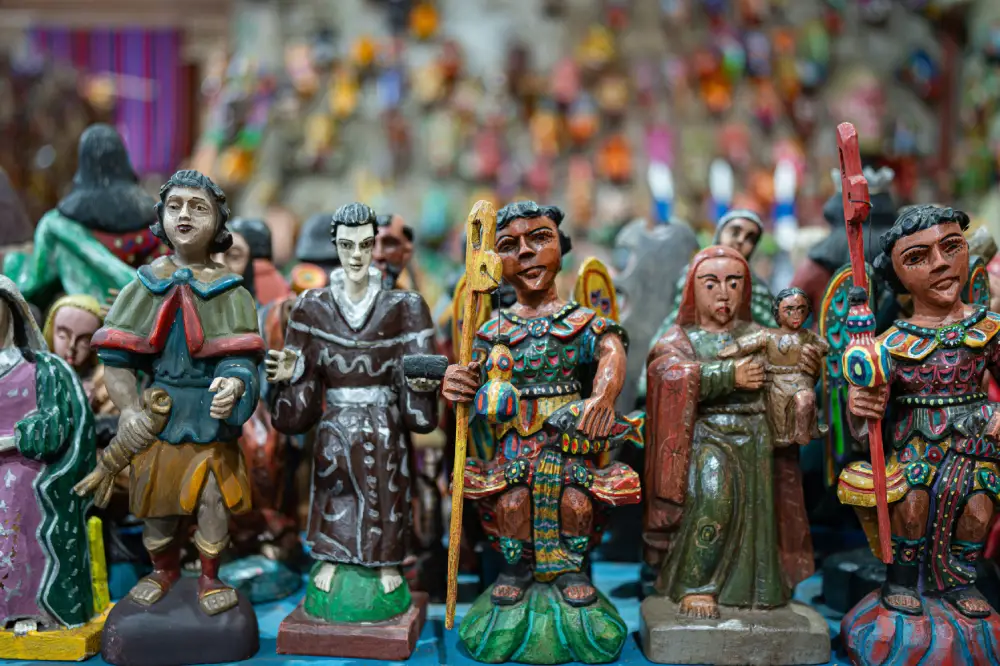
Although Alotenango is not one of Guatemala’s major centres for handicrafts, traditional crafts continue to form part of local life.
The municipality is home to textile work, decorative items, woodwork and handicrafts linked to religious festivals. Many of these items are produced in family-run workshops where traditional techniques continue to be passed down through the generations.
Traditional cuisine of the municipality
Alotenango’s cuisine reflects the region’s agricultural wealth. Tamales, chuchitos, traditional recados and various maize-based dishes are a regular feature of the local cuisine.
Thanks to the fertile volcanic soil, the area is also renowned for its production of fruit, vegetables and coffee. In the markets and family-run eateries, you can sample traditional dishes made with ingredients grown in the nearby communities.
- We invite you to read our article about Mazatenango.
What to see in Alotenango
Central Park and the parish church
The heart of Alotenango lies around its central park and the parish church dedicated to St John the Baptist in the 2nd canton, Plazuela Central. This area is the focal point for much of the social life and is the best place to observe everyday life in the town.
During the patron saint festivities, the park also becomes one of the main venues for celebrations, community gatherings and cultural activities. If you want to enjoy one of the most authentic local experiences, where culture fills every street, try to time your trip to coincide with one of these celebrations.
Volcanic landscapes and views of the Fuego Volcano
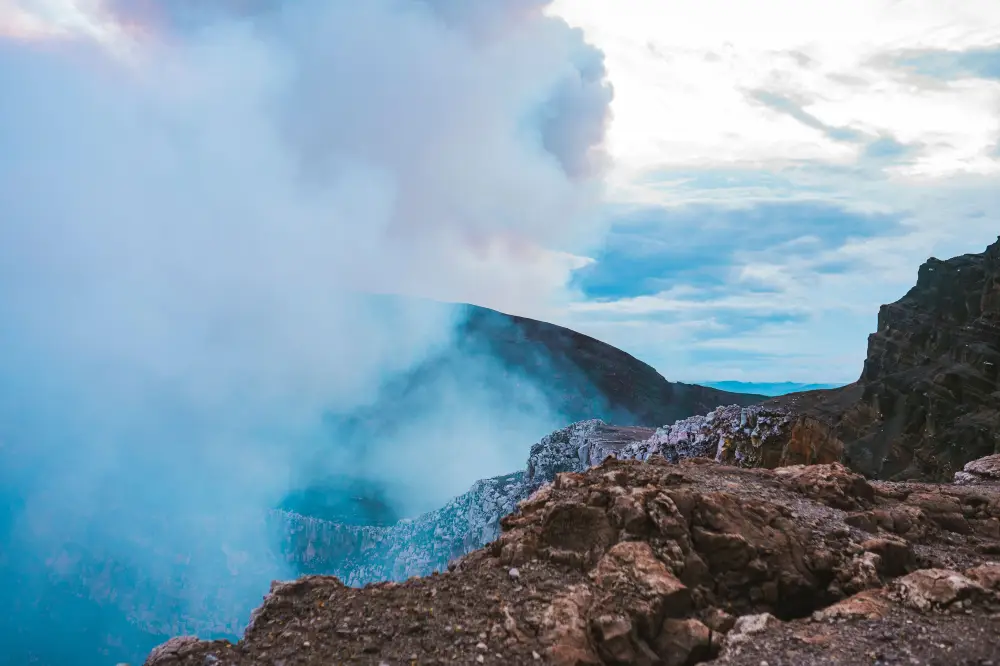
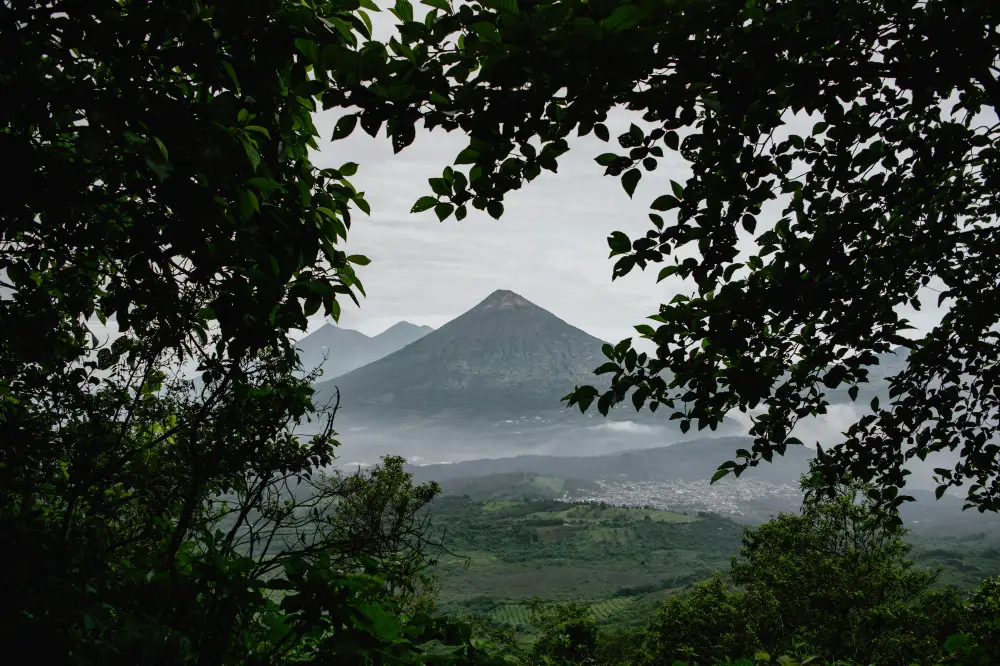
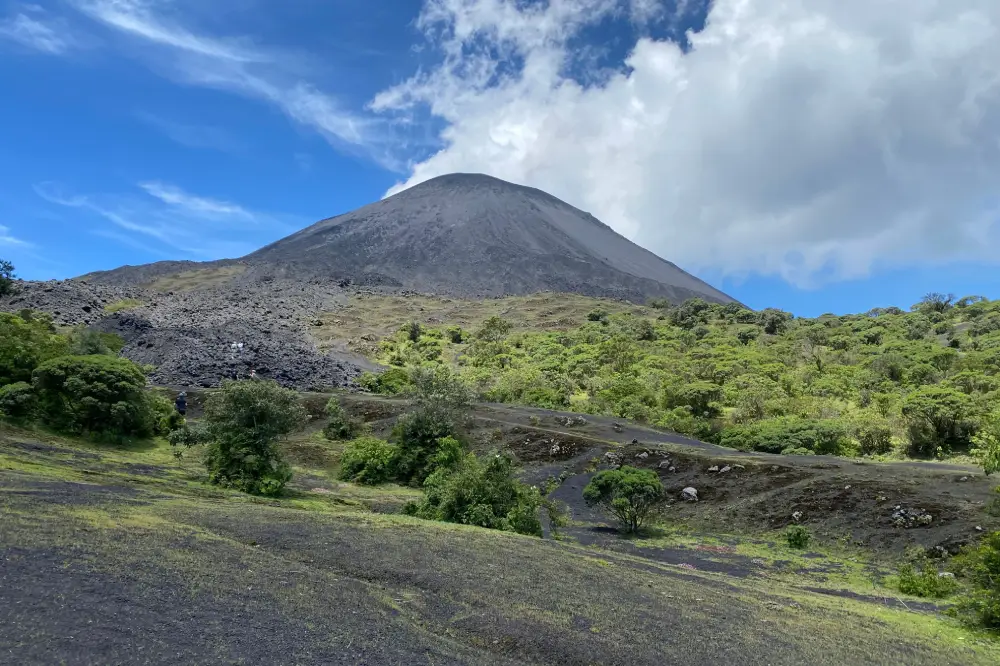
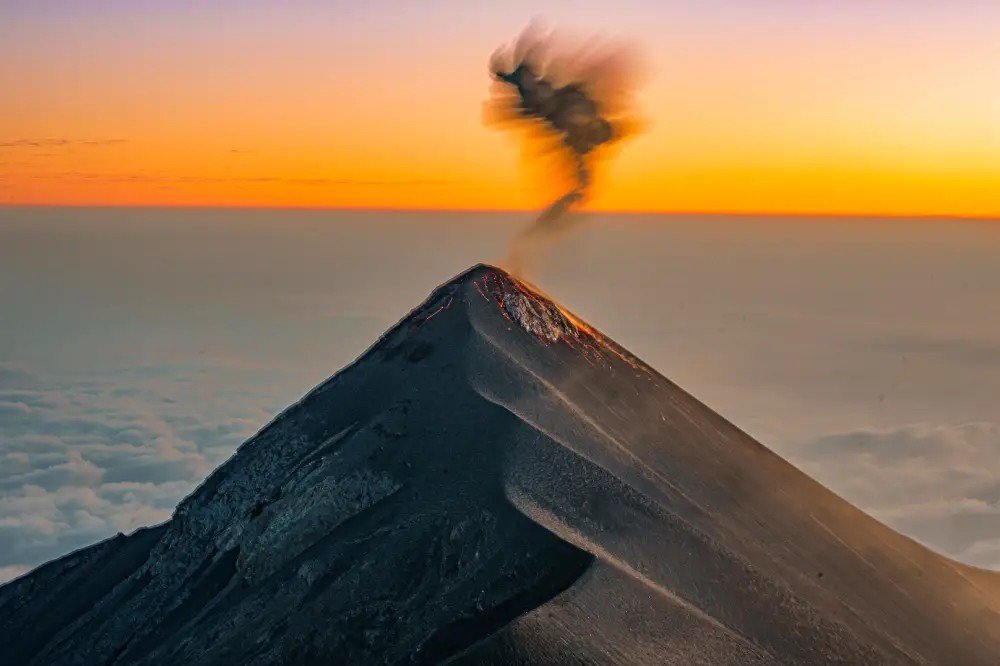
One of Alotenango’s main attractions is its extraordinary location opposite the Fuego Volcano. From various points across the municipality, it's possible to see the volcano’s silhouette and, on occasion, observe small ash emissions or eruptive activity. It also offers a picturesque combination of agricultural fields and forests surrounded by volcanoes – a landscape typical of Sacatepéquez.
The proximity to the Acatenango Volcano makes the surroundings even more spectacular. On clear days, the views take in much of Guatemala’s central volcanic range, making Alotenango one of the best places to appreciate the geological forces that have shaped this region. Sunrises are often particularly impressive, when the first light illuminates the volcanic slopes and the valleys covered in vegetation.
Farms and coffee plantations in the region
The fertile volcanic soil has encouraged the development of numerous farms. Some of these offer an insight into traditional crops such as coffee, avocado, maize and other produce that form part of the local economy.
Agriculture remains one of the municipality’s main economic activities and is an integral part of its identity. A tour of these farms gives an insight into how the soil, enriched by centuries of volcanic activity, has fostered high-quality crops.
Natural viewpoints on the volcanic slopes
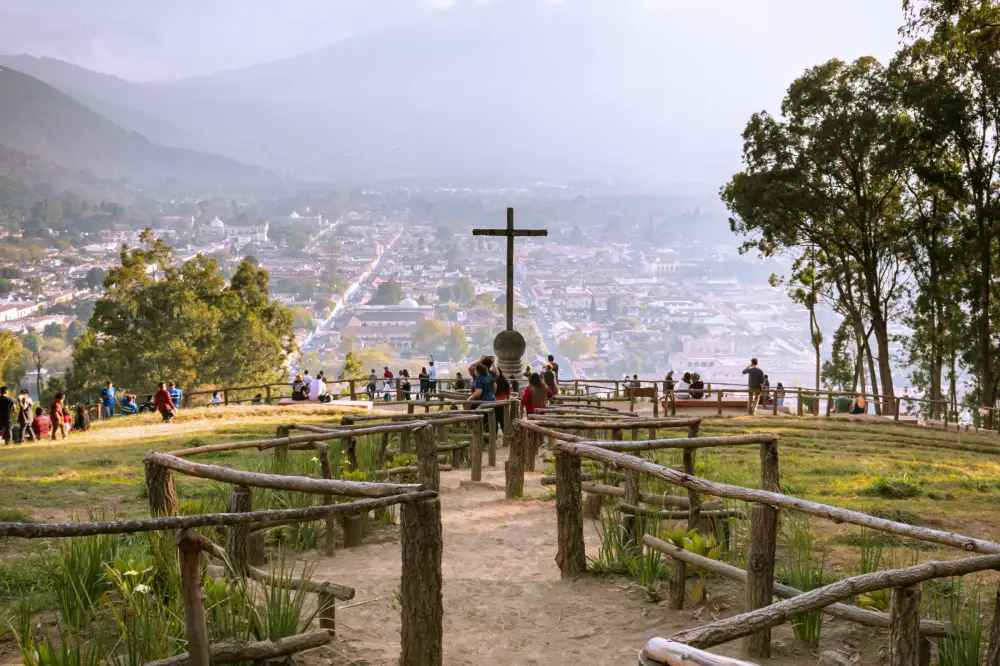
If you enjoy walking and are looking for a window onto nature, the area surrounding the town offers a number of vantage points that are easy to reach. Once there, the valleys of Sacatepéquez stretch out before you, in a panoramic view crowned by the Fuego and Acatenango volcanoes. Sunrises and sunsets often provide some of the best opportunities to enjoy this picturesque landscape.
Things to do in Alotenango
Explore the town centre and get a feel for local life
Walking through the streets of Alotenango allows you to discover a lesser-known side of Sacatepéquez – one that is more local and more authentic. The markets, small shops and community spaces offer a glimpse into the daily life of a community closely tied to agriculture and local traditions.
Explore the surrounding volcanic landscapes
The presence of the Fuego and Acatenango volcanoes makes Alotenango an excellent base from which to explore some of Guatemala’s most breathtaking landscapes. Numerous country lanes allow visitors to explore agricultural areas, viewpoints and natural sites offering spectacular views of this volcanic range.
Thanks to these volcanic conditions, a number of nearby farms have also been established, which now offer visitors the chance to learn about the crops that have historically sustained the local economy. Some of these farms organise tours during which traditional farming methods and the influence of the volcanic soil are explained.
If you enjoy photography, few places offer such close contact with the volcanic landscape as Alotenango does. The combination of still-active volcanoes, farmland and the small communities living around them makes the municipality a particularly attractive destination to capture on camera.
Take part in local festivals and activities
If you want to experience Alotenango like a true local, we recommend that you time your visit to coincide with one of the patron saint festivals or religious celebrations. These are an excellent opportunity to get to know the town’s traditions from the inside, just like a true local. During these events, you can witness processions, cultural activities, live music and popular festivities that form part of the identity of the people of Alotenango.
San Juan Alotenango: A nearby attraction
Characteristics of the village and its culture
San Juan Alotenango is the municipality’s most important historical and cultural centre. Its identity is deeply rooted in agriculture, religious traditions and its enduring relationship with the volcanic landscape. Daily life retains many of the characteristic features of the rural communities of Sacatepéquez, where family and the community continue to play a fundamental role.
Notable traditions and festivals
The feast day of St John the Baptist, the patron saint of Alotenango, takes centre stage in the local festival calendar. Held on 24 June, the streets are filled on that day with religious, cultural and recreational activities that bring together both local residents and visitors from neighbouring communities.
The celebrations include processions, solemn masses and liturgical services that reflect the region’s deep-rooted Catholic tradition. At the same time, there are local fairs, fairground rides, concerts, sports competitions and marimba performances. All of this takes place against the ever-present backdrop of the Fuego and Acatenango volcanoes, which form an inseparable part of the landscape and the collective memory of the region’s inhabitants.
Things to see and do in San Juan Alotenango
Although many travellers pass through San Juan Alotenango on their way to Antigua Guatemala or the volcanic routes of Acatenango and Fuego, it's well worth taking the time to explore this village and its surroundings. Its town centre offers a glimpse into the daily life of a community deeply rooted in agriculture and the traditions of Sacatepéquez.
One of its main attractions is the view of the Fuego Volcano, whose silhouette dominates the landscape. As if that weren’t striking enough in itself, on clear days you can see the plumes of steam rising from its crater. The area around San Juan Alotenango is also dotted with farms, coffee plantations and avocado and maize fields, which thrive thanks to the fertility of the volcanic soil.
Best time to visit Alotenango
The dry season, between November and April, usually offers the best conditions for visiting Alotenango. During these months, the skies are generally clearer, making it easier to see the volcanoes and enjoy outdoor activities.
What makes the municipality and its people unique
What makes Alotenango special is its constant coexistence with one of the continent’s most active volcanoes. Few places in Guatemala offer such a direct experience of the power of the volcanic landscape whilst allowing visitors to discover the daily life of communities that have learnt to adapt to this environment over generations. The blend of agricultural tradition, cultural heritage and nature makes the municipality a truly unique destination.
How to include Alotenango and San Juan Alotenango in an itinerary
Alotenango can easily be included in an itinerary covering central Guatemala. It's most common to combine a visit here with trips to Antigua Guatemala, Ciudad Vieja, Jocotenango and excursions to the Acatenango Volcano.
Frequently Asked Questions about Alotenango
Which department is San Juan Alotenango in?
San Juan Alotenango is part of the municipality of Alotenango, located in the department of Sacatepéquez, Guatemala.
When is the best time to visit Alotenango?
The best time to visit is usually during the dry season, between November and April, when the weather is ideal for viewing the volcanoes and enjoying outdoor activities. The rainy season offers a rich array of greenery but, on the other hand, makes the trails and outdoor activities more difficult.