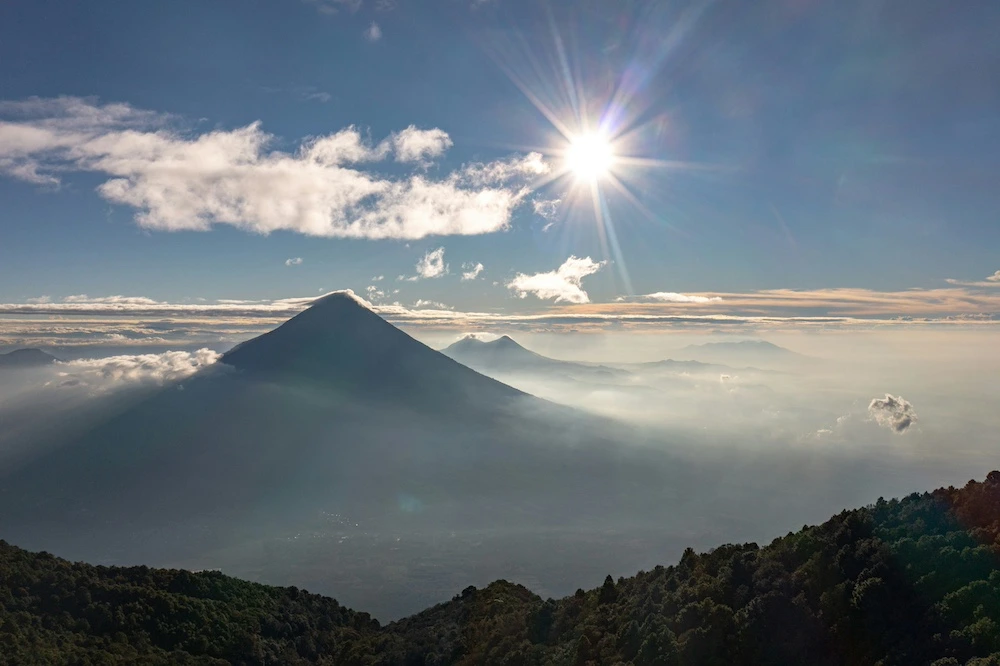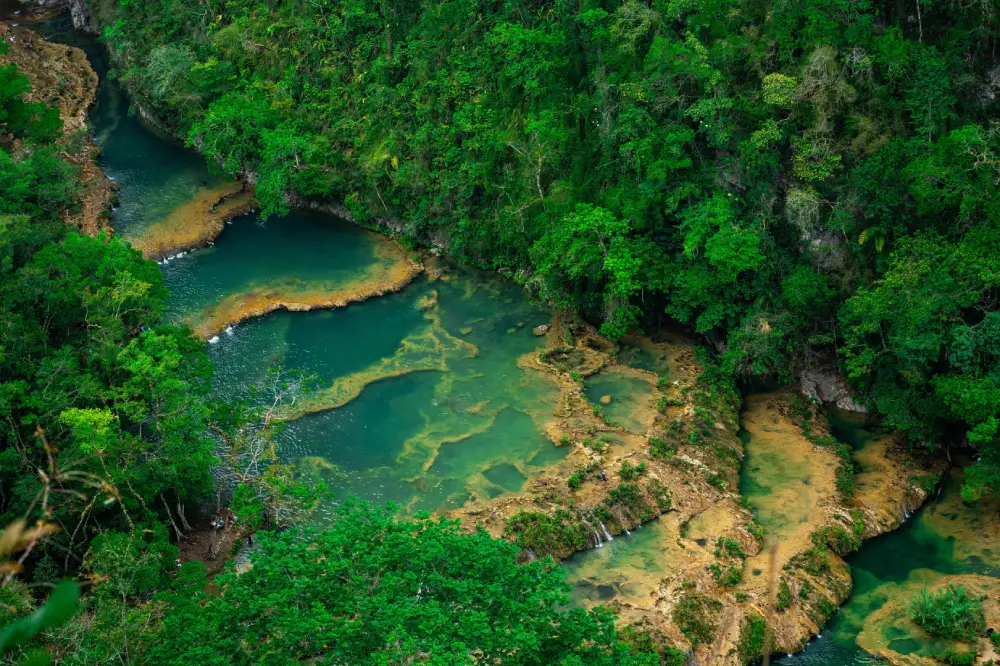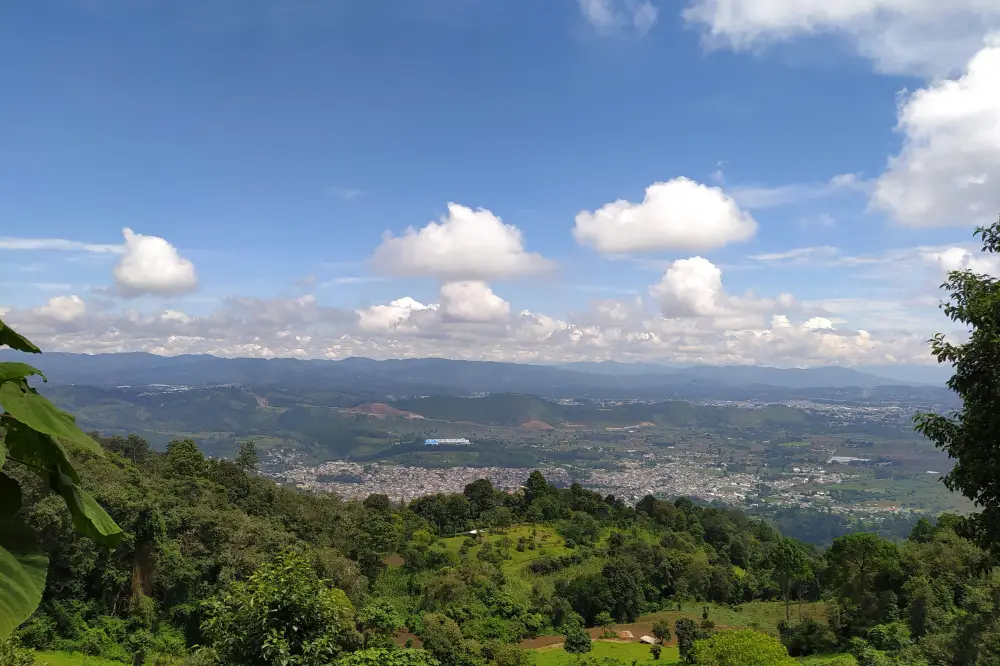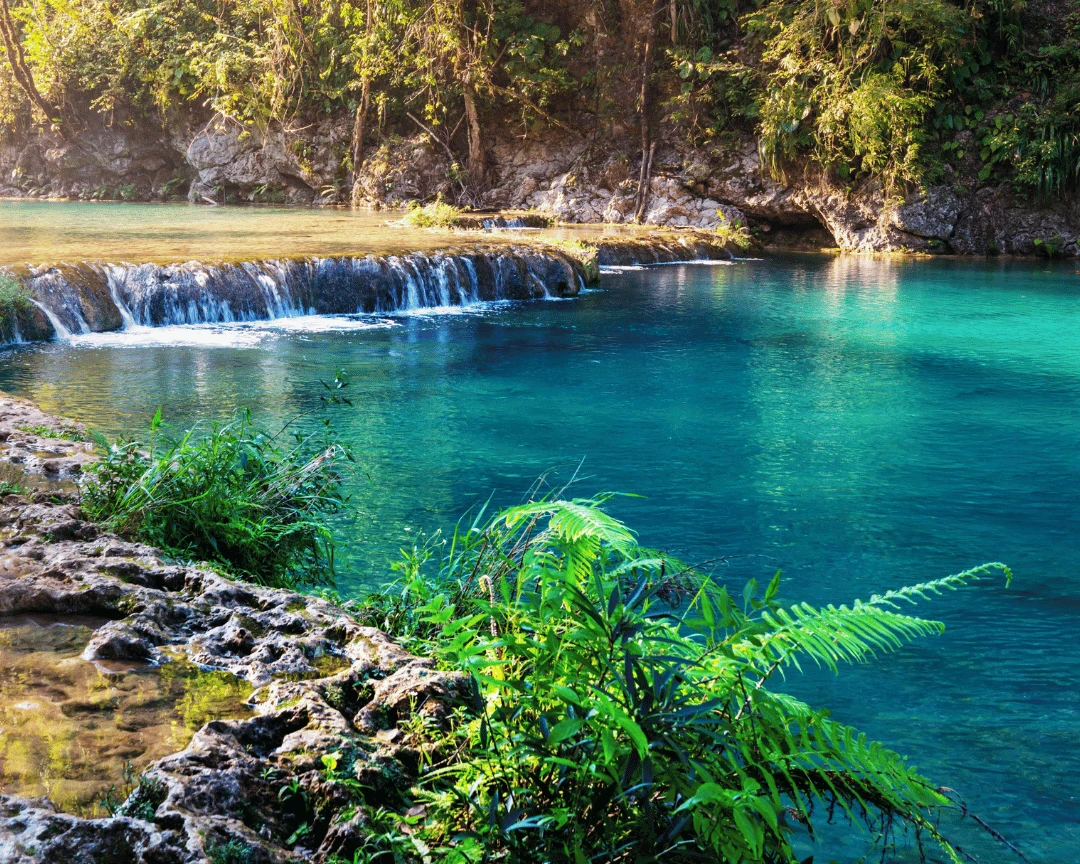
The Cahabón River, one of Central America’s most impressive river treasures, flows through some of Alta Verapaz’s most characteristic landscapes. Along its course, there are rainforests, waterfalls, rural areas and spots where the water takes centre stage – a scene that defines much of this region of Guatemala.
Beyond its scenic value, the River Cahabón has close ties with local communities and well-known sites such as Semuc Champey. Its waters are an integral part of daily life in the region and help us to better understand the natural and cultural wealth of the Verapaces.
What is the River Cahabón?
Characteristics of the river and its ecosystem

The Cahabón River is one of the mightiest and most important rivers in the Guatemalan highlands. It winds its way through limestone canyons and dense rainforests that are home to an extraordinary array of tropical biodiversity.
But the water does not behave the same way everywhere. There are stretches where the river flows calmly through the vegetation, and others where rapids, rock formations and small waterfalls appear, completely transforming the landscape.

Why it is a top destination in Alta Verapaz
The River Cahabón is one of the best-known features of Alta Verapaz. It has shaped much of the region’s landscape and is closely linked to several of the department’s most visited natural areas.
It's highly regarded by adventure tourism enthusiasts for the quality of its rapids and is perfect for rafting and kayaking. This adrenaline rush, combined with the spectacular scenery, is a magnet for international tourists.
The environmental and cultural importance of the river
The Cahabón River plays a vital role within the ecosystems of Alta Verapaz. Its waters contribute to the region’s environmental balance and support a wide variety of flora and fauna.
Furthermore, the river has a long-standing connection with the Q’eqchi’ (or Qekchí) communities, who for generations have centred part of their daily lives around this natural environment.
Location of the River Cahabón
Where is it in Alta Verapaz?
The river flows entirely through the department of Alta Verapaz, in the northern region of Guatemala. It rises in the mountainous peaks of Purulhá and flows towards the east of the country. It passes through several key municipalities, including Lanquín and the town of Cahabón.
How to get there from Cobán
Cobán is the main starting point for exploring its most famous sections. From the town, take the road leading to the municipality of San Pedro Carchá and continue on towards Lanquín.
The journey by car takes approximately two to three hours due to the winding mountain road. You can also travel by tourist minibus.
How to get there and recommended routes for visiting
Most visitors reach the Cahabón River via roads linking Cobán with Lanquín and other natural destinations in Alta Verapaz.
To visit the Semuc Champey area, where the river flows beneath the pools, 4x4 vehicles are used.
- We invite you to read our articles about the Río Azul, the Motagua River and the Río Dulce.
History and culture around the River Cahabón
Significance for local communities

The River Cahabón has been an integral part of the lives of numerous communities since long before the arrival of the Europeans. Its waters have served as a natural resource and as a fundamental element within the traditional organisation of the territory.
For the Q'eqchi' Maya people, it's a sacred element that deserves respect. Its waters have provided food, transport routes and agricultural sustenance to rural families for centuries.
Legends and traditions associated with the river
As is the case in many regions of Guatemala, rivers often feature prominently in local oral tradition. The elders recount ancient tales of water spirits that dwell in the deepest rapids. According to local tradition, the river roars at night to communicate with the surrounding sacred hills.
The symbolic importance that water holds within many indigenous communities in the region is particularly noteworthy.
Conservation and cultural heritage in the region
Protecting the ecosystems linked to the Cahabón River is essential for preserving both the biodiversity and the cultural heritage of Alta Verapaz. Various community organisations are actively working to implement ecotourism practices that reduce the environmental impact on the river.
In recent years, there has also been growing interest in promoting responsible tourism models to ensure that the river remains a natural sanctuary for future generations of Guatemalans.
Things to do on the River Cahabón
Water sports and adventure
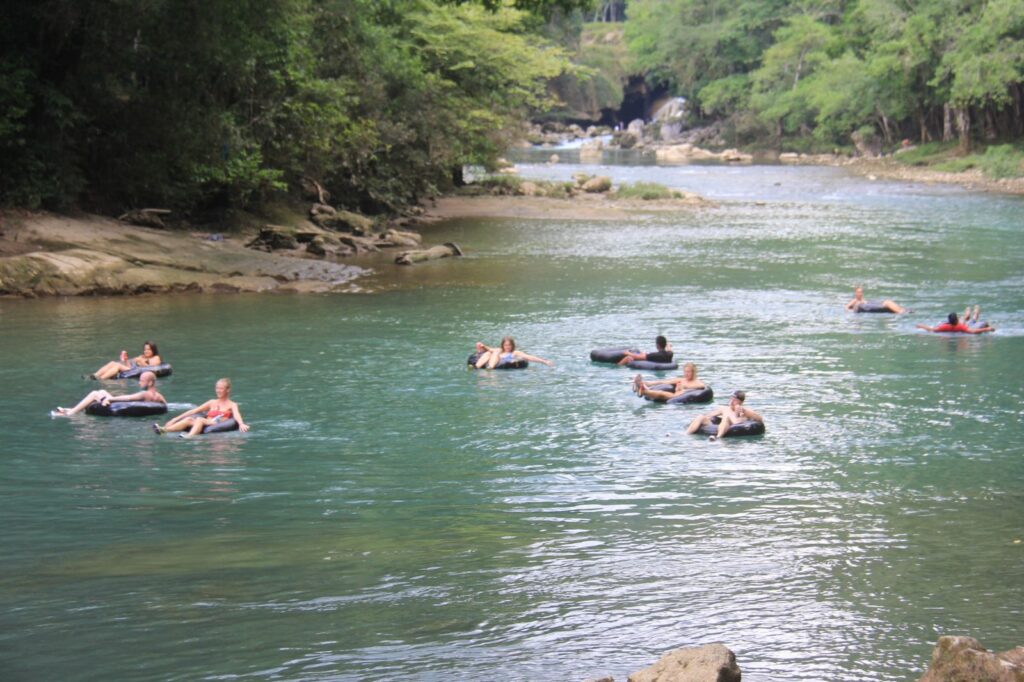
Depending on which section you visit, the River Cahabón offers a range of different water-based experiences.
The star attraction and most popular activity on the river is white-water rafting or adventure rafting. The navigable stretches offer Class III and IV rapids, guaranteeing an extreme rush of adrenaline and excitement. You can also go tubing in the calmer sections.
Hiking and exploring the natural environment
Exploring the area around the River Cahabón is one of the best ways to discover the natural riches of Alta Verapaz.
The canyon’s slopes are criss-crossed by footpaths that wind their way deep into the dense tropical rainforest. These hiking trails allow visitors to explore unique rock formations, hidden caves and other water sources.
Wildlife spotting
The diversity of habitats found in the area around the River Cahabón supports a wide range of species.
You can spot toucans and a wide variety of colourful wild parrots. The best time to look for them is in the early hours of the morning, when the river is calm. You may also hear howler monkeys in the tall treetops of the jungle or spot mammals such as the peccary.
Local guides will help you identify the medicinal plants and exotic orchids that grow by the water’s edge.
Landscape and nature photography
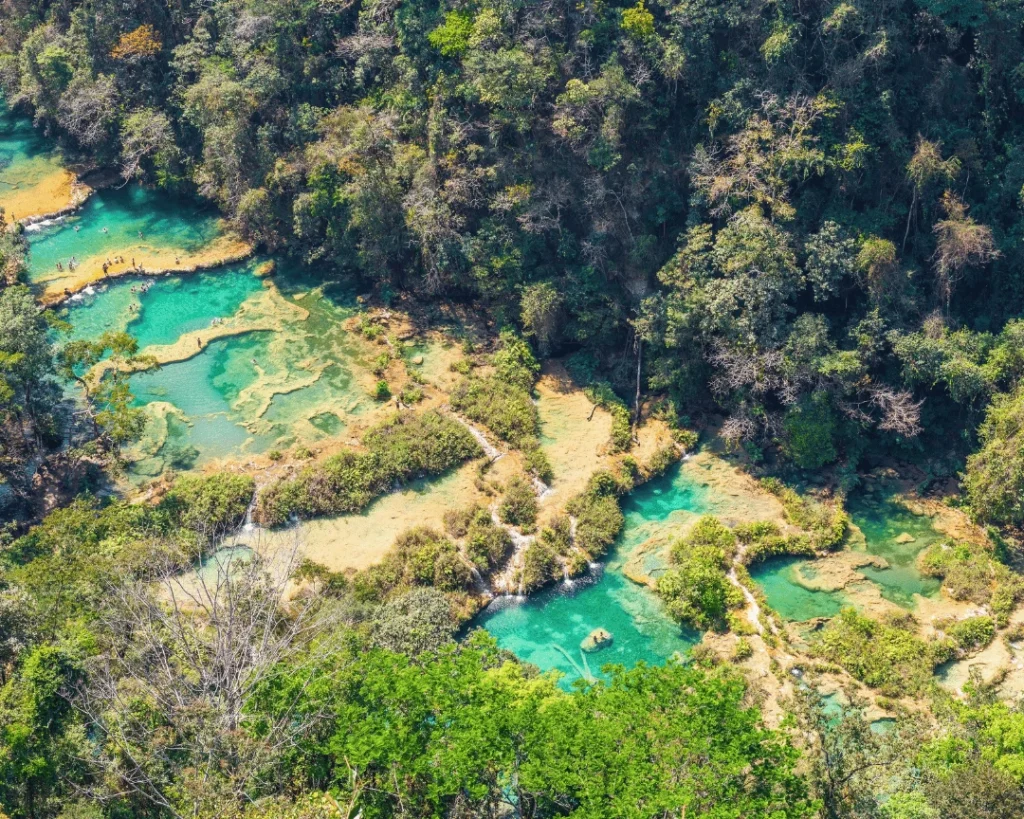
Capturing the power of water crashing against the rocks in the rapids is an exciting challenge for photography enthusiasts. The pools of colour contrasting with the green of the jungle, the light filtering through the trees, and the sunsets over the river also make for perfect postcard scenes. Just remember to protect your equipment properly with waterproof bags.
What to see on the River Cahabón
Waterfalls and rapids
One of the great attractions of the River Cahabón is that the landscape changes constantly as the water flows through valleys, forests and rocky areas.
Along its course, the river creates waterfalls that punctuate the landscape. The most famous rapids, such as ‘El Rodeo’ and ‘Las Tres Hermanas’, are a real feast for the eyes. At the points where the tributaries join the main river, very photogenic waterfalls of crystal-clear water form.
Beaches and natural recreational areas
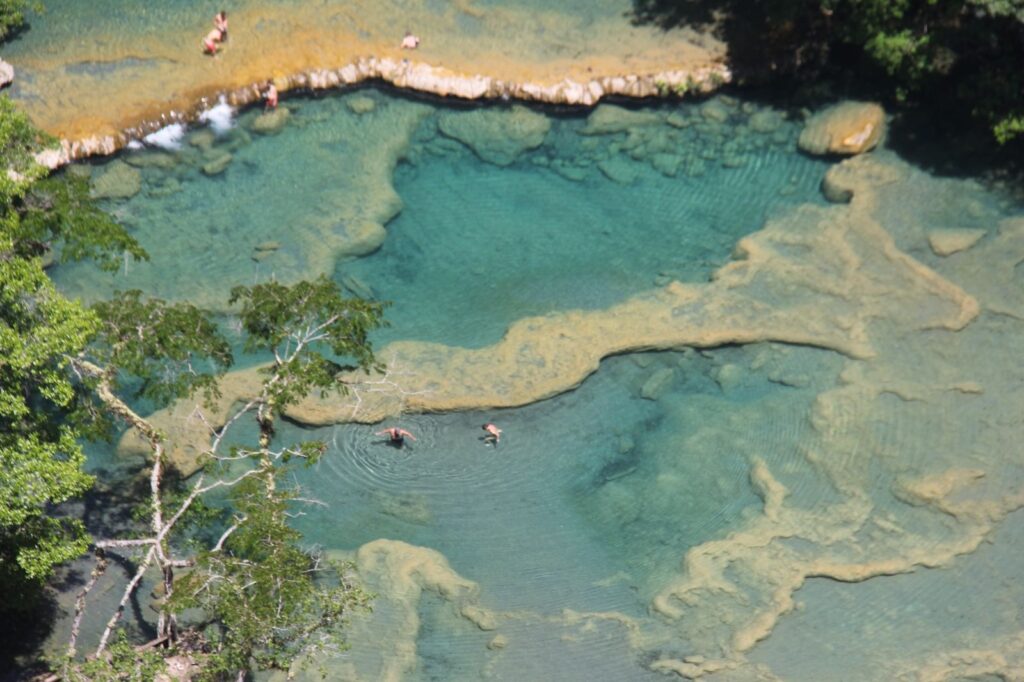
In some sections, the river widens, forming beaches of fine sand and pebbles. These areas are ideal for relaxing in the sun, taking a leisurely swim and quietly enjoying the surrounding scenery. This is where rafting groups stop to camp and prepare their lunches.
Viewpoints and panoramic views
The trails that run along the upper reaches of the canyon feature natural terraces that serve as spectacular viewpoints. From these heights, you can see the river winding its way through the dense jungle. You’ll be amazed by the vastness of the green landscape.
- We invite you to read our article about rivers in Guatemala.
Best time to visit the Cahabón River
The climate in the river basin is warm, tropical and very humid. The Cahabón River can be visited for much of the year, although conditions vary depending on the season.
The dry season, from November to April, generally makes it easier to travel by road and go for walks along nearby trails. It also offers the most stable and safe conditions for activities such as rafting. During the rainy months, the landscape takes on a particularly lush green appearance. However, rainfall can make access to some areas difficult and alter the conditions on certain routes.
Tips for visiting the River Cahabón
Safety recommendations
For any water-based adventure activity, it's essential to wear a life jacket and a helmet. Never attempt to paddle or swim in rapids without being accompanied by a certified local guide.
It's also advisable to wear suitable footwear, take enough water with you and keep an eye on the weather conditions, particularly during the rainy season. When visiting areas near the riverbed, it's important to follow the signs and avoid approaching strong currents or slippery areas.
What to see near the River Cahabón
Laguna Brava in Huehuetenango
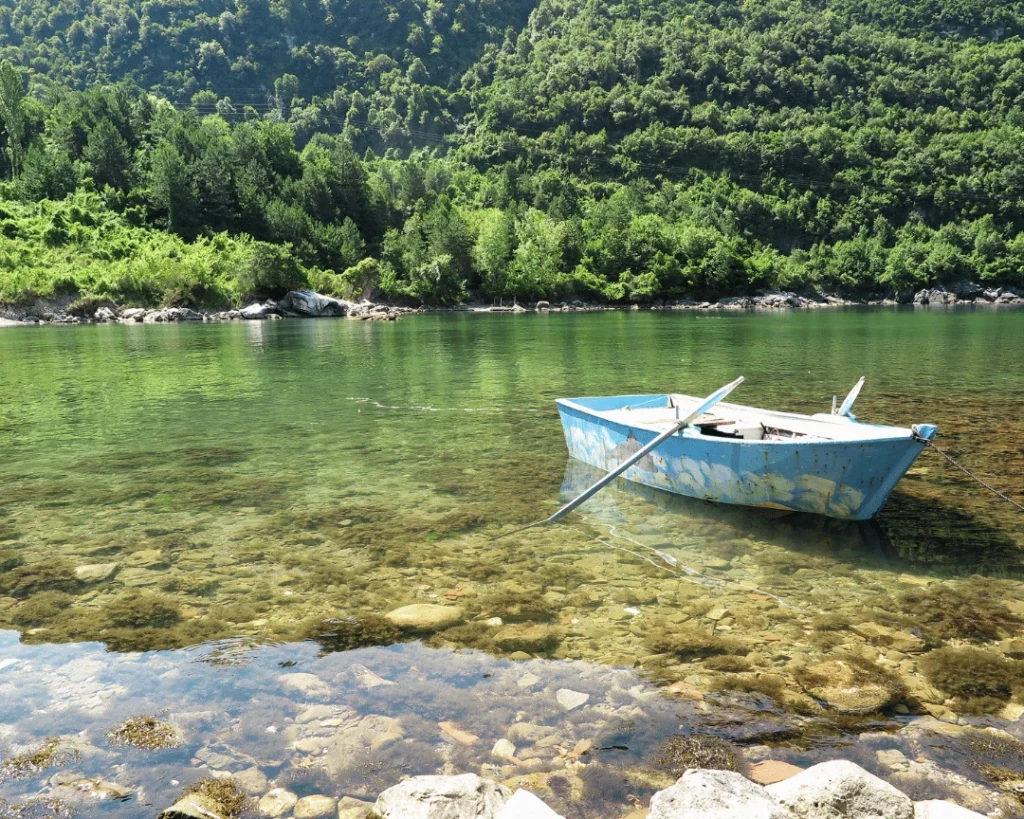
Although it is not located near the River Cahabón, some travellers include Laguna Brava in their wider itineraries around Guatemala, which focus on natural landscapes and water-based destinations.
Its mountainous surroundings and the distinctive colour of its waters have made it one of the best-known spots in Huehuetenango, regarded as an ecotourism gem.
Cobán and the surrounding area
Cobán is the main gateway for exploring Alta Verapaz and an excellent base from which to organise day trips or longer excursions around the Cahabón River.
The city boasts charming colonial architecture and museums dedicated to Mayan culture. Don’t leave without trying traditional dishes such as Kak’ik, a traditional turkey broth made with local spices
Nearby rivers and waterfalls
The area around Cahabón features waterfalls, natural pools and rainforests, which are among the most recognisable sights in Alta Verapaz. Notable among these sites are Semuc Champey, the Las Conchas waterfalls and the crystal-clear springs that flow directly from the Lanquín caves.
Indigenous communities and cultural trails
The area around the Cahabón River offers the chance to get to know communities that have preserved many of their cultural traditions. The Q’eqchi’ people are an integral part of this region’s identity. Visiting their community centres will give you a first-hand insight into their complex traditional weaving techniques and the cultivation of native cocoa.
Is the Cahabón River worth a visit?
What makes it unique in Guatemala
What makes the Cahabón River special is the combination of world-class technical rapids and geological landmarks such as Semuc Champey. It's a destination that perfectly combines extreme sports, ecotourism and the living Mayan culture of today.
Who is this destination recommended for?
The Cahabón River is particularly appealing to travellers who enjoy nature, photography and outdoor activities. It's the ideal destination for sports enthusiasts seeking an adrenaline rush and thrills. It's also a good choice for those wishing to discover a less urban side of Guatemala.
Frequently Asked Questions about the Cahabón River
Where is the River Cahabón?
The Cahabón River is situated in the department of Alta Verapaz, in Guatemala, and flows through various municipalities, including San Pedro Carchá, Lanquín and Cahabón.
When is the best time to visit the Cahabón River?
The dry season usually offers better conditions for getting about and enjoying outdoor activities, although the river can be visited all year round.
How many hours is it to the Cahabón River from Cobán or Huehuetenango?
It depends on which section of the river you want to visit. From Cobán, there are sections that can be reached in just over an hour by road, whilst from Huehuetenango the journey takes several hours (up to seven) due to the distance between the two departments.