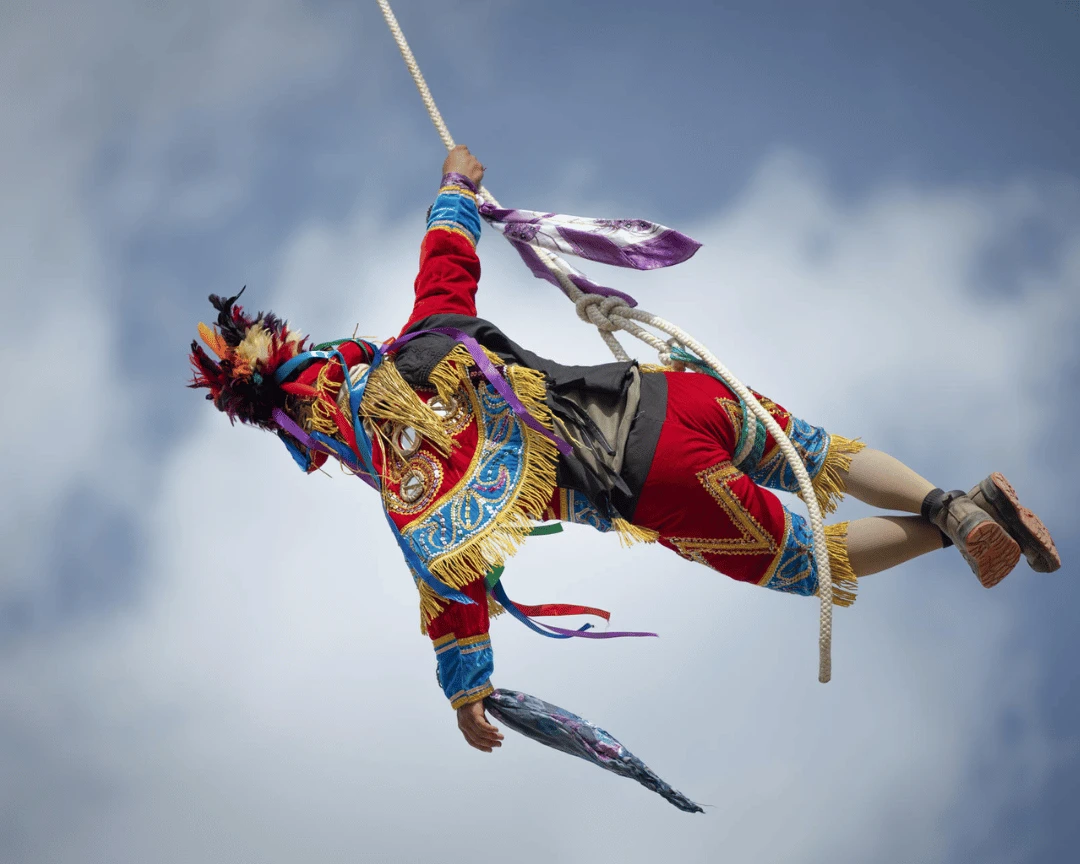
The dance of the Palo Volador is one of Guatemala’s most impressive traditions for one very simple reason: it’s unlike anything you’ve ever seen before. It's ritual, it's community, it's music, it's memory and, at the same time, it's a powerfully visual spectacle: a towering pole, two flyers descending whilst spinning in the air, and an entire village watching, joining in and sustaining the moment.
In this article, we explain what the Palo Volador dance is, why it remains so significant, where it originated, what the Palo Volador symbolises in Guatemala, where you can see it (with a particular focus on Chichicastenango), and how to plan your visit so you can experience it with an understanding of its context and with respect.
If you’re planning a trip around the country, you can find useful information on Guatemala’s official tourism website.
What is the Palo Volador dance, and why is it one of Guatemala’s most striking traditions?
The Flying Pole dance is a traditional ceremony in which two performers descend from the top of a pole, tied to it with ropes, whilst spinning around it until they reach the ground. The spectacle is breathtaking because it combines height, movement and a controlled risk that impresses even those who know nothing of the tradition.

But the most important thing is that it isn’t a show put on for tourists. The Palo Volador in Guatemala is seen as a community tradition with ritual significance, linked to celebrations and the festive calendar. The music, the atmosphere, the preparation and the respect with which it's observed make it clear that the focus is not on the ‘wow factor’, but on what it represents for the community.

What’s more, seeing it in context changes everything. Watching a video is not the same as being there: hearing the instruments, feeling the anticipation, seeing the coordination and sensing how the people join in the moment. That’s when you understand why it’s considered one of Guatemala’s most powerful living traditions.
Is the Palo Volador dance worth seeing? What do travellers think?
Yes, it’s well worth it, especially if you’re interested in living culture and want to take home an impression of Guatemala that goes beyond landscapes and markets. Most travellers who happen to be there for the Palo Volador dance recall it as one of the most intense moments of their trip, because it combines excitement, tradition and a performance that you won’t forget.

What people tend to enjoy most is the whole experience: not just the descent of the ‘voladores’, but the atmosphere in the village, the music, the preparations, and the fact that they’re witnessing a tradition that’s still being celebrated. It’s also much more appreciated when you understand the context, which is why it helps to do some research beforehand or go with someone who’s familiar with the festival.
And one important point: although the Palo Volador is impressive for its height, the experience is best enjoyed when you take your time and show respect, bearing in mind that you are taking part in a communal event, not just a stand-alone ‘attraction’.
The origins and history of the Palo Volador dance in Guatemala
The origins of the Palo Volador dance in Guatemala are linked to the ceremonial traditions of the Mesoamerican world, with connections to Mayan traditions and a form of ritual in which the relationship with nature, time and the community plays a central role. As with many ancient cultural expressions, the dance has evolved over the centuries, adapting to different contexts without losing its essence.
In practice, this means that the Palo Volador is a tradition that has managed to stay alive: it has been preserved as a ceremony, incorporated into specific celebrations and passed down through the generations. To witness it today is to witness cultural continuity—with changes, certainly, but also with clear roots.
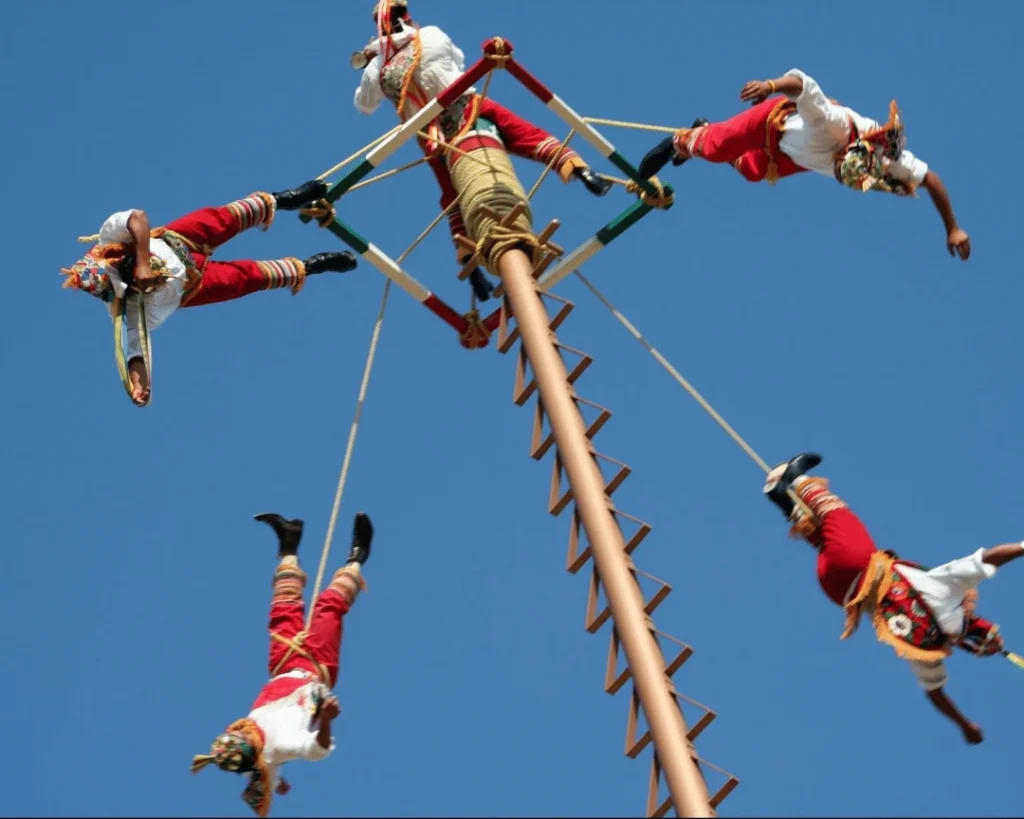
Ceremonial roots and significance within Mayan traditions
Within ceremonial imagery, the Flying Pole is associated with ideas of the connection between heaven and earth, natural cycles, and a way of celebrating the collective. The pole serves as a symbolic axis: verticality, height, and a central point around which the action takes place.
Dance is understood as a ritual act that is not merely observed, but actively engaged with. The music, the rhythm and the involvement of the surroundings are all part of the experience. That is why, when experienced as a celebration, one realises that it isn't just ‘what happens on stage’, but everything that takes place around it.
How the Palo Volador dance has survived to the present day
The survival of the Palo Volador in Guatemala is down to community transmission: it's learnt, practised and maintained as part of local celebrations. It isn't a tradition that is sustained solely by its ‘history’, but because it continues to hold cultural value for those who practise it.
Another factor has been its ability to adapt: preserving the ritual and its essence, whilst fitting it into modern festive calendars. In some places, the Palo Volador has become a symbol of local identity. And that is why the community protects it and continues to celebrate it.
Palo Volador in Guatemala: symbolism and cultural significance
The Palo Volador in Guatemala is sustained by its cultural significance. Beyond its sheer impressiveness, this dance represents continuity, a sense of belonging and memory. To witness it's to gain an insight into a way of understanding ritual as an integral part of community life, rather than as something separate or exceptional.
It's also an example of how tradition and the present coexist. The ritual gestures remain, the music remains, the connection to the festival remains, and at the same time, the modern context is evident in the village, in the market, in the atmosphere and in the way the celebration is experienced.
What does dance represent, and why does it remain so important?
The Flying Pole is a collective event that brings together symbols, the local area and the community. That is why it remains important: because it's a moment when the people recognise themselves in their own tradition. It's identity lived, not merely recounted.
Its significance also lies in the way it's passed on. Seeing that such a tradition continues and is celebrated with pride says a great deal about how culture is sustained in everyday life: it isn't merely preserved, but practised.
Music, costume and ritual surrounding the Flying Pole
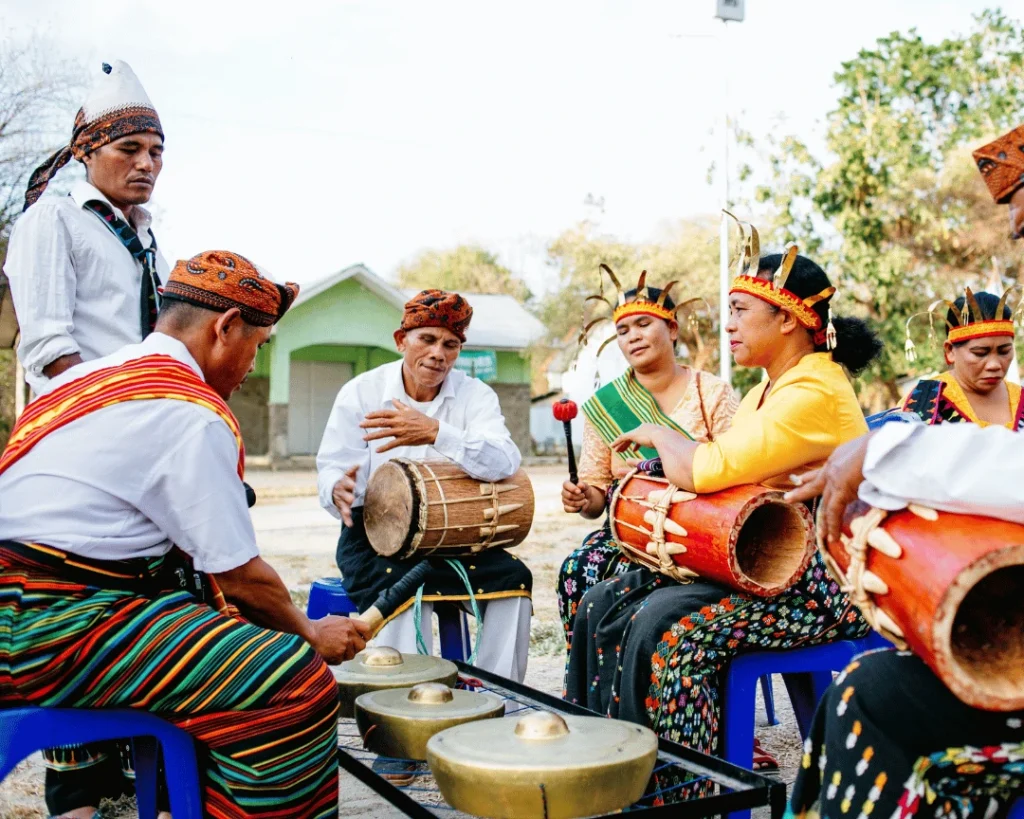
Music is an essential part of it. It's not merely background noise; it sets the pace, accompanies the action and sustains the moment. The costumes also lend an air of identity and symbolism, and form part of a production that is not improvised: there is preparation, order and respect.
And you can really feel it when you’re there. The dance doesn’t just start ‘out of the blue’. What’s incredible is how it builds up: the atmosphere, the music, the anticipation, the coordination. All of that forms part of the Palo Volador ritual in Guatemala.
Where to see the Palo Volador dance in Guatemala
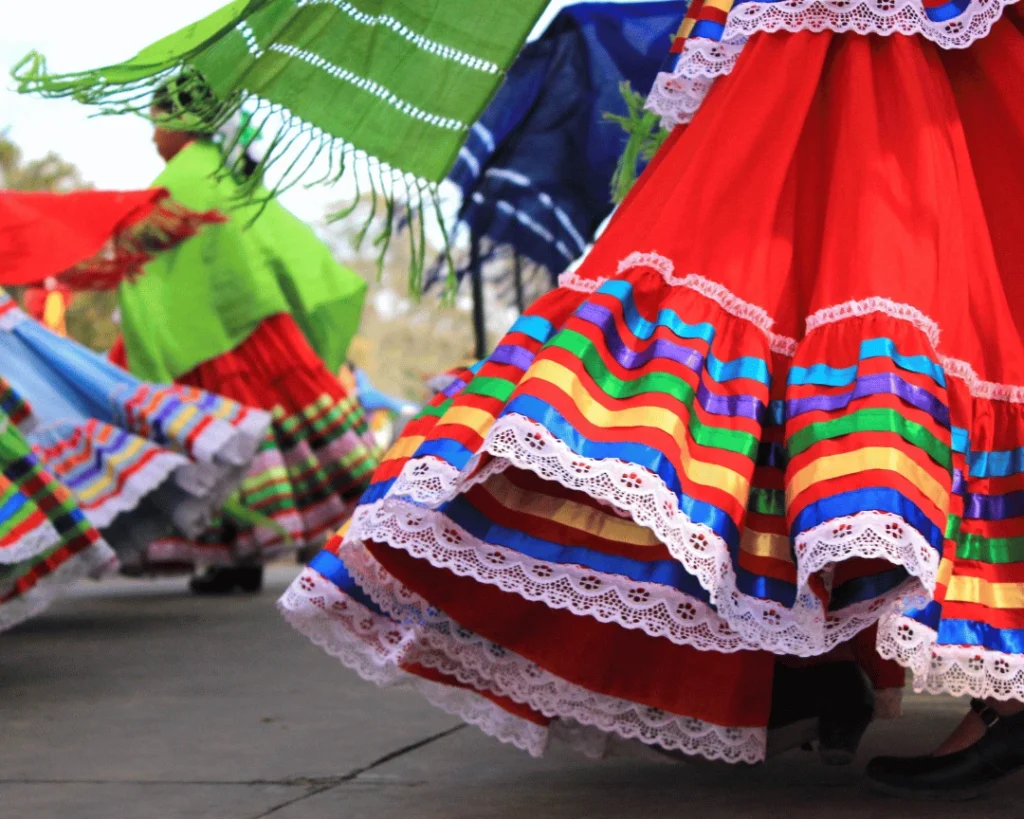
The Palo Volador dance takes place at specific times of the year and in specific locations, usually in connection with local patron saint festivals and community celebrations. It's not something that happens every week, so it's advisable to organise it with clear dates in mind.
Chichicastenango and its connection to this tradition
Chichicastenango is one of the best-known places to see the Palo Volador in Guatemala, both because its cultural and ceremonial life is so significant and because the town is already a popular stop for its market and traditions. In Chichi, the experience is seen as part of a whole: the market, the church, the bustling streets and the celebrations.
To put the visit into context, it’s a great idea to link it to the Chichicastenango Market and to ‘Chichicastenango Costume: history, symbolism and tradition in Guatemala’, as this will give you a better understanding of the cultural setting in which the dance takes place.
Local festivals and times of the year when you can see the Palo Volador in Guatemala
The Palo Volador dance is most commonly seen during local patron saint festivals, when the town is particularly lively and the celebrations take over the streets, central squares and ceremonial sites. On such occasions, the Palo Volador takes on even greater significance as it forms part of the local ritual and festive calendar.
The practical advice here is clear: if your main aim is to see it, plan your itinerary around specific dates. And if you’re passing through Chichicastenango on market days, allow plenty of time, as the atmosphere changes and the town gets very busy.
The Dance of the Flying Stick as part of a visit to Chichicastenango
Visiting the Palo Volador in Chichicastenango, Guatemala, is best experienced as a complete cultural immersion. It’s not just a case of turning up, having a look and leaving. It’s about immersing yourself in the town on a special day, with the market, rituals, music and atmosphere.
How to combine this experience with the market and the Church of St Thomas
A logical way to go about it's to start at the market (to get a first impression of the atmosphere and the hustle and bustle) and then head towards the festival area, leaving time to visit the Church of Santo Tomás and the surrounding central area. In Chichi, everything is interconnected: commerce, ritual and everyday life.
If you want to make the most of your visit, take a look at ‘What to see and do at Chichicastenango Market’ (to get a clear idea of what to see and how to get around), and then leave some time for the Palo Volador, because these moments are best enjoyed when you’re not rushing from one place to another.
What to expect in terms of the atmosphere and cultural context during the celebration
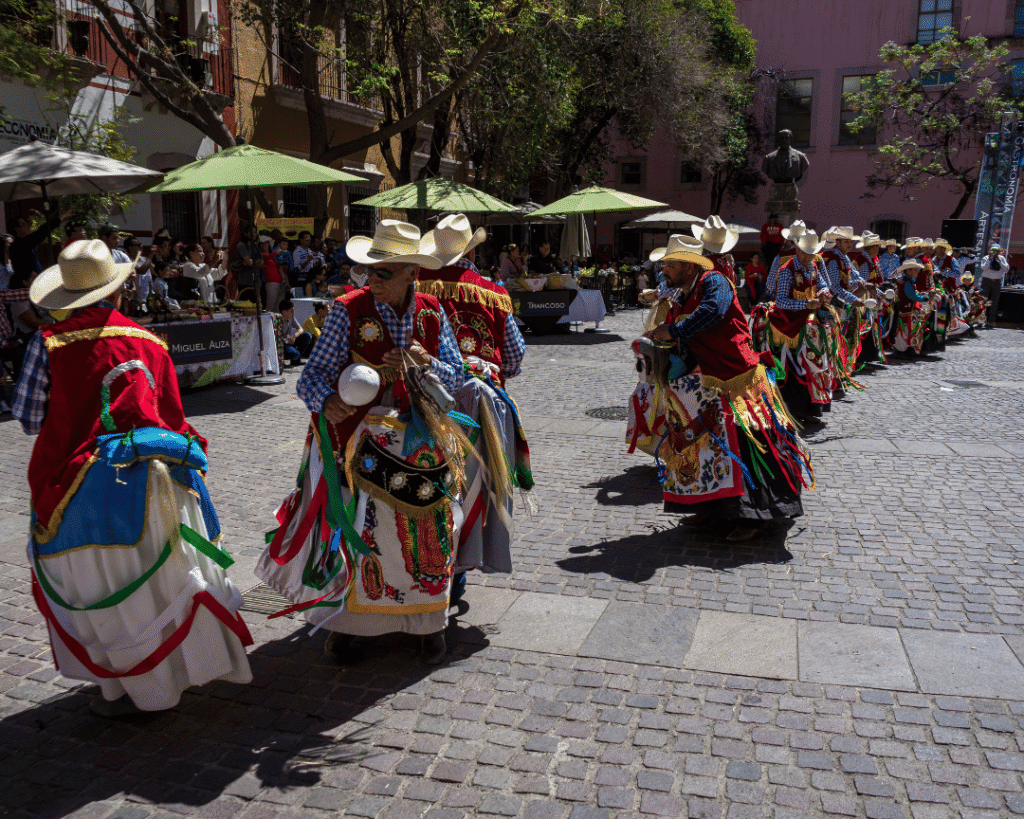
It’s an atmosphere of community celebration: more people, more music, more energy. It’s also a meaningful setting, so it’s best enjoyed with a spirit of respectful observation: watching, listening, understanding. If you go in with that mindset, the experience becomes so much richer.
A useful tip: set aside some time to take in “what’s going on around you”. The dance is the main event, of course, but the atmosphere is part of what makes it memorable: how people come together, how the festival is enjoyed, and how the community keeps the tradition alive.
The Dance of the Flying Pole and other living traditions of Guatemala
The Palo Volador does not exist in isolation. It forms part of a broader cultural landscape where ritual, community and memory constantly intersect. That is why a trip to Guatemala often becomes all the more interesting when you connect these traditions: markets, traditional dress, music, ritual and cuisine as pieces of a single identity.
The relationship between ritual, community and cultural memory
The key lies in understanding that ritual is not a mere ‘extra’, but a form of living memory. The community does not merely remember: it celebrates, passes on traditions and keeps them alive. And the Palo Volador is a clear example of that continuity.
That’s why, when you see it, it’s not just the height that makes an impression. It’s the feeling of witnessing something that isn’t merely performed, but actually experienced. That’s what makes it such a powerful tradition in Guatemala.
Why does the Palo Volador in Guatemala continue to attract so much interest from travellers and locals alike?
Because it combines excitement, visual beauty and cultural depth. For travellers, it's one of those experiences that feels truly unique. For the community, it represents identity and continuity.
What’s more, the Flying Pole has something that captivates even those who know nothing about history: it’s a powerful scene, but one with context. It’s not just adrenaline: it’s meaning.
If you’d like to add some cultural context to your itinerary, you might also find the Guide to Visiting the Popol Vuh Museum useful, as it helps you gain a better understanding of Guatemala’s worldview and heritage from a more interpretative perspective.
How to plan your visit if you want to see the Palo Volador dance
To see the Palo Volador dance, it’s important to plan ahead as it depends on specific dates and celebrations.
What to bear in mind regarding dates, celebrations and logistics
Firstly, find out the dates on which the event takes place in the place you’re interested in (for example, Chichicastenango). Secondly, allow plenty of time: on those days, the town has a different vibe, there’s a livelier atmosphere, and it’s best not to rush.
In practical terms, plan your day at a steady pace: arrive early, take your time exploring the market and the town centre, and save the main event for when the dancing begins. If you organise it this way, the Palo Volador will feel like a natural part of your day, rather than a separate event that causes you stress.
- This page about the cities of Guatemala may interest you.
Frequently Asked Questions about the Palo Volador dance
How long does the Palo Volador dance last?
The duration may vary depending on the event, but the highlight usually centres on the descent of the flyers and the accompanying music. Ideally, you should arrive in good time to watch the preparations and soak up the atmosphere, rather than just seeing the final moment.
Can you see the Flying Pole any day?
No. In Guatemala, the Palo Volador is usually associated with patron saint festivals and specific dates. That’s why it’s a good idea to plan your trip around the calendar.
Where is the Flying Stick most commonly found in Guatemala?
Chichicastenango is one of the best-known places, although there are other areas of the highlands where it's celebrated at specific times of the year.
Do we need a guide to understand the tradition?
It isn’t essential, but it helps a lot if you want some context. Even without a guide, taking your time to look around, listen to the music and soak up the atmosphere allows you to experience it to the full.
How can visitors experience it with respect?
With a simple approach: observe without intruding, ask permission if you’re going to take a close-up photo, and understand that you’re part of a community celebration with cultural significance