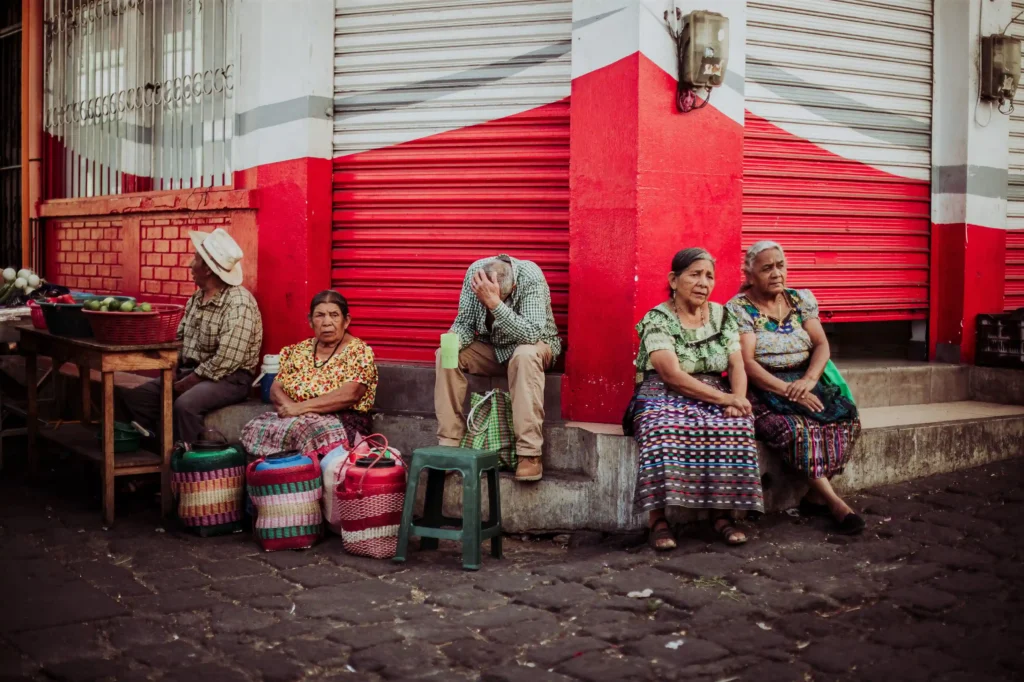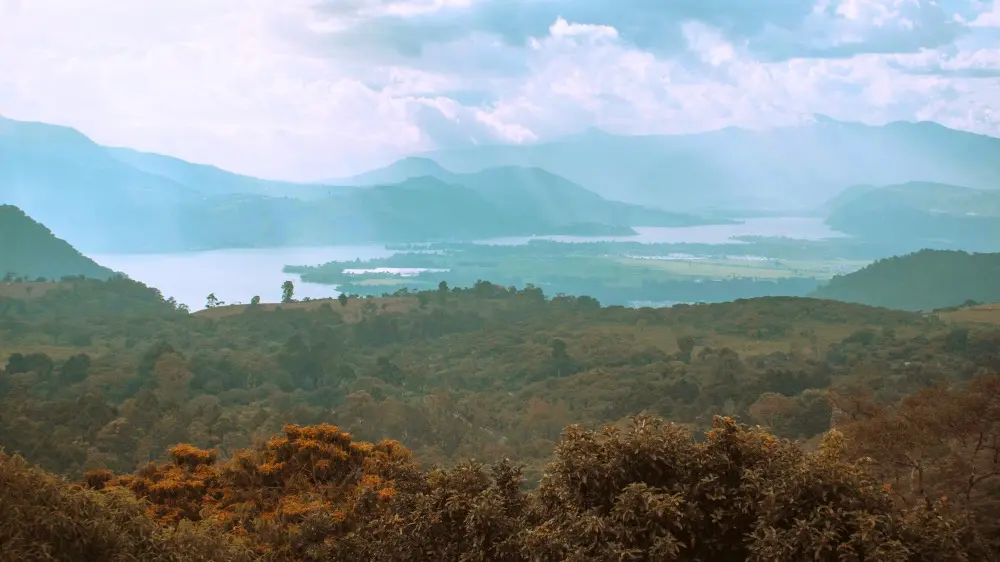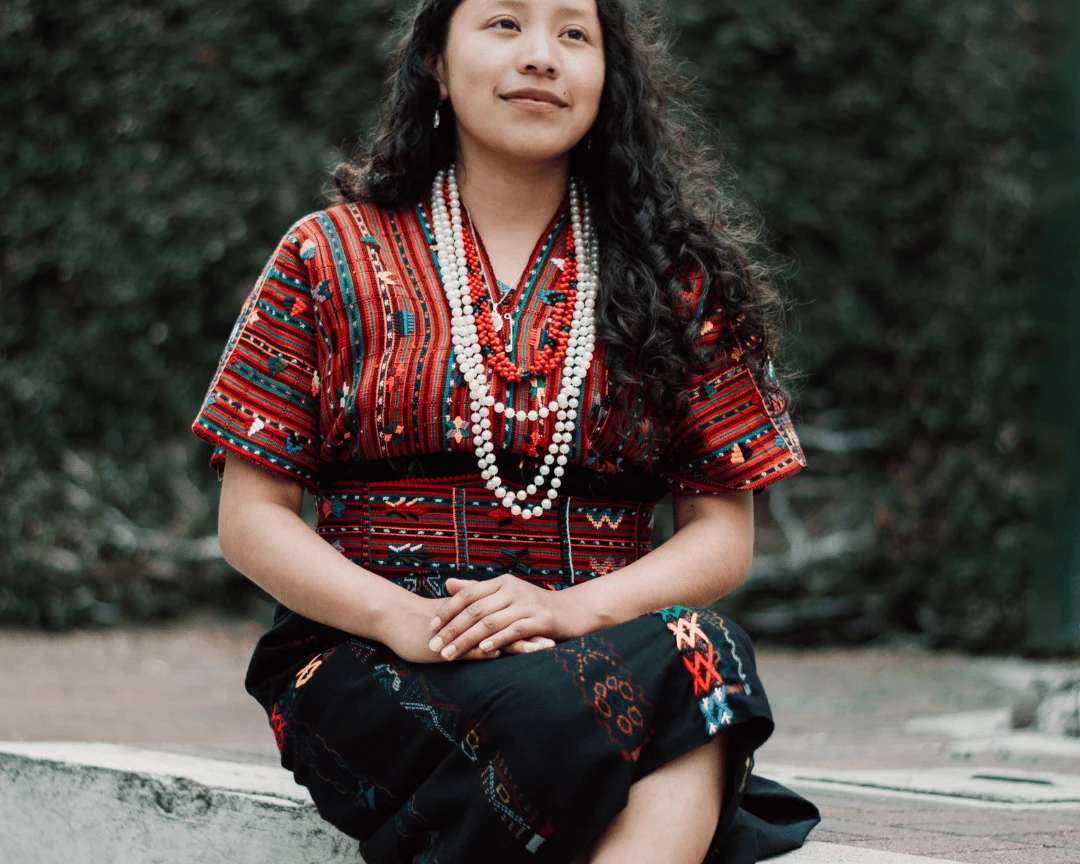
The traditional dress of Chichicastenango is not just a pretty outfit. It's identity, a sense of belonging and memory. In the Guatemalan highlands, traditional dress (especially women’s) functions as a visual language: colours, embroidery and patterns that speak of community, craft, family history and a way of being in the world. And in Chichicastenango, that presence is felt strongly, especially when the town comes alive with the market, festivals and community life.
In this article, we’ll tell you what makes the traditional dress of Chichicastenango so special, where it comes from, how it has evolved, what its most distinctive features symbolise, and where you can see it during your trip. If you’re planning a tour of the country, you can also find information on the official Guatemala tourism website and on the cities of Guatemala websites.
What makes the traditional dress of Chichicastenango so special?
What makes the traditional dress of Chichicastenango special is that it's not seen as a ‘costume’ for specific occasions, but as a living expression of local identity. Here, the traditional dress is associated with the community and its practices: the market, ceremonies, celebrations and everyday life. It's not merely aesthetic; it's a way of communicating where you are from and which social fabric you belong to.
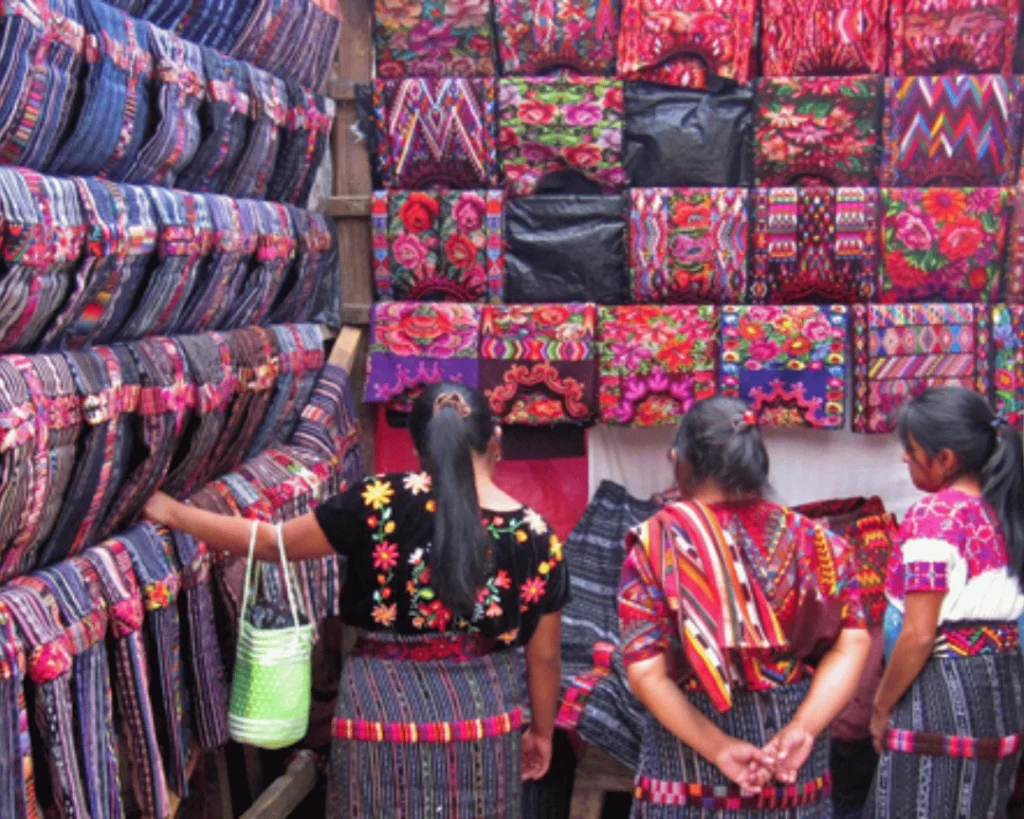
It also stands out for its visual impact. In Chichicastenango, the embroidery is typically dense, featuring eye-catching colours and a design that is instantly recognisable. To see a complete outfit, with all its elements, is to understand why Guatemala is a global benchmark in textile culture. And the most interesting thing is that, behind every garment, there is time, technique and craftsmanship: this is not simply ‘bought clothing’, but rather the result of hard work and the passing on of knowledge.

What’s more, traditional dress is experienced within its context. When you walk through the market, you see how traditional garments coexist with modern clothing, and how traditional dress remains a symbol without becoming something static. That blend, rather than detracting from its value, often makes it feel more authentic.
The history and origins of the traditional dress of Chichicastenango
To speak of the origins of the traditional dress of Chichicastenango is to speak of continuity, but also of change. Traditional dress in Guatemala has evolved over centuries, combining Mayan heritage, influences from the colonial period and local adaptations. In Chichicastenango, the traditional dress has evolved into a recognisable ensemble within the highlands, with elements that remain constant and others that change according to the era, available materials and social dynamics.
The important thing to understand here is that the dress is not static. Although it retains its essence, it changes over time: new colours are introduced, patterns are adjusted, techniques are modified, and the community decides what to keep and what to develop further. That ability to adapt is part of its strength.
How the traditional dress evolved over time
The evolution of the traditional dress of Chichicastenango is evident in the details: the types of thread, the predominant colours, the complexity of the embroidery, and the way the pieces are combined. Over time, some garments have become more practical, others more ceremonial, and, in general, the ensemble has adapted to contemporary life without losing its identity.
Another significant change relates to access to materials and the textile trade. The availability of threads, dyes and fabrics influences aesthetics, and that too is part of the story. Rather than viewing this as a ‘loss of authenticity’, it's often more useful to see it as a natural process: a living costume responds to its context.
The role of traditional dress in local and community identity
In Chichicastenango, the traditional dress serves as a marker of identity. It represents not only the individual, but also the community and a sense of belonging. It's a way of demonstrating cultural continuity and preserving collective memory through the visible. For this reason, for many women, the traditional dress is not merely a fashion choice: it's part of how they present themselves in public spaces.
Clothing also serves a social function: in community settings, it helps to define roles, mark special occasions and foster a sense of belonging. In other words, it conveys not only ‘who I am’, but also ‘how I participate’ in community life.
Elements and symbolism of the traditional dress of Chichicastenango
The traditional dress consists of pieces that are combined according to their own logic, almost as if it were an ‘outfit’ with its own set of rules. Although there are variations depending on the person, the family or the occasion, the general structure usually includes central elements (such as the huipil and the skirt) and accessories that complete the look and give it visual coherence. The important thing is to understand that it's not simply a matter of putting on clothes at random: there is a way of combining colours, balancing embroidery and creating a presence that is recognised within the community.
The most interesting thing is that symbolism is rarely found in a literal phrase. It usually appears in recurring details that the community recognises: patterns that recur time and again, colour combinations that define the local style, and embroidery techniques that reflect craftsmanship and tradition. It's a visual language that is learnt through transmission, observation and practice, and which is kept alive because it continues to hold meaning in everyday life.
What’s more, the dress conveys not only tradition, but also time and effort. Denser embroidery, a more complex design or a particularly well-crafted piece usually reflects dedication, skill and craftsmanship. That is why, when you see it at the market or at celebrations, you are not just seeing aesthetics: you are seeing a form of identity made by hand.
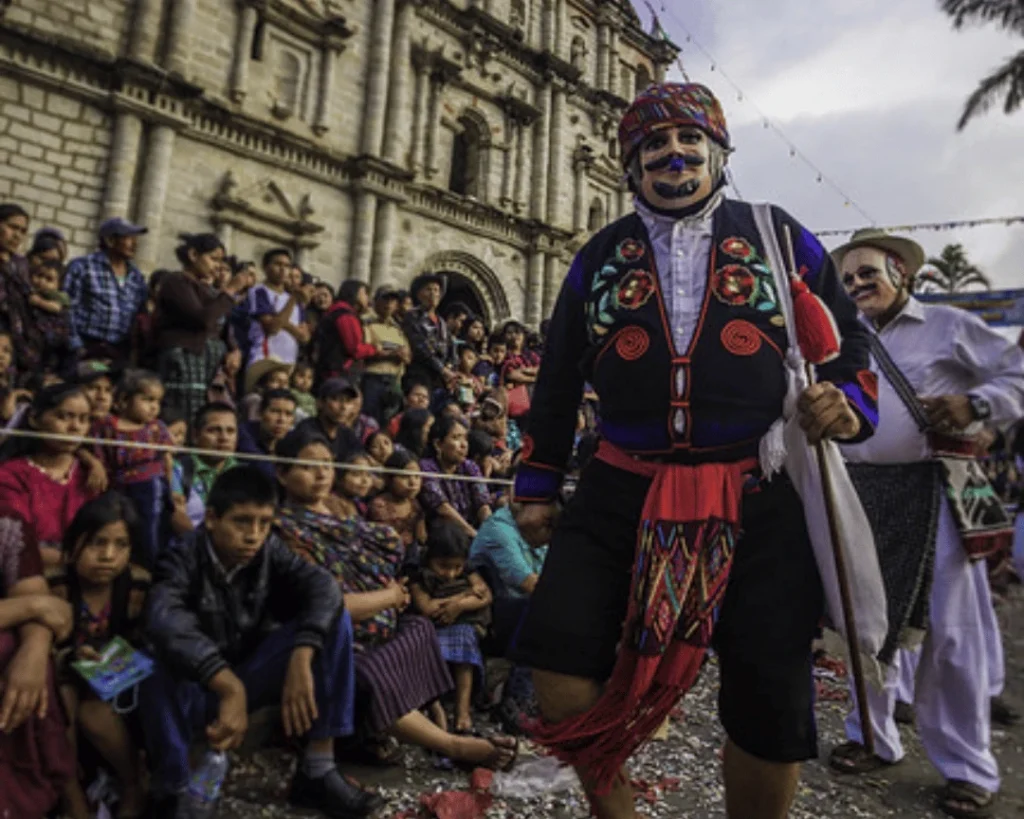
The most characteristic colours, embroidery and patterns
In traditional dress from Chichicastenango, embroidery usually plays a central role. It's seen as meticulous work, featuring repeated patterns and striking colour combinations. The colours are not simply there ‘because they look good’: they usually reflect local aesthetic traditions and a way of constructing visual identity.
Furthermore, the patterns are not merely decorative. They function as a language: what is repeated has a purpose, and so does what changes. Even if you do not know the exact meaning of each motif, you can see that there is an internal logic to the way the elements are arranged on the garment.
Differences between women’s and men’s traditional dress in Chichicastenango
The traditional dress worn by women in Chichicastenango is usually the most striking and the most intricate in terms of embroidery, the combination of its components and its visual symbolism. It's the garment most closely associated with the image of Chichicastenango and the one that most catches the eye of visitors.
The traditional Chichicastenango men’s dress, on the other hand, tends to be more understated in appearance and in everyday wear, and varies more depending on the context, generation and occasion. In many communities in the highlands, men have been adopting modern clothing more quickly, whilst women’s traditional dress has remained more consistent. This is not an absolute rule, but it's a common trend in several areas.
What matters for the traveller is to view these differences with respect: they do not imply ‘more or less tradition’, but rather different social dynamics.
What do some of the most distinctive features of the dress signify?
Certain details of traditional dress are often linked to notions of identity, territory, nature or worldview. Geometric patterns, stylised figures, colour schemes or repeated embroidery can serve as symbols with cultural significance.
The key here is not to oversimplify things. Not everything has a single, universal meaning, and many interpretations depend on context and the community. If you’re interested in symbolism, the best thing to do is to listen to local people or cultural guides, and accept that there are layers of meaning that cannot be grasped in a single visit.
Traditional dress from Chichicastenango in everyday life and at festivals
One of the things that most impresses visitors to Chichicastenango is seeing the traditional dress in action: not as a museum piece, but as part of everyday life and communal occasions. Seeing it at the market, in a church or at a celebration completely changes your perception, because you realise that the dress isn’t a display for tourists, but a real part of life.
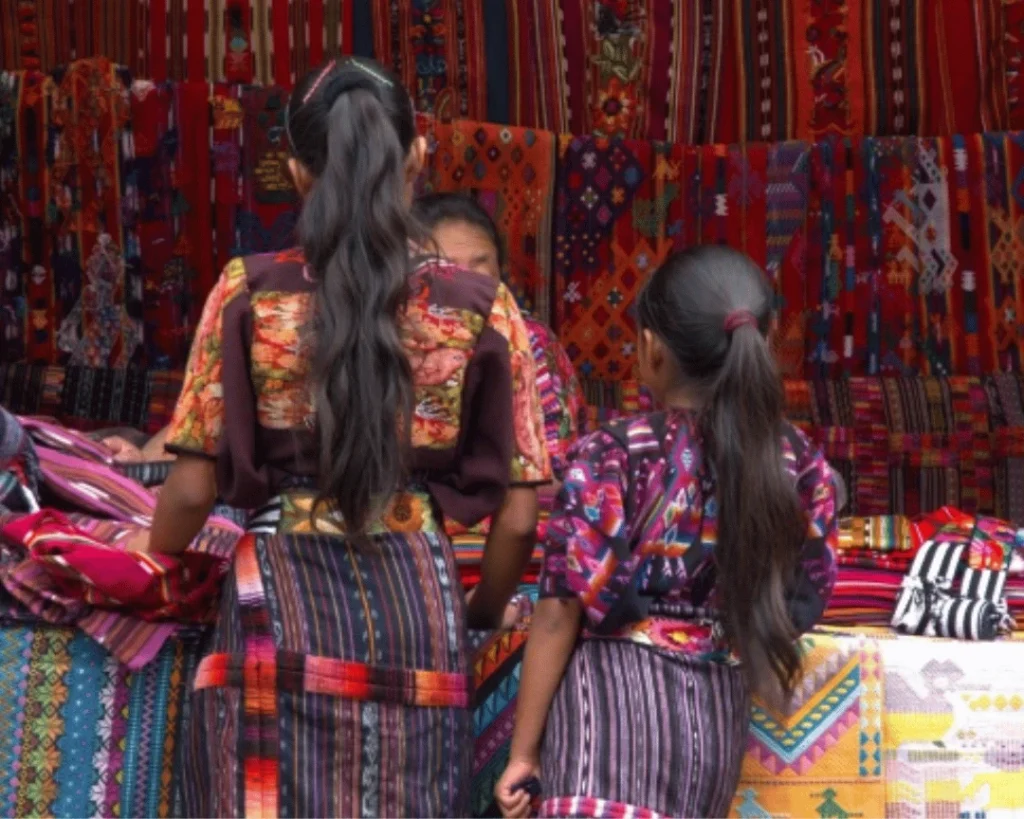
When is a traditional dress worn in everyday life?
In everyday life, whether someone wears traditional dress depends on the individual, their family, their work and the dynamics of the community. In Chichicastenango, it's common to see it in public spaces, especially on market days, when the town is bustling and community life is in full swing.
It also coexists with modern clothing. And that is important: this coexistence does not diminish the value of the traditional dress, but rather shows how tradition endures in the modern world. The traditional dress is worn because it makes sense to the wearer, not out of some external obligation.
The role of traditional dress in ceremonies, celebrations and the local market
At ceremonies and celebrations, the traditional dress of Chichicastenango can make a more striking impression: more elaborate pieces, more complete ensembles, or a more prominent display of the outfit. On such occasions, the dress serves as an expression of belonging and as part of the social ritual.
The market is the perfect place to see this because it’s not just about trade: it’s about people coming together. There, you can see the traditional dress in motion, in conversation, at work and in everyday life. And if you want to connect the traditional dress with the place where you’ll see it most, ‘What to see and do at Chichicastenango Market’ is just the thing for you.
What’s more, there are celebrations where the cultural aspect becomes even more prominent. If you’d like to learn about one of the region’s best-known traditions, do take a look at ‘The Flying Pole Dance: origins and significance’.
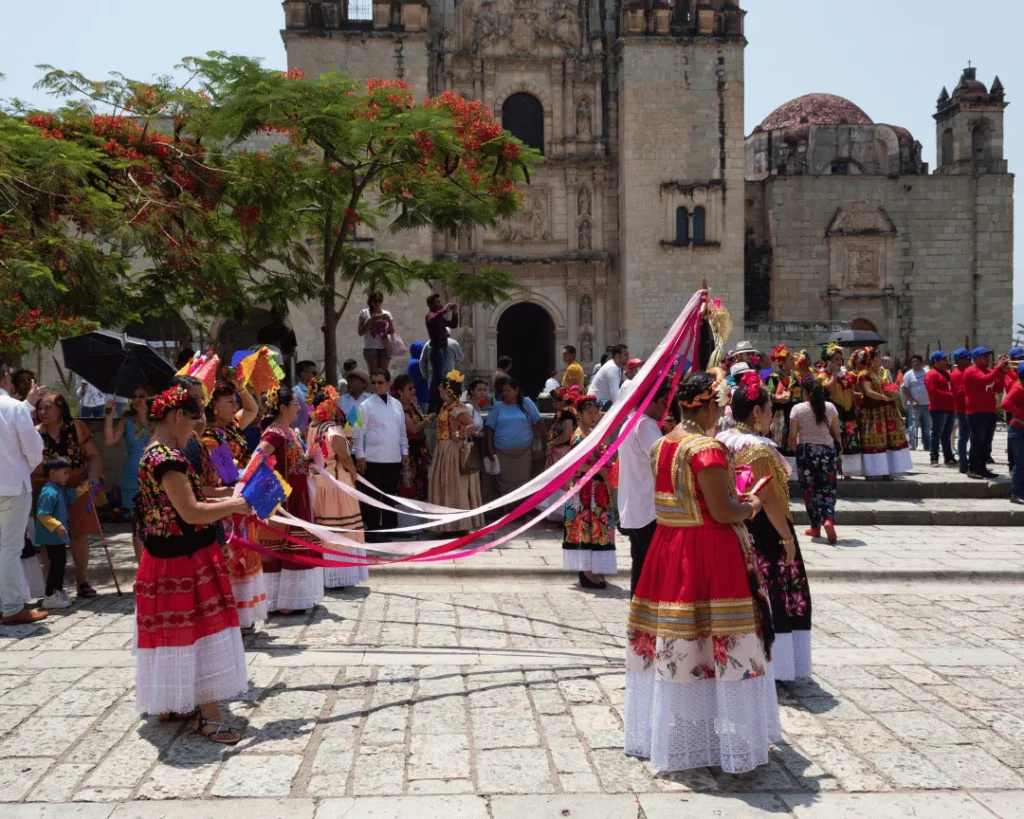
Where to see the traditional dress of Chichicastenango during your trip
The place really comes into its own when you experience it first-hand. So, rather than looking for a ‘specific spot’, it’s best to time your visit for when Chichicastenango is buzzing: the market, the town centre, local celebrations and the streets teeming with local life.
Chichicastenango Market and the streets of the town centre
The best place to see the traditional dress of Chichicastenango in context is the market and the town centre. There you see it in a natural setting: people buying, selling, walking, going in and out of the church, carrying flowers or candles. It’s the perfect place to observe at your leisure, without intruding or turning it into a ‘photo hunt’.
If you want to plan your visit and get a good idea of what to see in the market beyond the stalls, check out ‘What to see and do at Chichicastenango Market’ for a clear itinerary.
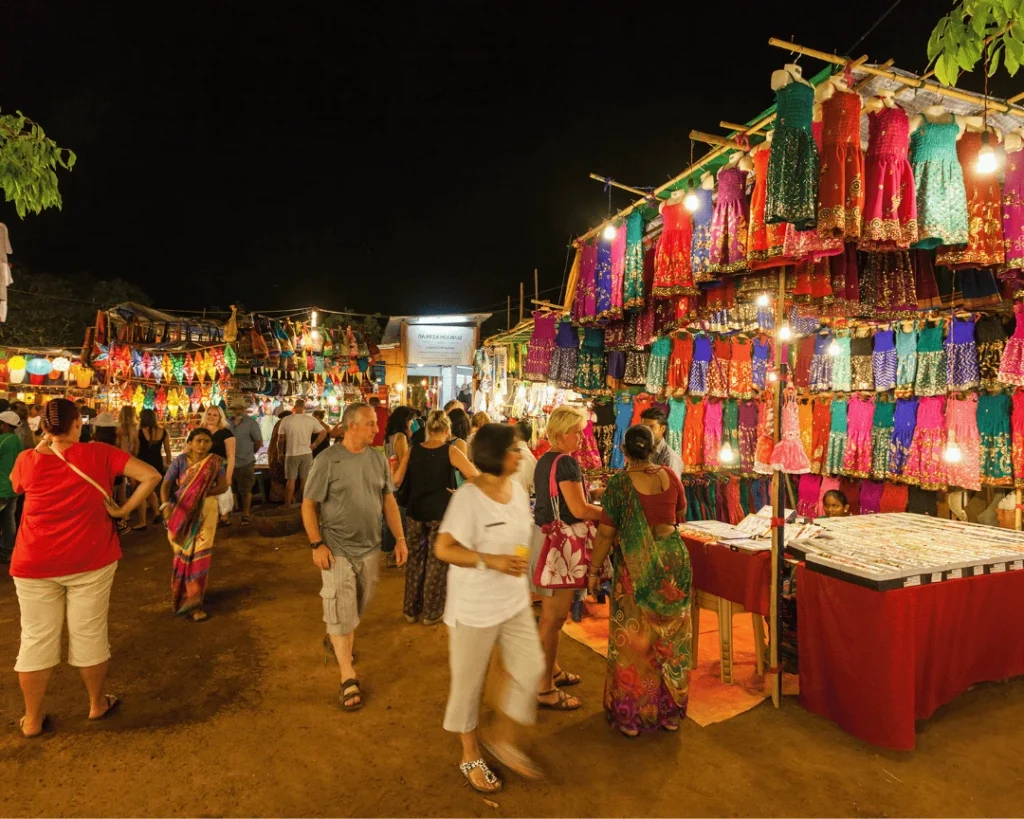
Festivals, market days and celebrations where traditional dress takes centre stage
On busy market days and during celebrations, the traditional dress tends to take centre stage as the town fills up and community life springs to life. It's at these times that the collective aspect is most evident: it's not merely an individual garment, but a shared cultural presence.
If you happen to be there during a traditional event, the trip becomes even more fascinating, as the traditional dress is woven into the music, dance, rituals and celebrations. In that context, observing with respect makes all the difference: watching, learning and understanding without intruding.
And if, whilst travelling through Guatemala, you fancy combining culture with Caribbean cuisine, this article is the perfect complement: Tapado, Livingston’s most iconic dish.
Frequently Asked Questions about the traditional dress of Chichicastenango
Is the traditional dress of Chichicastenango only worn on special occasions?
Not necessarily. In Chichicastenango, it's common to see the traditional dress on market days and in public spaces, although how it's worn can vary depending on the individual, generation and context. At celebrations and ceremonies, however, it's usually seen more frequently and in more complete ensembles.
Can you buy traditional dress from Chichicastenango at the market?
You can buy textiles and related items, but it's important to do so thoughtfully and respectfully. Many garments hold great cultural and artisanal value. If you do wish to take something home, it's best to choose textiles or items that you can wear appropriately and appreciate the quality of the craftsmanship.
How can I view the dress without coming across as a tourist?
The best approach is simple: observe calmly, ask permission before taking a photo, avoid interrupting private moments, and understand that you are witnessing a living cultural tradition. If you’re genuinely interested, a guided cultural tour or a chat with local craftswomen can usually be incredibly rewarding