The Popol Vuh Museum is one of those places that helps you gain a deeper understanding of Guatemala. It offers a journey that connects you with the country’s cultural roots through art, religion and centuries of history.
So, if you’re already planning a trip to Guatemala City, the Popol Vuh Museum is well worth a visit. It offers a comprehensive experience, with a collection of great cultural significance, presented in a clear and accessible way. All of this will make your visit a truly fascinating experience.
Why is the Popol Vuh Museum one of Guatemala City’s key museums?
The Popol Vuh Museum plays a significant role in Guatemala City’s cultural scene. This is because it offers a unique journey through the country’s history via original artefacts. It's worth noting that, in addition to being an exhibition space, it also serves as a centre for research and conservation. It undoubtedly displays highly significant artefacts and maintains a specialist library, as well as running educational programmes.
As we can see, it has many strengths, and another one we mustn’t forget is the breadth of its collection. To give you an idea, it holds over 7,000 objects, and the museum’s online catalogue provides access to more than 2,000 documented items.

As if that weren’t enough, the Popol Vuh Museum brings together pre-Hispanic art, colonial art and Guatemala’s cultural traditions all under one roof. You’ll gain a broader understanding of how the country came into being and how it has been portrayed over time.
Where is the Popol Vuh Museum, and what is its connection to Guatemala City?
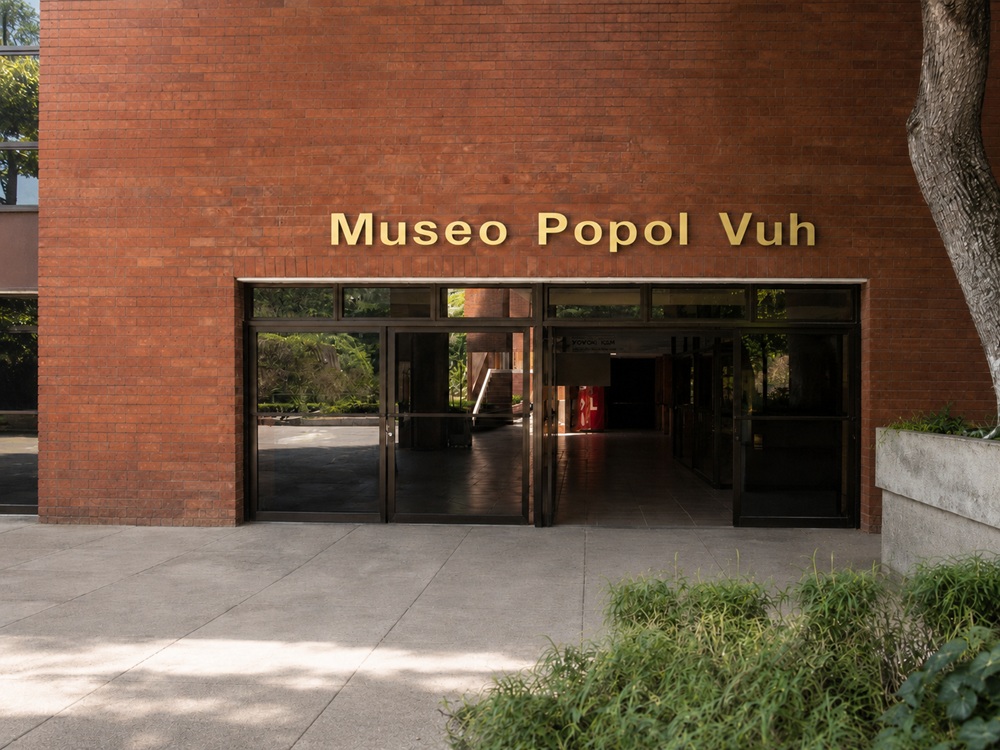
The Popol Vuh Museum is located on the campus of Francisco Marroquín University, in Zone 10 of Guatemala City. This is a very convenient location for any traveller. Why? Because the well-known Zone 10 is one of the best-connected areas. What’s more, it’s where the hotels are concentrated, along with restaurants and, of course, various cultural attractions, including the museum. So it fits into a single itinerary without having to travel too far. If you’re using public transport, the museum itself states that city bus routes 63, 101 and 40R pass along La Reforma Avenue. From there, it’s just a short walk to the entrance ramp leading onto the campus.
What’s more, the Popol Vuh Museum is located next to the Ixchel Museum of Indigenous Costume, another well-known attraction in the city. So you can spend a morning or an afternoon visiting these two complementary museums. You’ll create a comprehensive tour that connects pre-Hispanic history, colonial art and living Guatemalan culture in a single space.
A brief history of the Popol Vuh Museum
The history of the Popol Vuh Museum explains why a visit there is so significant in Guatemala City. It must be said that behind its galleries lie decades of work and research, which have shaped one of the country’s most comprehensive collections. Thus, the museum is the result of a process driven by a desire to preserve and share Guatemala’s cultural history.
Origin of the collection and its connection with Francisco Marroquín University
The Popol Vuh Museum was founded in 1977 by Jorge and Ella Castillo from their private collection of archaeological and colonial artefacts. As early as the 1960s, the Castillo collection was regarded as one of the finest in Guatemala, as several of its pieces had been featured in international exhibitions on pre-Hispanic Guatemalan art.
With this in mind, we realise that the museum had a very solid foundation right from the start. Of course, over time, it grew to become one of the country’s most important collections.
Today, the Popol Vuh Museum forms part of Francisco Marroquín University. This partnership explains its academic scope, as the museum also promotes research, as well as lectures and various educational programmes. It serves as a link not only to academic study but also to the promotion of Guatemalan heritage.
The museum’s aim: to preserve and promote Guatemala’s heritage
As we’ve just mentioned, the Popol Vuh Museum’s main aim is to preserve and share Guatemala’s cultural heritage. It works to ensure that each of the objects in its collection helps visitors to better understand the history behind them.
That is why, through its collection, the museum connects with the past, creating a kind of narrative that makes it easy to understand cultural evolution. We can therefore say that this perspective makes a visit to the museum much more than just a visual tour.
We must not forget that it also organises numerous educational activities in the form of workshops and talks. Thanks to all this, it brings knowledge to a wide range of audiences and keeps interest in heritage alive.
- We invite you to read our article about the Flower Festival in Antigua Guatemala.
What is on display at the Popol Vuh Museum
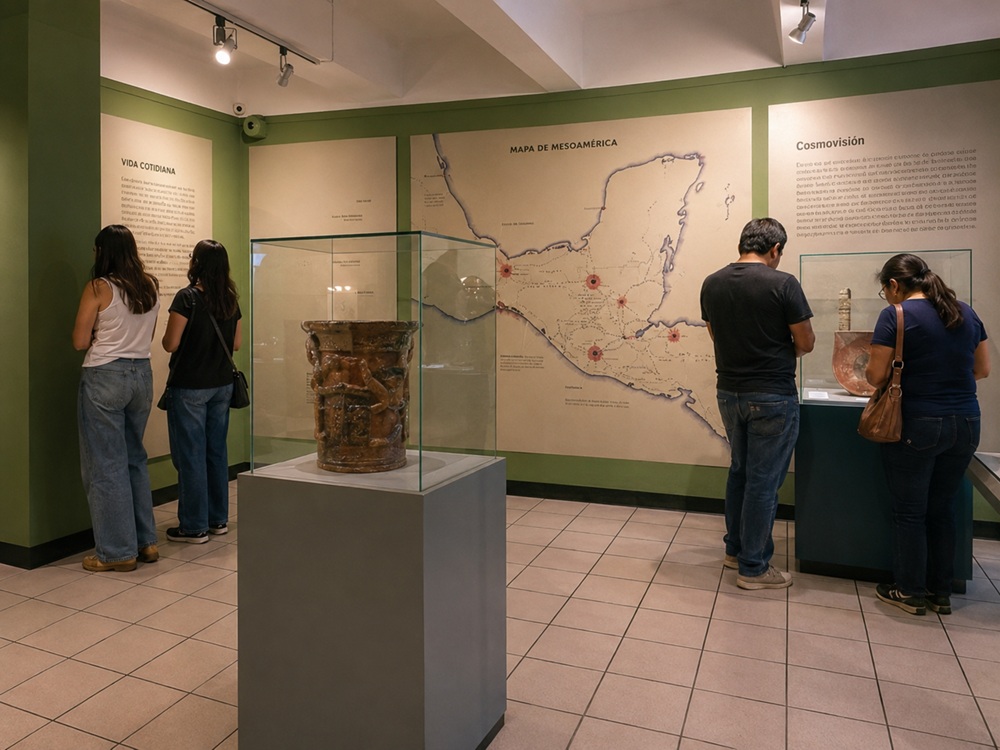
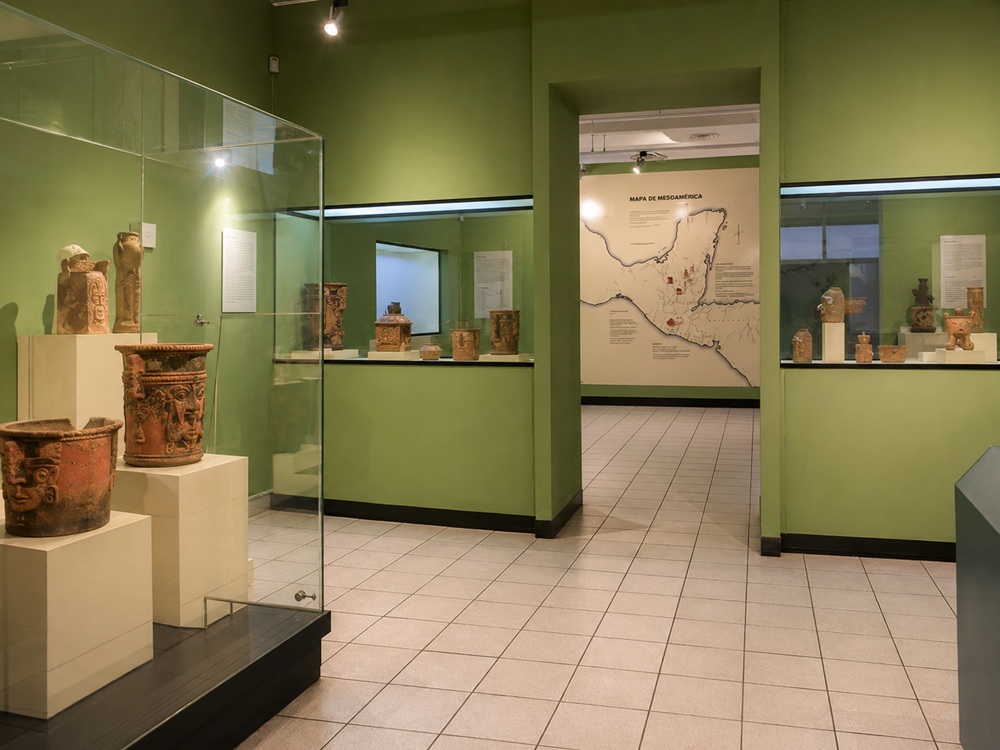
This museum presents a collection focusing on the cultural history of Guatemala, all presented in a clear and easy-to-follow manner. The exhibition spans from the pre-Hispanic Mayan world to the colonial period. During your visit, get ready to discover archaeological finds, as well as ritual objects and religious artworks. This will help you understand the significance of these objects in real life and gain a deeper understanding of their culture. Furthermore, the Popol Vuh Museum not only displays artefacts but also pays great attention to how they are presented. We say this because the galleries are well organised so that every visitor can understand the context of each object. The display cases are clearly labelled and the route flows smoothly, so the good layout makes following the thread of the story even easier.
Collections of pre-Hispanic Mayan art
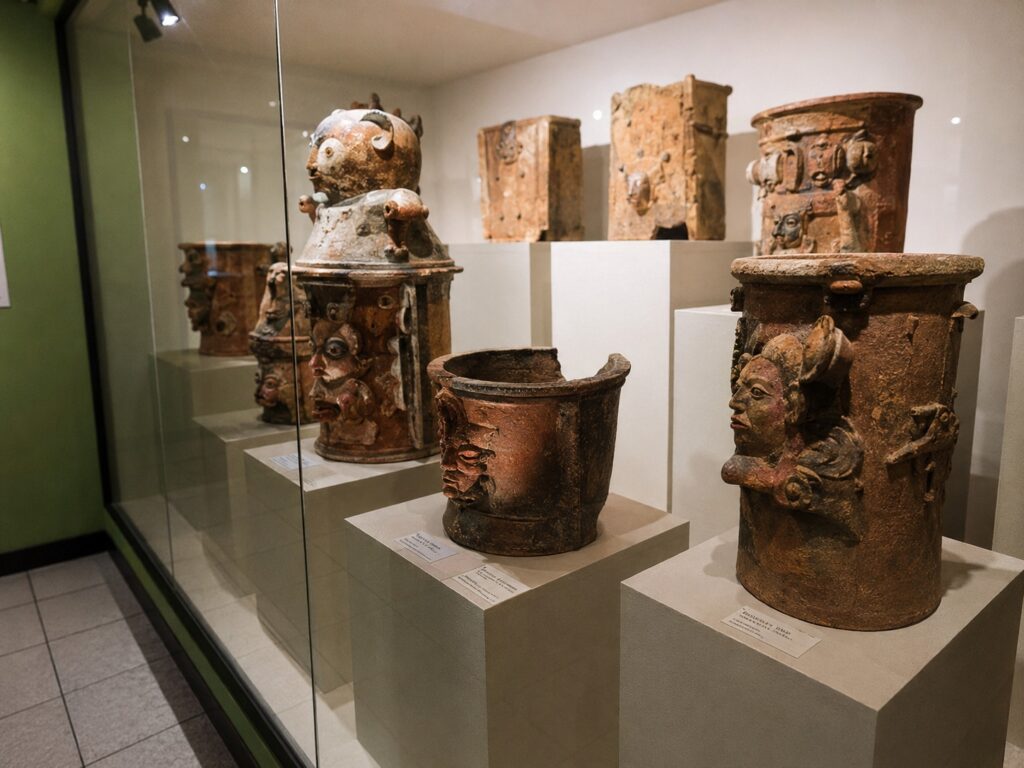
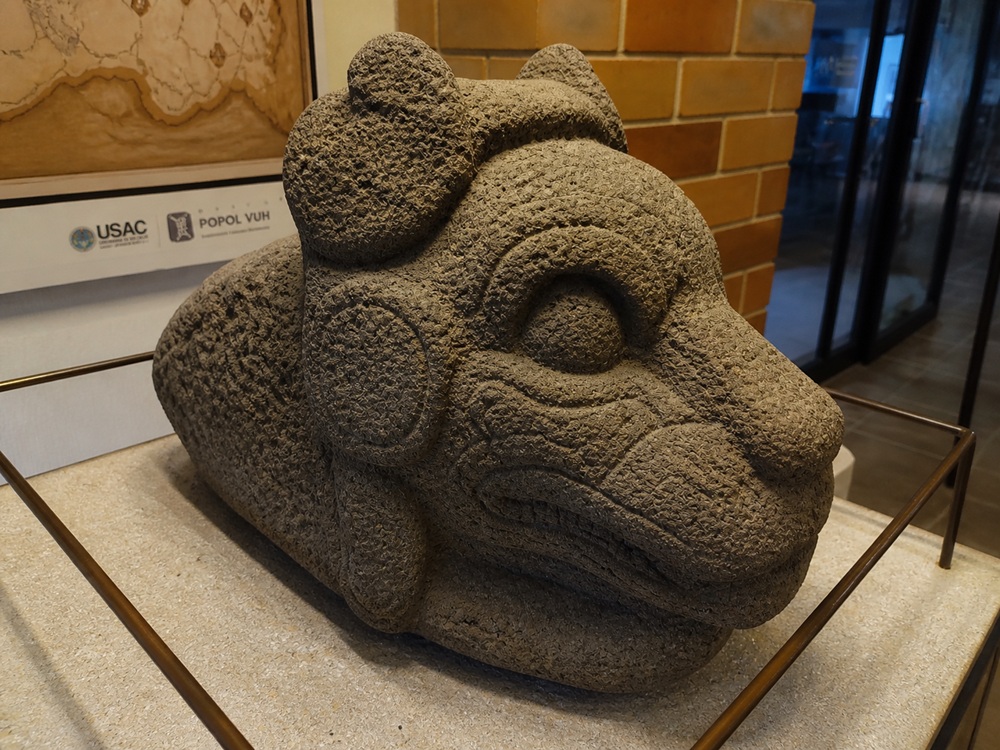
The museum’s pre-Hispanic section is truly incredible. Here you can admire numerous examples of painted pottery from the Classic period, originating from Petén, as well as from Verapaz and other regions. There are also Pre-Classic and Classic sculptures from Kaminaljuyú. Other highlights include the incense burners recovered from the waters of Lake Amatitlán and an excellent collection of ceramic whistles.
It's worth noting that the permanent collection of the Popol Vuh Museum is arranged in chronological order and spans from the earliest evidence of human presence in Guatemalan territory to the Spanish conquest.
Colonial and religious artworks
The colonial section complements the previous one perfectly. Its rooms feature displays of Guatemalan silverwork and colonial paintings. All of this serves to highlight the importance of religion not only in daily life but also in the art of the period.
Temporary exhibitions and cultural activities
In addition to all of the above, the Popol Vuh Museum complements its permanent collection with temporary exhibitions that change throughout the year. These usually focus on specific themes from the Mayan world, such as colonial art or cultural aspects of Guatemala. Cultural activities such as workshops and lectures are also organised.
- We invite you to read our article about Antigua Guatemala Fútbol Club.
Is the Popol Vuh Museum worth a visit?
Yes, it’s well worth it. Because this place offers a much more special experience, as well as being interesting and well organised. It boasts a collection of art objects that you simply can’t miss, and it also provides an insight into the region’s culture. It fits perfectly into any itinerary you’ve planned, as it won’t take up too much of your time. You won’t feel overwhelmed, unlike in some larger museums. In no time at all, you’ll have a comprehensive overview of the history.
How do I visit the Popol Vuh Museum in Guatemala City?
As we can see, visiting the Popol Vuh Museum is very straightforward. Of course, it’s always worth knowing a few practical details before you go. Even for those travellers who consider this a must-see, it’s worth spending a few minutes on it. How? By checking out the collection online or reading up on Mayan culture. It’s an interesting way to go in a bit prepared and then fill in the gaps in your knowledge. Remember to also check the opening times, prices, visiting options and rules so you can make the most of your visit.
Opening hours, prices and ticket types
The museum is open Monday to Friday from 9.00 am to 5.00 pm and on Saturdays from 9.00 am to 1.00 pm. However, it's closed on Sundays. As for prices, the Popol Vuh Museum charges Q45 (around €5) for adults, Q25 (around €2.75) for students with a valid ID card, and Q15 (around €1.65) for children aged 2 to 12. Students and staff of Francisco Marroquín University have free entry.
Guided tours, educational workshops and other services
The Popol Vuh Museum offers guided tours that help visitors gain a better understanding of the artefacts and their historical context. It also organises educational workshops and cultural activities designed for both students and the general public.
Of course, it also has a specialist library and a bookshop, which enhances the experience beyond simply touring the galleries. We consider this essential when it comes to gathering further information.
Accessibility, photography and rules within the museum
One of the most frequently asked questions is whether photography is permitted in museums. In this case, it's allowed, but for a small fee. However, you must not use a flash at any time to protect the exhibits. Among the rules you must follow are avoiding touching the display cases or objects and always following the staff’s instructions. As for accessibility, it's best to check with the museum for more specific information on certain adapted services.
- We invite you to read our article about the Santa Catalina Arch.
The Popol Vuh Museum on your tour of Guatemala City
It’s quite easy to include the Popol Vuh Museum in a tour of the capital. Its location in Zone 10 and its proximity to other cultural venues mean you can plan a very full day out without having to cross the city several times.
Combine your visit with a trip to the Ixchel Museum and other nearby attractions
One of the best things to do when visiting the Popol Vuh Museum is to combine it with a visit to the Ixchel Museum of Indigenous Costume, which is located in the same area. In just one visit, you can gain an understanding of both Guatemala’s pre-Hispanic past and its living culture. Once you’ve finished your visit, you can round off your day with a meal at one of the local restaurants or enjoy a delicious coffee in one of the cafés. All without having to travel far!
Ideas for a day of museums and culture in the city
A good idea would be to start the morning at the Popol Vuh Museum, continue on to the Ixchel Museum, and leave the afternoon free for another cultural activity or a stroll through the capital’s more urban areas. That way, you can fit in all your museum visits at the same time of day. Alternatively, you could opt for a more leisurely visit, making the most of the programme if it coincides with a lecture or special event.
Another interesting option is to split the experience into two parts. You could visit the Popol Vuh Museum in the morning, take a long break for lunch, and then return for another cultural activity or exhibition if you fancy carrying on.
If you’re looking for some background information before travelling to Antigua or other historic areas, this museum is also essential as an introduction. It provides both visual and historical insights that will help you see other places in a new light. Even if you’re not a big fan of museums, this sort of preparation helps make the experience more engaging.
- This page about the cities of Guatemala may interest you.
Frequently Asked Questions about the Popol Vuh Museum in Guatemala City
How long does it take to visit the Popol Vuh Museum?
The tour usually lasts between 1 and 2 hours, depending on how quickly you go through the rooms. If you’d prefer a quicker tour, you can see the main highlights in an hour.
What sort of artefacts can be seen at the Popol Vuh Museum?
It displays pre-Hispanic and colonial art from Guatemala. From Mayan pottery to sculptures and funerary urns, as well as silverwork and colonial paintings.
Is photography allowed inside the Popol Vuh Museum?
Yes, you can take photographs for a fee of Q15. That’s roughly two euros.