Are you planning a trip to western Guatemala and fancy a bit of adventure? Don’t miss this: come and climb the Santa María Volcano, one of the most popular tourist activities near Quetzaltenango or Xela. It’s not exactly a gentle hike, as we’re talking about a high mountain with a significant elevation gain.
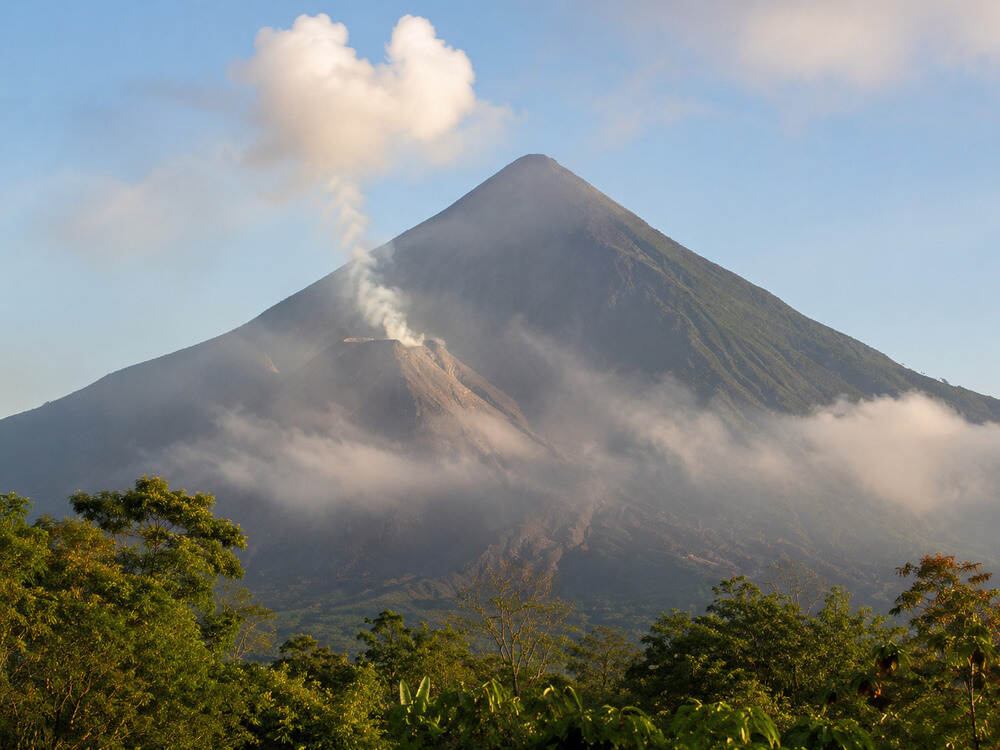
However, the panoramic views you’ll enjoy on the way up are truly unique. On a clear day, you can see Mount Santiaguito, the Quetzaltenango Valley and much of the area’s volcanic landscape. Here’s everything you need to know!
Where is the Santa María Volcano, and why is it one of the major volcanoes in western Guatemala?
Santa María Volcano is located in the department of Quetzaltenango, south of the city of Xela. The most common route starts from the Palajunoj area, near Llano del Pinal, about 10 kilometres from the city centre.
This volcano stands at an altitude of almost 3,800 metres, so it is a high-altitude hike, with cold conditions at the summit. Moreover, Santa María is not just a beautiful mountain. Its volcanic history is linked to the great eruption of 1902 and the subsequent formation of the Santiaguito complex, which began to grow in the crater formed on the south-western slope from 1922 onwards.

Is the Santa María Volcano worth a visit? What do travellers think?
Travellers are in no doubt: yes, Santa María Volcano is well worth a visit, especially if you’re looking for a genuine mountain experience. The most common comments highlight the challenge of the climb, the feeling of reaching great heights, and the chance to see Santiaguito from a vantage point.
However, it’s worth bearing in mind that this isn’t a hike for everyone. If you’re short on time, haven’t acclimatised, or don’t fancy getting up early, you’ll find it a very gruelling hike. The full route takes around 6–7 hours to walk (3–4 hours up and 2–3 hours down).
The great reward awaits you at the top. On a clear day, from the summit you can see the Quetzaltenango Valley, the Santiaguito complex and other volcanoes of the highlands in perfect clarity. For this reason, it is always advisable to set off early, as clouds can quickly obscure the view, particularly outside the dry season.
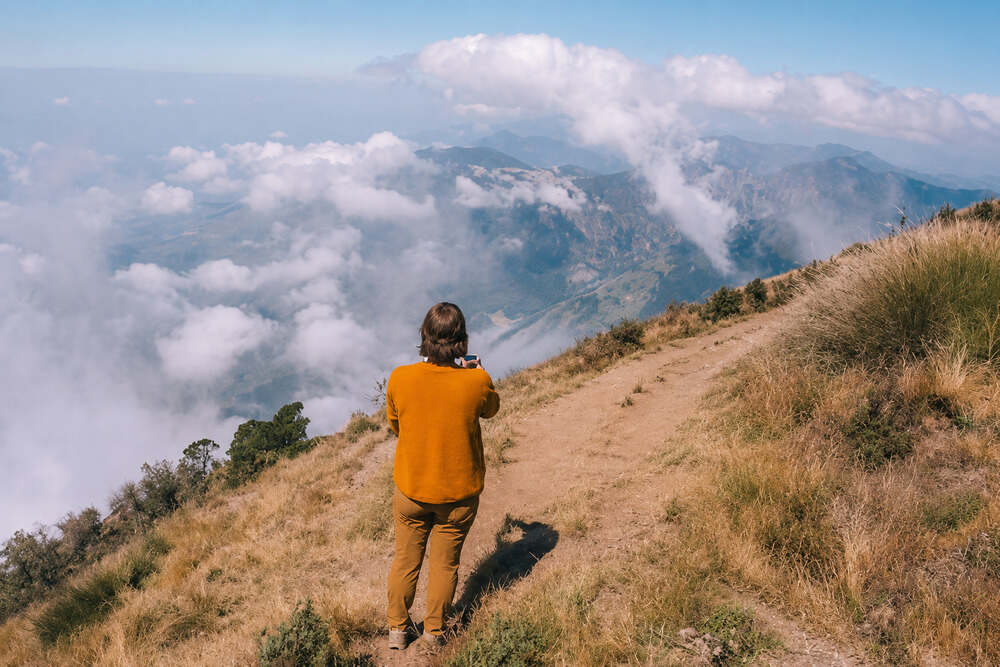
What sort of traveller would benefit from a visit to the Santa María Volcano?
The Santa María Volcano is recommended for active travellers who are used to walking for several hours and have an interest in volcanic landscapes. You don’t actually need to be a mountaineer, but you do need to be physically fit, wear sturdy footwear and have everything well planned so you can pace yourself.
This hike is perfect if your idea of a trip involves exploring the highlands, visiting markets, villages, lakes and volcanoes. But if you’re looking for something a bit more relaxed, it’s best to head up to a viewpoint or go on a shorter hike near Xela.
The Santa María Volcano: For travellers looking for hiking, sweeping views and a mountain experience
If you enjoy hiking over hilly terrain, this route is for you. It winds its way through rural areas and woodlands, with some steep sections before reaching the summit. Don’t expect to find any major tourist facilities or man-made viewing points along the way.
The beauty of the Santa María Volcano lies precisely in the feeling of being on a mountain. You climb, you sweat, you stop, you catch your breath, and you realise why Xela is an excellent base from which to explore the volcanoes in the area.
The Santa María Volcano: For those looking for a challenging hike near Quetzaltenango
Getting there from Quetzaltenango is easy. The route via Palajunoj is the most recommended, although you can also take public transport to Llano del Pinal or Chicavioc from the bus station near the Minerva Temple.
This proximity makes the Santa María Volcano the perfect day trip. You can stay overnight in Xela, set off at dawn, climb up, come back down and return to the city in the afternoon to rest.
- We invite you to read our article about Salcajá, Guatemala.
What is a visit to the Santa María Volcano like?
A visit to the Santa María Volcano is, above all, a long, steady walk. It is not, therefore, a flat route with comfortable stops every few minutes. The incline is very noticeable, the ground can be damp, and the altitude makes every step feel harder.
As we mentioned earlier, it’s best to set off early – even before dawn – and with guides. That way, you’ll have a much better chance of reaching the summit and enjoying good visibility, as well as avoiding the mid-morning heat and clouds.
The climb up the Santa María Volcano and what you experience during the hike
The climb starts off gently but soon becomes steeper. The path is a mix of earth, stones, patches of vegetation and sections where you really need to catch your breath. The key is not to overexert yourself in the first hour, but to be patient. It’s best to keep a steady pace, take short breaks and save your energy for the final stretch, which is the toughest due to the altitude.
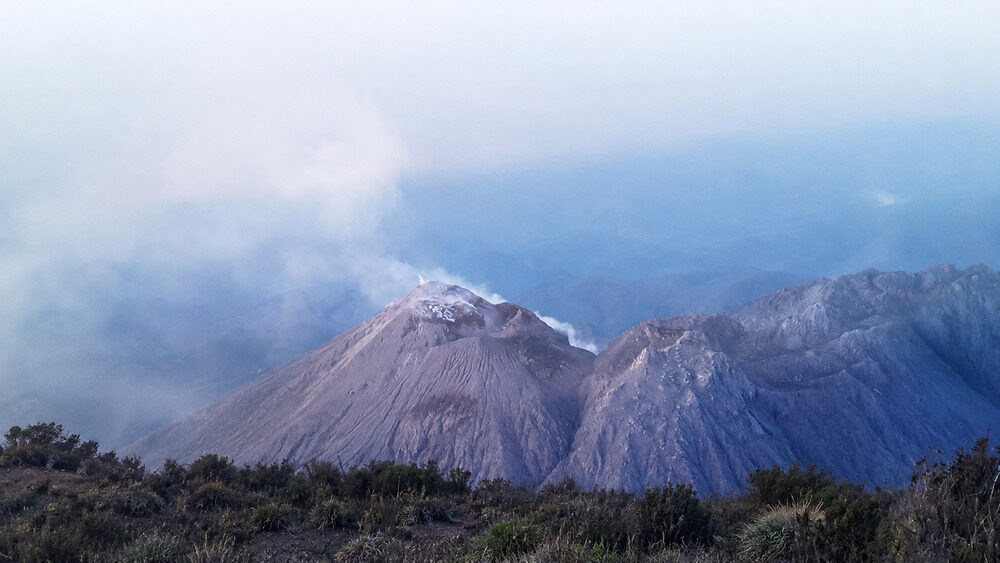
Viewpoints, panoramic views and vistas of the local volcanic complex
Once at the top, the view is magnificent. On one side lies the Quetzaltenango valley and on the other, Santiaguito, situated on the slopes of Santa María and known for its constant volcanic activity. That said, the view isn’t always completely clear. Here on the mountain, the clouds are in charge, which is why we stress the need to get up early to enjoy the best views.
Sunrise and the view from the summit of the Santa María Volcano
Sunrise is one of the most unforgettable moments at the summit of the Santa María Volcano. Light gradually breaks over the high plateau, shadows trace the contours of the landscape, and the early morning chill begins to fade. For the ascent, bring a warm coat, water, some food, and allow enough time to make a leisurely descent. The summit can be windy and cold, even if the weather seemed very pleasant when you left Xela.
The Santa María Volcano: a must-visit for hiking enthusiasts
The Santa María Volcano is one of the most rewarding hiking trails in western Guatemala. It offers a challenging ascent, high altitude, stunning scenery, geological history and a summit with breathtaking views. Bear in mind, however, that if it has rained, the mud will make progress difficult. Furthermore, if it is foggy, finding your way may be more difficult, as it will be if you are not acclimatised to the altitude.
What the route is like, what level of fitness it requires and how long it takes
The first thing you need to do is allow for a total of around 6–7 hours of walking. The ascent usually takes between 3 and 4 hours, whilst the descent takes 2–3 hours. The approximate elevation gain is 1,230 metres, so a moderate to high level of fitness is required. You’ll need to be prepared to walk for several hours uphill, so it’s always recommended to spend the night in Xela before starting the ascent.
What to expect in terms of gradient, altitude and the actual effort required for the walk
The slope of the Santa María Volcano is not uniform. Some sections are fairly easy, whilst others are much steeper, particularly where the path becomes more direct and approaches the summit.
Another factor to bear in mind is altitude. Once you’re above 3,000 metres, you’ll need to take more frequent breaks. Don’t forget to take enough water with you and have a bite to eat during the climb. And please, don’t turn the route into a race against the clock.
When is it worth climbing the Santa María Volcano rather than other volcanic routes?
We get this question from many travellers. And the truth is, it’s well worth it if you’re in Quetzaltenango and want to tackle a challenging hike without having to go all the way to Antigua or the Acatenango area. It’s also a good option if you’re interested in seeing Santiaguito from above.
If you’d prefer a gentler experience, the best option is to head up to a viewpoint to see Santiaguito or go on a shorter hike around Xela. It all depends a bit on your energy levels, how much time you have, and your experience in the mountains.
- This page about Cobán may interest you.
The Santa María Volcano, a volcanic landscape in the west
The landscape of the Santa María Volcano perfectly encapsulates what western Guatemala is all about: high mountains, a cool climate, volcanic soil and a constant interplay between nature and its people. It is not an isolated volcano on the map, but rather part of a chain of large stratovolcanoes rising above Guatemala’s Pacific plain.
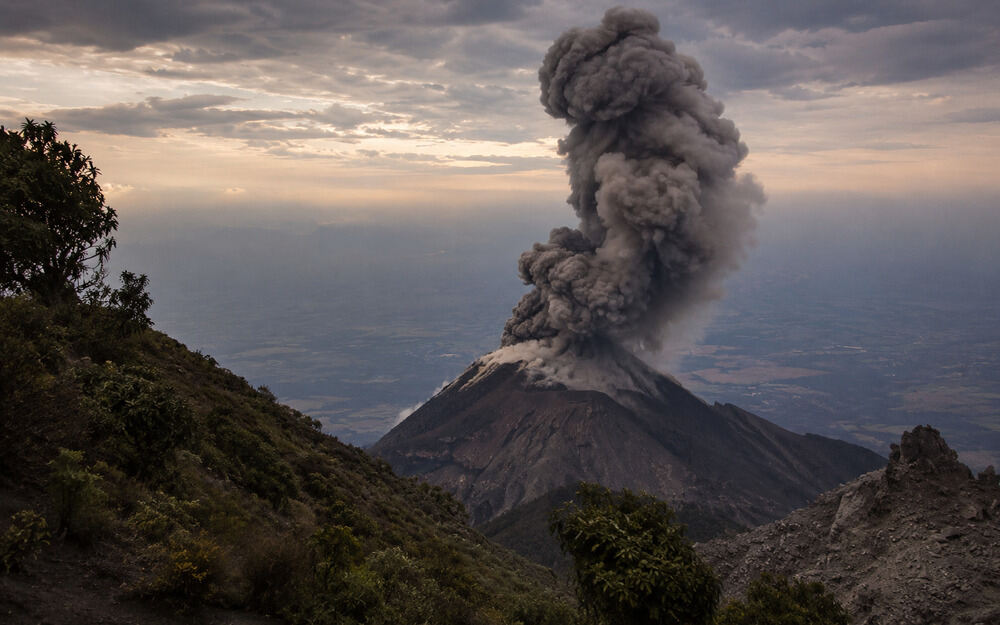
The relationship between the Santa María and the Santiaguito Volcano
The relationship between Santa María and Santiaguito is key to understanding the whole of this area. Following the 1902 eruption, the Santiaguito lava dome began to grow in 1922 at the base of the crater formed on the south-western flank.
Today, Santiaguito is highly active, with explosions, gas emissions, rockfalls and so on. It is therefore important to bear in mind that climbing the Santa María Volcano does not mean getting close to Santiaguito.
What makes this area so special for those who enjoy volcanic landscapes
What makes this excursion special is that you’ll be able to enjoy volcanic scenery from a mountain that you can climb in less than a day. What’s more, Santiaguito isn’t an extinct volcano, as it continues to produce explosions, fumaroles, ash and incandescent material.
All this activity makes the area a fascinating place, provided we take care. Before setting off, it is important to check whether the relevant authorities are currently recommending the hike and to avoid any routes that take you near areas that may be off-limits.
The best times of day to enjoy the views
The best time is usually early in the morning. At this time of day, you’re more likely to find clear, cloudless skies. What’s more, it will be much cooler during the climb and the light at the summit will be truly special.
The best conditions for hiking in the Guatemalan highlands are during the dry season (between November and April). If you’re visiting during the rainy season, you’ll need to check the forecast for each day carefully at least a day in advance.
- We invite you to read our article about La Esperanza.
The Santa María Volcano with friends: Group activities and adventures ranging from gentle to intense
If everyone in the group is at a similar level, the climb up the Santa María Volcano makes for a brilliant outing. Otherwise, if anyone isn’t up to it, the climb can take a long time. The experience is a mix of adventure, exhaustion, banter during the breaks and that silence that descends as you approach the summit and the slope becomes steepest.
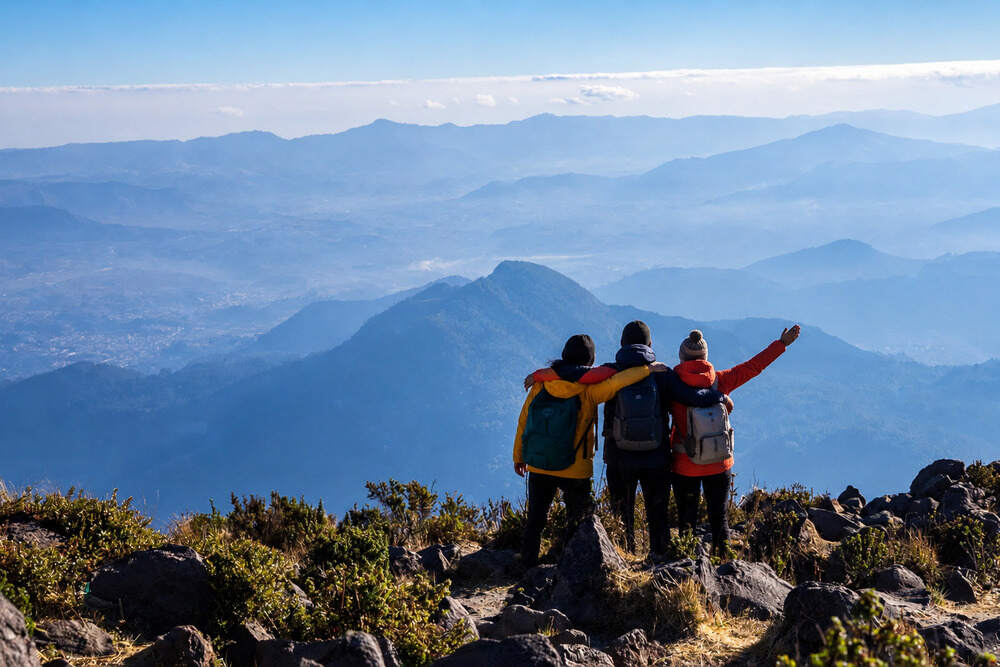
How to organise a group climb and pace yourselves
Ideally, you should set off with a local guide, agree on a clear start time and plan for a few short breaks during the climb. No one should be left behind on their own, especially if there is fog, rain or poor visibility. It is also advisable to share the load: one person can carry the first-aid kit, another the shared food, another the bin bags, and so on. Planning like this helps when fatigue sets in.
What to do alongside Quetzaltenango and other nearby attractions
Quetzaltenango serves as the natural base for a trip to the Santa María Volcano. You can combine the climb with a stroll through the historic centre, explore the Pasaje Enríquez or the Municipal Theatre, or pay a visit to the Fuentes Georginas.
If you have a few more days, you could head to Xela or other towns in the highlands. This is a great way to explore the local markets and other volcanic landscapes that are less crowded with tourists than those in Antigua.
- This page about Guatemala's natural wonders may interest you.
How to plan your visit to the Santa María Volcano, step by step
When planning your visit to the Santa María Volcano, bear in mind these three key points:
- Spend the night in Xela the night before.
- Hire a guide if you’re not familiar with the route.
- Set off very early.
Now that that’s clear, you need to pack your kit as if you were going to climb a real mountain. The route is long, high-altitude and conditions can change quickly, so no trainers or a small bottle of water.
How to get to the start of the route from Quetzaltenango
From Quetzaltenango, the route to Palajunoj starts near the monument to the mountaineer, El Club Cuervos. If you’re travelling by public transport, you’ll need to catch the bus to Llano del Pinal or Chicavioc from the terminus next to the Minerva Temple.
You can also arrange private transport through a local agency. This is the most convenient option if you want to set off in the early hours or make the ascent at dawn.
The best time to climb the Santa María Volcano
The best time to climb the Santa María Volcano is during the dry season (November–April), as you’re more likely to enjoy clear skies and trails in better condition.
Actually, you can also go up during the rainy season, but you need to check the forecast for that day carefully. If it has rained heavily, the mud, fog and risk of slipping will make the experience less than pleasant.
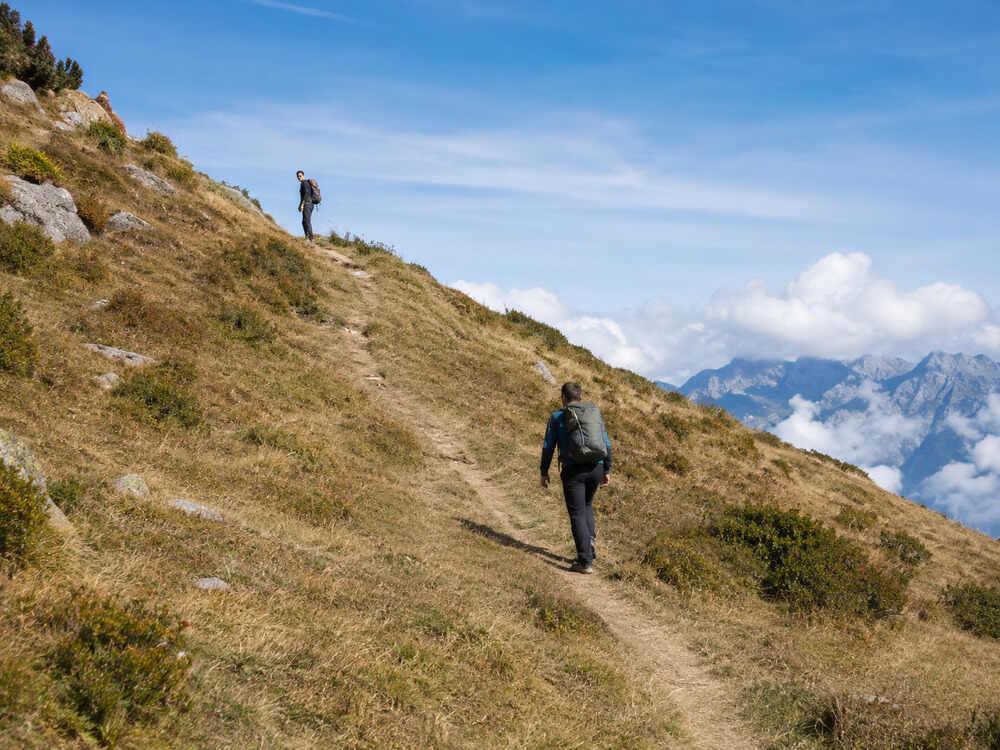
Practical tips for visiting the Santa María Volcano
You’ll enjoy Mount Santa María much more if you’re fully prepared and have planned everything carefully. You should take at least 2 litres of water, energy-rich food, a windbreaker, a warm jacket, a hat, gloves if you’re setting off at dawn, and proper hiking boots. You should also bring cash for transport or the guide, a bag to collect rubbish, and a mobile phone with a fully charged battery. By the way, don’t forget to get a map of the climb before you set off.
What to pack for a high-altitude mountain climb
Here are some of the essential items you should pack:
- Breathable T-shirt.
- Fleece or thermal jacket.
- A jacket for windy and cold weather.
- A waterproof jacket if there is a risk of rain.
- Sunscreen (even if it’s cold, the sun can still burn you when it’s high in the sky).
- Savoury and sweet snacks.
How to prepare for the cold, the hills and the early morning
If you’re going to watch the sunrise at the Santa María Volcano, that means you’ll be setting off at night or in the early hours of the morning. So, you’ll start the climb feeling cold and reach the top covered in sweat. The key is not to stand still for too long without wrapping up warm. As soon as you reach the top, put on a dry coat or jacket, as the wind cools you down very quickly.
Tips for enjoying the experience safely
Before setting off, check the local authorities’ advisories carefully. Bear in mind that Santiaguito remains active, with explosions, ash fall, short-range pyroclastic flows, avalanches, etc. Therefore, do not approach Santiaguito or venture off the main path. The safest option is to climb the Santa María Volcano, enjoy the views and descend whilst there is still sufficient daylight.
Frequently Asked Questions about the Santa María Volcano
How long does it take to climb the Santa María Volcano?
The climb usually takes around 3–4 hours, and the entire route takes around 6–7 hours, including the descent. The actual time will depend on your fitness level, the weather, the mud and any breaks you take.
Is it difficult to climb the Santa María Volcano?
Yes, it’s a medium to high-difficulty hike. It isn’t a particularly technical climb, but the gradient, altitude and duration are demanding. It’s therefore best to have some basic hiking experience.
Is it possible to climb the Santa María Volcano without a guide?
Yes, some people do that, but it’s not the best idea if you’re not familiar with the area. It’s best to go with a guide, especially given the night-time walk, the terrain and the changing weather conditions.
When is the best time to go up?
The dry season (November–April) offers the best conditions. However, you should always check the forecast the day before and avoid the route in the event of heavy rain or poor visibility.
Is the activity at Santiaguito dangerous?
The usual route leads up to Santa María, not Santiaguito. Even so, the area is part of an active volcanic complex, so you should check the official guidelines and avoid restricted areas.