Momostenango is one of the most fascinating cultural gems of the Guatemalan highlands. Known worldwide for its stunning woollen ponchos and its rich Mayan heritage, this municipality offers an experience quite unlike anywhere else in the country. This destination combines stunning natural landscapes with a sense of religious mysticism that permeates every corner. Because that’s Momostenango for you – a place of contrasts.
In this article, we’ll tell you in detail what to see and do at this very special place, so you don’t miss any of its hidden treasures.
Where is Momostenango?
Location in the department of Totonicapán
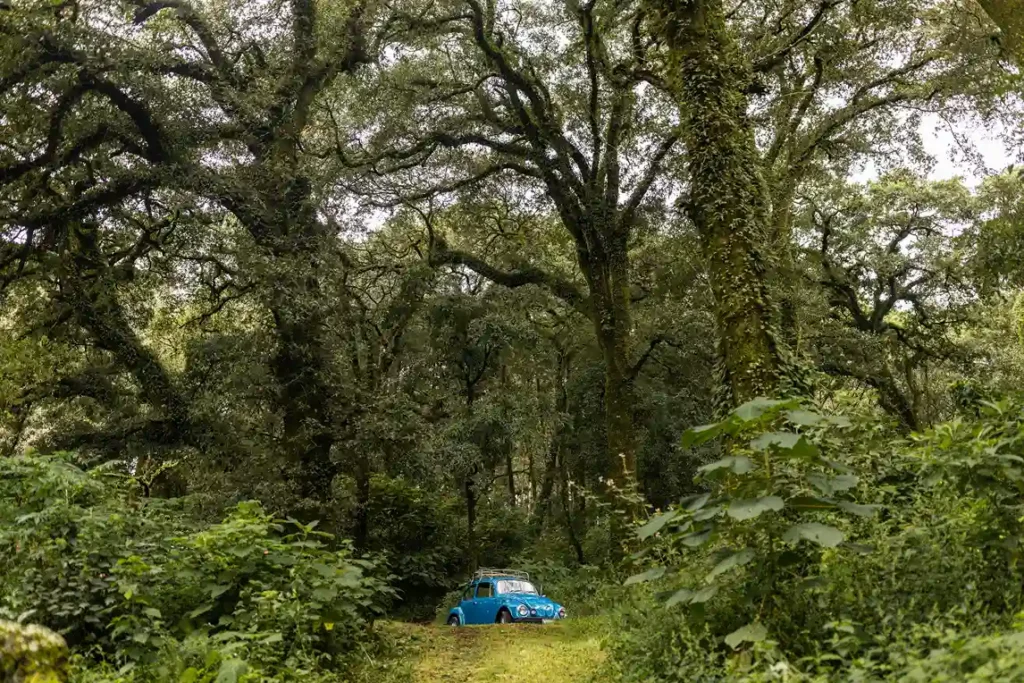
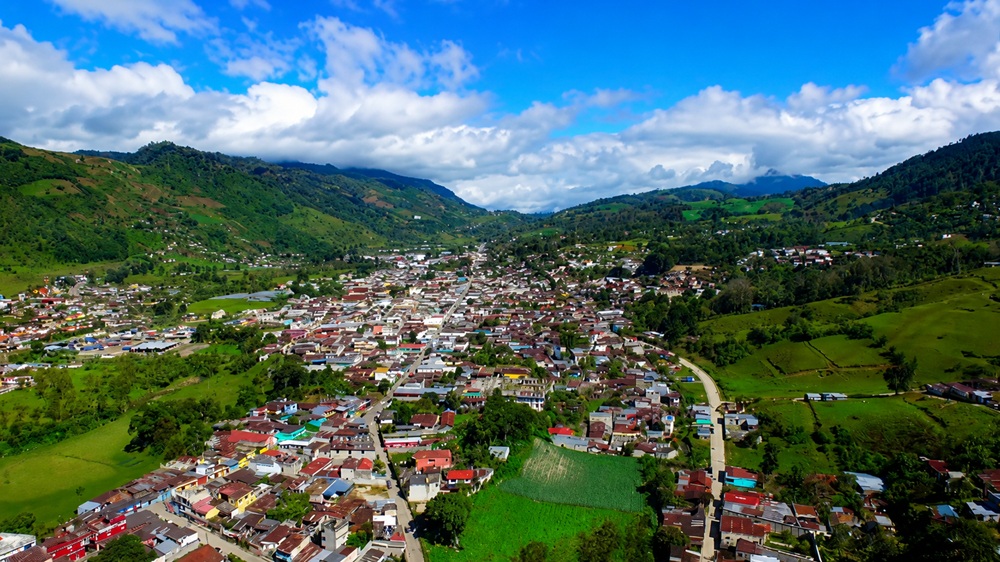
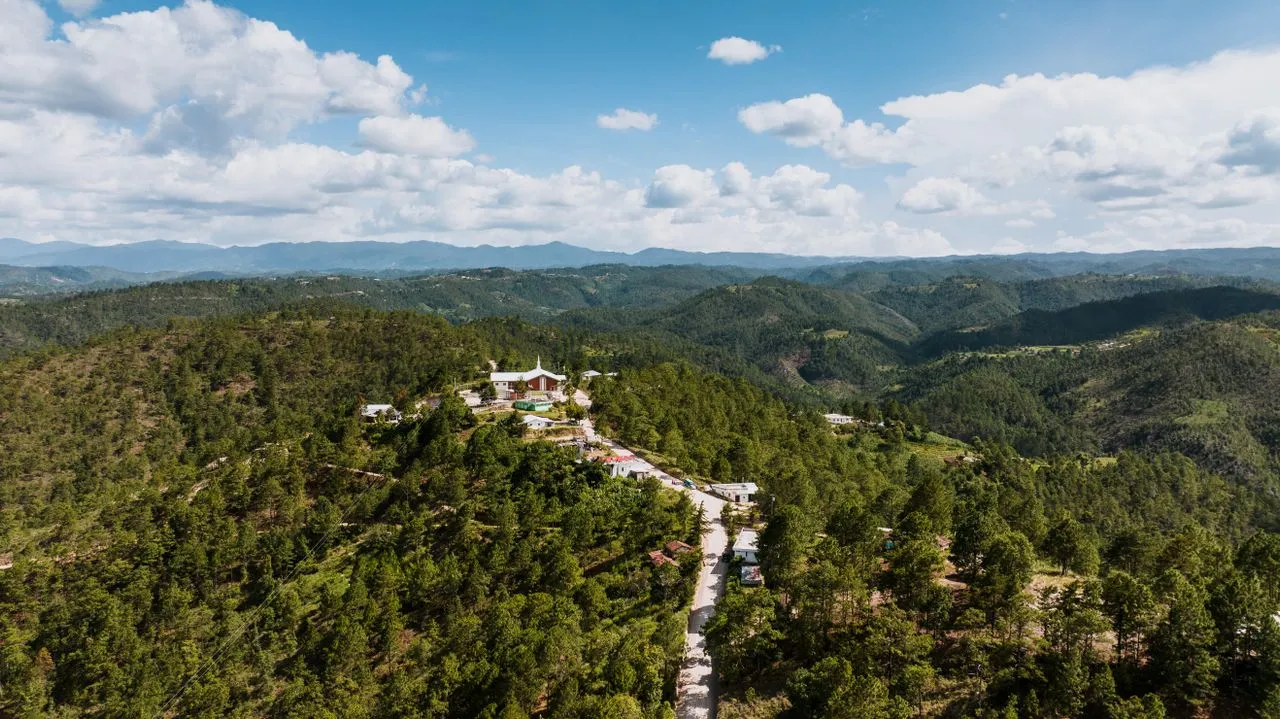
Momostenango is situated in the highlands of western Guatemala, in the department of Totonicapán. It's a very mountainous and forested region.
How to get there from Guatemala City
From the capital, Guatemala City, you can reach Momostenango by road in a journey lasting around 4 hours. It's best to use private transport or join an organised tour. However, it isn't common for trips to Momostenango to be organised from Guatemala City; you are more likely to find these options in Antigua Guatemala, Quetzaltenango or Panajachel.

There are also scheduled bus services operated by various companies. Unlike public buses, the seats are numbered, the buses are air-conditioned and have a locked luggage compartment.
- This page about the Quetzal Biotope may interest you.
History and culture of Momostenango
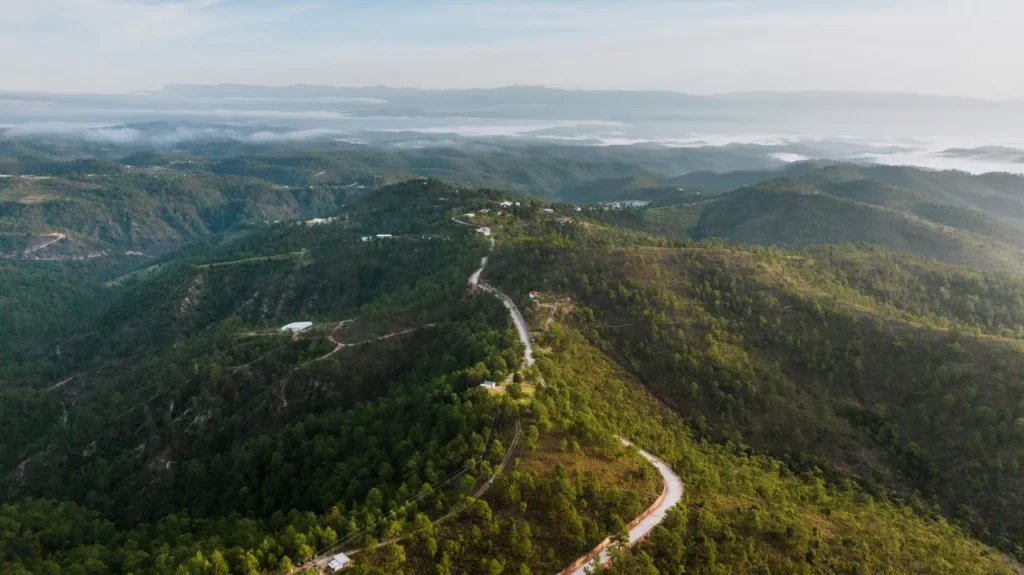
The name Momostenango comes from Nahuatl, the official language of the Aztec Empire, and means ‘place of religious altars’. This name, in fact, perfectly encapsulates what remains the very essence of the municipality today: a sacred land where Mayan mysticism and colonial history are interwoven in the daily lives of its inhabitants.
As for its history, before the arrival of the Spanish, the territory of present-day Momostenango formed part of a powerful independent Mayan state known as the K’iche’ Kingdom, which went on to become one of the strongest civilisations in Mesoamerica, both militarily and politically, prior to the Spanish invasion. For them, the area was not only of great strategic value due to the abundance of mountains, but also because they regarded it as sacred.
As early as the 16th century, the village of Momostenango was founded by Franciscan friars, and it was then that Catholic customs began to blend with the deep-rooted pre-Hispanic traditions.
- We invite you to read our article about Laguna Brava.
Traditions and Festivals in Momostenango
It's in the traditions and festivities of Momostenango that one can best see the religious syncretism so characteristic of this region and of Guatemala as a whole.
Patron saint festivals and local celebrations
- The Monkey Dance: this is a traditional folk dance performed in July during the Festival of St James the Apostle. During the dance, the dancers dress up as monkeys and climb a very tall pole in front of the main church in Momostenango whilst performing dangerous acrobatic feats.
- The Dance of the Conquest and the Moors: this is a traditional dance in which the participants wear wooden masks and colourful costumes in an attempt to evoke and re-enact the colonial era.
- The Wajxaquib' B'atz' festival: it takes place every 260 days according to the Mayan calendar and is a massive celebration during which local altars are filled with offerings, incense and candles.
Cultural expressions
K’iche’ is the predominant Mayan language and is still spoken by the local population. In Momostenango, you’ll hear it on the streets, at the market, during Mayan ceremonies and in people’s homes, where it's spoken alongside Spanish as a matter of course.
Highlights of the local cuisine and crafts
Momostenango’s cuisine is a direct reflection of its cold climate and its Mayan roots. Its recipes prioritise broths and dishes simmered over a low heat. The signature dish is quilín, a thick, reddish sauce made with chillies, tomatoes and spices, which is cooked with beef, pork or chicken. There is also a wide variety of comforting broths, such as kilaw and pork chirmol.
Of course, people in Momostenango also eat plenty of tamales, and the department’s traditional drink is jox, a hot drink made from chian seeds or flowers, which is sweetened. As for baked goods, you simply must try pan ayemado – it’s very light and fluffy, with a subtle hint of sweetness.
The municipality of Momostenango is also famous for its age-old textile tradition; not only nationally but throughout Central America. This practice was introduced during the colonial era with the arrival of sheep. To weave the wool, local artisans use huge floor looms, and their most famous creation is the so-called Momostenango poncho. I highly recommend popping into the shops to have a look at them and, if you fancy it, it’s one of the best souvenirs you can take home from the area.
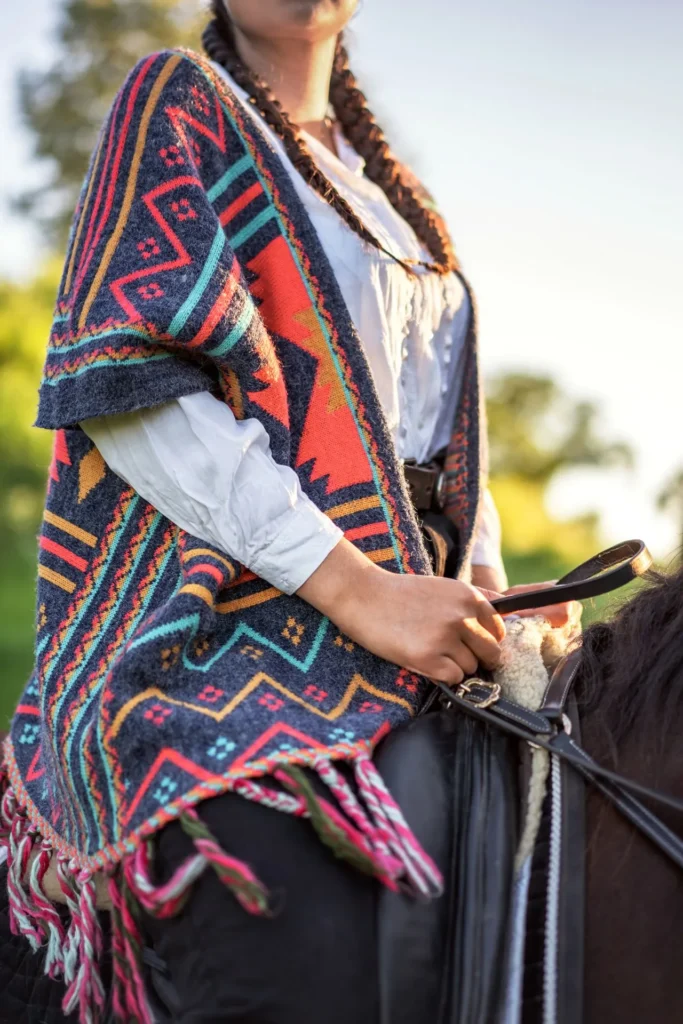
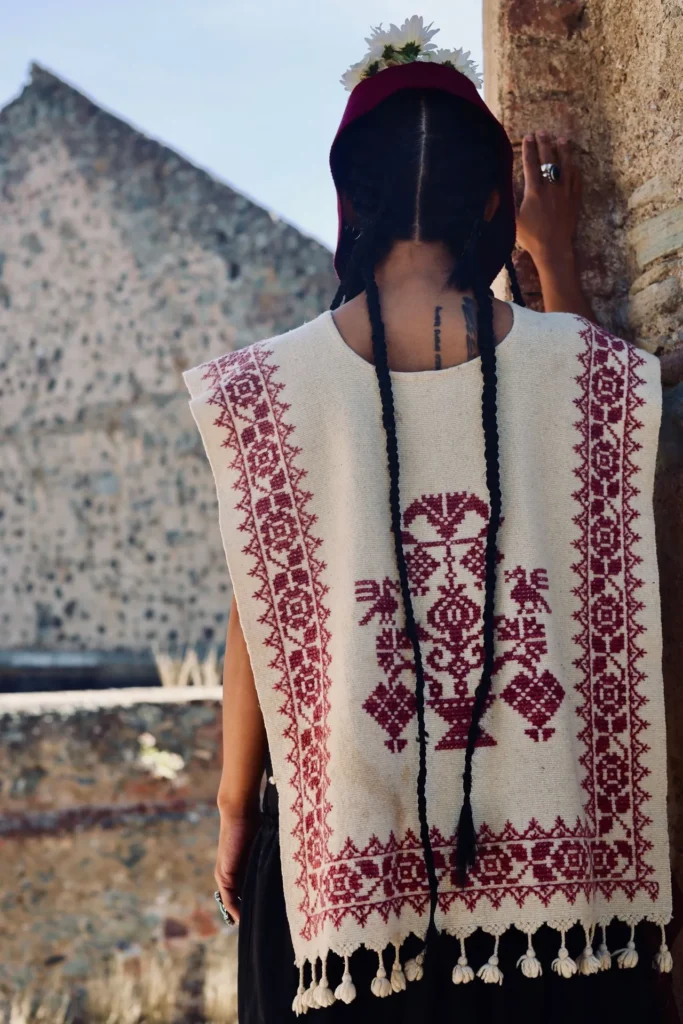
Furthermore, as part of the process of making these ponchos, the wool is washed in hot water to make it shrink and become denser; this makes it more durable and softer. Other traditional garments you can find in Momostenango, both in shops and worn by the locals themselves, include, for example, the huipil, a kind of women’s t-shirt featuring delicate embroidery and geometric patterns.
- We invite you to read our article about Ipala.
What to see in Momostenango
The Momostenango Cliffs and rock formations
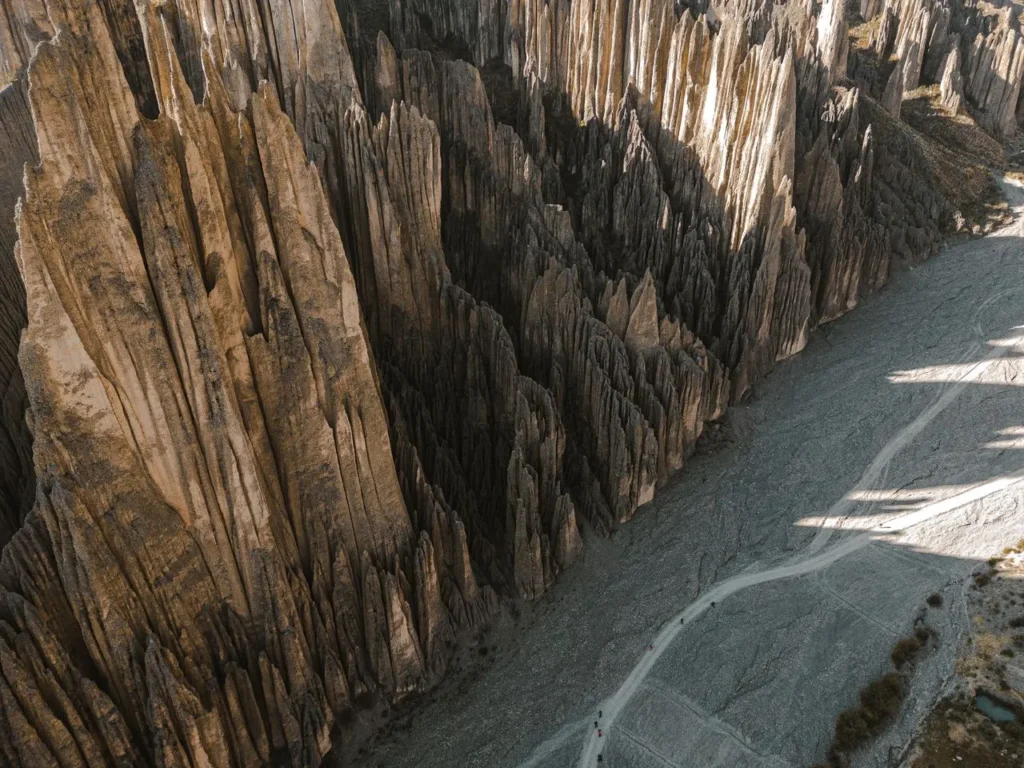
Momostenango’s real tourist attraction is its ancient geological landscape. The Riscos are the undisputed symbol of the entire department of Totonicapán, having been designated a National Park in the 1950s. These are rocky towers whose shape is reminiscent of a Gothic cathedral carved out of the heart of the forest. According to experts, these cliffs are ancient mountains that gradually lost their shape and disappeared as a result of erosion caused by rain and wind.
The most magical time to see the Riscos de Momostenango is when the light falls directly upon them. It's then that you can see the brilliant glints reflecting off the rocks, which take on different hues throughout the day.
For the K’iche’ Maya people, these cliffs are not just part of the landscape; they are used as religious altars where spiritual guides perform ceremonies and make offerings. You simply mustn’t miss them, and what’s more, they’re just five minutes from the centre of Momostenango. Access to the area is completely free and it's open all day. We recommend that you always stay on the marked paths, as the rocks and the area itself are fragile and sandy. For this very reason, please do not touch the rock formations or climb them.
The Thermal Baths
Momostenango also has natural springs of sulphurous medicinal waters. The bath known as Pala Chiquito is the one most highly recommended for tourists.
Cerro Paclom Viewpoint
This is Momostenango’s best-kept secret. It's situated a short distance from the town centre and has become a must-visit for anyone wishing to see the town from above and enjoy the stunning views and scenery. The hill is one of the highest points in Momostenango and offers stunning views of the valley and the surrounding highlands.
The best time to enjoy this spot is at sunset, when the sky is bathed in shades of red and orange over the mountains. Furthermore, as well as being a viewpoint, Paclom Hill is a sacred ceremonial site of great importance to the local Mayan community. For this reason, spiritual guides perform rituals there, and it's one of the main gathering places during the Mayan New Year.
Parish Church of St James the Apostle
Situated in the heart of the village, opposite the central park, this is a 16th-century colonial church. Its most striking features are its white façade and its imposing architecture. I encourage you to visit the interior as well to admire its religious images, which are of great historical value.
- We invite you to read our article about Huehuetenango.
Best time to visit Momostenango
The dry season (from November to April) is undoubtedly the best time to visit Momostenango and the surrounding area. The days are sunny and clear, making them ideal for exploring and photographing the Riscos and the views from the hill. But be warned: the nights and early mornings are often cold, with temperatures sometimes dropping to around 5 ºC.
If possible, try to avoid the period from June to October. This is the heavy rain season and the roads become very dangerous due to the fog. Furthermore, there may be landslides in the Riscos area.
- This page about Takalik Abaj may interest you.
Tips for visiting Momostenango
- Make sure you carry enough cash to pay at local shops, craft markets and market stalls. Credit cards are not usually accepted at these places, and there are only a few cash machines in Momostenango.
- Wear hiking clothes and a warm jacket for the evening.
- Ask for permission before taking photos of local people and rituals, should you come across any.