At the foot of Antigua Guatemala, where the valley opens out between volcanoes and cobbled streets, Jocotenango emerges as a village that seems to exist halfway between the historical and the everyday. Known for its traditional patron saint’s festival, its craft workshops and its proximity to some of Sacatepéquez’s most iconic landscapes, this municipality offers a peaceful and authentic way to discover local Guatemalan life.
To the rhythm of the marimba, their identity is particularly reinforced by their fair, a celebration that weaves together the past and the present, bringing them together in a single festival.
Where is Jocotenango?
Location in the department of Sacatepéquez
Jocotenango is situated to the north of Antigua Guatemala, practically adjoining it, which means that travel between the two municipalities is very easy. It forms part of the same tourist area in Sacatepéquez, known for its traditional villages, nearby volcanoes and mountainous landscapes.
How to get there from Antigua Guatemala
Getting to Jocotenango from Antigua Guatemala is very straightforward. The journey takes just a few minutes by car and is mainly along the CA-1 Occidente (Interamericana) road. There are also local roads that link the centre of Antigua directly with Jocotenango, making for a quick and seamless journey between the two towns.

Links with other nearby towns
From Jocotenango, it's easy to reach other municipalities in Sacatepéquez, such as Ciudad Vieja, Pastores and San Felipe de Jesús, as well as Antigua Guatemala itself. Its location within the Sacatepéquez tourist corridor makes Jocotenango a good stop-off point or base from which to explore the area.
- We invite you to read our article about Alotenango.
History of Jocotenango
The origins of the village and its foundation
The origins of Jocotenango date back to pre-Hispanic times, when there were indigenous settlements linked to the Cakchiquel civilisation in this area of what is now Sacatepéquez.
The Spanish reorganised the territory and brought together several communities into new settlements, giving rise to the colonial town of Jocotenango, situated near the former capital of Santiago de los Caballeros. The name refers to the abundance of jocotes, reflecting the town’s historical connection with agriculture.
Historical development during the colonial period
During the colonial era, Jocotenango developed as a town linked to the great city of Santiago de los Caballeros, now known as Antigua Guatemala. It played a supporting role in agriculture and as a source of labour, supplying produce, fruit and other resources from the countryside to the colonial city. Over time, it established its own community organisation centred on the parish and the patron saint’s festivities.
The cultural and social significance of Jocotenango
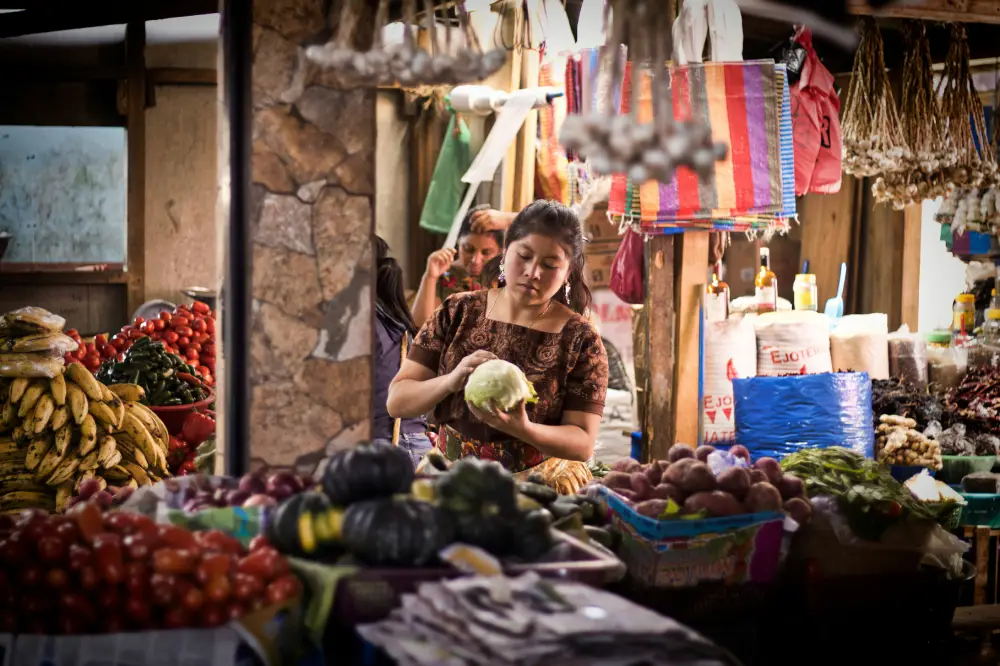
Culturally and socially, Jocotenango is notable for preserving traditions linked to popular religion, patron saint festivals, music and the traditional cuisine of the highlands. The marimba continues to play an important role in many local celebrations, and the patron saint festival remains one of the community’s main social events.
Culture and traditions of Jocotenango
Major festivals and celebrations
For the people of Jocotenango, there is always one major highlight in the festival calendar: the patron saint’s festival in honour of the Assumption of the Virgin. Processions, solemn masses, prayers, parades of floats and folk dances are organised… The festival also includes the event ‘Jocotazos de ayer y hoy’ (Jocotazos of yesterday and today), during which anecdotes and stories about Jocotenango’s identity are recounted.
Local crafts and cultural expressions
Jocotenango is renowned for the work of its craftspeople, particularly for the production of wooden crafts in family-run workshops. Here, angels, religious figures and decorative pieces are carved from woods such as mahogany, cedar, cenizo, coffee root and conacaste.
Traditional cuisine of the municipality
The Jocotenango Fair is the perfect time to enjoy traditional Guatemalan dishes and snacks. Among the must-try dishes are garnachas, churrasquitos and flour tortillas served with grilled meat, sauces and side dishes. There are also traditional desserts such as molletes and buñuelos, often accompanied by fruit punch or milk punch.
Jocotenango Fair
Dates and duration of the fair
The lively Jocotenango fair, which dates back to the 16th century, remains a very special event for those who wish to experience the tradition first hand. It's held every 15 August in honour of the Assumption of the Virgin, patron saint of the capital. Since it was officially recognised in 1928, it has been established as a national event.
Activities and events at the fair
During the festival, the streets come alive with a programme that combines tradition, entertainment and popular culture. As well as the religious processions and events dedicated to the Assumption of the Virgin, visitors can enjoy concerts, marimba performances, parades, craft exhibitions and numerous activities for the whole family.
The food stalls and fairground rides round off an experience that attracts thousands of people from all over Guatemala every year.
How the fair reflects local culture
Anyone who visits the Jocotenango Fair is in for an experience that combines tradition and joy. The aromas of churros, garnachas, ‘elotes locos’, molletes and traditional sweets mingle with the laughter from the fairground rides and the music that accompanies the walk. Artisans from different regions of the country take part to showcase their talent, boost the local economy and preserve traditions.
What to see in Jocotenango
Churches and main squares
The main church in Jocotenango, known as the Parroquia Nuestra Señora de la Asunción, is one of the town’s most iconic landmarks and a key to understanding its religious and cultural heritage. Its Baroque-style façade stands opposite the main square, one of the town’s most iconic spaces.
Markets and craft workshops
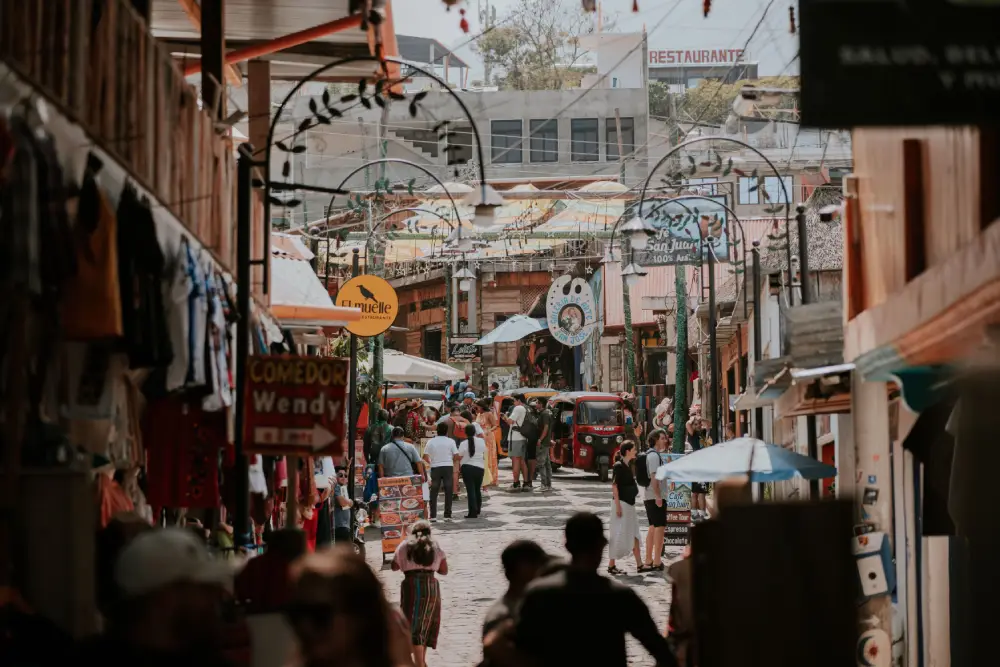
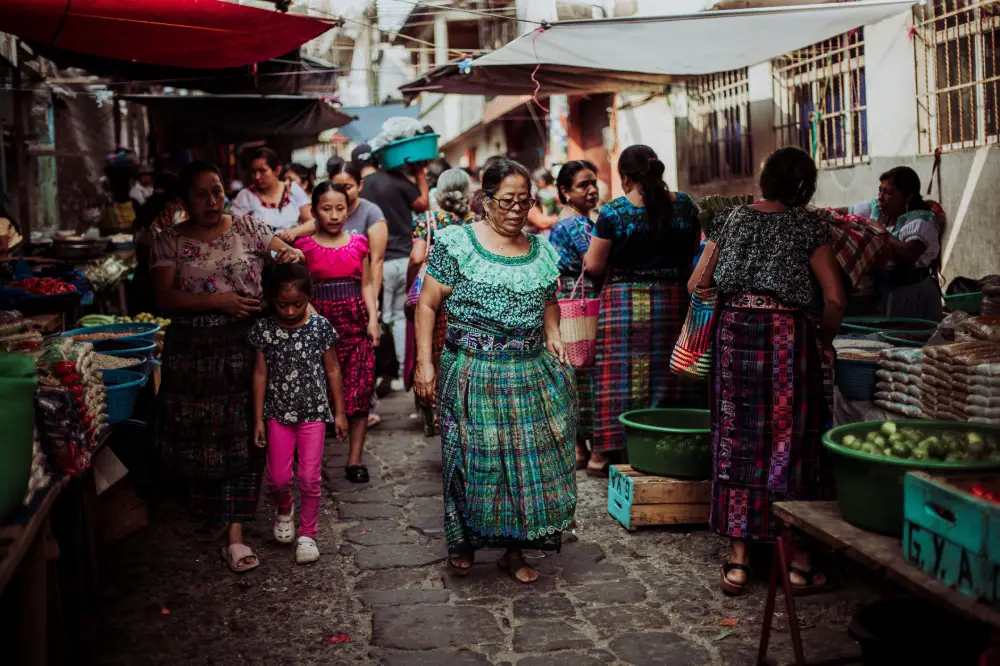
One of the main attractions of Jocotenango is its markets and craft workshops, where craftwork closely linked to local tradition is still practised. Here, carved wooden pieces, religious souvenirs and decorative items are crafted, alongside stalls selling fruit, vegetables, traditional food and snacks that represent Guatemalan culture.
Viewpoints and natural landscapes
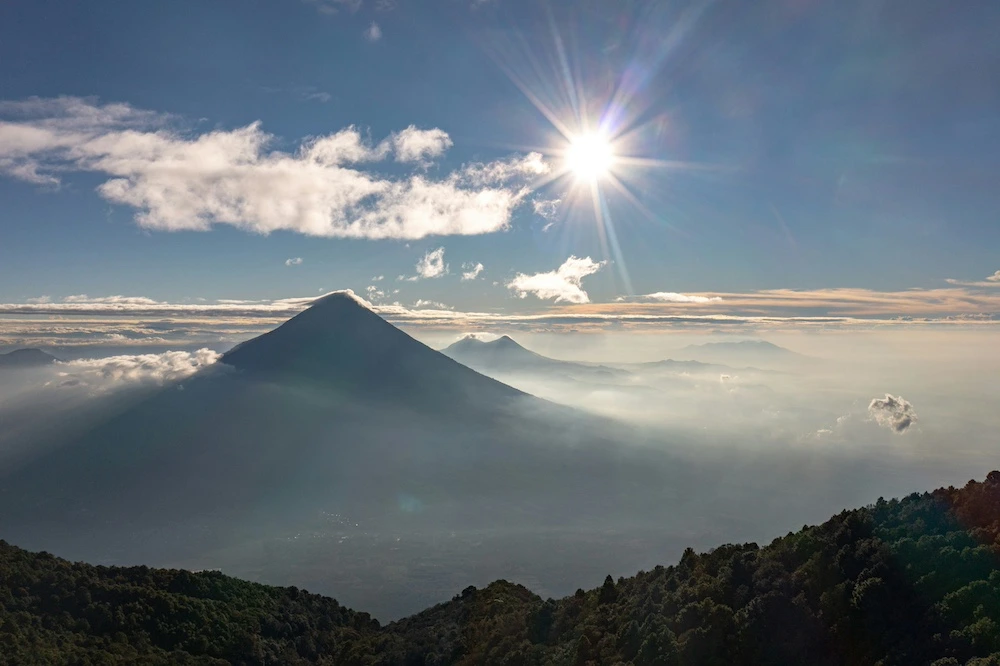
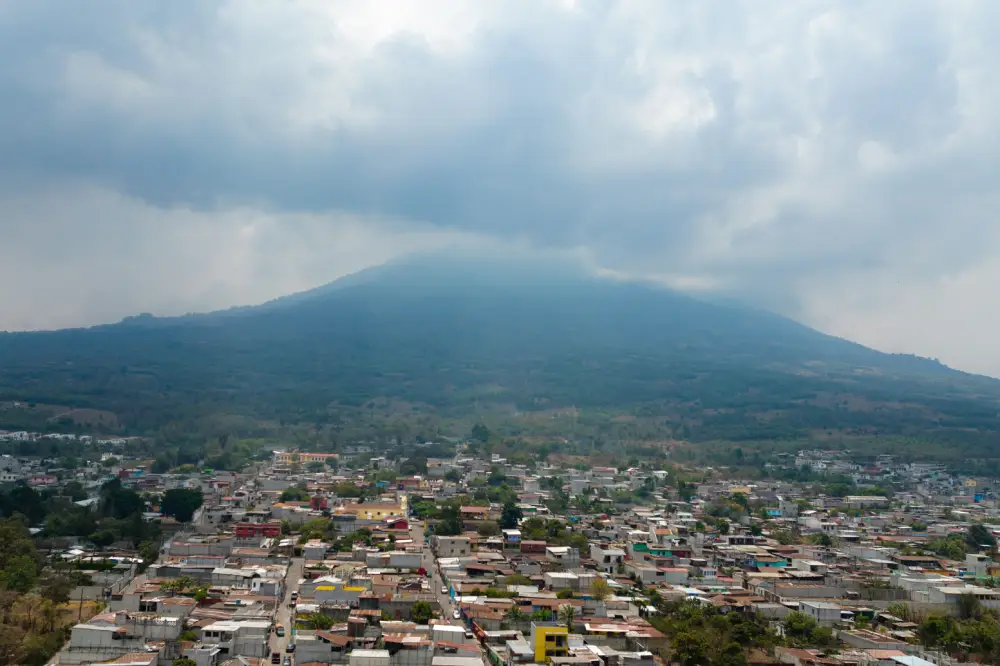
Jocotenango’s location in the Panchoy Valley will allow you to enjoy some of Sacatepéquez’s most distinctive landscapes. From various points across the municipality, you can see the Agua, Fuego and Acatenango volcanoes, three of the region’s most striking landmarks.
Historic spots in the village
Its proximity to Antigua Guatemala has had a profound influence on the history of Jocotenango, but the municipality has managed to preserve its own identity, which can still be felt in some of its most traditional corners.
In just a few minutes, you can reach some of Antigua’s most iconic sites, such as the Arch of Santa Catalina, the Church of La Merced and the ancient ruins of convents and monasteries.
Things to do in Jocotenango
Take part in the fair and its traditions
If you’re lucky enough to visit Jocotenango during its patron saint celebrations, you’ll be able to discover one of the town’s most authentic aspects. The processions, religious activities, traditional music and community events fill the streets with a lively atmosphere and offer a glimpse into the customs that have shaped the local identity for generations.
Cultural tours of the village
The best way to get to know Jocotenango is to explore it at your own pace, without rushing. Stroll through its streets, visit the Church of Our Lady of the Assumption and observe the daily life of its inhabitants. That is what allows you to discover this town with its strong colonial heritage and unique character, shaped by its close ties to Antigua Guatemala.
Hiking and exploring the surrounding area
The region boasts significant natural landmarks such as Cerro El Narizón and offers views of the Agua Volcano, with wooded areas on hills such as Panza de Burro. These geographical features provide a diverse landscape well-suited to various sports such as hiking, jogging, cycle touring and mountain biking.
Architectural and landscape photography
If you’re a photography enthusiast, Jocotenango is the perfect destination to take your camera out for a spin. The light of the highlands bathes the churches, the colourful traditional streets and the volcanic views, allowing you to capture the best memories of this trip.
- This page about Lake Atitlán may interest you.
Best time to visit Jocotenango
The best time to enjoy Guatemala without having to worry about the weather is during the dry season, which runs from November to April. During these months, there is less rain, the volcanoes are more clearly visible and the roads are generally in better condition.
Climate throughout the year
In Jocotenango, the climate is mild and very pleasant all year round, perfect for travelling without extreme cold or heat. Temperatures usually range between 11 °C and 25 °C, so all you need is some light clothing and an extra layer for the cooler mornings and evenings.
Dry season and rainy season
The dry season generally runs from November to April, with February and March being the driest and most stable months for going on excursions and enjoying unobstructed views. November and April act as transitional months: in November, the end of the rainy season is noticeable, and in April, the first isolated storms may occur before the wet season sets in.
When to visit the fair for the full experience
If you want to experience Jocotenango like a true local, in its most authentic form, it’s best to plan your trip to coincide with the patron saint’s festival of the Virgin of the Assumption. In other words, around 15 August.
Tips for visiting Jocotenango
What to bring on your visit
- Comfortable clothes.
- Closed-toe footwear for walking on cobbled streets.
- A jacket for cooler evenings.
- If you’re travelling during the rainy season, make sure to pack a raincoat or an umbrella.
- Sun cream.
- Some cash in quetzales to enjoy the markets.
Transport and safety recommendations
Jocotenango is very close to Antigua Guatemala, so travelling by tuk-tuk, local taxi or private car is the most convenient way to get there and back without any hassle. As in any tourist town, it’s a good idea to keep an eye on your belongings in busy areas, avoid carrying valuable items in plain sight and only use transport services recommended by your accommodation or by reputable agencies.
How to make the most of the cultural experience
Ideally, you should combine a visit to the Parish Church of Our Lady of the Assumption and the main square with a stroll through the market. If your trip coincides with the patron saint’s festival of Our Lady of the Assumption, make the most of it by watching the processions, listening to the marimba music and visiting the food stalls.
What to see near Jocotenango
Antigua Guatemala
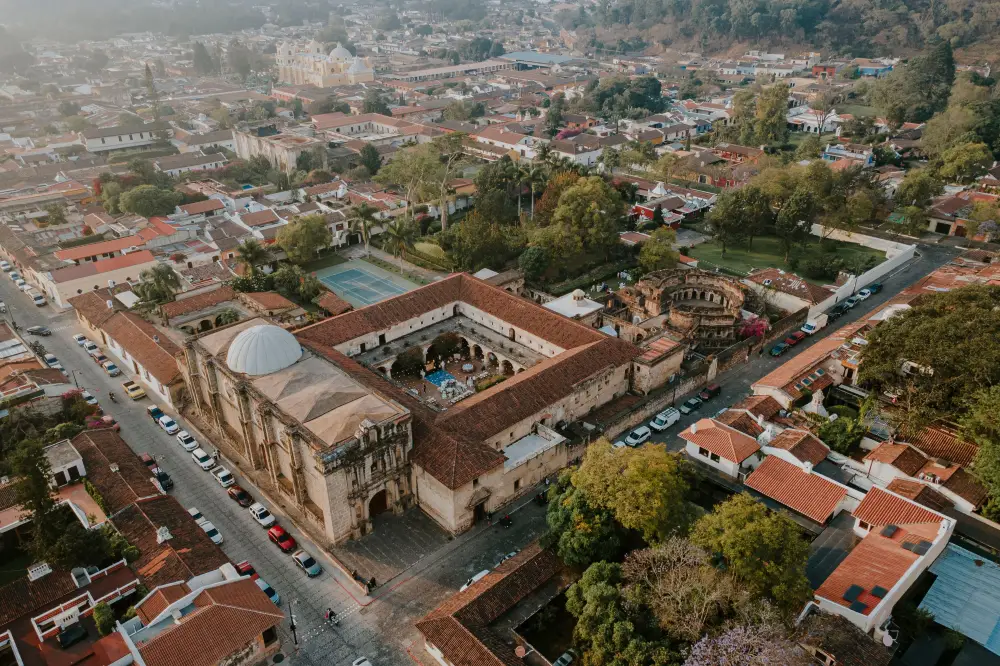
Just a few minutes from Jocotenango lies Antigua Guatemala, one of the most fascinating colonial cities in Latin America and a UNESCO World Heritage Site. Don’t miss its cobbled streets, centuries-old churches and bustling squares.
Agua Volcano
The Agua Volcano dominates the landscape of Sacatepéquez and can be seen from numerous vantage points around Jocotenango and Antigua. It’s well worth taking in the views at sunrise or sunset, or including a viewpoint on your route to enjoy its volcanic silhouette.
Other villages in the Sacatepéquez highlands
Very close to Jocotenango, you can visit other villages in the highlands such as Ciudad Vieja, Pastores or San Felipe de Jesús, each with its own church, square and unique atmosphere.
Nearby nature trails and viewpoints
In the area around Jocotenango and Antigua, there are several trails and natural viewpoints where you can get away from the hustle and bustle and enjoy the scenery of the valley and volcanoes. Many gentle routes lead from the hillsides near Antigua to viewpoints, such as the paths that skirt the Panchoy Valley, offering direct views of the Agua Volcano and even the Fuego and Acatenango volcanoes.
- We invite you to read our article about Acatenango, the village at the foot of the volcano.
Is Jocotenango worth a visit?
What makes the village and its fair unique
Its essence. Through its connection with local life and traditions – particularly during its patron saint festivities – the town endures. Unlike other destinations more focused on international tourism, here it's still possible to experience traditional celebrations where the community remains the true star of the show. In Jocotenango, the streets are filled with the sound of the marimba and the aromas of traditional food, revealing what makes this town truly unique.
Who is this destination recommended for?
If you enjoy exploring the unique character of each village away from the most touristy spots, this destination is for you. Even if you’re visiting Antigua Guatemala, Jocotenango could prove to be a key stop-off for enjoying authentic experiences.
How to include it in an itinerary around Sacatepéquez
Thanks to its strategic location, Jocotenango can easily be visited whilst staying in Antigua Guatemala or as part of a tour of other municipalities in Sacatepéquez, such as Pastores, Ciudad Vieja or San Lucas Sacatepéquez.
- This page about cities in Guatemala may interest you.
Frequently Asked Questions about Jocotenango
Where is Jocotenango located?
Jocotenango is a municipality in the department of Sacatepéquez, in the central highlands of Guatemala, situated just a few minutes’ drive from Antigua Guatemala.
When does the Jocotenango fair take place?
The patron saint’s festival in Jocotenango is held around 15 August, in honour of the Assumption of the Virgin.
What to see and do in Jocotenango?
In Jocotenango, you can visit the Parroquia de Nuestra Señora de la Asunción and its main square, explore the market and the woodcraft workshops, and sample local specialities. You can also make the most of its proximity to Antigua to combine your visit with cultural tours or trips to scenic viewpoints.
How do I get to Jocotenango from Antigua Guatemala?
Getting to Jocotenango from Antigua Guatemala is very easy: just take the RN-10 road and, in about 5–10 minutes by taxi, private car or bus, you’ll be in the village.