If you’re looking for interesting places to visit on your holiday, San Felipe Castle in Guatemala is a must-see. It’s situated next to Río Dulce and Lake Izabal. It’s an old colonial fort that was built to protect the area from pirate attacks and to control a trade route.
Today we see it in a different light, as it combines both defensive architecture and tropical scenery. This makes it a key stop on any tour of Río Dulce or Livingston. It’s a place steeped in history, even if it isn’t the largest. What really stands out are the stunning views and a history that makes more sense when you’re standing by the water.
Where is San Felipe Castle, and why is it so important to Guatemala’s history?
Although we have already introduced it, we should mention that San Felipe Castle in Guatemala is located in the department of Izabal, at the point where the Río Dulce flows into Lake Izabal. This location tells us more than we could have imagined. For whoever controlled this point controlled one of the most important routes out to the Caribbean.
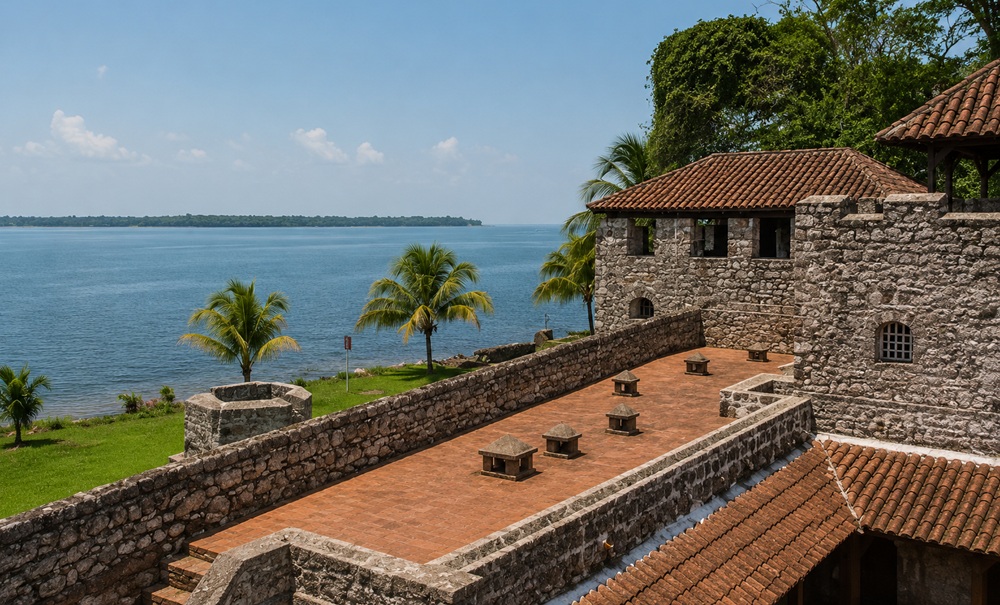
During the colonial era, the Río Dulce was a vital waterway for transporting goods between the Guatemalan hinterland and the maritime trade routes. For this reason, the fort was built as an essential defensive structure. Above all, it was designed to counter pirates and privateers who attacked Spanish trade routes from the Caribbean. What makes San Felipe Castle in Guatemala so special is the blend of its strategic importance at the time and the landscape that surrounds it.

What is the connection between San Felipe Castle and Livingston and the route through Río Dulce?
Without a doubt, this is an area that will leave a lasting impression, as the Río Dulce connects Lake Izabal with the Caribbean, and Livingston lies at the end of that route. But here we find ourselves in a much more Caribbean atmosphere. It's therefore no surprise that many travellers visit the castle before or after sailing down the Río Dulce. It's a stop well worth making to understand the area’s historical significance before heading on to the canyons or the hot springs.
What’s more, San Felipe Castle in Guatemala serves as the perfect introduction to Izabal. In just a short time, you can experience a slice of colonial history combined with tropical nature and one of the country’s most beautiful routes. With this in mind, we really must stop off here – and not just for a quick visit!
A brief history of San Felipe Castle in Guatemala: pirates, trade and the defence of the river
If you like pirate stories, you don’t need to go to the cinema to immerse yourself in them. Instead, in this case, you can enjoy one of the most original tales. San Felipe Castle is, after all, linked to the fear of pirate attacks. During the colonial era, the Caribbean was one of the busiest regions for trade. Although this was positive, it also had a downside, as the constant threat of pirate ships was ever-present.
The fort served several purposes, and although military defence was one of the most important, it also functioned as a customs checkpoint and even as a prison. As we can see, its role was not only to keep watch but also to protect goods and regulate traffic through a strategic area for Guatemala.
The colonial origins of San Felipe de Lara Castle
Looking back, the original fort was built between the 16th and 17th centuries. Its purpose was to deter pirate attacks and protect the colonial estates in the Izabal region. The fortress was soon named San Felipe de Lara and was built at a very specific location that we have already mentioned. That is, the passage between Lake Izabal and the Dulce River. It's undoubtedly a perfect position for monitoring and controlling access to the interior.
Over time, San Felipe Castle in Guatemala has become one of the region’s most recognisable historical landmarks. It's not particularly large, it's true, but both its location and its function make it of great significance in the region’s history.
Reconstruction, neglect and restoration as a tourist attraction
The truth is that this castle has suffered attacks, as well as fires and, of course, reconstruction. Some sources claim that it was destroyed by pirates in 1686. After being rebuilt with palm-leaf roofs, it was subsequently reconstructed to restore its defensive function. As you might imagine, over the centuries, the fortress lost its military purpose and fell into disuse. But a place like this could not remain forgotten for long.
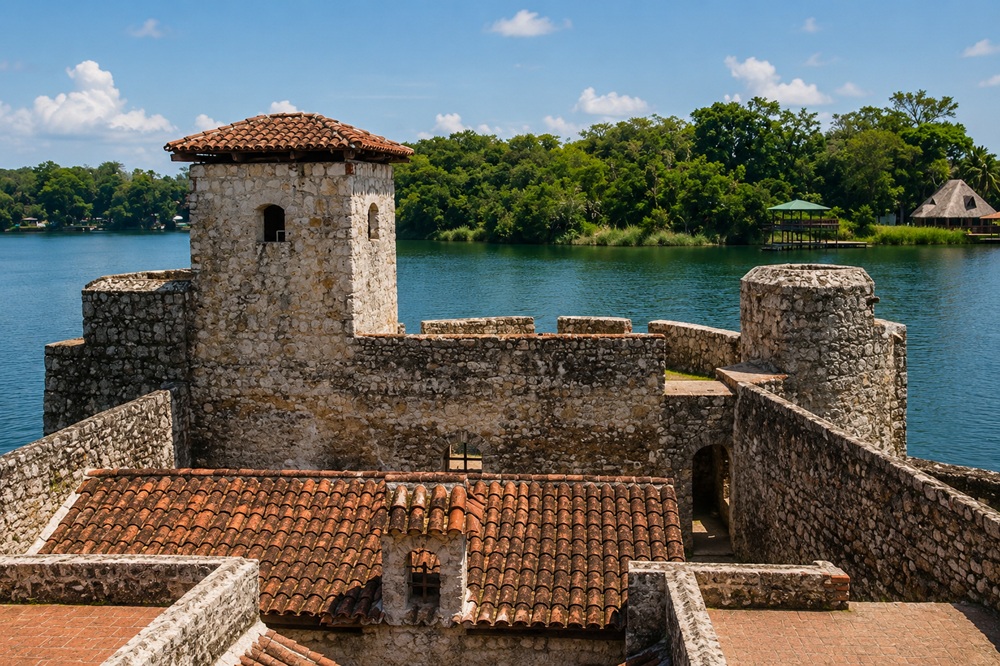
So much so that it was restored as a historic monument and tourist attraction, eventually becoming a regular stop for those exploring the Río Dulce. Today, the Castillo de San Felipe in Guatemala is a restored fortress surrounded by green spaces. If you venture inside, please note that the tour allows you to explore its walls, as well as its corridors, gun emplacements and interior spaces with relative ease.
Is San Felipe Castle in Guatemala worth a visit?
Yes, San Felipe Castle in Guatemala is well worth a visit, especially if you’re passing through Río Dulce or planning a trip to Livingston. It’s a short visit, but the castle is steeped in history and the scenery speaks for itself – it simply needs to be enjoyed.
Travellers are in no doubt about this. They all agree that the castle is quick to explore because it's small, and that its surroundings make it all the more impressive. Visitors also emphasise that it's well preserved, that the views are breathtaking, and that exploring the passageways, towers and gun emplacements helps to spark the imagination.
It’s best to include this stop on a tour of Izabal. Also, bear in mind that the grounds, with their parks and rest areas, mean that the visit isn’t limited to the interior of the fortress.
How do you get to San Felipe Castle in Guatemala from Río Dulce and Livingston?
If you’re already in the Río Dulce area, getting to San Felipe Castle in Guatemala is a piece of cake. The fortress is close to the town centre and can be reached by road or by boat. Although from Livingston, the usual way to get there is by boat along the Río Dulce. This way, the castle can form part of the river tour to Lake Izabal or to the town of Río Dulce. It’s a perfect option as it allows you to enjoy the scenery from the water.
Get to the castle jetty by road
Whether you’re in Río Dulce or travelling by road through Izabal, you can reach the area around San Felipe Castle in Guatemala by car or taxi. Bear in mind that visits are usually organised from the Río Dulce area, where there are accommodation options, restaurants and various tourist services.
It’s worth noting that travelling by road is more convenient for those travelling in their own or a hire car. As you know, this offers complete convenience as it gives you greater control over your schedule, allowing you to stop at the castle and make other stops along the way.
Visit San Felipe Castle by boat
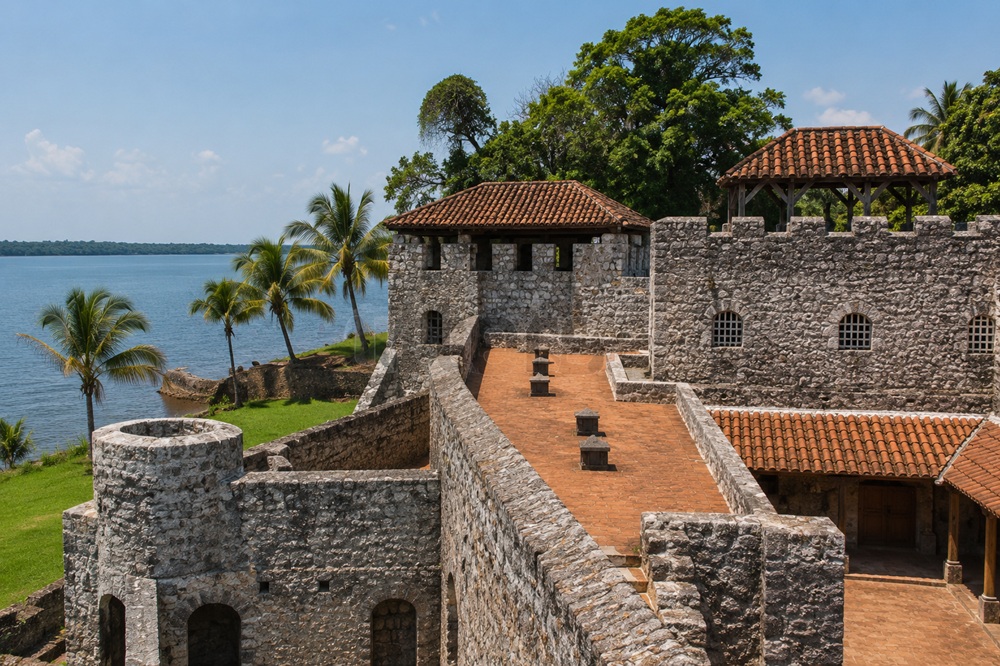
If we had to choose, we’d pick the boat as one of the most special ways to get up close to the fortress. From the water, everything looks completely different, as you can really appreciate its defensive position. This is one of those options that’s perfect if you’re heading to Livingston, as these kinds of tours already include stops where you can enjoy everything to the full.
If you're short on time, you can always admire it from the outside whilst sailing past. It'll always be a wonderful memory. But to be honest, it's best to set aside a bit of time, go inside and explore the area.
What to see at San Felipe Castle, Guatemala
There are plenty of reasons why you shouldn’t miss a place like this. We’ve already mentioned a few: it combines various elements such as architecture, history and, of course, the most beautiful natural surroundings. There are plenty of spots to explore, so you can easily spend between an hour and an hour and a half here.
We should always explore a place like this at a leisurely pace, so that we can take in every space it has to offer. The fort was designed for surveillance, but also for defence and, furthermore, to store as much as possible. That is one of the key points to bear in mind, as it helps us to better understand each area, each corridor and even every view of the river.
City walls, Bustamante Tower and canyons overlooking the Río Dulce
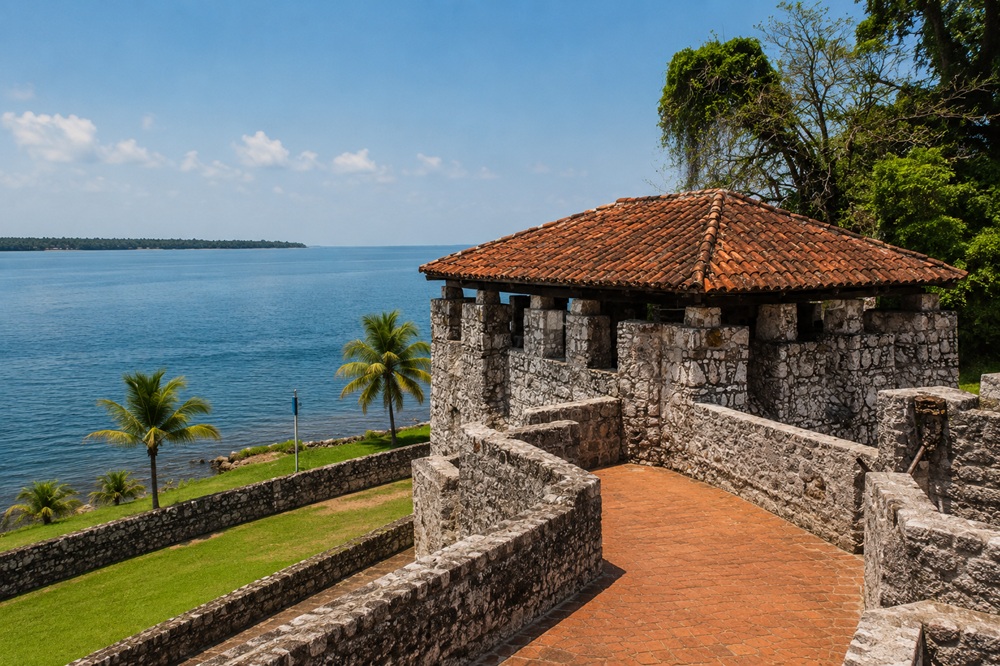
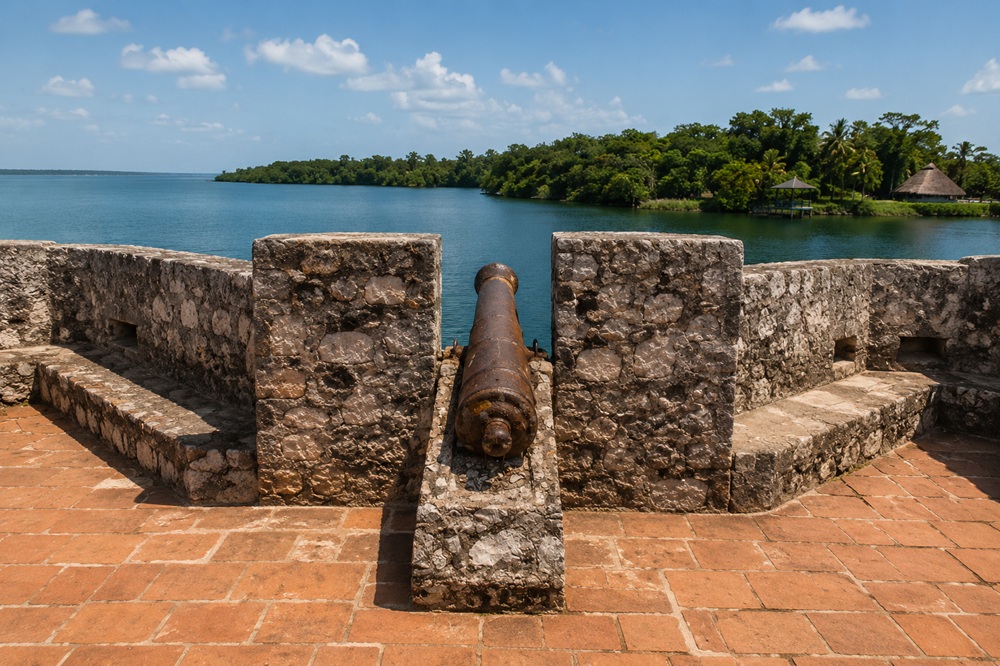
One of the most important features of San Felipe Castle in Guatemala is the Bustamante Tower. It's undoubtedly one of the key elements of this structure. It's undoubtedly the part that best illustrates its defensive nature.
Of course, the cannons also attract a great deal of attention. This is because they are pointed out towards the water. There are around 19 cannons in total, 17 of which are made of iron and two of bronze. This is another of those details that helps us to imagine the fort’s military importance. Although you’ll see it with your own eyes, we’d like to remind you that this is one of the most photographed spots in the area.
Inside the castle: passageways, dungeons and historic cellars
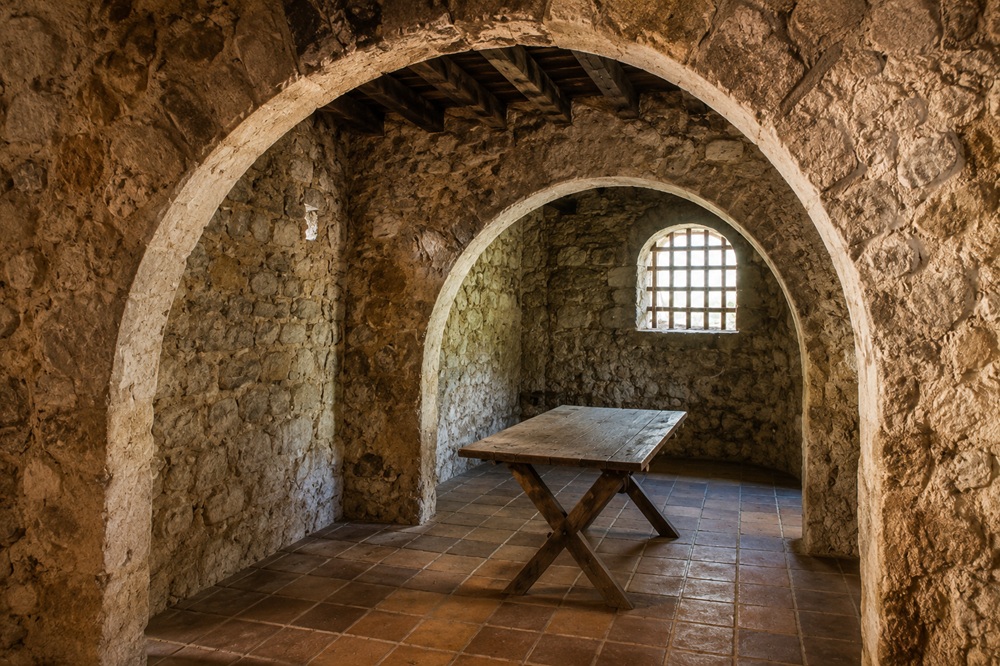
The interior of San Felipe Castle in Guatemala is small but interesting. What’s more, it’s not just about looking at it; you can explore areas such as the inner chambers, as well as the watchtowers and spaces like the storeroom. The tour inside is also particularly special if you’re travelling with children or if you enjoy historical sites that are easy to visualise.
The castle’s natural surroundings: Lake Izabal, mangroves and viewing points
We’ve been talking all this time about the castle itself, but its surroundings are also well worth a mention. This fortress is surrounded by lush vegetation and landscapes typical of Izabal. Although this is sometimes overlooked, it really does set it apart from other monuments in the country.
After the tour, if you’re feeling tired, there are green spaces where you can rest and take a well-deserved break. Many visitors mention the park as one of the highlights of the experience.
San Felipe Castle as part of your trip to Livingston, Guatemala
Sometimes there are places that perhaps don’t quite fit into an itinerary. Instead, we have to put a bit more thought into planning. But that’s not the case here. San Felipe Castle in Guatemala can be visited either before setting out on the Río Dulce or on the way back from Livingston. This place has a very distinct character, shaped by Garifuna culture and a Caribbean atmosphere. That’s why combining both places allows us to see two sides of Izabal: on the one hand, its colonial history, and on the other, the cultural life of the Guatemalan Caribbean.
Combine a visit to the castle with Río Dulce and Livingston in one or two days
If you only have one day, you can visit San Felipe Castle in Guatemala in the morning and then go on a boat trip along the Río Dulce. Although it’s a bit of a rush, with a bit of careful planning you can definitely manage it.
After just two days, the experience is already much better. You can spend the first day exploring the castle or the area around Lake Izabal and staying overnight in Río Dulce. On the second day, you can sail to Livingston, enjoy the journey and spend a few hours or the night there. It’s always best to take it easy so you can enjoy it much more.
Other interesting stops along the route between San Felipe Castle and Livingston
The route between San Felipe Castle in Guatemala and Livingston offers several interesting stops. The most popular include the Río Dulce canyons, mangrove areas, hot springs and small spots where you can observe wildlife along the river. You could also include the Lake Izabal area, especially if you’re travelling by car and want to explore the area with more freedom.
Remember that in Livingston, it’s well worth taking the time to explore Garifuna culture, as well as the local cuisine and Caribbean atmosphere. This will make your trip a more complete cultural experience.
Practical tips for visiting San Felipe Castle in Guatemala
As we’ve seen, visiting San Felipe Castle in Guatemala is straightforward. But it’s certainly worth bearing a few things in mind. The area can be hot and humid, so the experience varies greatly depending on the time of day.
It’s also worth checking opening hours, the full range of services and even prices. This is because, during the high season or on days when local events are taking place, everything can vary.
Opening hours, tickets and services available in the area
Although, as we’ve said, it’s always a good idea to check the details, we can tell you that San Felipe Castle in Guatemala is open every day. Opening hours are from 8.00 am to 4.00 pm. The visit includes a tour of the fortress as well as access to the outdoor areas. As for the price, tickets are usually affordable, but, once again, we recommend checking carefully before your visit or at the ticket office.
What to bring and the best time of day to visit the fortress
If you’re planning to visit San Felipe Castle in Guatemala, it’s best to bring water, sun cream, a cap or hat, and comfortable shoes. Although the walk isn’t long, the heat in Izabal can be quite intense, especially at midday.
Of course, the best time to explore this place is usually in the morning. That’s because the light is better and it’s not as hot. What’s more, it gives you time to visit other areas as well. It’s also worth bearing in mind that you’ll need to carry some cash. Although many places do accept other payment methods, it’s always a good idea to have some cash to hand.
Frequently Asked Questions about San Felipe Castle, Guatemala
How long does it take to visit San Felipe Castle in Guatemala?
This visit usually lasts between 45 minutes and an hour and a half. It always depends on whether you just explore the fortress or spend some time in the park as well.
Can you visit San Felipe Castle in Guatemala from Livingston?
Yes. You can visit the castle from Livingston by boat, as part of a tour of Río Dulce.
Is it worth visiting San Felipe Castle in Guatemala with children?
Yes, it’s a perfect outing for the whole family. It has footpaths, green spaces and the best views of the water.