Rilaj Mam – that is, Maximón – is one of the most fascinating figures in Guatemalan popular culture. Indeed, Rilaj Mam (in the Tz’utujil language), or the ‘Great Grandfather’, is regarded as both a Mayan deity and a saint. In fact, he represents one of the most extraordinary examples of religious syncretism in Central America. Far from being relegated to the collective memory as a myth of the past, Maximón is a living presence who continues to shape the spirituality of thousands of Guatemalans, particularly in the indigenous communities of the west of the country.
The cult of Rilaj Mam originated on the fringes of popular Catholicism in Santiago Atitlán, and has transcended local boundaries to become a symbol of cultural resistance, Mayan identity and social justice. His presence in numerous temples and countless homes maintains a deep connection with the local population, who regard him as a protector, an intermediary and a source of material and spiritual blessings.
Who is Maximón: God and saint
But who is Rilaj Mam or Maximón? Essentially, he is a Mayan deity and folk saint depicted in various forms by the Mayan peoples of the highlands of Guatemala. His character is fundamentally syncretic, blending elements of pre-Columbian Mayan mythology with biblical and Spanish colonial influences.
Analysts believe that the modern figure of Maximón is a blend of various historical, biblical and Mayan mythological figures, including Pedro de Alvarado (the Spanish conquistador), Judas Iscariot (Jesus’s treacherous disciple), Saint Peter and the Mayan deity Mam.

Visual representation
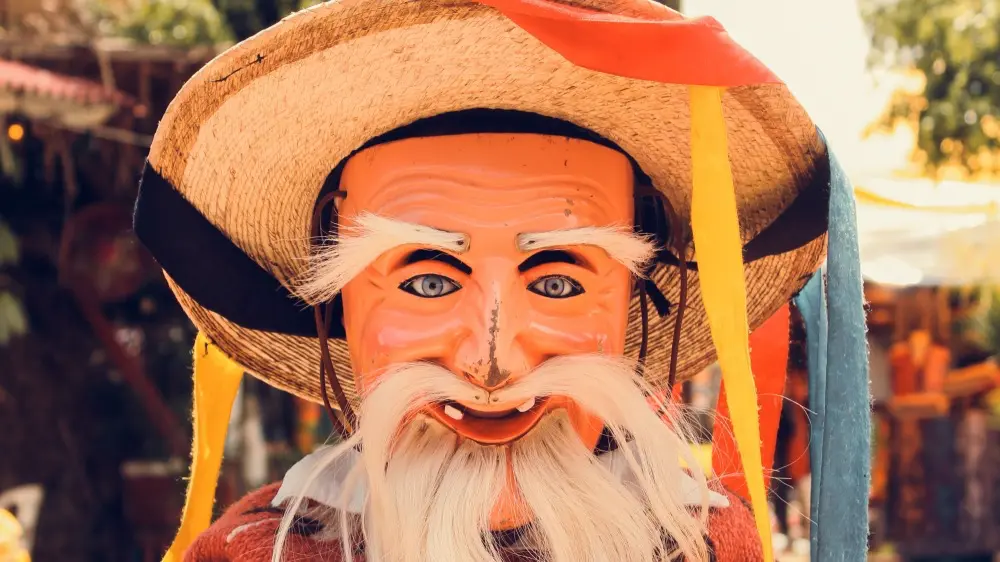
He is usually depicted as a man in a black suit, wearing a large hat, a moustache and holding a lit cigarette. In Santiago Atitlán, the figure is often depicted wearing colourful garlands and scarves wrapped around his body. And in Zunil, he wears glasses and a bandana-style scarf. The most traditional depiction is that of a wooden figure wearing a hat, either armless or with short arms, often with his head upside down.
Generally speaking, he appears as a white man, with characteristics that reflect his dual nature as both protector and deceiver.
Myth
Maximón represents both light and darkness, possessing powers for both good and evil. In the Tz’utujil tradition, he is regarded as the ancestral ‘Great Grandfather’, as ancient as the existence of the indigenous peoples. He is also an intermediary between the earthly realm and the gods, possessing the ability to know the past, see the present and predict the future. He is often portrayed as a champion against the injustices suffered by indigenous peoples
He is also known as San Simón, El Monchito, Laj Mam or even Don Pedro (in reference to Pedro de Alvarado). Other nicknames include ‘el Doctor’ and ‘el Angel’.
- This page about Tikal may interest you.
The Story of Maximón
The worship of Maximón is believed to have begun at the time of the Spanish conquest of the Maya, in the 16th century. The designation of Maximón as a ‘saint’ is the result of religious syncretism, whereby the Christian conquistadors attempted to eradicate the ancient Mayan deities but ultimately adopted the figure of ‘San Simón’ to replace them.
The legends of the origins of Rilaj Mam
There are several versions of the origin of Maximón, each reflecting different aspects of Guatemalan history and mythology. He is thus identified as Kaji' Imox, the last Kaqchikel ruler, or a Mayan ‘guardian’ who resisted the Spanish conquest.
In Santiago Atitlán, an alternative tradition holds that Maximón was never a man, but a wooden figure created by shamans to protect the village from witches.
The syncretism between Maximón and Saint Simon
The syncretism between Maximón and Saint Simon began when the Christian conquistadors realised they could not eradicate the image of the people’s great protector. Consequently, they began to promote the idea that Maximón was one and the same as Saint Simon, who was often associated with Saint Jude, a treacherous figure.
The historical origins of the Maximón cult
It's believed that the cult originated in Santiago Atitlán, an indigenous village in the mountains of western Guatemala, where this sacred figure is said to have been born, and where the brotherhoods ensured that the cult has continued to the present day.
The figure of Maximón appears in the Popol Vuh (the sacred Mayan book) under the name Rijlaj Mam, where it's recounted that in the moments when light first dawned, before the Shapers and Creators fashioned humankind, they deliberated and agreed that the guardians of creation should appear.
Worship of this deity has grown considerably over the last two decades, spreading from the Atitlán region throughout Guatemala and even abroad.
In a globalised world, Maximón stands as a testament to the vitality of Mayan traditions and the ability of indigenous cultures to adapt, endure and keep their spiritual identity alive throughout centuries of history.
- We invite you to read our article about the history and culture of the Garifuna People in Guatemala.
Cultural influence in Guatemala
Maximón is an iconic Guatemalan deity, displayed in museums, depicted on the walls of tourist offices, on postcards and on postage stamps. He has also inspired Guatemalan authors such as the Nobel Prize-winning author Miguel Ángel Asturias and the poet Hugo Carrillo.
Rilaj Mam is regarded as an icon of resistance and justice within the Guatemalan community. Its story serves as a reminder of the importance of fighting for the rights and dignity of the most vulnerable, and of how solidarity and mutual support can overcome oppression.
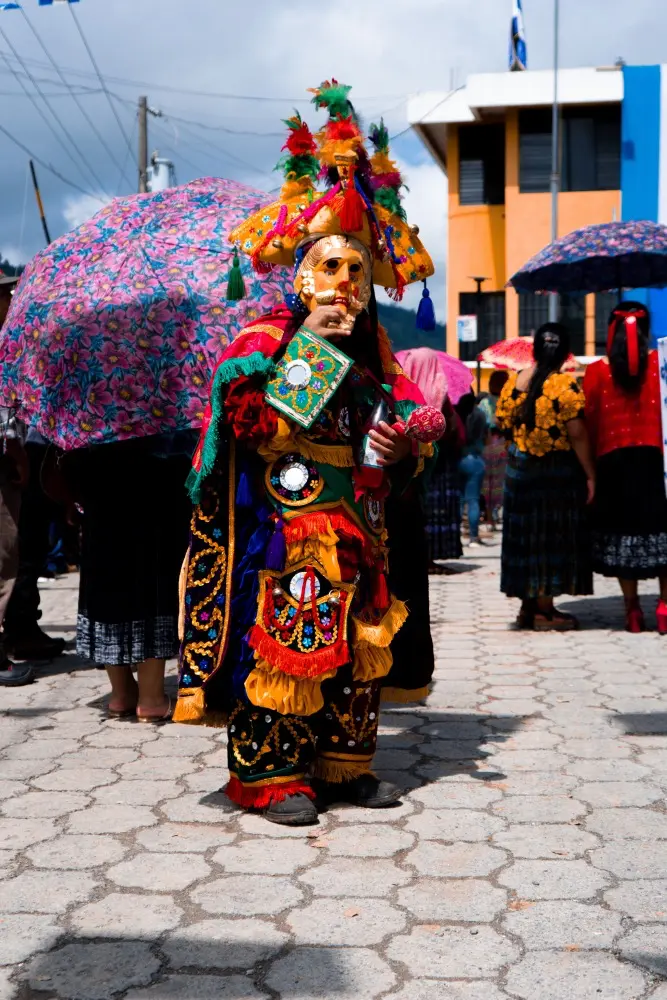
Holy Week and Rilaj Mam
Maximón is the finest example of religious transmutation in Guatemala, where the Catholic faith has been ‘adapted’ to incorporate the gods, goddesses, rites and ceremonies of the indigenous peoples, whilst simultaneously integrating elements specific to Catholicism.
This syncretism is particularly evident during Holy Week, which in Guatemala is a unique experience where Catholic and Mayan traditions intermingle.
Good Friday is one of the most important moments in the celebrations and represents the link between the ancestral world and the present. Furthermore, during the Procession of Grandfather Rilaj Mam, the saint returns from the chapel to the community along a route that symbolises the protection and guidance he offers to the villagers.
Maximón as a symbol
The image of Rilaj Mam or Maximón is displayed in museums, tourist information offices and on postcards. Its presence within Guatemala’s official tourism infrastructure confirms its status as a recognised cultural symbol of the country.
The San Andrés Itzapa temple is one of the most popular shrines to Maximón in the region. People travel from all over Guatemala, Mexico, El Salvador and Belize to burn offerings for him. This represents a significant flow of religious tourism, with pilgrims arriving especially for 28 October.
- We invite you to read our article about Mayan rituals in Guatemala.
Maximón’s ‘homes’ in Guatemala
Although the cult of Rilaj Mam originated in a very specific part of the country, his figure has now gained a significant presence throughout Guatemala, with certain regions standing out in particular in this regard. Nevertheless, his statues, figures and depictions can be found throughout the country.
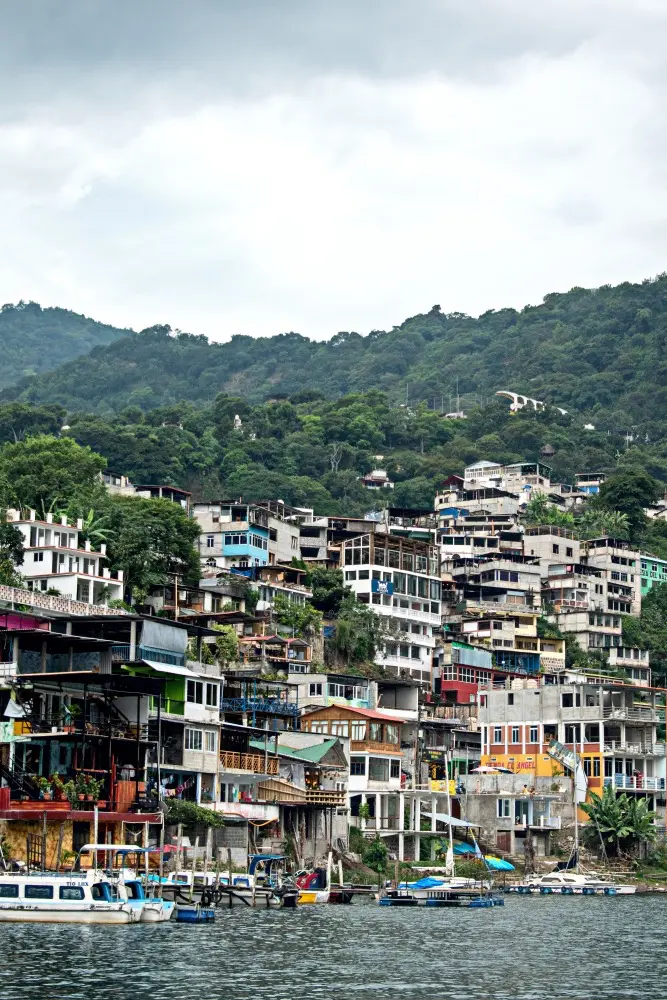
Santiago Atitlán (Sololá)
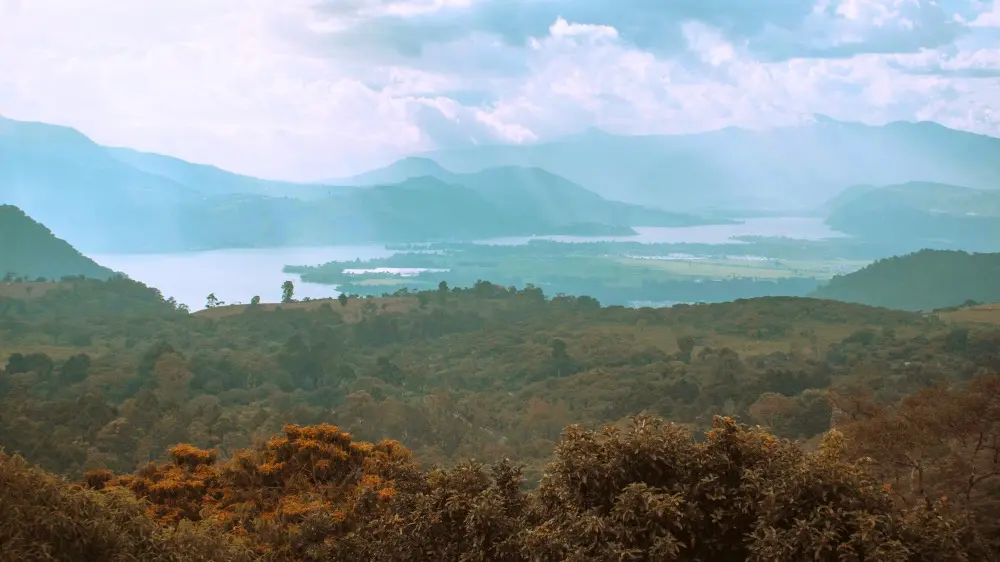
Santiago Atitlán is where the cult of Maximón takes its most ancient and indigenous form. This Tz’utujil Maya village in the mountains of western Guatemala is regarded as the cradle of this sacred figure and of the brotherhoods that have ensured the cult’s survival.
The statue of Maximón is housed in a different house each year. It's normally only taken out of this house during Holy Week, after which it moves from one home to another, but it's on display all year round due to the popularity of the pilgrimages
The saint is accompanied by loyal attendants or brotherhoods, a group of men who spend the whole year tending the altar, overseeing the offerings and ceremonies, tending the candles and incense, and keeping Maximón’s cigarette alight. The brotherhood is not merely a religious organisation, but also a social structure that fosters community cohesion and the passing on of ancestral knowledge.
There are no signs, leaflets or websites that show Maximón’s location in Santiago. The only way to find him is to ask the locals in Spanish.
How do I get to Santiago Atitlán?
To get to Santiago Atitlán, you need to travel by car from Guatemala City to the department of Sololá. The journey takes approximately 3 hours, covering a distance of around 130 kilometres. You can take a public bus or a taxi. Once in Sololá, you can take a boat from the port of Panajachel to reach Santiago Atitlán.
San Andrés Itzapa (Chimaltenango)
San Andrés Itzapa, a town not far from Santiago Atitlán, is deeply devoted to the figure of Maximón. Rather than having shrines in people’s homes, in 2011 the town completed the construction of a huge temple in his honour, at the opposite end of the town from the Catholic church.
The unique Maximón festival takes place in this small temple and is held every 28 October: St Simon’s Day. However, thousands of devotees visit the temple every day to pay their respects and pray for love, money, health or protection for their families. As part of the offerings, maize, flowers and candles are publicly burnt by the shamans in honour of the deity. The faithful bring cash, alcohol and tobacco cigars.
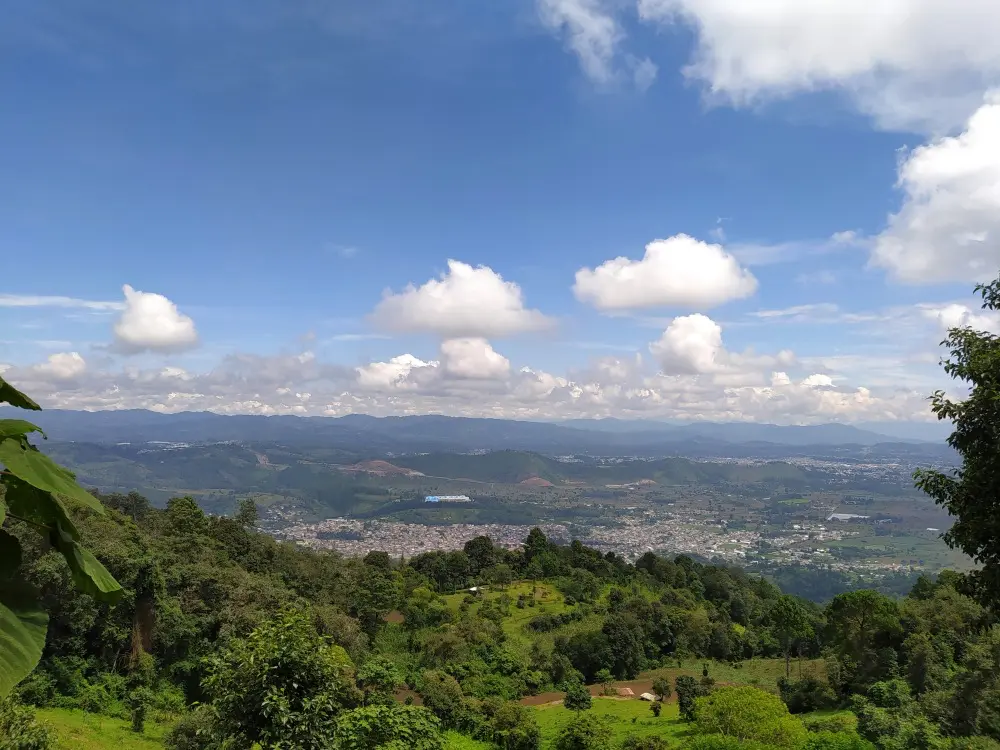
How do I get to San Andrés Itzapa?
To get to San Andrés Itzapa, you need to drive for about two hours from Guatemala City towards Chimaltenango. You can also take a public bus or a taxi. San Andrés Itzapa is 60 kilometres west of the Guatemalan capital.
Zunil (Quetzaltenango)
Maximón’s location changes every year in Zunil. The priests of his brotherhood also look after him. The distance to Guatemala City is around 200 kilometres.
- We invite you to read our article about the origins and significance of the Mesoamerican ballgame.
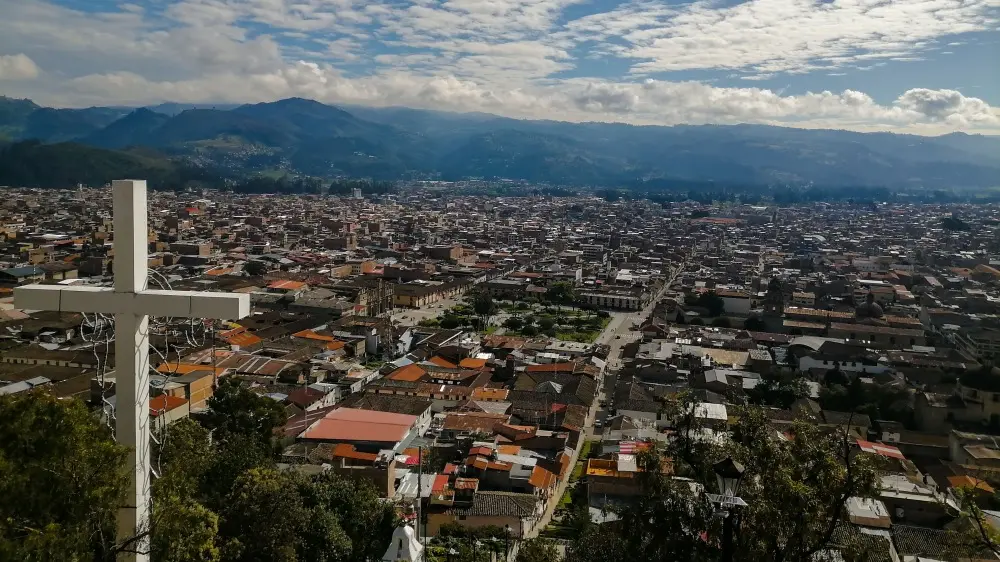
Tourism based on exploration and discovery
In Santiago Atitlán, home to perhaps the most famous statue of Maximón, visitors are encouraged to try to find it, but with certain considerations in mind: primarily, to ask in Spanish, to dress respectably and to pay the suggested admission fee.
The worship of Maximón has different origins depending on the town:
- Among the indigenous Maya people, he is primarily regarded as Rilaj Mam (Great Grandfather), an ancestral guardian deity.
- Among the Latino or mestizo population, he is mainly known as Maximón or San Simón, and his cult is practised primarily within this group. People offer him the ‘cigar prayer’ and it's said that he helps with matters relating to money, business and relationships. His image is often found in bars.
Frequently Asked Questions about Rilaj Mam or Maximón
Why is Rilaj Mam also known as Maximón?
The name ‘Maximón’ comes from the Tz’utujil-Maya language: ‘Ma’ is a term referring to a man (meaning ‘lord’), and ‘Ximon’ means ‘tied’ or ‘knot’. This etymology is linked to the oral tradition which identifies him with Kaji’ Imox, the last ruler of the Kaqchikel Maya people during the Spanish conquest, who died after being tortured.
Is Maximón Satan or a genuine saint?
Maximón is viewed in very different ways depending on one’s perspective. He may be Satan or a figure associated with black magic. Or a legitimate Catholic saint. To his devotees, in any case, he is a great protector with magical powers.
Where can you find Maximón in Guatemala?
The main places where it's particularly prominent are Santiago Atitlán, San Andrés Itzapa and Zunil. However, examples of it can be found throughout the country.
What offerings are made to Maximón and how is he worshipped?
Popular offerings include cash, tobacco, alcoholic drinks, candles, flowers, maize or certain herbs. As for specific rituals, cigars are often used in prayers, and devotees even pay the guides to receive blessings.
What can you ask Maximón for?
You can ask them for anything from lovers to wealth, health and curses on your enemies. Anything goes, and their devotees are convinced that their requests are always granted. Each colour of candle has a specific meaning relating to the requests.