In many ways, Guatemala is an open-air museum. And this is thanks to the muralism and street art that have been such a prominent and vibrant part of the country for some time, acting as a social mirror that sheds light on Mayan history and the country’s current situation. Discovering these creations on a trip to Guatemala is a way of getting to know the country and gaining a much better understanding of its social, political and cultural reality.
Walking past the façades along the main streets of Guatemalan towns and cities is like taking a history lesson on the region. From 20th-century murals to the most contemporary expressions of street art, the country has found a form of expression in this type of art. And in this article, we’ve put together a short, basic guide so that, during your trip, you can discover and understand Guatemala’s most important murals.
The history and significance of Guatemala’s murals
The origins of Guatemalan muralism
The golden age of Guatemalan murals began in the mid-20th century. It was spurred on by the October Revolution of 1944 (a civil-military uprising that overthrew the government that had succeeded the dictator Jorge Ubico) and was subsequently developed by the modernisation and democratisation that followed. During the 1950s and 1960s, the government strongly promoted the integration of art with monumental architecture.
One of the finest examples of this integration was the murals created at the Civic Centre, where techniques that were highly innovative for the time were employed. It was here that Guatemalan muralism first emerged.

Indigenous and colonial influences in urban art
The street art we see on the streets of Guatemala today is a direct legacy of the country’s cultural mix, where the Maya and Spanish peoples fused their cultures and art forms. The styles of graffiti artists and street artists are highly distinctive, drawing inspiration from both pre-Hispanic and colonial heritage. On the one hand, there is a strong presence of geometric figures, colourful patterns and the Mayan worldview. On the other hand, the colonial Baroque style also has a significant influence on these artists’ work, evident in the floral motifs and sacred representations.
The cultural and patriotic significance of Guatemala’s murals
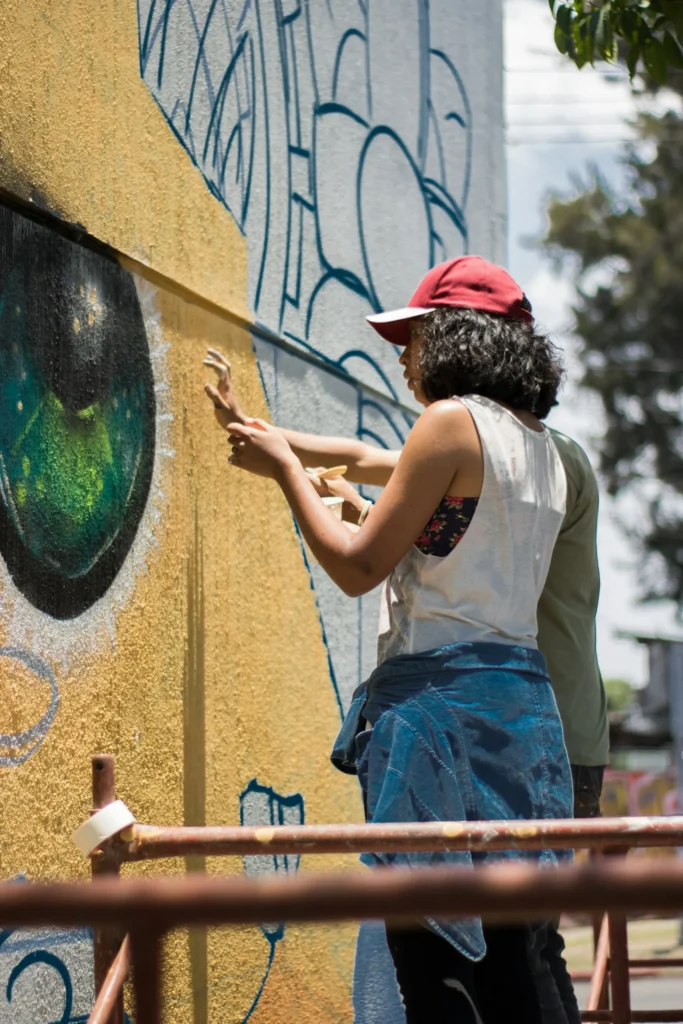
Guatemala’s murals and street art focus heavily on telling the country’s story and conveying its cultural aspects. In this way, they serve as a means of bringing the country’s way of life closer to visitors. But, furthermore, many argue that this type of artwork democratises art by bringing it closer to the people. And not only that: in marginalised and conflict-ridden areas, the creation of these pieces and paintings helps communities to thrive, as it promotes tourism and initiatives for social inclusion and community engagement.
- We invite you to read our article about Guatemalan artists.
Guatemala’s most iconic murals
Including a visit to the murals and street art in your Guatemala itinerary will really enrich your trip, particularly from a cultural and historical perspective. Below, I’ll tell you which pieces you simply mustn’t miss.
Patriotic murals in Guatemala City
Guatemala City, the country’s capital, is the epicentre of national and institutional mural art. Most of the works are concentrated in Zone 1 of the Civic Centre, an architectural and monumental complex that has become an open-air gallery. Here, a visit to admire the murals of the Bank of Guatemala is a must; they are carved directly onto the façade and allegorically narrate the country’s economic history, pre-Hispanic trade and national development. Next, I encourage you to visit the murals at the National Mortgage Bank, where Cubism blends with Mayan abstraction to pay homage to the country’s countryside and industry.
Finally, do pay a visit to the murals at the Guatemalan Social Security Institute, which are truly impressive and depict the history of social security from pre-Hispanic times to the modern era.
Murals in Quetzaltenango and Antigua Guatemala
Outside the capital, we find murals that are much more focused on conveying the colonial spirit and Mayan mysticism. Quetzaltenango, for example, has undergone a major revival as a city thanks, precisely, to these artistic projects. Notable examples include the murals at the Xela Intercultural Centre and those found around the Plazuela de San Antonio.
In Antigua Guatemala, one of the country’s most popular tourist destinations, street art is prohibited on the façades of buildings in the historic centre, as these are World Heritage Sites. However, on the outskirts, in cultural centres (such as the National Art Museum of Guatemala) and in nearby communities such as Jocotenango and San Juan del Obispo, local groups have formed to create art depicting coffee cultivation, the country’s traditions and everyday life.
Contemporary Guatemalan murals in public and educational spaces
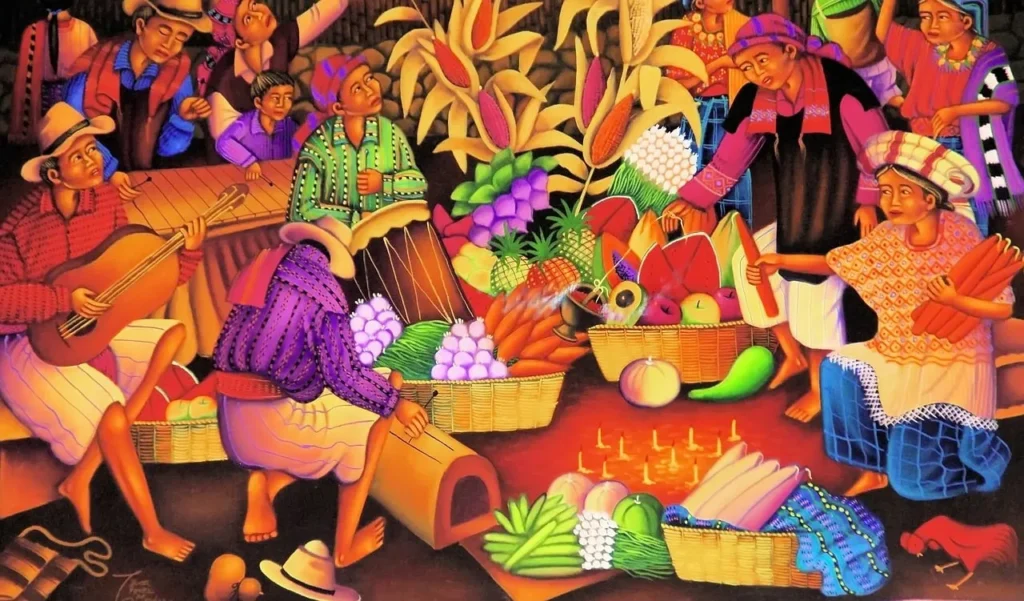
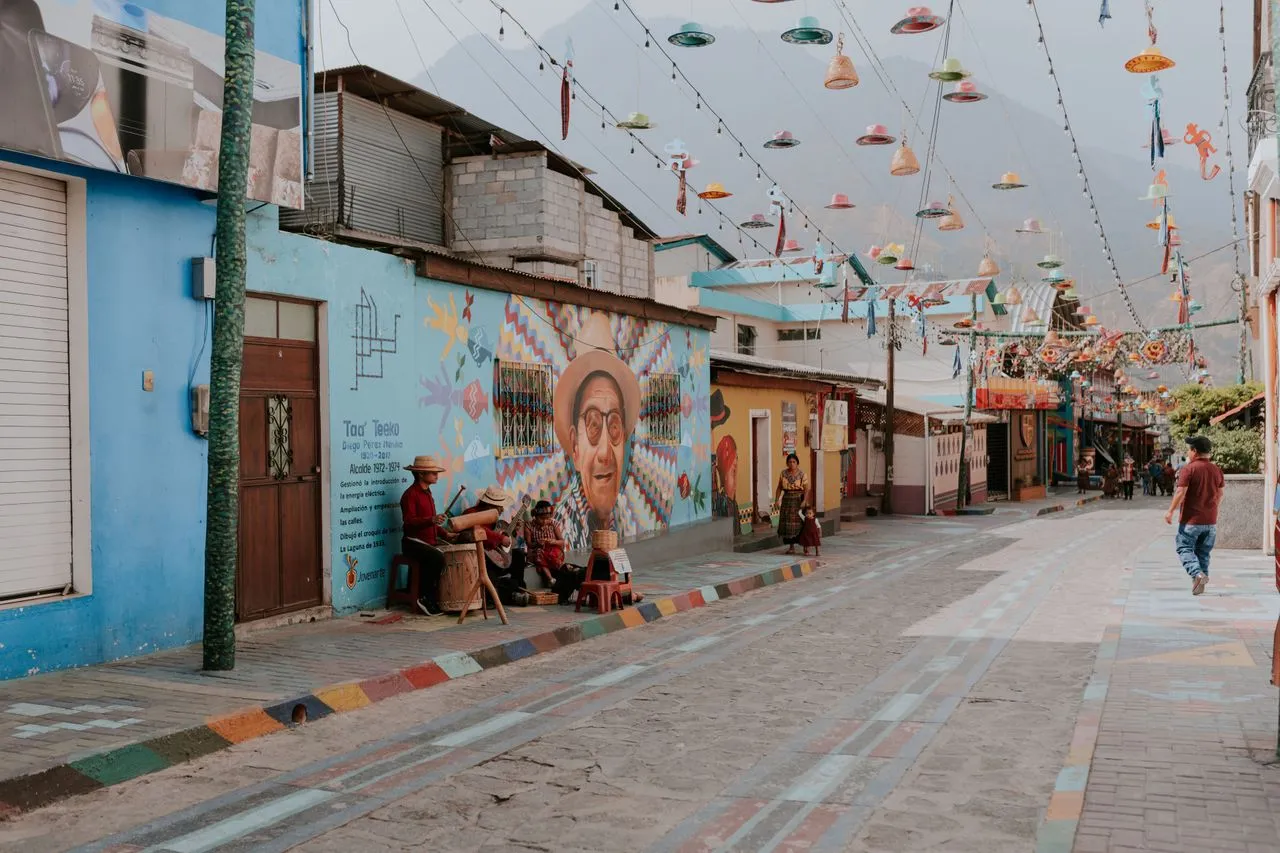
Guatemala’s 21st-century murals are notable for their clear social focus and for bringing urban environments to life. Examples of urban art from this period can be found in the capital’s urban areas, such as the historic centre and Zone 18, and in villages such as San Juan La Laguna, which reflect the Mayan worldview and promote care for nature.
- We invite you to read our article about the Flower Festival in Antigua Guatemala.
Experiences for visitors
Mural and street art tours
These tours take you on a journey to discover Guatemala’s best-known and most distinctive street art and murals, accompanied by an expert local guide who will help you gain a better understanding of their history and significance. Here are some of the highlights:
- Tour of the Civic Centre in Guatemala City.
- A tour of San Juan La Laguna.
Responsible wildlife watching and photography
When visiting Guatemala’s murals and street art, please remember that many are painted or created on the façades of private homes. Therefore, before taking photos or posing in front of them, it would be very polite of you to ask the owners if they are at home. Of course, try not to touch or damage the artworks you visit; respecting them ensures they can continue to exist and remain there for a long time to come. And if you’re planning to visit murals in Guatemala located on the outskirts, try to do so during the day and always in the company of a local guide.
Practical tips for viewing Guatemala’s murals
The best time of year to visit Guatemala’s outdoor murals
Without a doubt, the dry season (November to April) is the best time to visit. As all the murals are outdoors, there’s less chance of rain and you’ll be able to enjoy clear skies during your visit. What’s more, the sun is at its strongest in Guatemala at this time of year, so the colours of the street art will look much more vibrant and make everything look even more beautiful.
Even so, if you’re visiting Guatemala during the wet season, try to see the murals in the morning, as storms tend to break out around midday. That way, you’ll have a better chance of completing the tour without any problems.
How to view murals in different cities across Guatemala
As for the murals at the Civic Centre, because they’re in the city centre, they’re very easy to get to. You can get there by tube, and it’s best to visit at the weekend, when the public buildings there are closed. There’ll be far fewer people around, so you’ll be able to admire and photograph them at your leisure.
The villages on Lake Atitlán, such as San Juan La Laguna, can only be reached by boat from two of the villages that do have road links. Once there, you can explore the whole area on foot. As for the murals in Quetzaltenango, these are located near the historic centre and the Intercultural Centre, which you can reach using the tuk-tuks available in the city.
Safety recommendations and local guidelines
If you have to choose which mural tours to prioritise in Guatemala, I would definitely recommend those in the capital. They are the most interesting and will make your experience completely different from if you were to explore on your own. Also, as an important tip, you should avoid doing this sort of tour after sunset; not only will you not be able to see the murals as clearly, but it's also advisable (especially in outlying areas) to avoid being out and about for safety reasons.
- We invite you to read our article about the dances of Guatemala.
Top 10 patriotic murals in Guatemala that you shouldn’t miss
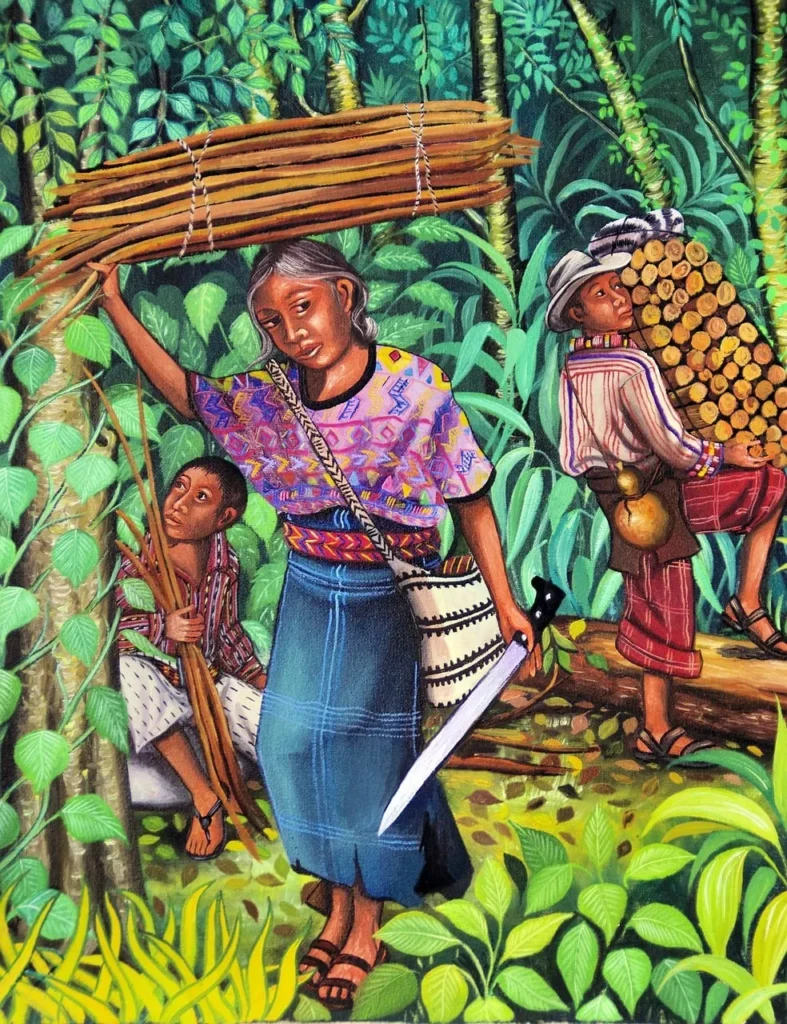
- 'Evolution of the Economy' (Guatemala City) on the west façade of the Bank of Guatemala: a visual account of barter from pre-Hispanic times to the modern era.
- 'Mayan Culture' (Guatemala City) at Crédito Hipotecario Nacional: a fusion of European abstractionism and Mayan geometry.
- 'Ode to the Motherland' (Guatemala City) on the façade of the Crédito Hipotecario Nacional: a tribute to the work of the country’s farmers and industry.
- 'Social Security' (Guatemala City) at the IGSS building: embodying family protection from the moment of birth.
- 'The Weaving of Time' (San Juan La Laguna, Atitlán) on the village’s main streets: it shows elderly Tz’utujil women using the traditional backstrap loom.
- 'Tribute to Efraín Recinos' (Quetzaltenango) at the Xela Intercultural Centre: a portrait of the life and legacy of the architectural genius and creator of Guatemala’s visual identity.
- 'Guardians of the Jungle' (Flores, Petén): depicts jaguars, macaws and native vegetation in a hyperrealistic style.
- 'The Face of Jacaltenango' (Huehuetenango) in the town centre: it celebrates the pride of the Popti' Maya woman, dressed in her ceremonial attire and featuring the sacred hummingbird.
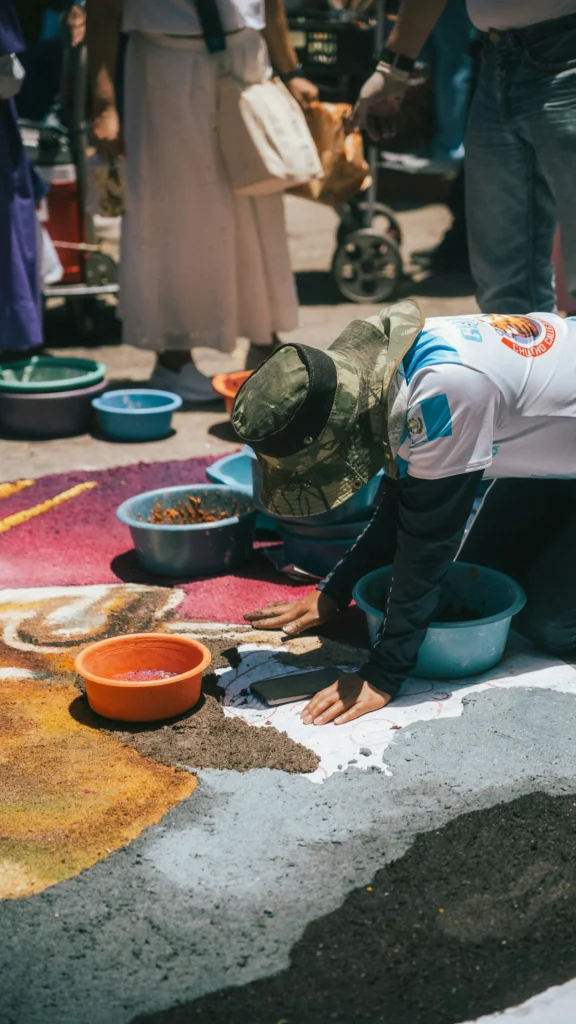
- 'Lent-themed Prints' (Jocotenango, Sacatepéquez): exploring the mystique of the sawdust carpets and the cones of Holy Week.
- 'Roots of the Future' (Zone 4, Guatemala City): this is a striking large-scale graffiti artwork that combines the face of an indigenous girl with technology and nature.
Checklist of urban art and mural routes in Guatemala
- Route 1: The Civic and Historic Centre (Guatemala City).
- Route 2: The Splendour of the Tz'utujil Maya (San Juan La Laguna, Atitlán)
- Route 3: The Heart of the Altiplano (Quetzaltenango / Xela)