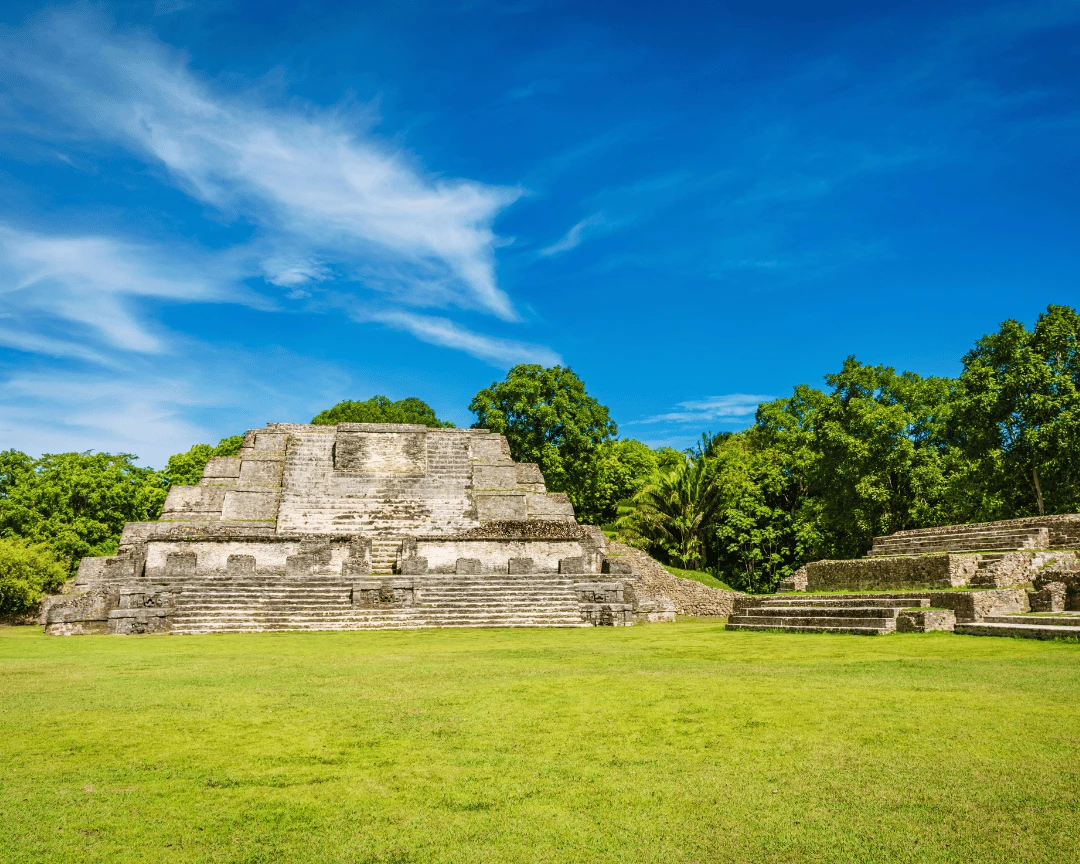
The North Acropolis at Yaxhá is one of the most striking sights in the park, as it combines two elements that make Petén feel truly ‘epic’: Mayan architecture perched high above the ground and sweeping views of the jungle and the lagoon. It is not just a collection of structures; it is a place designed to dominate the landscape, to observe, to gather and to understand Yaxhá from above.
In this guide, we’ll tell you what the North Acropolis is, why it’s worth including in your itinerary, how to get there as part of your tour, what to see once you’re there, how to combine it with other parts of the park, and what to bring so you can enjoy it at a leisurely pace.
If you’d like some official information about the site, here’s the tourist guide to Yaxhá. And if you’re planning a trip to Guatemala, this website will help you locate Petén on the country’s cultural map.
What is the North Acropolis of Yaxhá?
The North Acropolis is one of the most notable architectural complexes within Yaxhá. Put simply, it is an elevated area comprising various structures (platforms, temples and interconnected spaces) that form a ceremonial complex. It is called an ‘acropolis’ because it functions as an elevated hub: a point of visual and symbolic control over the surrounding area.

What makes it special within Yaxhá is its strategic location. From here, you can appreciate the relationship between the city and the landscape: the jungle, the lagoon and the park’s internal paths. Furthermore, it is a complex that is explored as a system, not as a single isolated pyramid. This makes the visit more interesting: it is not just a matter of ‘climbing up for a photo’, but of walking through the complex and understanding how ceremonial life was organised.
Why is the North Acropolis a must-see during your visit to Yaxhá?
Because the North Acropolis encapsulates what many people are looking for in Petén: imposing Mayan structures, a sense of height, and a perspective that completely transforms the visit. Yaxhá is a vast site with several key points of interest, but the North Acropolis is often the place where visitors have that ‘aha’ moment and feel they are in a real Mayan city, not just on a path lined with ruins.
What’s more, there’s a very practical reason: if you’re heading to Yaxhá for its viewpoints and scenery, this site is a must-see. From the top, the landscape opens up and you see the park in a whole new light. Even if you’re not particularly interested in history, the North Acropolis is well worth a visit for the visual experience and the atmosphere alone.
And if you’re planning a trip around Petén, the Northern Acropolis fits perfectly into an itinerary that combines nature and archaeology without repeating the same experiences. For example, you could combine it with Lake Macanché, or with a fascinating archaeological addition in the same area, such as the ruins of Nakum.
History and function of the North Acropolis, Yaxhá
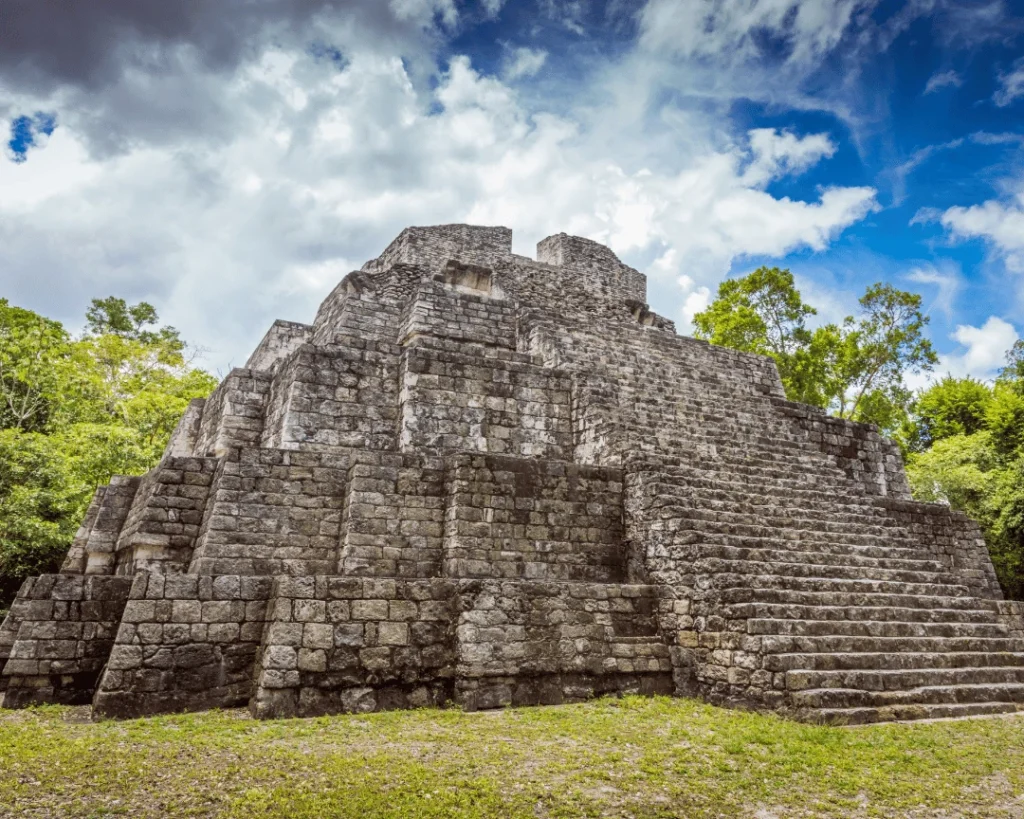
The North Acropolis is best understood when viewed as a multi-purpose site. In the Mayan world, elevated complexes were not merely ‘pretty’ or ‘tall’. They were spaces of power, ritual and performance: places where ceremonial activities were concentrated and where architecture reinforced hierarchies.
At Yaxhá, the North Acropolis is part of this logic. Its layout, with interconnected structures, suggests a planned use of space, where the plaza, platforms and temples fulfilled complementary roles. Walking through it with that idea in mind makes the visit more rewarding: you begin to see the city as a system, rather than as a collection of individual buildings.
The origins of the complex and its role in the ancient Mayan city
The site is linked to the development of Yaxhá as a Mayan city within the Petén corridor. Its elevated position is no accident: it allows for visual control, a symbolic presence and a connection with the landscape – something of great importance in cities where the territory and the surrounding environment were integral to the political and religious imagination.
In practice, this means a space designed to be experienced from various angles. It’s not just about reaching the top: it’s about walking around, looking out over the lagoon, returning to the square, and changing your perspective. The North Acropolis was designed to guide the experience.
Main structures and the development of the complex over time
As is the case with many Mayan complexes, the North Acropolis is not understood as a structure built ‘all at once’. The complexes were transformed, extended, built upon and reconfigured according to phases of power and ceremonial use. This explains why, as you walk through it, you sense a sequence of spaces and platforms, rather than a single dominant building.
This development also helps visitors understand something important: the Acropolis is not just a viewpoint, but a complex with a rich architectural history. And this ‘layered’ nature is part of its appeal.
How to get to the North Acropolis as part of the Yaxhá tour
Getting to the North Acropolis is easy if you follow the natural route through the park. The key is to plan your day so you visit it whilst you still have plenty of energy, because although it isn’t a particularly steep climb, you’ll enjoy it more if you take your time rather than rushing.
Recommended route from the entrance and the central square
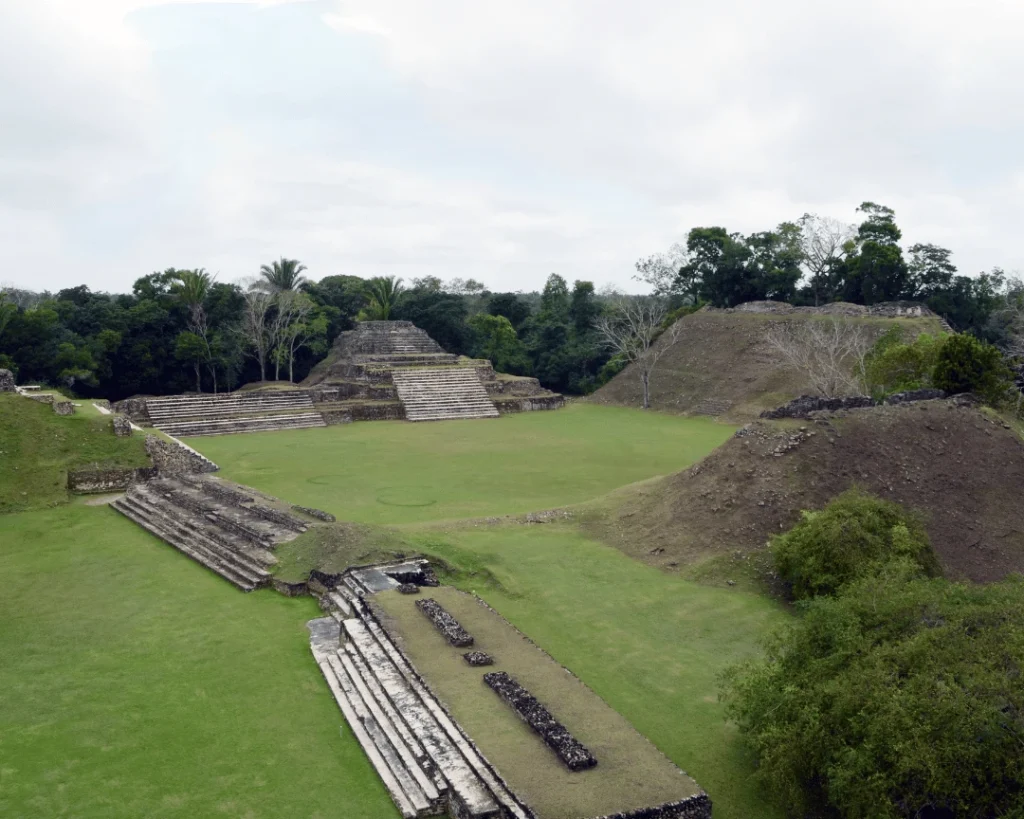
A route that usually works well is to start with an orientation section (the entrance and the first few paths), move through the central area to get an overview of the site as a whole, and then head towards the North Acropolis. This allows you to arrive with some context: you’ve already seen how Yaxhá is laid out, and when you climb up, the view all makes sense.
If you’re spending a full day at Yaxhá, this suggested route will help you avoid retracing your steps and keep up the pace for the day. What’s more, the North Acropolis usually fits in well before you spend the final part of your visit at the viewpoints and taking in the scenery.
Approximate duration of the visit and level of difficulty of the climb
As a guide, allow at least 45–90 minutes for the North Acropolis, including the climb, the tour and any stops. The climb is usually manageable for most visitors, but the heat and humidity can make it feel more strenuous than it appears. It is therefore advisable to take it slowly, take short breaks if necessary and drink water before setting off.
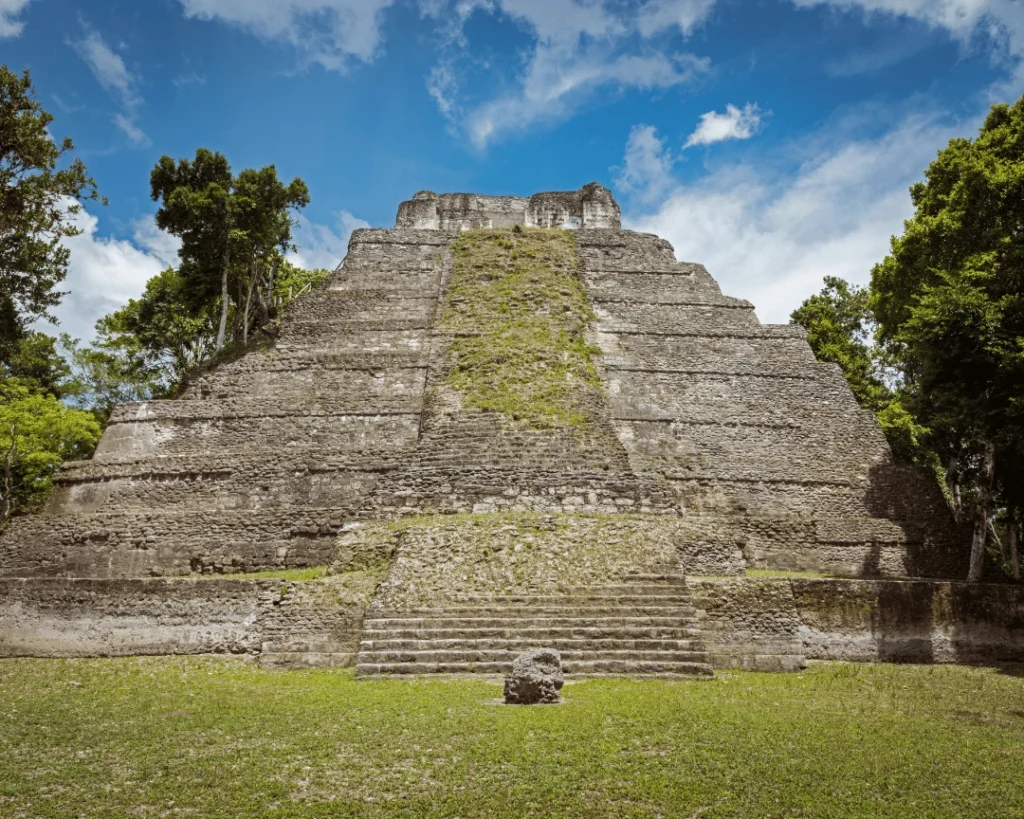
The level of exertion is moderate: you don’t need any special preparation, but you do need comfortable footwear and a steady pace. It’s not about who gets there first; it’s about getting there in good shape.
What to see at the North Acropolis of Yaxhá
There are two reasons to enjoy the North Acropolis: the site itself and the views from there. The key is to view the space as a system: how the platforms connect, how the views open up, and how the experience changes as you move from one point to another. It’s not a place to arrive at, take a photo and leave; it’s a place to explore at a leisurely pace, understand its structure and allow time for the view, because Yaxhá is much better appreciated from above.
A handy tip before you start: when you reach the top, don’t just stay at the first vantage point. Walk around for a few minutes, look at the square from different angles and see how the layout encourages you to move around. That ‘circulation’ is part of the experience and also helps you find the best vantage points without needing to know the map.
The main pyramids and temples of the complex
Within the complex, you’ll find elevated structures, platforms and temples arranged along a specific route. The interesting thing is that you’re not in ‘a pyramid’; you’re in a group of buildings that function as a single entity. You can see this in the way you walk through it: you go up, cross over, go up again, change level and look down on the square from above. As you move through it, the space opens up and closes in, and this interplay of heights gives you a very clear sense of how the architecture was designed to direct your attention.
This kind of tour helps you to imagine what life was like in this complex: where people gathered, where they looked out from, which spots were most visible, and how certain spaces function as a ‘stage’. What’s more, as you move between platforms, you begin to understand that the experience here is not just visual, but also physical: walking is the way to ‘read’ the place. At the North Acropolis, movement is part of the visit.
If you want to get even more out of it, stop briefly at each change of level. You don’t need to stay long: just taking a look for 30 seconds and changing your angle is enough to see how the whole scene changes. And if you’re with a guide, make the most of it and ask about the purpose of each area, as this usually makes the tour much more meaningful.
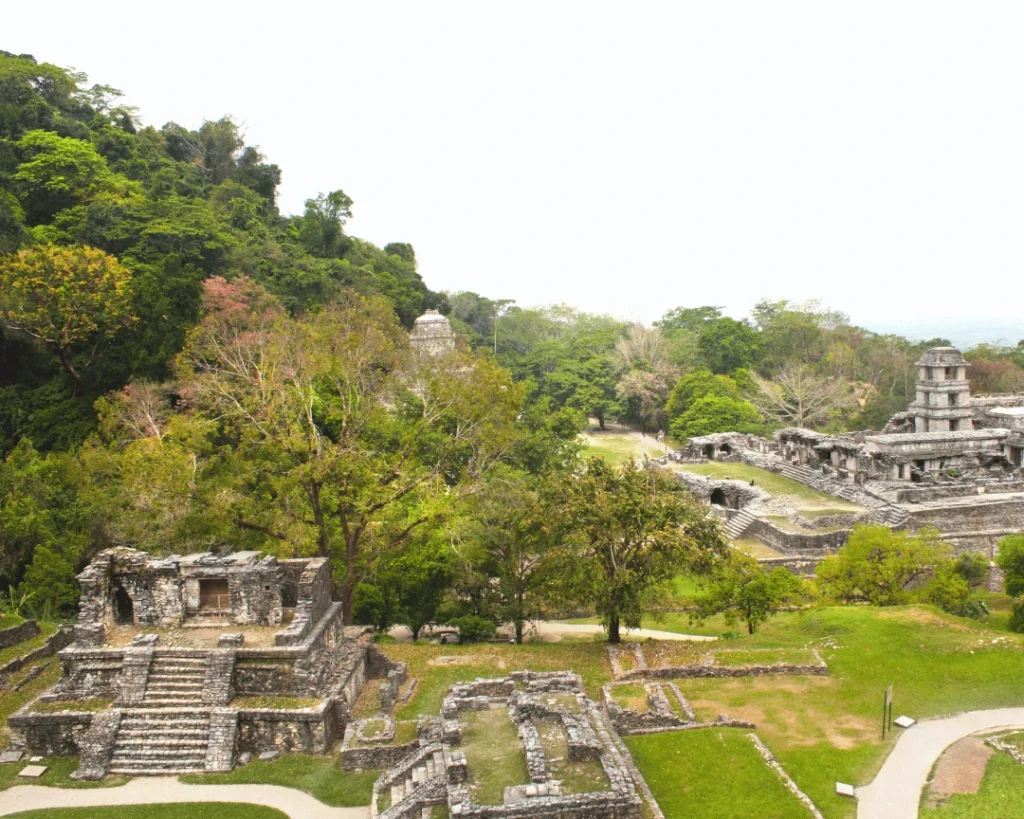
Viewpoints and views over the jungle and Yaxhá Lagoon
This is one of the main reasons to visit the North Acropolis: the views. From up here, the jungle stretches out like a sea of green and the lagoon appears as an integral part of the Yaxhá landscape. It’s the perfect moment to stop, take a breath and enjoy the moment at your own pace. Here you truly understand why Yaxhá feels so different from other places: the combination of ruins and water, right in the heart of the jungle, is incredibly powerful.
If the day is clear, the view is crystal-clear and photogenic, and you can experiment with wide shots to capture the relationship between the structures and the landscape. If there’s mist or clouds, the atmosphere becomes more ‘Petén’: softer, more mysterious, more jungle-like. In both cases, it’s worth staying for a few minutes in silence. Often, that moment is the strongest memory of the place, because it’s not just what you see, it’s what you feel: the humidity, the sound of birds, the gentle breeze and the sensation of being above the forest.
One last tip: when you find your favourite spot, don’t spend all your time on your phone. Take a photo, sure, but then put your phone away and just take a moment to look around. It’s a place you’ll enjoy much more if you take your time.
The North Acropolis of Yaxhá as part of your visit to Yaxhá-Nakum-Naranjo Park
The North Acropolis fits very well into a full tour of the park, as it serves as the highlight of the itinerary. If you’re visiting Yaxhá as part of a wider itinerary (including other complexes or even other nearby sites), the key is to organise your day into blocks: walk, climb, rest, walk again.
How to combine the North Acropolis with other sites at Yaxhá in a single day
A well-organised day usually alternates between:
- A series of trails and open spaces to get you started.
- North Acropolis as a stronghold (while you still have energy).
- Break (water, snack, shade).
- The final stretch features scenic viewpoints and beautiful scenery, and is less physically demanding.
If you’d also like to round off your archaeological experience without repeating the same activities, we highly recommend including the Nakum ruins in your overall itinerary (over one or two days). And if you need to balance all that sightseeing with some downtime, Lake Macanché is the perfect fit.
The best time of day to visit the North Acropolis and enjoy the view
The North Acropolis is particularly enjoyable at two specific times:
- Early in the morning, for the cooler weather and peace and quiet.
- At the end of the day, because the light is fading and the landscape takes on a warmer hue.
If your plan includes watching the sunset at Yaxhá, it’s best to adjust your itinerary so that you finish at a viewpoint with good light. In that case, you could visit the North Acropolis in the middle of the day, saving the viewpoints for the end. The important thing is not to rush: hurrying up the steps and arriving just in time for the ‘perfect moment’ often takes away from the enjoyment.
Practical tips for visiting the North Acropolis at Yaxhá
The North Acropolis is best enjoyed at a leisurely pace, with the basics sorted. You don’t need any ‘specialist kit’, but it’s a good idea to be prepared for the heat, the humidity and the pace of the park.
Footwear, water and protection from the sun and damp
Wear comfortable shoes with a good grip, as there’s dirt, steps and areas that may be wet. Water is essential (more than you might think), and sun cream and insect repellent will be a lifesaver. A cap or hat is a great help, especially if the sun is strong.
A simple snack is also handy if you’re going on a long hike. And if you like taking photos or using maps, a power bank is usually a good idea: in Petén, your mobile phone gets used more than you might think.
- We invite you to read our article about The Lost World of Tikal: One of the oldest sites in the park.
Safety guidelines and respect for the archaeological site
Your visit will be all the better if you show respect: stay on the paths, avoid touching delicate reliefs or stones, and do not climb on structures unless permitted. It also helps to walk at a leisurely pace and keep the atmosphere peaceful: part of the magic of Yaxhá lies in the sounds of the jungle and the atmosphere of the place.
If you’d like a general overview of the archaeological site, here’s the tourist guide to Tikal, which is very useful for locating Petén on the route.
Frequently Asked Questions about the Yaxhá North Acropolis
How long do I need to visit the North Acropolis at Yaxhá?
Ideally, you should allow between 45 and 90 minutes, taking into account the climb, the walk around the site and stops to enjoy the views. This time allows you not only to reach the top, but also to walk between the platforms and temples, change your perspective and appreciate the site as a whole (which is what really makes it interesting). If you’re with a guide, it might be a bit quicker as the pace is usually dictated by the group’s itinerary; if you’re on your own, you’ll normally spend more time at the top, especially if there’s a clear view over the jungle and the lagoon.
Is the climb up to the North Acropolis difficult?
It isn’t usually technically difficult, but it can feel challenging due to the heat, humidity and stairs. The key is to take it slowly, without sudden changes in pace, and to take short breaks if you need to. With comfortable footwear, water and a steady pace, it’s a manageable climb for most visitors. What’s more, the effort is well worth it because the reward isn’t just reaching the top, but being able to explore the site without your heart racing.
Is it worth it if I'm already going to visit other parts of Yaxhá?
Yes, because the North Acropolis offers a different perspective. Even if you’ve already seen temples or plazas, this site provides a different kind of experience: greater height, a more panoramic view, and a distinct sense of being at a ‘ceremonial viewpoint’ overlooking the landscape. It rounds off the tour very well because it helps you understand the scale of Yaxhá and its relationship with the lagoon and the jungle. What’s more, it’s usually a place where you feel like stopping for a few minutes without rushing, something that doesn’t always happen at other more transient spots.