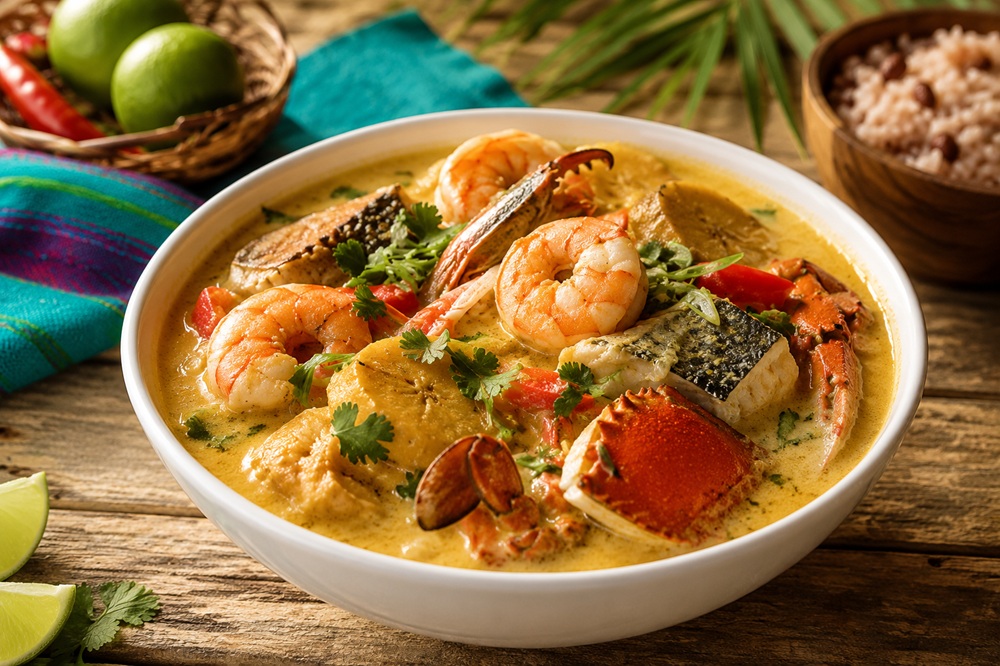
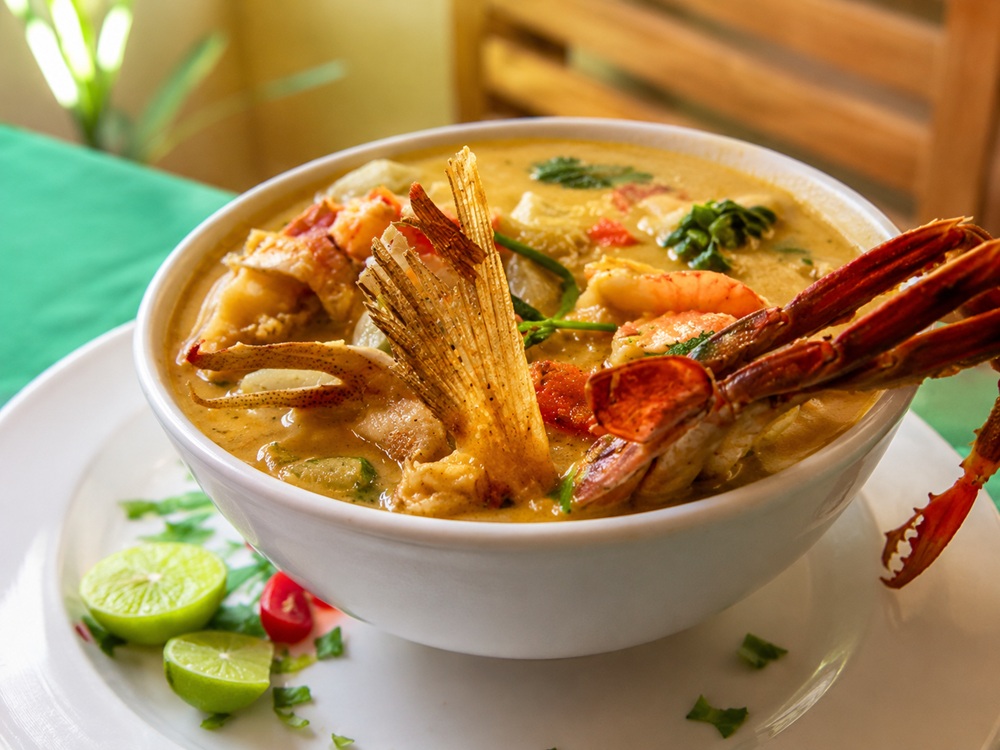
Tapado is one of those recipes that perfectly captures the essence of a place without needing many words. In Livingston, this Caribbean broth made with coconut, fish, seafood, plantain and herbs encapsulates the Garifuna people’s relationship with the sea. But it also reflects their tradition of slow cooking and the flavours that arrive at the table steeped in history.
The seafood stew, served hot and with that unmistakable aroma of coconut milk, is one of the best ways to experience Livingston through its cuisine. It brings together local produce with Garifuna tradition and the character of the Guatemalan Caribbean.
Why does the tapado represent Caribbean cuisine so well?
This dish epitomises Caribbean cuisine because it is made from ingredients that are part of Livingston’s daily life. On the one hand, coconut forms the basis of the stock, whilst the fish and seafood come from the coastal environment. Furthermore, the plantain adds that smooth texture that elevates the dish beyond a simple soup.
When you try it, the first thing you notice is the aroma of coconut milk. Then comes the taste of the sea, the slight herbal note of coriander or samat, and the subtle sweetness of the banana. It’s one of those recipes you really need to savour, because your taste buds will thank you for it.

It also ties in with a very practical cuisine. This is because seafood stews make the most of whatever is locally available. In other words, fish, prawns, crab, blue crab, cassava, green bananas or plantains, depending on the family recipe and what’s in season. That’s why there are so many versions, and each one can have its own subtle variations.
Is it worth trying the tapado in Livingston?
Yes, the tapado in Livingston is well worth trying. In this town in Izabal, it forms part of a traditional cuisine with strong links to the Caribbean, local produce and Garifuna culture.
It’s also a good choice if you want to try something truly representative of the area. Seafood tapado is usually served as a main course, with a rich coconut broth, as well as fish and shellfish, depending on each kitchen’s recipe. So we’re not talking about a light soup for a quick bite. It’s a full meal.
In many restaurants and eateries, tapado is prepared to order or takes longer to cook than other dishes on the menu. That wait is part of the experience, especially if you’re enjoying it near the quay or in a family-run eatery.
If you’re only going to be in Livingston for a few hours, tapado should be high on your list. There are other Garifuna dishes that are well worth trying, but few encapsulate the relationship between local cuisine, the Caribbean coast and everyday life in the town quite so well.
Seafood tapado: Ingredients, flavour and what makes it different
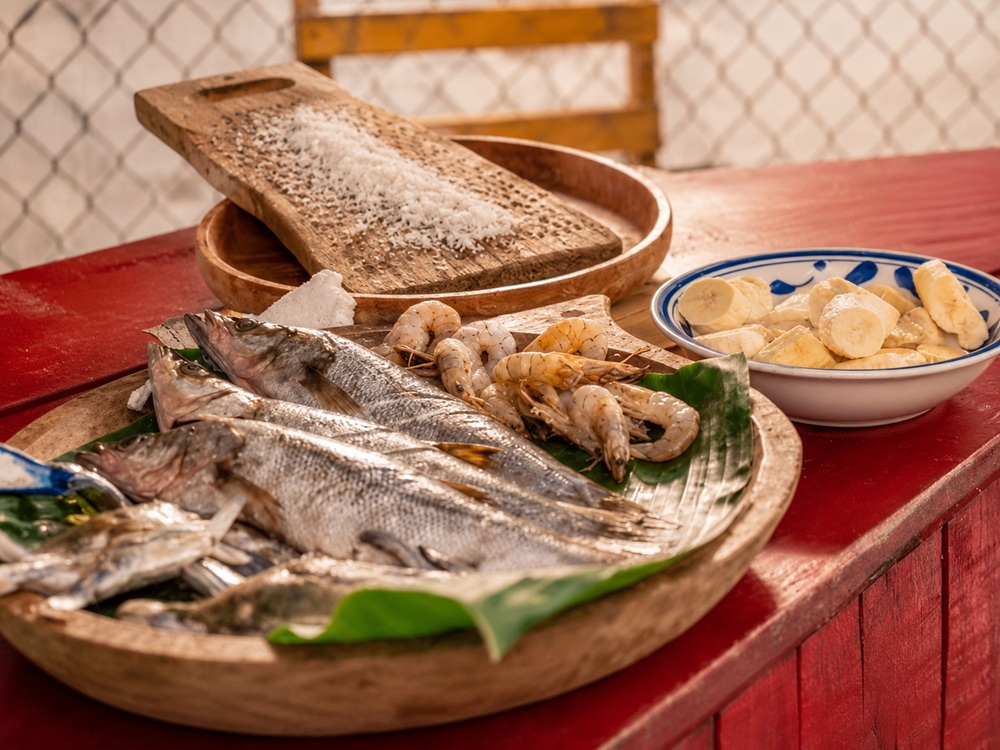
Tapado de mariscos is usually made with coconut milk, fish, prawns, crab or blue crab, plantain, green banana, cassava, onion, garlic and aromatic herbs. The recipe varies from family to family, and from restaurant to restaurant, but the essence of tapado remains the same.

The flavour is creamy and slightly sweet. The coconut milk adds body, the seafood provides an intense depth of flavour, and the banana rounds the whole dish off. When prepared well, it isn’t at all heavy. So it’ll be a real treat for your taste buds and your stomach.
There’s enough broth to eat with a spoon, but there are also pieces of fish, seafood and plantain, which mean you have to eat slowly.
Coconut milk, banana, fish and seafood: The basis of the seafood tapado
Coconut milk is the key ingredient that gives the tapado its distinctive character. In the most traditional versions, the coconut is processed to extract the milk, which is then used to cook the base of the dish. This step sets it apart from a more common seafood soup.
Plain bananas and green plantains add body to the broth. They are included to balance out the saltiness of the fish and seafood. In a good tapado, you’ll notice that every mouthful combines something creamy, something from the sea and something vegetable-based.
As we can see, fish usually takes centre stage, although the seafood tapado takes the lead when prawns, crab, blue crab, clams or other available seafood are included. The key is to ensure the seafood is not overcooked and retains its texture.
The herbs add the finishing touch. That’s why coriander, samat and local spices bring a touch of freshness. So, when it’s done properly, it doesn’t just taste of coconut – it tastes of Caribbean cuisine and the freshest ingredients of the day.
What sets tapado apart from other soups and stews from the Guatemalan Caribbean?
The main difference lies in the balance. Tapado shares ingredients with other coastal dishes, but its distinctive character comes from the combination of coconut milk, seafood, plantain and a generous amount of stock. So you can’t say it’s simply boiled seafood or a coconut cream soup with fish.
Unlike other dishes such as machuca, where mashed plantain takes centre stage, tapado keeps the broth as the main feature.
Part of the charm of tapado lies in the fact that it isn’t eaten in just one way. First comes the broth, creamy and aromatic; then the fish appears, the plantain blends with the coconut, and each type of seafood adds a different nuance. It is this succession of flavours that makes the dish so memorable long after you’ve tasted it.
- We invite you to read our article about the Dance of the Palo Volador.
Tapado and Garifuna culture in Livingston
The tapado is so closely associated with Livingston because it stems from a style of cooking that is deeply rooted in the sea and the daily life of the Garifuna community. It is a dish that reflects how local ingredients are put to good use and how a family tradition is kept alive.
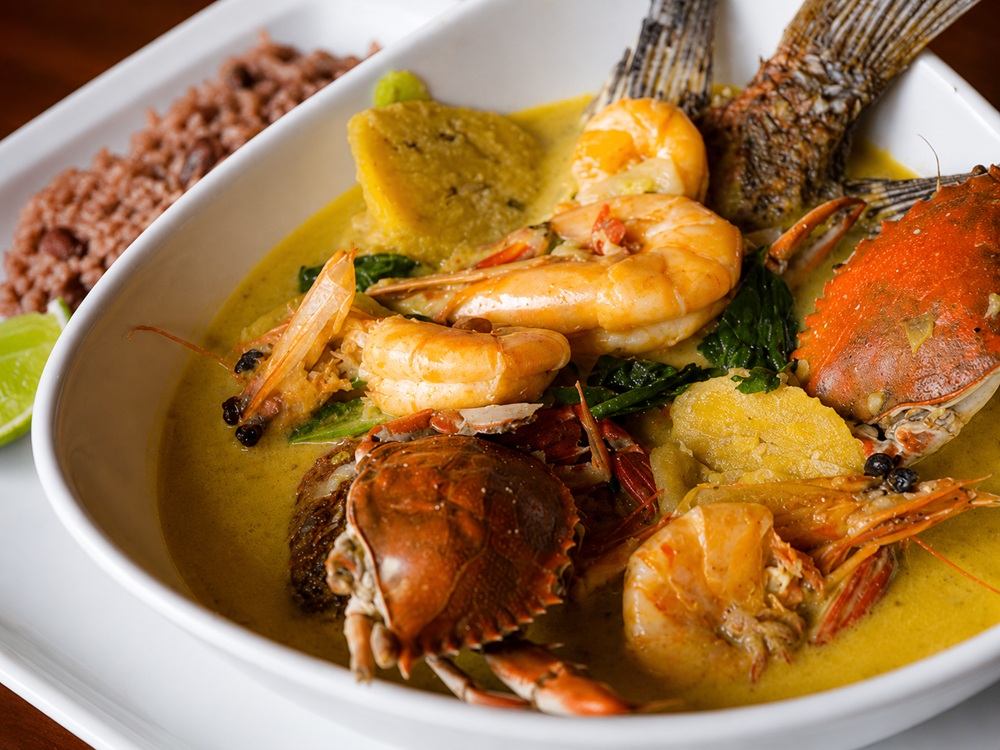
In Garifuna cuisine, ingredients such as cassava, plantains, fish, seafood and coconut milk play a central role. Tapado brings several of these together in a single pot, which is why it helps you appreciate the flavour of Livingston from the very first bite. As well as being creamy and full of the flavours of the sea, it is aromatic and has that unmistakable Caribbean touch.
What’s more, there’s more to the tapado than just the food. It has become a tradition in its own right, passed down through the generations, and one that continues to attract locals and visitors alike. That’s why, even though you can order it in restaurants and canteens, it still has very strong cultural roots.
Why is the ‘tapado’ so closely linked to Livingston’s culinary identity?
Livingston is one of the places in Guatemala where Garifuna culture is most prominent. Its location on the Caribbean coast and its community history have made its cuisine one of the most visible expressions of that identity.
The tapado is linked to Livingston because it uses locally sourced ingredients and because the recipe has been passed down through family kitchens. There is no single definitive version, but there is a shared foundation that makes it instantly recognisable as soon as it is served.
In many canteens, ‘el tapado’ is prepared differently depending on the day. This is because it depends on the seafood that’s available, the cook’s style and even the household’s traditions. This variation gives it that authentic local flavour.
Cuisine, tradition and everyday life centred on Garifuna cooking
Garifuna cuisine is not limited to famous dishes. It also features in coconut bread, rice and beans, machuca, casabe, fish, traditional drinks and home-cooked dishes that are served at gatherings, celebrations and everyday meals.
The tapado is part of that world. You can order it in a restaurant, but it also evokes home cooking and recipes passed down by word of mouth. In many cases, recipes are learnt by watching, helping out and tasting, rather than by following exact quantities.
That approach to cooking is evident in the result. Whilst the dish may vary from table to table, it retains the same underlying aim: to provide good food, use locally sourced ingredients and maintain a connection with the coast.
- We invite you to read our article about Punta de Palma.
Where to try tapado in Livingston
Restaurants, eateries and local spots where you can order a seafood tapado
If you want to try tapado in Livingston, the easiest way is to look for Garifuna restaurants and eateries near the town centre, the jetty and the main streets leading to the beach area. Many travellers arrive by boat and have a meal before continuing on to Río Dulce or Punta de Manabique.
Some restaurants known for their Caribbean or Garifuna cuisine often serve tapado, fish, seafood, rice and beans, and coconut bread. Even so, it’s worth checking whether the restaurant cooks to order and whether the dish is listed as a house speciality.
Seafood stew isn’t always ready in a few minutes. If the restaurant lets you know it’s taking a while, that might be a good sign. Because this dish requires time on the hob and patience, especially when it contains a variety of seafood.
How to spot a good cover story in a local newspaper
When you’re faced with a good tapado, it usually clearly lists its main ingredients. If the menu mentions coconut milk, fish, seafood and banana, you’re on the right track. It also helps to ask what seafood is available that day, as availability can change, as we’ve been saying.
The texture of the stock is another clue. It shouldn’t be watery or too thick. Ideally, the stock should be creamy, aromatic and well-blended, with the coconut flavour coming through without overpowering the taste of the fish.
On the menu, ‘tapado’ may be listed as ‘Garifuna tapado’, ‘seafood tapado’ or ‘Garifuna soup’. If in doubt, ask before ordering. In Livingston, they usually explain quite readily what goes into each version.
What other Guatemalan dishes should you make sure not to miss?
Once you’ve tried tapado, it’s well worth extending your culinary journey through Guatemala. The country’s flavours vary greatly from region to region, and this is evident in mountain dishes, Mayan recipes, mestizo cuisine, traditional sweets and Caribbean specialities.
- Pepián is one of Guatemala’s great stews. It is usually made with meat, vegetables, seeds and toasted spices, creating a thick, rich sauce.
- Kak’ik, typical of the Verapaces region, is a red turkey broth made with chilli, achiote and herbs. In contrast to tapado, which is associated with the Caribbean, kak’ik is linked to the Q’eqchi’ tradition and to a more inland style of cooking.
- You should also try jocón, tamales, rellenitos, plantains in mole, fiambre if you’re travelling in season, rice and beans in Izabal, coconut bread and machuca. You don’t need to try everything on one trip, but do make sure to leave room to eat whatever the place has to offer.
Tips if you’re looking for a more local, less touristy experience
If you want to try tapado in a more authentic way, the best thing to do is ask where the locals eat it. See if the restaurant is busy and go for places where they tell you what seafood is available that day.
It also helps to arrive in good time, because, as we can see, the tapado isn’t the sort of thing you can fit into a rushed half-hour visit. It’s best to order it when you can take your time and enjoy it without having to worry about the next boat coming along.
Another good idea is to try it at lunchtime. Many restaurants work best with fresh produce during the day, and you’ll also have more time to walk around Livingston afterwards without having had too heavy a dinner.
Finally, give it a taste before you judge. This soup may be sweeter, more intense or thicker than you’d expect if you’re used to other seafood soups. That contrast is part of its charm and its Caribbean identity.
- This page about the cities of Guatemala may interest you.
Frequently Asked Questions about the Livingston Tapado
Does tapado always contain seafood?
It doesn’t always contain the same combination of ingredients, but Livingston’s tapado usually features fish and a variety of seafood. That said, this can vary depending on the restaurant and what’s available on the day.
Is the seafood tapado spicy?
It isn’t particularly spicy. That said, every cook can adjust the seasoning to their own taste.
How long does it take to try tapado in Livingston?
Ideally, you should set aside at least an hour for lunch at Livingston. That way, you can be sure to enjoy your meal as you deserve.