Guatemalan art can be divided into three distinct categories: works from the Mayan culture, art with a Spanish colonial heritage, and modern artistic movements. Furthermore, Guatemalan art and artists are characterised by a focus on reflecting the country’s identity, history and social conflicts, rather than on expressing individual feelings or experiences.
In this article, we’ll show you how to discover Guatemala through its art and how to plan a trip around the country that combines cultural experiences with visits to art venues. Art lovers, Guatemala has so much to offer!
An overview of the art scene in Guatemala
History of contemporary and traditional art
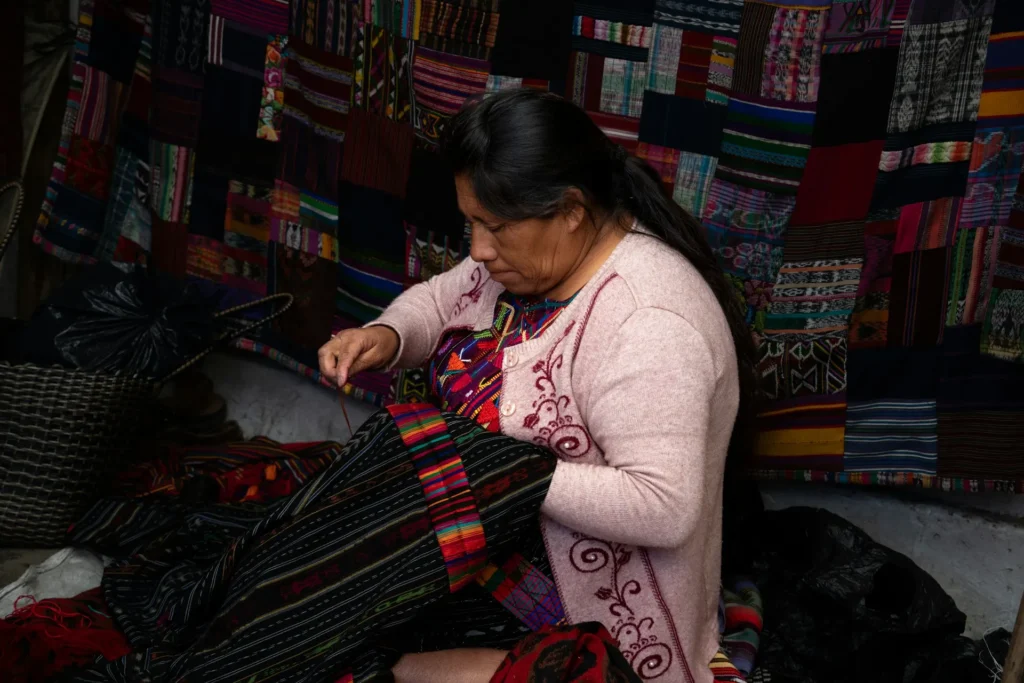
Guatemalan art and artists reflect the country’s rich cultural diversity. Traditional art encompasses the works of the Maya people, which give us an insight into their worldview and the way of life this civilisation once led. They were the largest pre-Hispanic people in Guatemala, but of course they have not disappeared. Their descendants keep their traditions and culture alive, enabling us to continue to understand their way of life and their view of the world. Mayan textile-making, for example, is one of the most complex living traditions in the world.
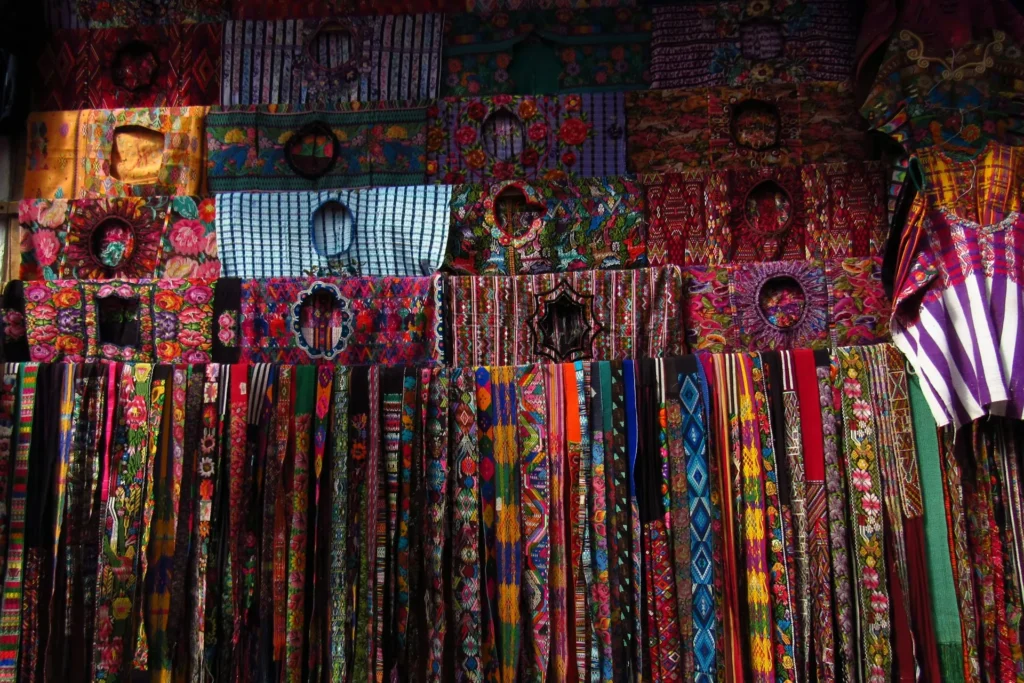
However, the Maya are not the only indigenous people who lived and continue to live in Guatemala. The Xinka, although they left behind fewer monuments and artistic artefacts, are also part of the pre-Hispanic cultural period, particularly in terms of pottery and ceramic pieces.

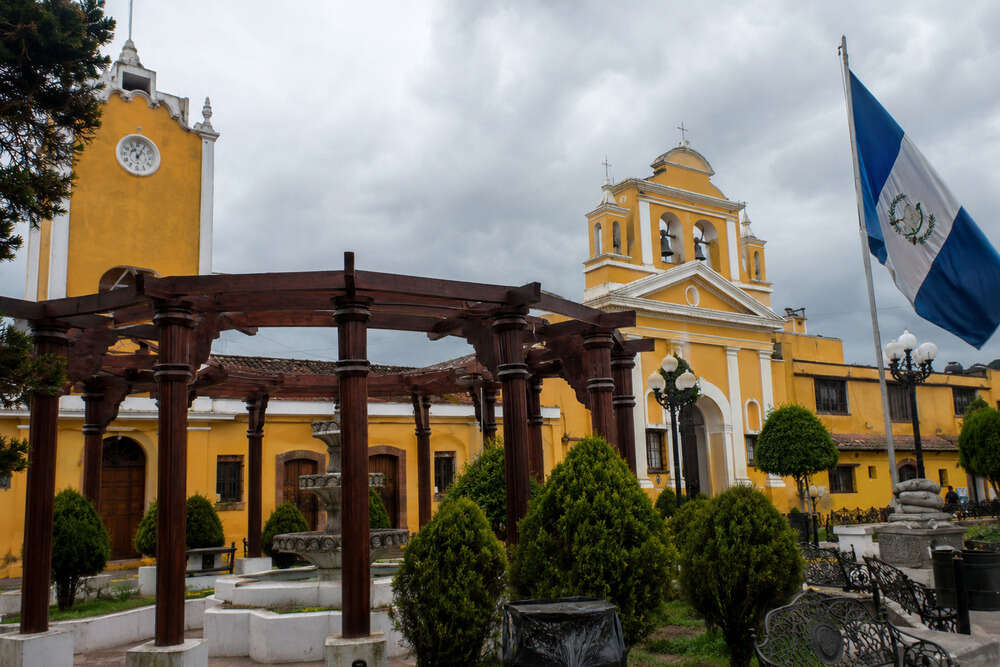
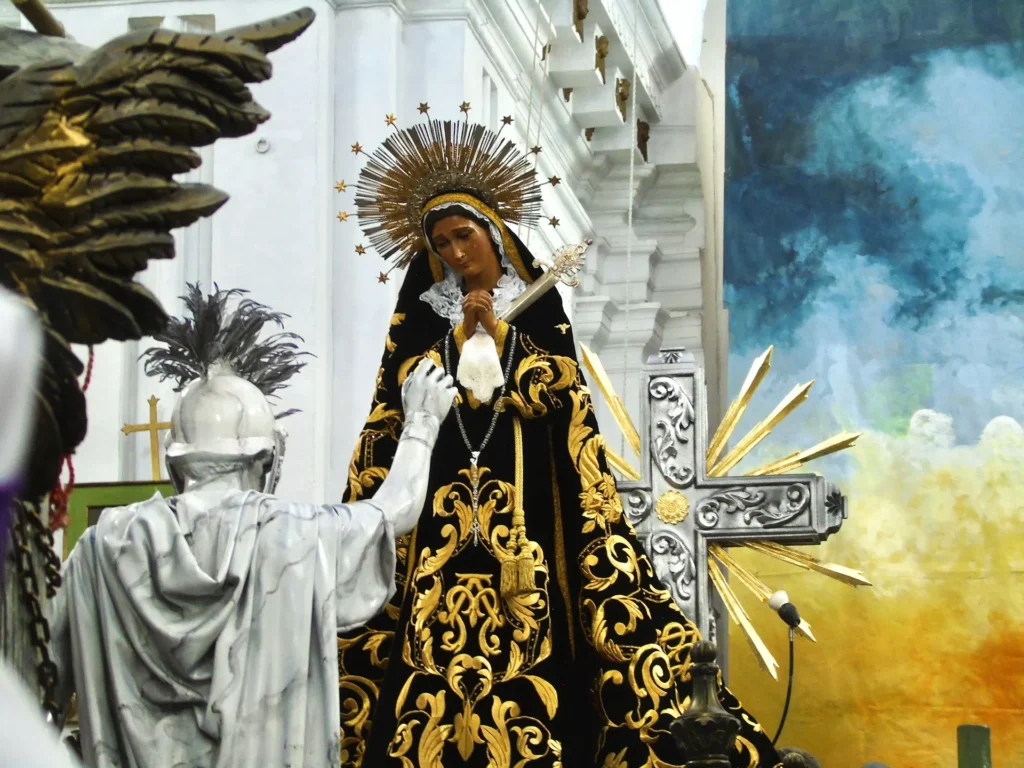
Traditional art also encompasses art from the colonial period, in which Spanish influences blended with indigenous traditions. What is now known as the city of Antigua Guatemala became a major centre of colonial artistic production, where religious sculptures, amongst other works, stand out.
As for Guatemalan contemporary art, which emerged in the mid-20th century, it focuses primarily on the search for a national identity and on highlighting the country’s social conflicts. Following the 1944 revolution, there was a great cultural opening, but the armed conflict and the post-war period of the 1980s and 1990s left a deep mark on artists, and their works began to reflect the collective trauma. In the 21st century, however, there was a new renaissance and many artists with a global reach emerged.
The most significant artistic movements in different regions
Guatemalan art is closely linked to the country’s geography. The different regions of the country have given rise to unique artistic movements influenced by their history, ethnic characteristics and natural environment:
- Western Altiplano region. It's the heartland of contemporary folk and indigenous art. One of the most popular movements to emerge from this region was Primitivist painting, characterised by its highly colourful and detailed canvases depicting community life and Mayan traditions. Furthermore, it's also one of the best places to appreciate Mayan textile art.
- Central Region. This is where we can best appreciate the Spanish heritage and its religious art. The art of this region was a direct heir to the colonial Baroque movement, and the workshops of Antigua Guatemala remain a benchmark in the restoration and creation of religious images. Furthermore, there is currently a movement in the region attracting Guatemalan and international artists known as ‘landscape art’.
- Metropolitan Region. This is where modernism and geometric abstraction flourished, alongside civic muralism, post-war contemporary art and performance art.
- The Verapaces Region. The geography of this forested and misty region had a strong influence on the art that developed there, such as genre painting. This style depicted nature in a hyperrealistic and romantic manner.
- Eastern Region. What is interesting about this region is that a movement has emerged which recreates Mayan monumental sculpture using the same materials as in the past.
Notable Guatemalan artists by discipline and region
Painting and sculpture
In the metropolitan region, Guatemalan artists such as Carlos Mérida stand out; he was one of the most versatile, having fused Cubism and European abstraction with the geometry of Mayan art. Nor should we forget Elmar Rojas, the creator of magical realism in Guatemalan painting, and Aníbal López, a pioneer of conceptual art and abstract painting.
Also notable in this region are sculptors such as Efraín Recinos, whose works perfectly capture the urban identity of the capital, and Roberto González Goyri, who created the murals on the façades of the Bank of Guatemala and the Social Security Institute.
In the Western Altiplano region, notable painters include Andrés Curruchich, the father of naïve art in Guatemala; Paula Nicho Cumez, one of the most prominent indigenous painters; and Pedro Rafael González Chavajay, the leading figure in the school that preserves and teaches indigenous heritage. In sculpture, Mariano González Chavajay, Pedro’s brother, stands out for his depictions of deities from the indigenous tradition.
Finally, in the central region we find the great master of Antigua-style landscape painting, Humberto Garavito, who had a major influence on later local painters; and Luis González Palma, whose work focuses primarily on indigenous life. And we must not forget Max Leyva, one of the most popular sculptors in this region, with works on display at various locations in the centre of Guatemala.
Artists in Guatemala City, Quetzaltenango and Antigua Guatemala
These three places are the country’s three most important cultural landmarks. Guatemala City, the country’s capital, is renowned for its avant-garde art and modern murals. The aforementioned Efráin Recinos is the capital’s most iconic artist, filling the city with his works and designing the Miguel Ángel Asturias Cultural Centre.
Regina José Galindo also stands out in the field of performance art as one of the world’s most influential contemporary artists. She uses her body as a canvas to highlight and denounce various social realities. We must not forget Darío Escobar, a sculptor renowned worldwide for transforming everyday objects found in the city into sculptures.
As a colonial city, Antigua Guatemala attracts artists interested in history and classical techniques. In Quetzaltenango, meanwhile, the current generation is very much focused on social criticism, but it has an academic tradition strongly centred on the graphic arts. Alfredo Gálvez Suárez is one of its leading exponents and his murals adorn the National Palace of Culture. We also find Guatemalan artists such as Rolando Ixquiac Xicará, Pascual de León and Marilyn Boror Bor. Furthermore, the city is home to one of the country’s most active printmaking schools.
Street art and muralism
The epicentre of large-scale urban muralism is in the capital, particularly on the façades of public buildings. This is the case with the Civic Centre, where the façades of the Bank of Guatemala, the National Mortgage Bank and the Guatemalan Social Security Institute stand out. Meanwhile, in the historic centre, the murals by Alfredo Gálvez Suárez are preserved in the National Palace of Culture.
As for street art, it has been particularly prominent in rural and indigenous communities of the Altiplano, transforming entire streets into open-air canvases that depict community life and cultural resilience. Notable examples include the façades and houses of San Juan La Laguna and the historic mural in San Juan Comalapa painted by Kaqchikel Guatemalan artists.
Music and the performing arts
The marimba is the country’s national instrument. It has African roots, but has been adapted and embraced by Mayan and Mestizo cultures. Composers such as Domingo Bethancourt gave this instrument the recognition it deserved.
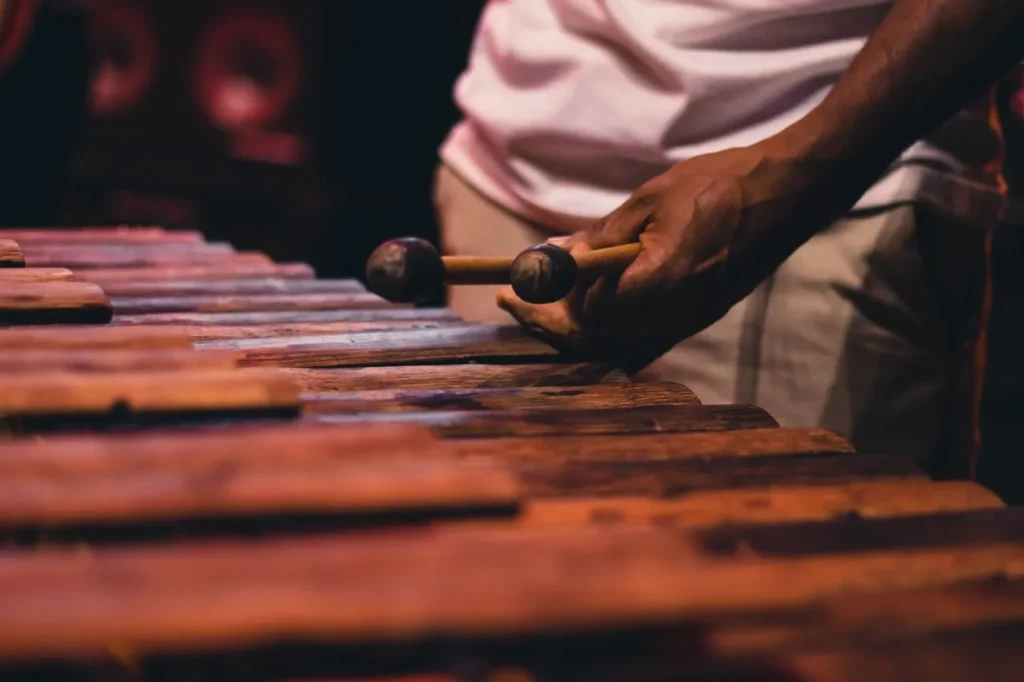
Indigenous music is still very much alive, particularly in the communities of the Altiplano and the Verapaces. As for classical and concert music, the Guatemalan National Symphony Orchestra gives concerts in the capital at certain times of the year.
As for more contemporary music, rock enjoyed a major boom in the 1990s and saw the emergence of iconic bands, whilst in recent decades independent singer-songwriters have come to the fore. This is the case with Gaby Moreno, who went on to win a Grammy and has been instrumental in introducing Guatemalan music to the world.
- We invite you to read our article about Antigua Guatemala at night.
Cultural venues and galleries across the country
Museums, cultural centres and independent galleries
- Guatemala National Art Museum: located in Antigua Guatemala, it's the country’s most modern museum, housing works ranging from pre-Hispanic and colonial pieces to republican and contemporary art.
- The Ixchel Museum of Indigenous Costume: located in the capital, it's a leading centre for indigenous textile art from the Mayan communities.
- Popol Vuh Museum: located near the Ixchel Museum, it houses one of the region’s most important collections of pre-Hispanic and colonial art.
- Proyectos Ultravioleta: based in Guatemala City, it's an art gallery with an international reputation.
Art festivals and craft fairs
- The Arte Paíz Biennial: Central America’s most important contemporary art event.
- Chichicastenango Craft Market: held on Thursdays and Sundays, it's the region’s most famous open-air craft market.
- Virgen de la Asunción Fair: held in the capital every August. As well as focusing on food, the fair also sells handicrafts from different parts of the country.
- We invite you to read our article about tapado, Livingston’s most iconic dish.
Experiences for travellers
Art and culture tours in various cities
In this section, I’m going to suggest itineraries for various cities in Guatemala so that you can enjoy artistic and cultural tours of the country during your trip.
In the capital, for example, you could start the day at the Civic Centre to admire the building facades and murals. In the afternoon, I suggest heading to the historic centre to see the murals at the National Palace of Culture, before finishing up with a visit to the contemporary art exhibitions at the Spanish Cultural Centre, also known as the Lux building. In the evening, you can visit the Proyectos Ultravioleta gallery or enjoy a concert or play at the Miguel Ángel Asturias Cultural Centre.
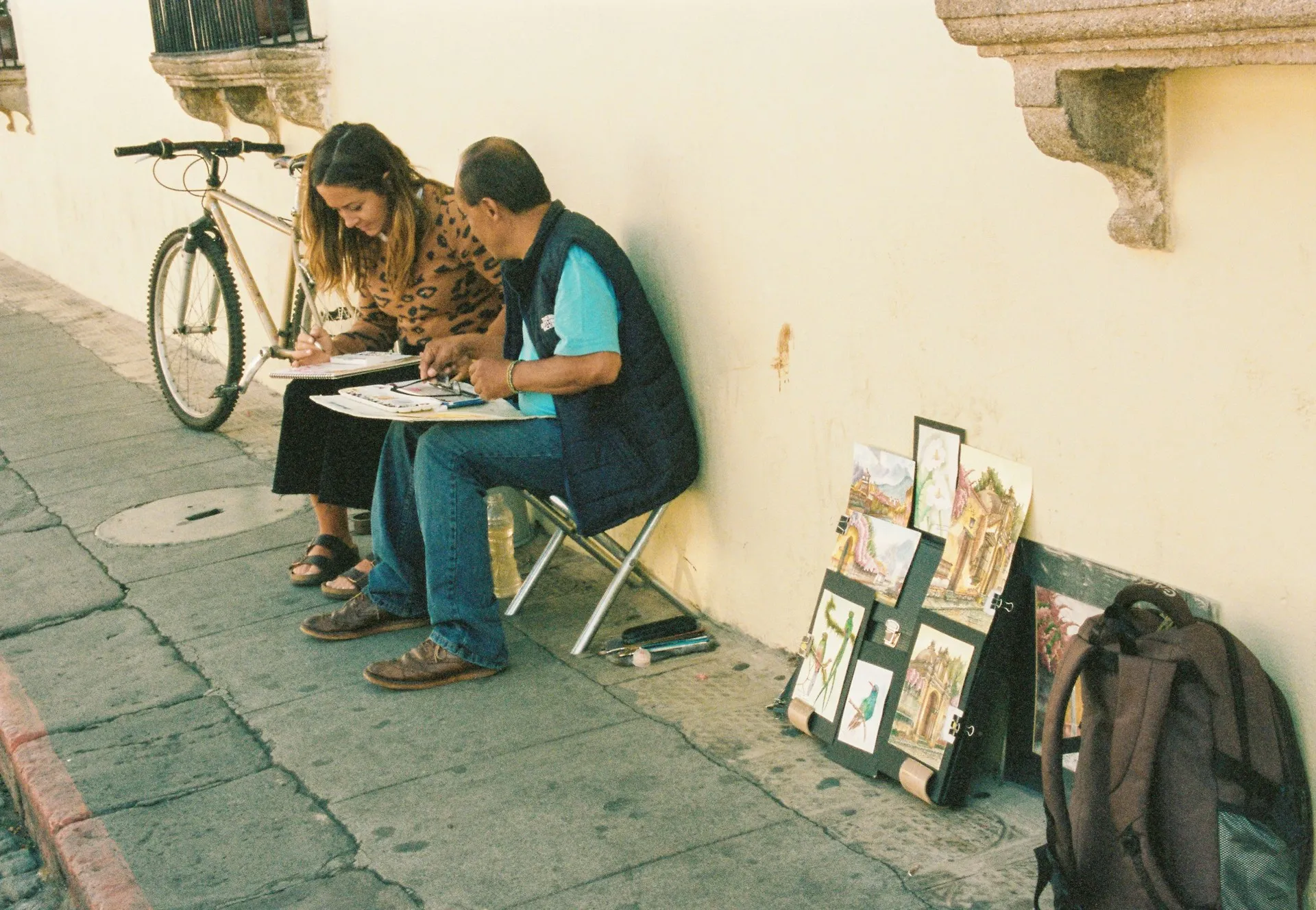
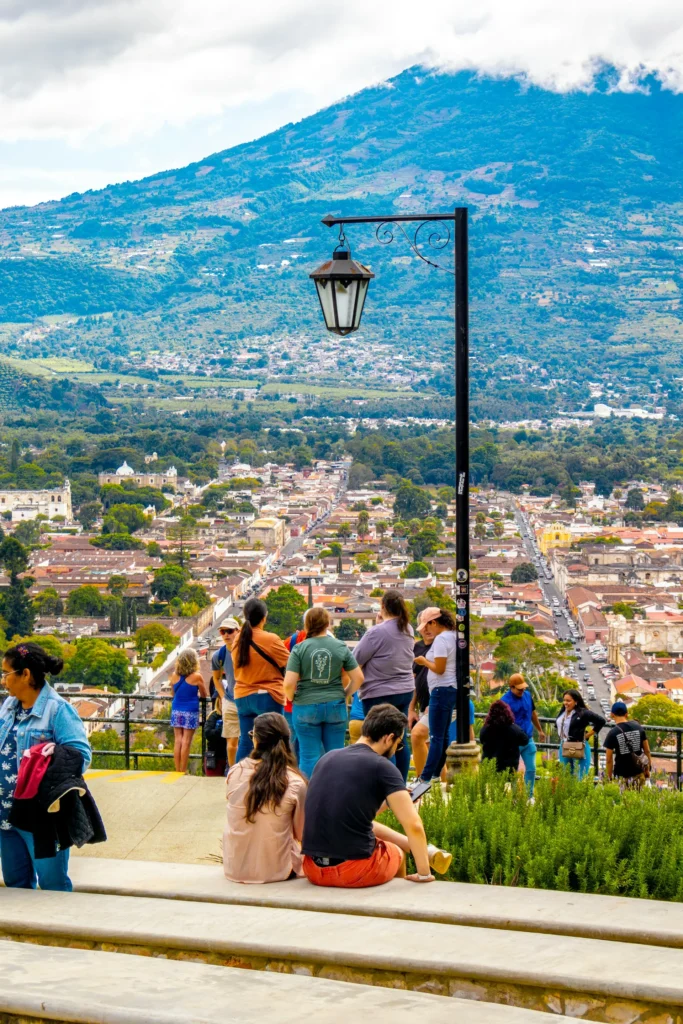
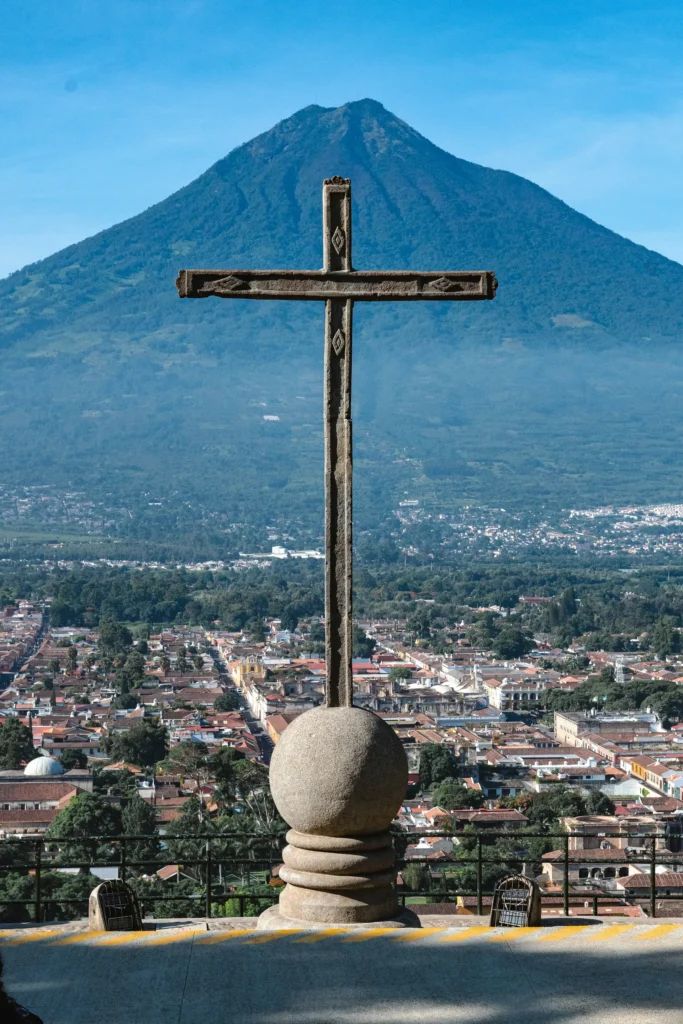
In the city of Antigua Guatemala, you can start your tour at the National Art Museum of Guatemala and continue on to the La Nueva Fábrica cultural complex, before heading to the workshops in the neighbourhoods of Santa Ana or San Bartolo. To round off the day, I suggest you climb Cerro de la Cruz to admire the same views enjoyed by the painters of the Antigua School when they sit down to capture the landscape.
I would also highly recommend that you take the San Juan La Laguna mural trail and visit the San Juan Comalapa Perimeter Historical Mural.
- We invite you to read our article about the Flower Festival in Antigua Guatemala.
Tips for discovering Guatemalan artists
One of the best tips we can give you is that, in the Altiplano region – specifically in villages such as San Juan La Laguna and San Pedro La Laguna – you should visit the workshops open to the public run by the indigenous Mayan artists of the Tz'utujil School. They are located on the main streets and, as well as admiring their work, you may have the chance to speak to them so they can tell you more about their art and movement.
The best times to visit exhibitions and festivals featuring Guatemalan artists
In May, the Arte en Mayo group exhibition takes place, where contemporary Guatemalan and international artists display their paintings, sculptures, photographs and prints. The venue may vary from year to year, but it has always been held in the capital. Then, between November and February, the Arte Paíz biennial takes place.
Top 10 Guatemalan artists you shouldn’t miss
- Carlos Mérida (painter and muralist), Guatemala’s most internationally renowned artist.
- Efraín Recinos (painter and sculptor), the country’s great multifaceted genius.
- Roberto González Goyri (muralist and sculptor), who shaped the identity of the Civic Centre.
- Regina José Galindo (performer and poet), one of the world’s most influential contemporary artists.
- Andrés Curruchich (painter), regarded as the father of indigenous folk art in the country.
- Luis González Palma (photographer), one of the most celebrated Latin American artists in his field.
- Paula Nicho Cumez (painter), who broke with the traditional conventions of indigenous painting.
- Aníbal López (conceptual artist), a leading figure in Central American contemporary art.
- Darío Escobar (sculptor), renowned for his work criticising consumerism and globalisation.
- Marilyn Boror Bor (conceptual artist), one of the most powerful voices in Indigenous art.