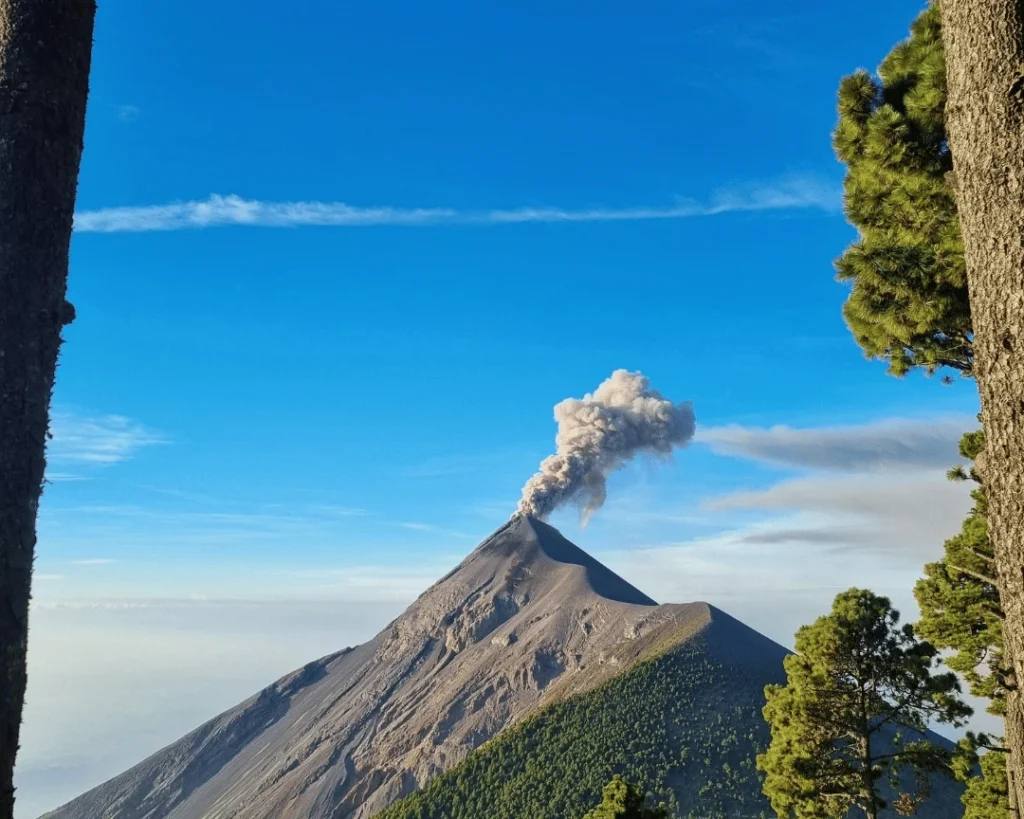
The Santiaguito volcano is one of Guatemala’s most breathtaking sights, but also one of the most unique. It isn't a “tourist” volcano in the traditional sense of climbing to the summit and taking a photo: here, the experience centres on viewpoints, panoramic views and observation from a distance, with the Santa María–Santiaguito volcanic complex as the undisputed star of the Quetzaltenango landscape.
In this article, we’ll tell you what to see and do at the Santiaguito volcano in Guatemala, which type of visit is best suited to you, which viewpoints are most highly recommended, how to organise a trip from Xela (Quetzaltenango), and what practical tips will help you enjoy the experience at your own pace and with confidence.
If you’re planning a trip around the country, you can find useful information on Guatemala’s official tourism website.
Where is the Santiaguito Volcano, and why is it one of the most impressive volcanoes in the country?
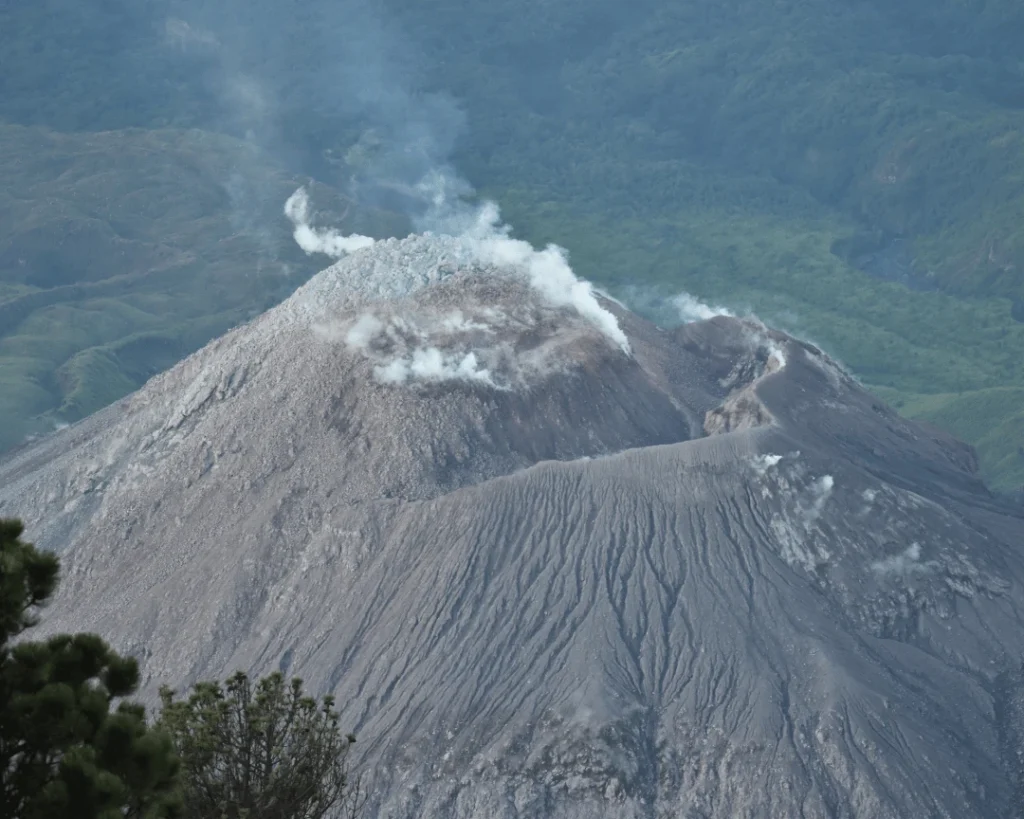
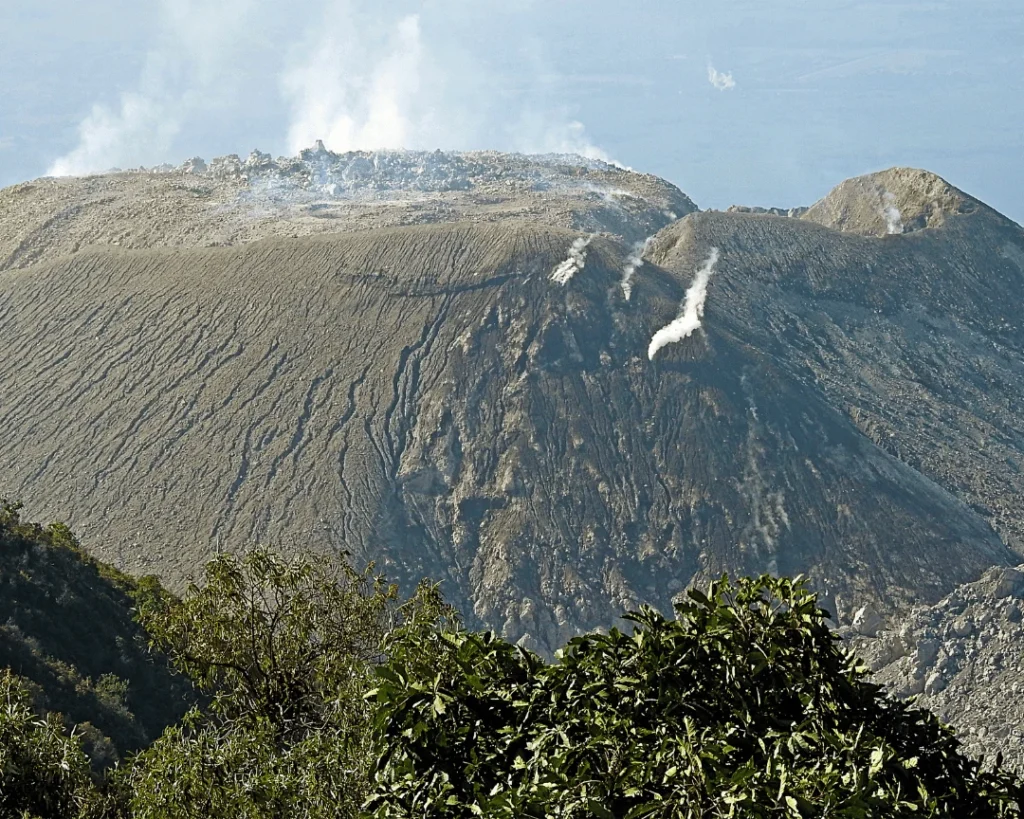
The Santiaguito volcano is located in the western highlands of Guatemala, very close to Quetzaltenango (Xela). In fact, Santiaguito is a complex of volcanic domes associated with the Santa María volcano, and this connection is key to understanding just how striking the place is: what you see is not ‘an isolated volcano’, but a complete volcanic landscape, vast in scale, with dramatic relief and a presence that dominates the horizon.

Why is the Santiaguito volcano in Guatemala so striking? Because here, the surroundings feel alive. Even without getting up close, viewing the complex from a well-chosen vantage point gives you a sense of scale and natural power that is very hard to match. What’s more, the area offers something that many volcano tours don’t: the chance to view the volcanic system from different angles, playing with light, altitude and perspective.
Is the Santiaguito Volcano worth a visit? What do travellers think?
Yes, it’s well worth a visit, especially if you’re into volcanic landscapes and photography. Most travellers who visit the Santiaguito volcano recommend it for two reasons: the visual impact of the Santa María–Santiaguito complex and how well it fits in as a day trip from Xela, without the need to book a specialised tour.
What people tend to like most is the nature of the experience: viewpoints and trails offering stunning views, which can be combined with other things to do in Quetzaltenango. It’s a very rewarding visit if you know what you’re getting into: taking in the views, going for a short walk, waiting for the best time of day and taking your time to enjoy the scenery.
What sort of traveller would benefit from a visit to the Santiaguito Volcano in Guatemala?
The Santiaguito volcano in Guatemala is ideal for those seeking a powerful natural experience as part of a well-planned trip. That said, everyone has different expectations, so here’s the best way to understand who it’s for.
Santiaguito Volcano: For travellers seeking volcanic landscapes and spectacular viewpoints
If you’re into vast landscapes, panoramic views and that ‘wow’ factor you get when looking out over an entire volcanic range, you’re going to love this idea. Santiaguito Volcano is best enjoyed when you pick a good vantage point and take the time to look around, rather than just rushing to get there.
Santiaguito Volcano: For those seeking an intense nature experience without venturing into high-risk areas
Santiaguito is best appreciated from a distance: viewpoints and trails that allow you to take in the whole scene from a broader perspective. It’s a way of experiencing a striking volcanic landscape without having to undertake a technical or close-up hike.
The Santiaguito Volcano might not be the best choice if you’re looking for an easy day trip
If you’re looking for a very short outing, with no walking involved and minimal planning (in terms of timing, transport and weather), you might prefer a city break or an extremely accessible viewpoint. The Santiaguito volcano usually requires choosing the right time of day and, sometimes, a short walk to reach the best views. It’s simple, but it’s much more rewarding when you do it with a purpose.
What is there to see at the Santiaguito Volcano and the surrounding area?
The plan for the Santiaguito volcano is based on perspective: choosing vantage points from which the complex can be seen most clearly, understanding the surroundings of Quetzaltenango, and making the most of the light to enjoy the ever-changing landscape.
Santiaguito Viewpoint: The safest and most popular way to view the volcano
The Santiaguito viewpoint (or other viewpoints in the area) is usually the most popular way to see the volcano: you arrive, walk just a short distance, find a spot and enjoy the view. It’s the sort of experience that appeals to a wide range of people because it focuses on taking in the Santa María–Santiaguito landscape as a whole.
The advice here is simple: don’t rush. Find a comfortable spot, take a few minutes to look at the scenery, and then go ahead and take some photos. The difference between ‘I saw the volcano’ and ‘I’ve captured the moment’ usually comes down to giving yourself that bit of time.
Views of the Santa María-Santiaguito complex and the landscape of Quetzaltenango
The great thing about this visit is that you don’t just see the volcano: you see the whole landscape of the high plateau. On one side, the volcanic complex; on the other, the landscape of Xela and its surroundings. It’s a very photogenic spot because it combines mountainous terrain, layered landscapes and constantly shifting light.
If you’re planning a route through the area, it’s well worth combining it with PILAR PAGE Quetzaltenango to round off your itinerary for the region.
Trails, panoramic views and times of day when the volcano looks its best
The Santiaguito volcano looks different depending on the time of day. Generally speaking, the best times to visit are usually:
- Early in the morning, for softer light and better visibility.
- Late afternoon, with its shadows and warm tones.
The trails and viewpoints are much more enjoyable when the light is right. If it’s very overcast, the plan still works, but the landscape is experienced more for its atmosphere (clouds, mist, the high-altitude feel) than for its clarity.
Safety when visiting Santiaguito Volcano: what you need to know before planning your visit
In Santiaguito, the key word is caution. Not out of fear, but out of common sense: it's an active volcanic environment and the visit is best enjoyed when approached in the right way. The important thing here is to understand that the best course of action is not to ‘get up close’, but to view the complex from viewing platforms and vantage points, which is where you really get the best visual experience and, at the same time, the most peaceful one.
That’s why it’s a good idea to plan your visit with two key points in mind. The first: adapt to the conditions on the day (visibility, cloud cover, wind). In volcanic areas, the difference between a sweeping panorama and a more restricted view can depend on an hour or a patch of clear sky. The second: choose well-known and well-planned routes, with standard paths and access points, rather than improvising your own. This not only enhances the experience, but also makes the whole outing more comfortable.
And one more tip that really helps: approach it with a mindset focused on the scenery, not the challenge. If your aim is to see Guatemala’s Santiaguito volcano at its best, it’s usually best to get up early, find a good vantage point, take your time and spend a few minutes taking in the whole view. At Santiaguito, the visit is most rewarding when you take your time, because the sense of scale and natural power is best appreciated when you allow yourself time.
Why isn’t it marketed as a typical tourist hotspot?
Because the experience here isn’t designed as a ‘summit climb’ for everyone. The most common approach is to view the complex from viewing points and safe routes, rather than venturing into areas not intended for general visitors. This makes the plan more responsible and, at the same time, a real treat: you get to see the best of the landscape without having to get involved in technical challenges.
What sort of visit is best suited to the Santiaguito area?
The ideal way to visit the Santiaguito volcano in Guatemala is to explore the viewing points and trails: choose a vantage point, take a leisurely walk, enjoy the surroundings, and head back. If you want to go further, it’s best to do so with a local guide and a plan that adapts to the conditions on the day.
Santiaguito Volcano as part of a tour of Quetzaltenango
The great thing about Santiaguito is that it fits perfectly into a tour of Xela: it offers stunning natural scenery without disrupting your itinerary.
How to combine a visit to Santiaguito with viewpoints, villages and other things to do in Xela
A perfect day in the area could include: a morning spent admiring the view of the Santiaguito volcano from a viewpoint, an afternoon stroll through Quetzaltenango, or a nature outing nearby. If you’d like to add another typical volcanic excursion around Xela, ‘What to see and do in Cerro Quemado’ is a great fit. And if you fancy rounding it off with a different local outing, you might also want to check out ‘What to see and do in Almolonga, Guatemala’.
How to organise your visit to the Santiaguito Volcano, step by step
Planning the trip is easy if you bear three things in mind: how to get there, when to go, and how to adapt your visit to the actual day (weather and visibility). Santiaguito isn’t a ‘turn up and go’ sort of place: you’ll enjoy it much more if you plan it as a well-thought-out viewpoint excursion, with time to move around at a leisurely pace and wait for a clear spell if necessary.
The first thing is to decide on your base, and Quetzaltenango (Xela) is usually the most practical option. From Xela, you can set off early, arrive at the viewpoint in good time and return without the day dragging on. The second step is to choose the time of day: generally speaking, getting up early is worth it because the light is usually softer and the views can be clearer; if you prefer sunset, that works too, but it’s best to allow plenty of time so that the light doesn’t catch you halfway through the journey.
And the third point is what really makes all the difference: planning with flexibility. The Santiaguito volcano in Guatemala looks very different depending on the sky. There are days when you can see it perfectly and days when the clouds cling to the landscape. That’s why the best approach is to adopt a ‘viewpoint’ mindset: arrive, take a leisurely stroll, choose a good spot and give yourself time to look around. Sometimes the view improves within 20 minutes. If you organise your day with that in mind, the visit feels much more fulfilling and less dependent on everything going ‘exactly’ to plan.
How to get there from Quetzaltenango and other nearby areas
The most common option is to set off from Quetzaltenango (Xela), whether by organised transport, local shuttle or your own vehicle, depending on your preferred travel style. Xela is a practical base as it allows you to get an early start without any stress and return in good time to make further plans.
If you’re coming from another part of the highlands, the idea is the same: arrive with plenty of time to spare so you can make the most of the best light and avoid rushing between locations.
What to bear in mind regarding guides, access and weather conditions
If you’re planning to visit a viewpoint, the logistics are usually straightforward. If you want to add in trails or more extensive routes, a local guide can help you optimise your itinerary and timing. In any case, the most important thing is to adapt to the conditions of the day: visibility, cloud cover and light. On volcanoes, the landscape changes quickly, and that’s part of the experience.
The best time of year to enjoy the views of the Santiaguito Volcano in Guatemala
The best time of year depends on the season and the kind of sky you’re looking for. In drier periods, there’s usually a better chance of clear visibility, whilst during the rainy season the landscape may be greener and more atmospheric. In both cases, the useful advice is the same: prioritise the morning if you want the best chance of a clear view.
Practical tips for visiting the Santiaguito Volcano
What to pack for a viewpoint and trail hike
If you’re planning a trip to a viewpoint and along a footpath, make sure to bring water, sun cream, a hat, insect repellent, comfortable shoes with good soles, and a light jacket in case the temperature changes. A small, lightweight rucksack is usually enough. If you like taking photos, an extra battery or a power bank might come in handy.
Recommendations for enjoying your visit safely
The main recommendation is simple: stick to the approach that works best here – that of looking at things with a sense of perspective. Keep a leisurely pace, choose familiar routes and vantage points, and allow yourself time to enjoy the scenery without rushing. When you experience it this way, the Santiaguito volcano in Guatemala becomes one of the great memories of the highlands.
If you’re planning a wider-ranging volcanic tour of Guatemala, you might want to consider Mount Acatenango as a completely different kind of experience, with a greater focus on trekking.
- This page about the cities of Guatemala may interest you.
Frequently Asked Questions about the Santiaguito Volcano, Guatemala
Can you get a good view of the Santiaguito volcano without going on a long hike?
Yes. The most common way to experience the Santiaguito volcano is from viewing points and short trails, which offer good views of the Santa María–Santiaguito complex.
What's the best time of day to go?
It usually works best early in the morning or late in the afternoon, when the light is more pleasant and visibility can be better.
Do you need a guide to visit the Santiaguito volcano?
For popular viewpoints, not always. If you’re looking for more comprehensive routes or want to tailor the itinerary to the day, a local guide can be a great help.
Can it be combined with other plans from Xela?
Yes. It goes very well with nearby viewpoints and day trips, such as things to see and do at Cerro Quemado or local activities in the surrounding area.
What kind of experience is it: a hike or a viewpoint?
Mainly a viewpoint and a footpath. It's a volcano best appreciated for the views of the volcanic landscape and the panoramic vista.