Santiago Atitlán is one of the best-known villages on Lake Atitlán. Its bustling streets, its religious brotherhoods, textiles, market, boats, church and spiritual atmosphere give it a unique and charming character. It's one of those destinations that should be explored at a leisurely pace, without rushing.
Panajachel is usually the gateway to this area. In the surrounding area, San Pedro, with its more touristy vibe, San Marcos with its wellness tourism, and Santiago with its community spirit are places you simply mustn’t miss. Shall we go for a stroll to explore them?
Where is Santiago, Atlitán?
Santiago Atitlán is located in the south of the department of Sololá, on the south-western shore of Lake Atitlán. The municipality is situated in the south-western region of Guatemala and is bordered to the north by the lake, to the east by San Lucas Tolimán, and to the west by San Pedro La Laguna and Chicacao.
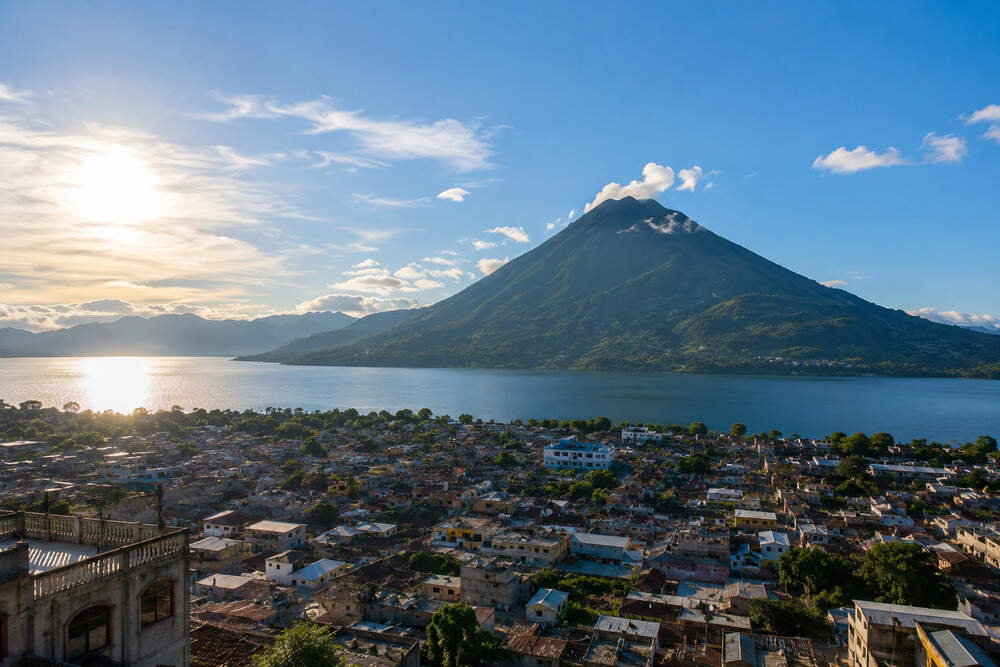
The jetty is the point of arrival, departure and meeting. From here, the bay opens out between mountains and volcanoes, with the light changing dramatically between morning and afternoon. Santiago is also one of the major Tz’utujil settlements on the lake. You’ll enjoy its market, the rhythm of the town and its ancient traditions, which are still very much alive.

Is it a good idea to stay in Santiago when visiting Lake Atitlán?
Santiago Atitlán is a good base if you want to explore the lake from a less touristy perspective. In fact, it doesn’t have the same nightlife as San Pedro or the laid-back atmosphere of San Marcos. However, it offers something different: local life is much more accessible here, with its markets, workshops, the jetty, religious culture and the best views of the water.
If you’re staying for just one night, you can easily visit the town centre, pop into the church and take a stroll along the seafront. If you stay for two days, you’ll have time to take a guided tour with a local guide, head up to a viewpoint and go on a boat trip.
So, Santiago is the best base from which to explore the whole of Lake Atitlán, but it all depends on your itinerary. For a start, it’s ideal for the southern area and for heading over to San Pedro La Laguna or Panajachel. But if you’re planning to hop between the small villages on the north shore every day, you’d be better off staying somewhere else.
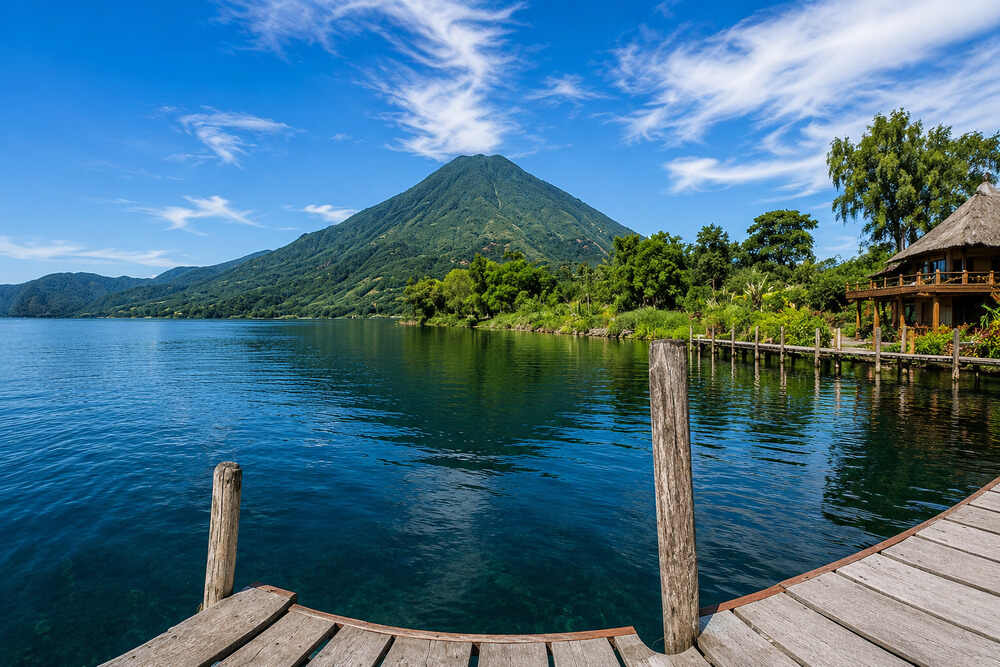
How to get to Santiago de Atitlán and get around the lake
The journey to Santiago Atitlán combines road and water travel. Many tourists arrive first in Panajachel, one of the usual entry points to Lake Atitlán, and from there take a boat across. The route from Guatemala City to Panajachel follows the CA-1 West Inter-American Highway, with a turn-off towards Sololá and Panajachel.
You can also get there by road from other parts of the highlands, although the journey takes longer due to the bends, traffic and stops.
Boats between Santiago and other villages on Lake Atitlán
Boats are the most practical and enjoyable way to get around Lake Atitlán. They essentially operate as water taxis, connecting towns such as Panajachel, San Pedro, San Juan, San Marcos La Laguna and Santiago Atitlán. The service is available throughout the day, although timetables may vary depending on the route and passenger numbers.
Connections to Santiago are usually less frequent than the main routes between Panajachel and San Pedro. The journey between San Pedro and Santiago takes just 15 minutes, with departures every hour. However, we recommend checking all this information at the pier itself.
For example, you should ask what time the last boat leaves before heading to another village. Bear in mind that the wind is unpredictable and can cause rough seas, so timetables change frequently.
How to get to Santiago from Guatemala City, Antigua and Xela
From Guatemala City, the most common route is via Panajachel. The first thing you need to do is drive to the lake. Once you arrive, you’ll need to take a boat to Santiago.
Many travellers from Antigua take a shared shuttle to Panajachel and then continue by boat. Finally, from Xela, the best option is to find transport to Panajachel, San Pedro or somewhere else on the lake, and then take a boat from there.
In any case, it’s best to set off early so you arrive at your destination while it’s still light, allowing you to find your way around more easily, locate your accommodation and take a tuk-tuk if you need to.
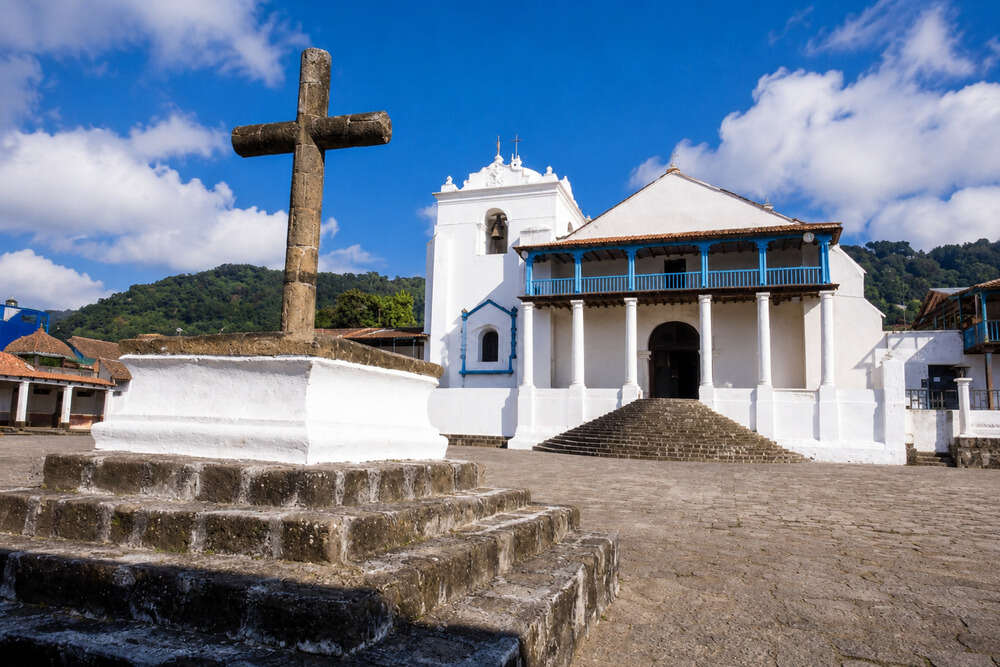
What to see in Santiago de Atitlán
Santiago Atitlán is easy to explore on foot. The main route takes you through the town centre, the market, the church, the religious brotherhoods, the craft workshops and the lakeside. The real appeal of this village lies in seeing how everyday life, spirituality and the landscape come together.
In a single day, you can easily visit the church, the Maximón, the market, pop into a textile workshop and take a stroll along the seafront promenade.
The Church of St James the Apostle and its blend of Mayan and Catholic traditions
The Church of St James the Apostle is one of the must-see attractions. The building is located very close to the town centre and is a fine example of the religious diversity that characterises this town. Inside, you will see Catholic iconography combined with local elements, textiles and other forms of religious devotion typical of the community.
The fact is that in Santiago, Mayan and Catholic traditions are not usually seen as separate worlds. Many practices have coexisted for centuries.
Religious brotherhoods and Maximón: spirituality and rituals in Santiago, Atitlán
Maximón, also known as Rilaj Mam, is one of the most complex spiritual figures in Guatemala. He is a figure from the Tz’utujil cosmology of Santiago Atitlán and is associated with a Mayan community settled on the shores of the lake.
Maximón isn’t in a museum, nor is he a permanent attraction. The statue is kept by a religious brotherhood and may change location depending on the ritual calendar. Most tourists either ask Maximón directly or are accompanied by a guide or a local tuk-tuk driver to find out where he is.
Local market and textile workshops
The local market offers a different side to Santiago Atitlán. It’s a very colourful, bustling place that’s deeply intertwined with the daily life of the town. If at all possible, you should visit on a Friday or a Sunday, when it’s at its liveliest. You’ll find stalls selling vegetables, fruit, handicrafts, traditional textiles and other local produce.
The textile industry is very important here. Huipiles, embroidery and traditional headdresses reflect identity, a sense of belonging and techniques passed down through the generations. We recommend visiting a workshop to learn more about the process, the dyes and everything else involved in this craft.
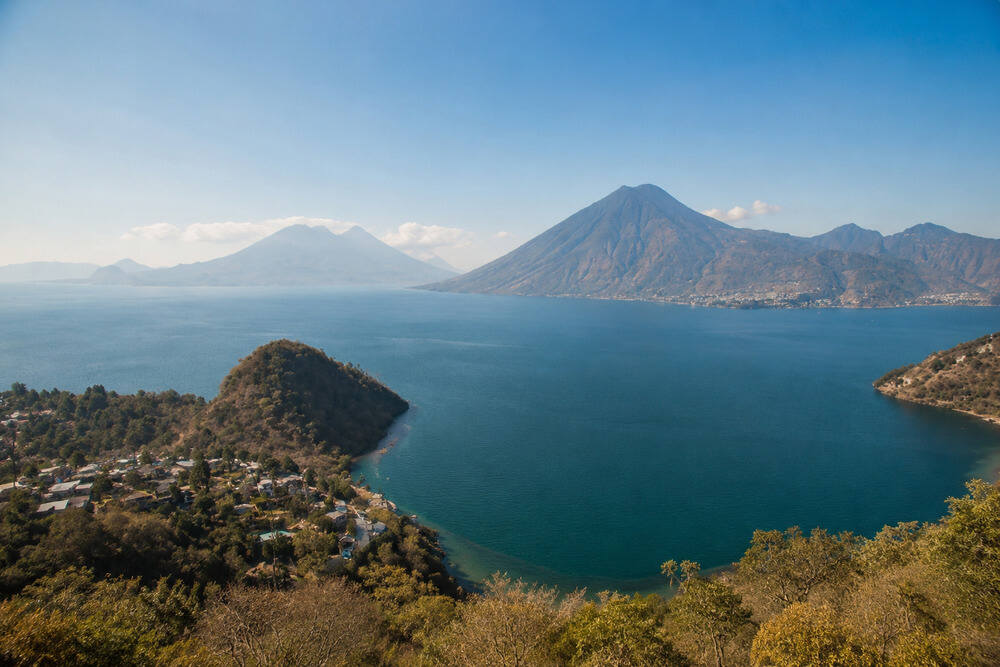
A stroll along the promenade and viewing points overlooking Lake Atitlán
Santiago’s seafront promenade is a wonderful place to round off your tour of the town. There, boats come and go, children play by the water’s edge, and volcanoes rise up in the background. After experiencing the hustle and bustle of the town centre, the waterfront is the perfect place to enjoy a bit of peace and quiet.
The nearby viewing points offer a much better view of the bay. You’ll just need to walk up a few short, steep streets, though you can also hire a tuk-tuk. The best time of day to go up is in the morning, as the sky is clearer and the lake is much calmer.
Nature and outdoor activities in Santiago, Atitlán
Santiago Atitlán is deeply connected to its landscape. The village and the lake form a unique landscape, complemented by the mountains and volcanoes that surround the basin. There’s plenty to do here: head up to a viewpoint, go for a boat ride, join guided tours with local guides, and more.
Easy walks to viewpoints overlooking Lake Atitlán
The area around Santiago Atitlán features steep streets, footpaths, farmland and vantage points overlooking the lake. You don’t need to plan a long route to enjoy the scenery. In fact, you can ask at your accommodation or a local travel agency for the best routes and times to visit.
Mornings are usually the best time to go, thanks to the light, the temperature and the visibility. Don’t forget to bring water, comfortable shoes and some cash to take a tuk-tuk back.
Trips to the San Pedro volcano and other easy hiking trails
The San Pedro volcano is one of the best-known mountains around Lake Atitlán. Standing at over 3,000 metres above sea level, it shelters the mountain forests and cloud forests.
If you want to climb it, your best bet is to head over to San Pedro La Laguna, as the climb is usually organised from that side. Bear in mind that it won’t be an easy hike; it does require a bit of effort. You’ll also need to set off early and take a local guide with you.
However, if you prefer something a bit easier, both Santiago and the surrounding area offer more leisurely walks, viewpoints and routes around the bay. There are various well-signposted trails throughout the area from which to enjoy the scenery.
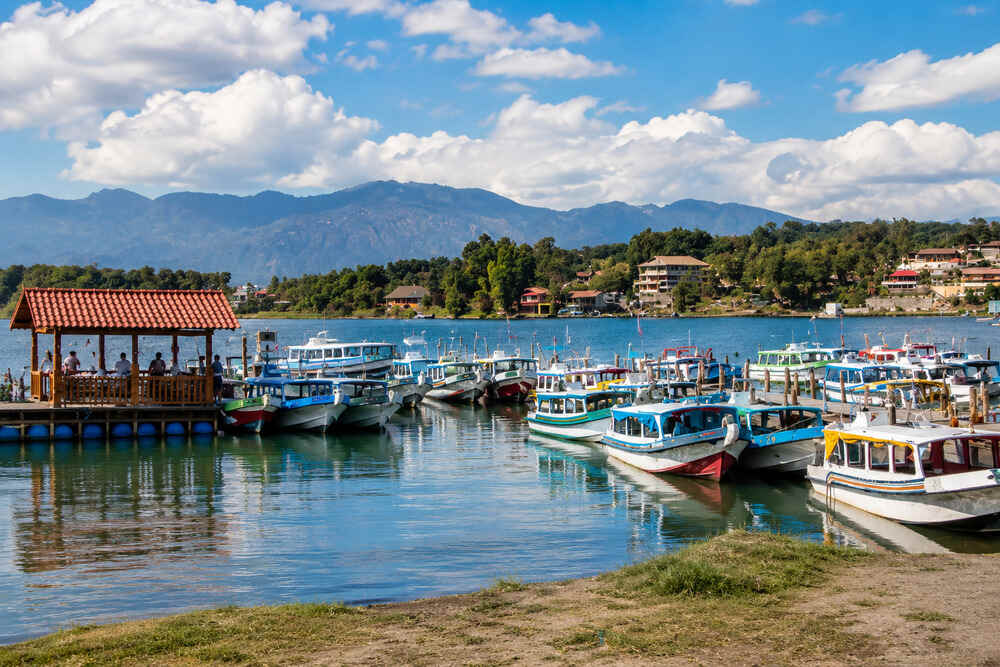
Kayaking and boat trips from Santiago
Water sports are another reason to visit Santiago Atitlán. In the village, you can book a boat trip around the bay or explore other parts of the lake. It’s the easiest and most comfortable way to see the shoreline, the volcanoes and everyday life from a different perspective.
Kayaking is, in fact, a brilliant option if the weather is on your side. The morning is once again the best time of day for this activity, as there will be less wind and the lake will be calmer.
- We invite you to read our article about Santa Catarina Palopó.
Practical tips for visiting Santiago Atitlán and Lake Atitlán
Santiago Atitlán is a fascinating destination, but you need to have everything well organised before you go. Your trip will be much more enjoyable if you arrive with plenty of time to spare and choose your transport carefully.
Please bear in mind these standard recommendations before travelling:
- Bring some cash (not all payments in the area can be made by card).
- Ask about the boat timetables on the day you plan to take one.
- Wear comfortable shoes for walking on sloping streets.
- Ask for permission before taking photos of people or rituals.
- Leave some leeway in case you need to make changes due to the weather or transport.
Best time to visit, weather and what to pack
Santiago Atitlán enjoys a very pleasant climate for much of the year. The best time to visit is between late January and mid-April. During these months, the skies are usually clearer and there is little rain. This dry season is ideal for getting around comfortably, going for walks and enjoying the best views.
That doesn’t mean you can’t go during the rainy season. However, when it rains, you’ll need to be much more aware of changes to timetables, routes and so on. So much so that it’s likely to be clear at dawn, only for the sky to become completely overcast within a few hours and for it to start raining, which would mean having to alter some activities.
Don’t forget to pack some light clothing, a waterproof jacket, sun cream, water, something warm for the evening and a dry bag if you’re travelling by boat. You’ll also need to carry some cash in small notes to pay for the tuk-tuk or small purchases at workshops, shops, etc.
Safety, transport and basic rules of cultural respect
For your own safety, you should avoid walking at night in isolated areas. It's also highly recommended that you check the routes with local people and do not leave your transport until the last boat, as the weather may cause the trip to be cancelled. On the other hand, if you hire a guide, it's best to choose one recommended by your accommodation or a local agency.
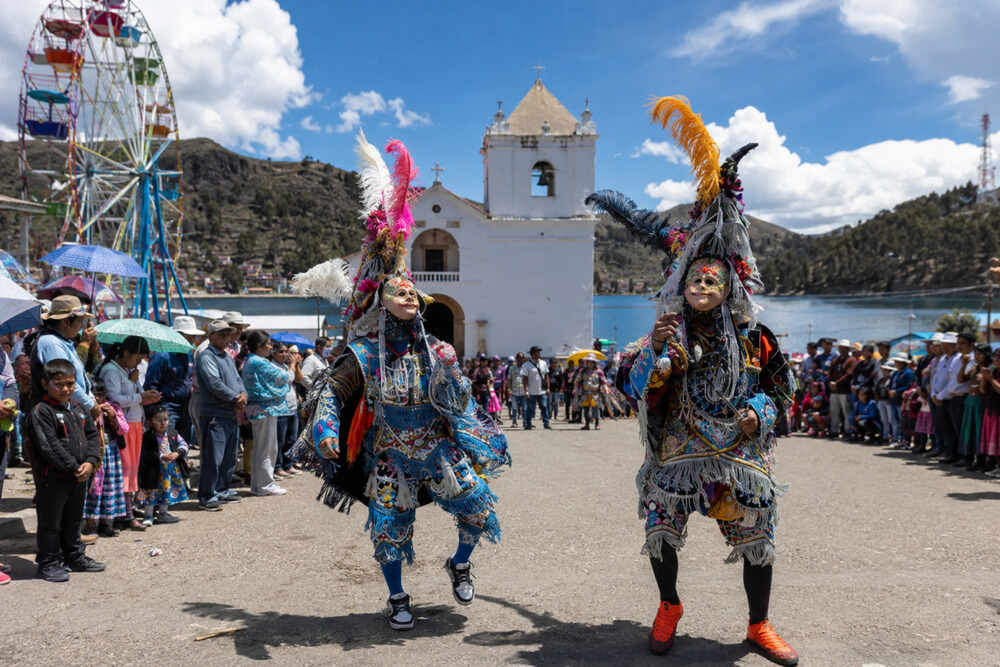
Cultural respect is just as important. Maximón, the brotherhoods, the church and the textiles are all part of community life. Any visit to any of these places should be made with care and humility.
We must also take care of the lake. In recent years, there have been reports of sewage and pollution problems in the area.
- This page about the natural wonders of Guatemala may interest you.
Frequently Asked Questions about Santiago, Atitlán
How many days do you need to visit Santiago Atitlán?
In a single day, you can visit the church, the market, Maximón and the seafront promenade. A two-day trip might be more enjoyable, allowing you to take your time, hire a local guide, visit a viewpoint and go for a boat ride on the lake.
Can you visit Maximón on your own?
Yes, but it’s best to go with a local guide or ask a trusted tuk-tuk driver, as the location can change. The visit requires respect, a donation where appropriate, and asking permission before taking any photos. This isn’t just any old tourist attraction.
Is Santiago Atitlán a good place to stay?
Yes, especially if you’re looking for a more local cultural experience that’s less geared towards international tourism. It doesn’t have as much of a nightlife as San Pedro, but it does have a market, local traditions, views of the lake and a very strong sense of community.
How do you get to Santiago Atitlán from Panajachel?
The most common way is to take a boat from the jetty in Panajachel. Timetables and frequencies may vary, so you’ll need to ask when you arrive. During the journey, you can enjoy the view of the lake. You’ll arrive directly at the main jetty area.
What clothes should you pack for Santiago Atitlán?
During the day, it’s best to wear comfortable, light clothing; but in the evening, it tends to get a bit chilly. You should also make sure you have comfortable shoes, a rain jacket during the rainy season, and modest clothing for visiting churches, religious brotherhoods or ceremonial venues.