

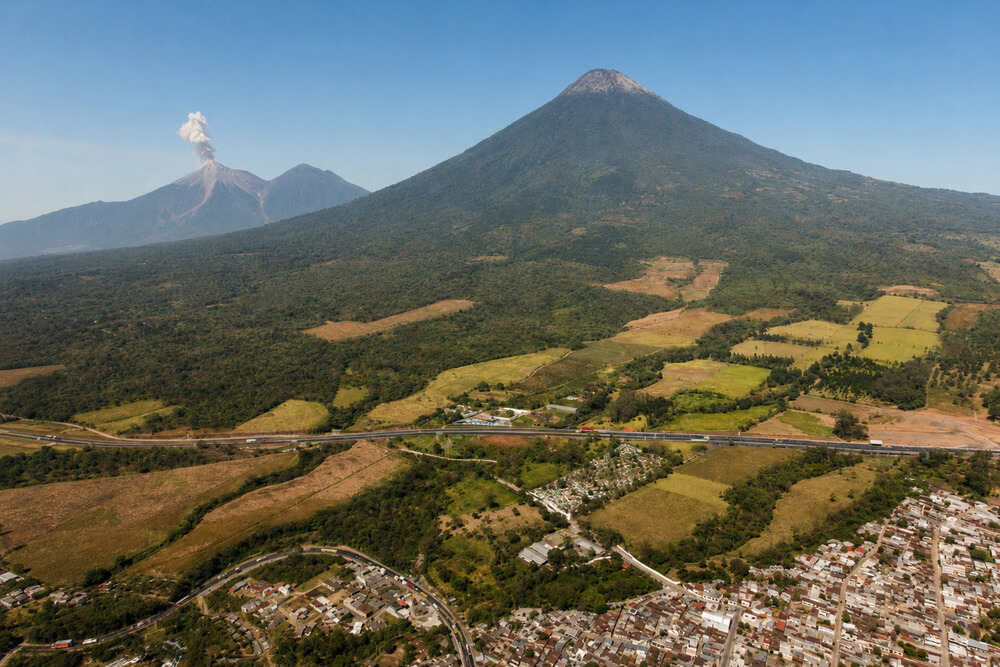
Are you planning a trip to Guatemala and would like to see more than just Antigua? Then make a note of Santa María de Jesús, one of the most interesting municipalities in Sacatepéquez. Situated at the foot of the Agua Volcano, it has a strong Kaqchikel identity and local life is deeply rooted in the market, agriculture, religious traditions and traditional dress. It’s a nearby, authentic destination and ideal if you’re travelling around this part of the country. Read on to find out a bit more about it. You’re going to love it!
Where is Santa María de Jesús?
Santa María de Jesús is in the department of Sacatepéquez, in the central region of Guatemala. Its location is quite special, as the municipality lies on the slopes of the Agua Volcano, one of the most recognisable features of the landscape around Antigua Guatemala.
We’re not talking about a major destination, nor one designed solely for tourists. On the contrary, here you’ll find a town with a pace all of its own, a bustling market, steep streets, beautiful mountain views and a very close connection to the volcano.
Santa María de Jesús Sacatepequez is also ideal as a half-day trip if you’re staying in Antigua Guatemala. It’s not far away, but the experience is quite different: the atmosphere is more local, more Kaqchikel and less geared towards foreign visitors.

Location in the department of Sacatepéquez
Santa María de Jesús is part of Sacatepéquez, a department best known for Antigua Guatemala, Ciudad Vieja, Jocotenango, San Lucas Sacatepéquez and other municipalities with a rich historical heritage.
The village is situated about 10 kilometres from Antigua Guatemala and at an altitude of just over 2,000 metres above sea level. This altitude is reflected in the climate, as it has cool mornings, mild afternoons and colder nights than in the lower-lying areas of the country.
Its location also explains part of its history. During the colonial era, its inhabitants carried out various activities on the slopes of the Agua Volcano, such as collecting ice to supply the old city of Santiago de los Caballeros de Guatemala.
How to get there from Guatemala City
Santa María de Jesús is about 45–50 kilometres from Guatemala City, depending on the route and the exact starting point. The journey can take between one and a half and two and a half hours, although traffic in the capital and in Antigua can significantly affect the actual journey time.
The most common route is to arrive in Antigua Guatemala first and then carry on to the municipality from there. If you’re travelling by car, it’s best to set off early, especially at the weekend. The road may have sections with bends, gradients and local traffic.
If you’re travelling by public transport, you can travel to Antigua Guatemala and then take a bus or local transport to Santa María de Jesús. Before boarding, make sure you ask about your stop and the return timetable. In Guatemala, local connections usually run smoothly, but it’s always best to check them once you’re there.
Connections to nearby towns and destinations
Santa María de Jesús is the perfect place to visit if you’re planning a trip around Sacatepéquez. You can combine a visit there with Antigua Guatemala, Ciudad Vieja, San Juan del Obispo, San Pedro Las Huertas or San Miguel Dueñas, depending on how much time you have.
It's also linked to the Agua Volcano. The route to the volcano requires a bit of preparation, up-to-date local information and a great deal of caution. If you enjoy hiking, check in advance about safety, the condition of the path and the option of going with a guide.
For a relaxed trip, the best option is to treat Santa María de Jesús Sacatepequez as a short day trip from Antigua. You can go in the morning, explore the town centre, visit the market, try some local food and return in the afternoon.
History and heritage of Santa María de Jesús
The history of Santa María de Jesús is linked to the Agua Volcano, the colonial era and the Kaqchikel presence in the region. The municipality soon became populated by people from the area around the Santa María de Zunil Volcano, although the history of the place unfolded in different stages and through various population movements.
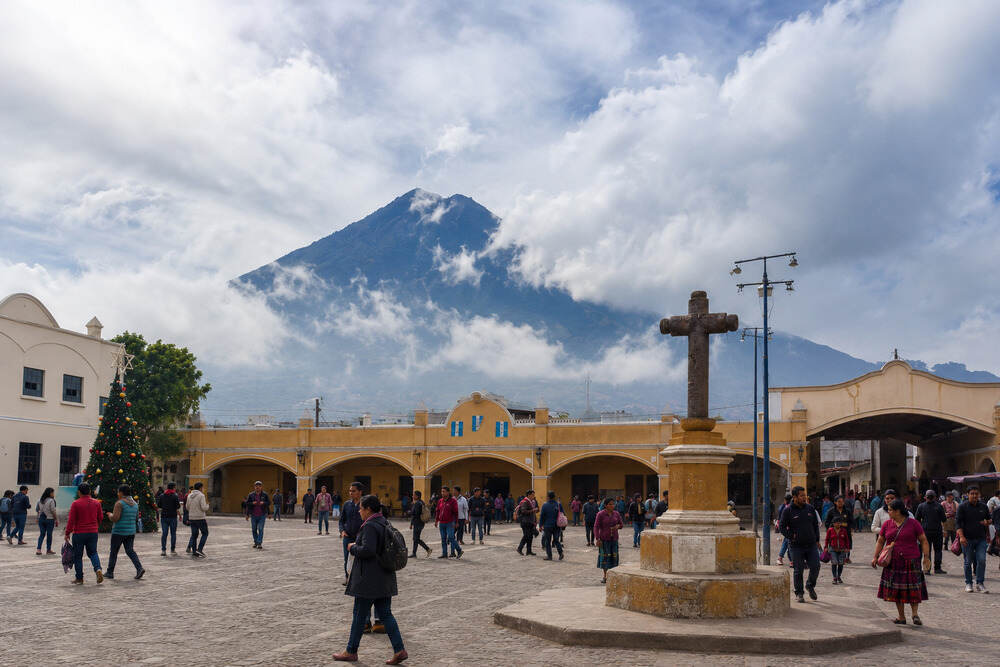
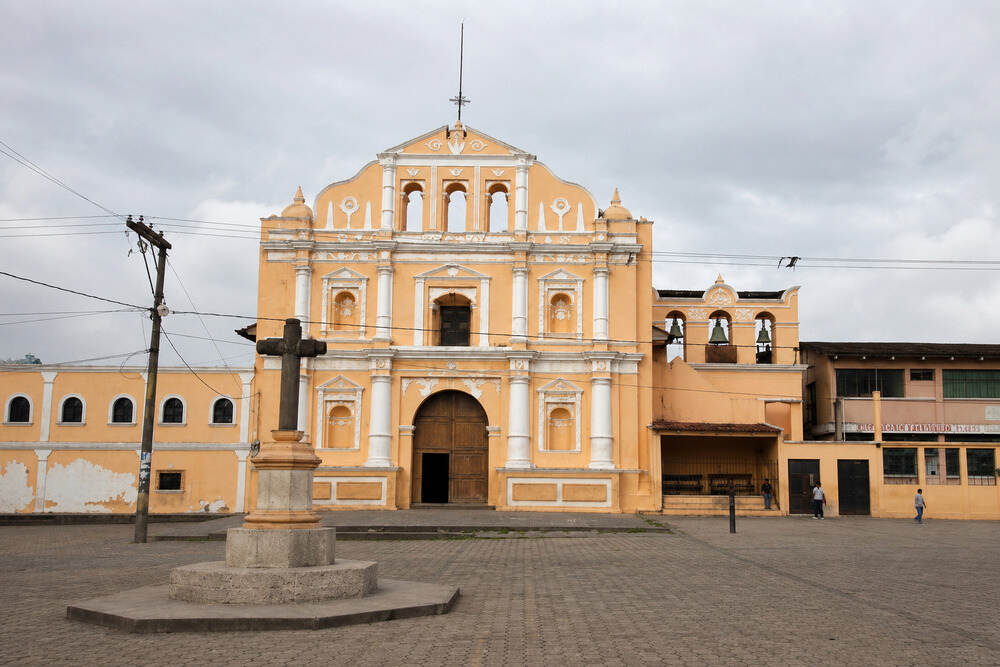
One of the most important heritage sites is its parish church, situated in the centre of the municipality. The central square retains the typical layout found in Guatemalan villages: the church, market, shops, transport and community life all centred around a single space.
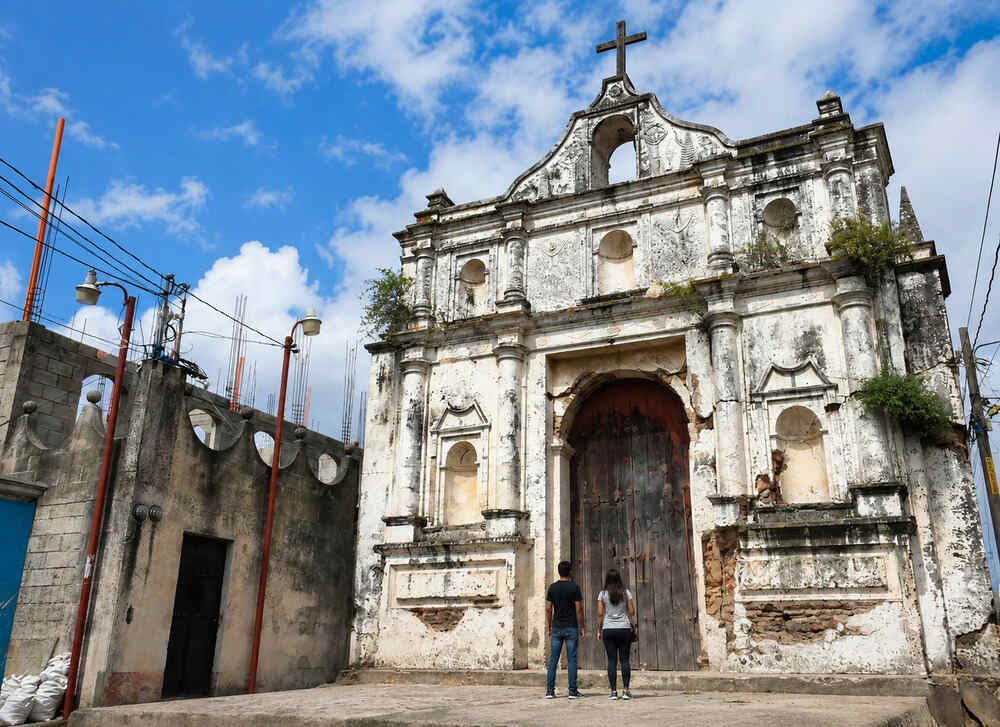
Another highlight is El Calvario, a church built during the colonial era which stands as a fine example of architectural and religious development following the conquest. It's one of those places that helps one understand the significance of the Catholic tradition in the municipality.
Santa María de Jesús is not visited as a city of historical monuments. Its heritage lies in its churches, its streets, its celebrations, its traditional dress, its relationship with the volcano, and a sense of community that remains very much alive.
Culture and traditions of Santa María de Jesús
The culture of Santa María de Jesús has strong Kaqchikel roots. You’ll find Spanish useful for getting about as a visitor, but Kaqchikel is part of the local identity and is spoken in everyday life, particularly amongst families and older people.
The municipality boasts religious traditions, markets, excellent local cuisine, traditional dress and close ties to agriculture. Many families depend on farming, trade and activities linked to the natural environment.
Santa María de Jesús Sacatepequez is also a good place to see how tradition and modern life coexist. Here you’ll see traditional dress, mobile phones, buses, food stalls, agricultural produce and people coming and going between the market, the church and the streets in the town centre.
Local festivals and celebrations
The patron saint’s festival of Santa María de Jesús is held in honour of the Holy Name of Jesus. The main activities usually take place around January, featuring both religious and popular events.
During the festival, there are solemn masses, processions, traditional dances, games, food stalls, traditional sweet treats and fireworks. It’s a lively time of year, although there is also more traffic, noise and hustle and bustle.
If you’re keen to experience the town’s liveliest side, this could be a good time to visit. Just make sure you allow plenty of time to get around. The streets can get busy and local transport may be more crowded than usual.
Traditional costumes and cultural expressions
The traditional costume is one of the most visible cultural expressions of Santa María de Jesús. Women usually wear traditional garments comprising a huipil, a skirt and a sash, although the designs may vary depending on age, everyday wear or the occasion.
These costumes are not merely a pretty, tourist-oriented display. For many women in the municipality, traditional dress is part of their identity, their family history and their community. So, if you want to take photos, please ask first.
At the market and in the square, you can also see more everyday cultural expressions: the way people sell their wares, the agricultural produce, conversations in Kaqchikel, religious festivals and the small rituals of daily life.
Crafts and cuisine of the municipality
The crafts of Santa María de Jesús are closely linked to textiles, traditional clothing and everyday items. It isn’t really a destination known for large tourist shops, but you can find local items, woven goods, baskets, agricultural produce and market-related goods.
The local cuisine is best experienced in the street stalls and simple eateries. Among the dishes associated with the municipality are traditional recipes such as pepián, tamales, chuchitos, rellenitos and other typical regional specialities.
It’s also worth trying the atoles, the breads, the fairground sweets or the food sold on market days. Santa María de Jesús offers the sort of cuisine that’s best appreciated at a simple table rather than through a perfect list of must-try dishes.
What to see in Santa María de Jesús
The centre of Santa María de Jesús is the best place to start your visit. This is where you’ll find the parish church, the park, the market, the shops, transport links and much of the town’s daily life.
The Church of the Holy Name of Jesus is one of the main attractions. It dominates the square and serves as a landmark to help you find your way around. If you happen to be there during a mass, the fair or a religious event, the atmosphere will be much more lively.
Although the Calvary is in a rather dilapidated state, it's also well worth a visit if you want to see another important religious site in the municipality. Its significance lies in its colonial history and the way in which it continues to form part of local religious life.
The market is another key spot. There you can find vegetables, fruit, textiles, food, kitchenware and everyday items. Don’t expect a market designed solely for visitors; it’s actually part of the locals’ daily lives.
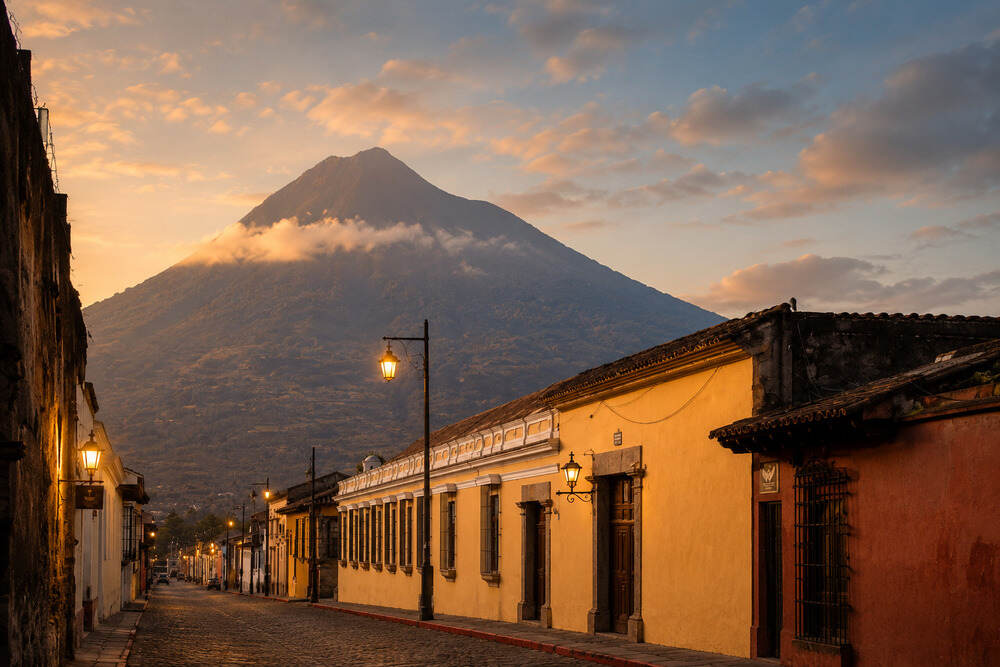
You can also spend a little time taking in the views of the Agua Volcano. Santa María de Jesús Sacatepequez is so close to the mountain that the volcano feels like part of the town. The sloping streets and a few open spots offer excellent views of the surrounding area.
So, the places you might include in your visit are:
- The central park and the area around the church.
- The Church of the Holy Name of Jesus.
- The Temple of El Calvario.
- The local market.
- The streets of the city centre and everyday life.
- The views of the Agua Volcano.
- The nearby agricultural areas, provided you go with a local or have reliable information.
Things to do in Santa María de Jesús
One of the best things you can do in Santa María de Jesús is to take a leisurely stroll through the town centre. Start at the square, pop into the church, take in the hustle and bustle of the market, and see how the town goes about its business on a normal day.
You can also try the local food. A simple breakfast, a hot atol or a dish from the market can give you a much more authentic experience than a restaurant designed for tourists.
If you’re interested in textiles, you can ask about traditional garments or locally made products. There won’t always be a clearly marked tourist shop, so the market and local shops will be your best bet.
Another option is to combine your visit with a trip to Antigua Guatemala. You could spend the morning in Santa María de Jesús and then return to Antigua to continue with a tour of the city’s main sights. The contrast between the two places is fascinating.
Santa María de Jesús Sacatepequez may also be of interest if you wish to explore the area around the Agua Volcano. If you’re planning to go for a walk in the countryside or undertake a full tour of the area, it’s best to check with local guides, the authorities or people you trust first.
In short, a simple plan could be as follows:
- Set off early from Antigua or Guatemala City.
- Head into the town centre and take a stroll around the square.
- Visit the church and El Calvario.
- Have a stroll around the market.
- Try the local food.
- Return with plenty of light and a sufficient margin.
Best time to visit Santa María de Jesús
The best time to visit Santa María de Jesús is usually during the dry season, between November and April. At this time of year, there is less rain, better conditions for walking and more opportunities to enjoy unobstructed views of the Agua Volcano.
The climate is temperate due to the altitude. Mornings can be cool, midday is usually pleasant, and the temperature can drop in the afternoon. Even though you’re in Guatemala, a light jacket always comes in handy.
The rainy season runs from May to October. During these months, the landscape is greener, but afternoon downpours can make sightseeing, getting around and any outdoor plans a bit of a hassle.
If you visit during the January festival, you’ll find a livelier atmosphere. But if you prefer to take a leisurely stroll, you might prefer to visit outside the festival period. It all depends on what you’re looking for: a bustling, festive atmosphere or a more peaceful stroll.
Transport and safety recommendations
Santa María de Jesús is near Antigua, but that doesn’t mean you can just wing it. The road, the traffic and the weather can all have a significant impact on journey times.
If you’re travelling by public transport, make sure you check your return stop before setting off. Don’t forget to bring cash in small notes for buses, food and shopping. Bear in mind that many local shops don’t accept card payments.
When it comes to safety, just use your common sense. Keep an eye on your rucksack, avoid displaying expensive items, and don’t walk alone in isolated areas after dark. If you want to leave the city centre or head out into the countryside, ask first.
Whichever route you take to the Agua Volcano, always check that the information is up to date. The mountain requires a bit of preparation, a sense of direction and caution. It’s not a good idea to set off without a guide, without water, without warm clothing or without knowing the condition of the path.
Santa María de Jesús Sacatepequez is best enjoyed on a simple, well-organised day trip. You don’t need to overcomplicate things to get a very authentic impression of the town.
Frequently Asked Questions about Santa María de Jesús
What is the population of Santa María de Jesús Sacatepéquez?
Santa María de Jesús had a population of around 27,000 in 2023. The exact figure may vary depending on the source and the year in question, but it serves to illustrate that it's a small-to-medium-sized municipality within Sacatepéquez.
When is the Santa María de Jesús Fair?
The Santa María de Jesús fair is held in honour of the Holy Name of Jesus, and its main events usually take place in January. During this time, there are religious celebrations, dances, food, stalls, games and a festive atmosphere throughout the town.
What is the traditional food of Santa María de Jesús?
Among the typical foods of Santa María de Jesús, traditional dishes such as pepián, tamales, chuchitos, rellenitos, atoles and market food are particularly worth mentioning. The best way to try them is to visit the local stalls, especially on fair or market days.